Sourcing hardside carry-on luggage means making material, mechanical, and compliance decisions that affect everything from retail price point to return rates. This guide covers the four areas where buyers most often need clarity: shell material trade-offs, wheel and handle system quality, cabin size compliance across airlines, and OEM customization paths.
- PC shells offer more flexibility and impact resistance than ABS; ABS remains the cost-effective option for price-sensitive programs.
- Wheel and handle systems deserve hands-on testing — roll and drop samples on actual surfaces before committing to a production order.
- There is no single global cabin size standard. 20-inch is the safer universal spec; 22-inch works for more permissive airlines.
- OEM options range from low-cost branding (lining print, zipper pulls, woven labels) to full shell mold development.
Shell Material Comparison: PC vs ABS vs PC/ABS
The shell material determines the carry-on's weight, impact behavior, surface finish options, and cost floor. Three material paths dominate the category.
| Material | Key Characteristics | Typical Positioning | Buyer Considerations |
|---|---|---|---|
| Polycarbonate (PC) | Flexible, high impact resistance, recovers shape after impact; can be finished matte or glossy | Mid-to-premium hardside programs | Higher material cost; better perceived value at retail; suits brands emphasizing durability |
| ABS | Rigid, lower flex, lighter than PC in some constructions; surface can scratch more visibly | Value and entry-level programs | Lower cost; good for high-volume promotional or private-label lines; confirm impact test method with supplier |
| PC/ABS blend | Combines PC flexibility with ABS rigidity; cost between the two | Mid-tier programs balancing cost and durability | Blend ratio varies by supplier — ask for the actual ratio and any impact test data |
For buyers comparing real product examples, a Polycarbonate Cabin Luggage 22-inch with a TSA lock represents the PC path, while a Lightweight ABS Cabin Trolley 20-inch represents the ABS path. The material difference alone does not determine end quality — shell thickness, ribbing design, and frame construction matter equally. Request shell thickness specifications and impact test reports (method and pass criteria) from your supplier before placing a production order.
Wheel and Handle System Evaluation
The wheel and handle system drives the in-store feel that converts a browser into a buyer. It is also where returns originate when components fail. Evaluate these assemblies as a system, not as separate parts.
Wheels
- Four-wheel spinner vs two-wheel: Four-wheel spinners roll upright and are easier to maneuver; two-wheel designs track straight but require tilting. Confirm which configuration your target retail channel expects.
- Wheel housing protection: Look for reinforced wheel housings or corner guards that absorb impact before it reaches the shell. Ask the supplier to describe how the housing is attached — screw-fixed, riveted, or molded into the shell.
- Wheel material: Polyurethane and TPU wheels run quieter and wear longer than basic PVC. Confirm the wheel material spec.
Handles
- Telescopic handle: Multi-stage aluminum handles let users set a comfortable height. Check for wobble — a handle that rattles at full extension signals loose tolerances.
- Riveted carry handles: Top and side carry handles should be riveted, not glued, and should return to position after being pulled.
- Locking mechanism: Test the push-button release repeatedly. It should engage firmly at each stage.
The most reliable evaluation method is hands-on: roll a loaded sample over carpet, tile, and pavement; drop it on a corner; extend and retract the handle repeatedly. Ask your supplier to provide a sample for this purpose and confirm what testing they perform in-house.
Cabin Size Compliance: Why 20-Inch Is the Safer Bet
There is no single global cabin size standard. Airlines set their own limits, and those limits change. The most expensive spec-period error a buyer can make is committing to a size that fails a major airline's sizer.
| Nominal Size | Typical Use Case | Compliance Notes |
|---|---|---|
| 20-inch | Global carry-on programs | More conservative fit across major international airlines; the safer default for multi-market distribution |
| 22-inch | Domestic or permissive-airline carry-on | Fits airlines with more generous cabin limits; verify against target airline sizers before committing |
| 26-inch | Checked luggage, medium trip | Not carry-on compliant; typically paired in a set with a 20-inch carry-on |
| 28-inch | Checked luggage, long trip | Not carry-on compliant; often the largest piece in a three-piece set |
Include wheels and handles in the measured dimensions, not just the shell body. A case marketed as 20-inch can exceed airline limits once the wheel housings are included. Confirm with your supplier whether the stated dimension is body-only or complete external measurement.
OEM Customization Options
OEM scope ranges from low-cost branding touches to full mold development. The right path depends on your order volume, target retail price, and how much differentiation your brand needs.
Low-cost branding path
- Shell color and matte/gloss finish
- TSA-approved lock
- Interior lining print with your brand pattern
- Custom zipper pulls
- Woven brand labels
This path requires no new tooling and typically has the lowest MOQ and shortest lead time. It is suitable for buyers testing a new brand or adding a carry-on to an existing line.
Full shell mold development
Custom shell molds create a proprietary silhouette that competitors cannot copy. This path requires higher investment and longer development time. It makes sense when your order volume supports the tooling amortization and when the shape itself is a brand asset. Ask your supplier for the mold development timeline, tooling ownership terms, and minimum order quantity for a custom shell program.
Quality Control Checkpoints for Hardside Luggage
Incoming inspection should cover both visual and functional checks. The following checkpoints apply to hardside carry-on programs.
- Shell inspection: Check for cracks, uneven thickness, color inconsistency between panels, and finish defects (scratches, orange peel on gloss, dull spots on matte).
- Wheel function: Roll each unit on a flat surface and confirm no wobble, no scraping, and smooth rotation through 360 degrees.
- Handle extension: Extend and retract the telescopic handle through all stages; confirm the locking mechanism engages at each stage and the handle returns fully.
- Zipper and closure: Run the zipper around the full opening; check for skipped stitches and smooth slider operation.
- Lock function: If a TSA lock is fitted, confirm it opens, closes, and resets correctly.
- Dimension check: Measure the complete external dimensions, including wheels and handles, and compare against the spec sheet.
- Lining and interior: Check for loose threads, misaligned seams, and secure attachment of internal straps and pockets.
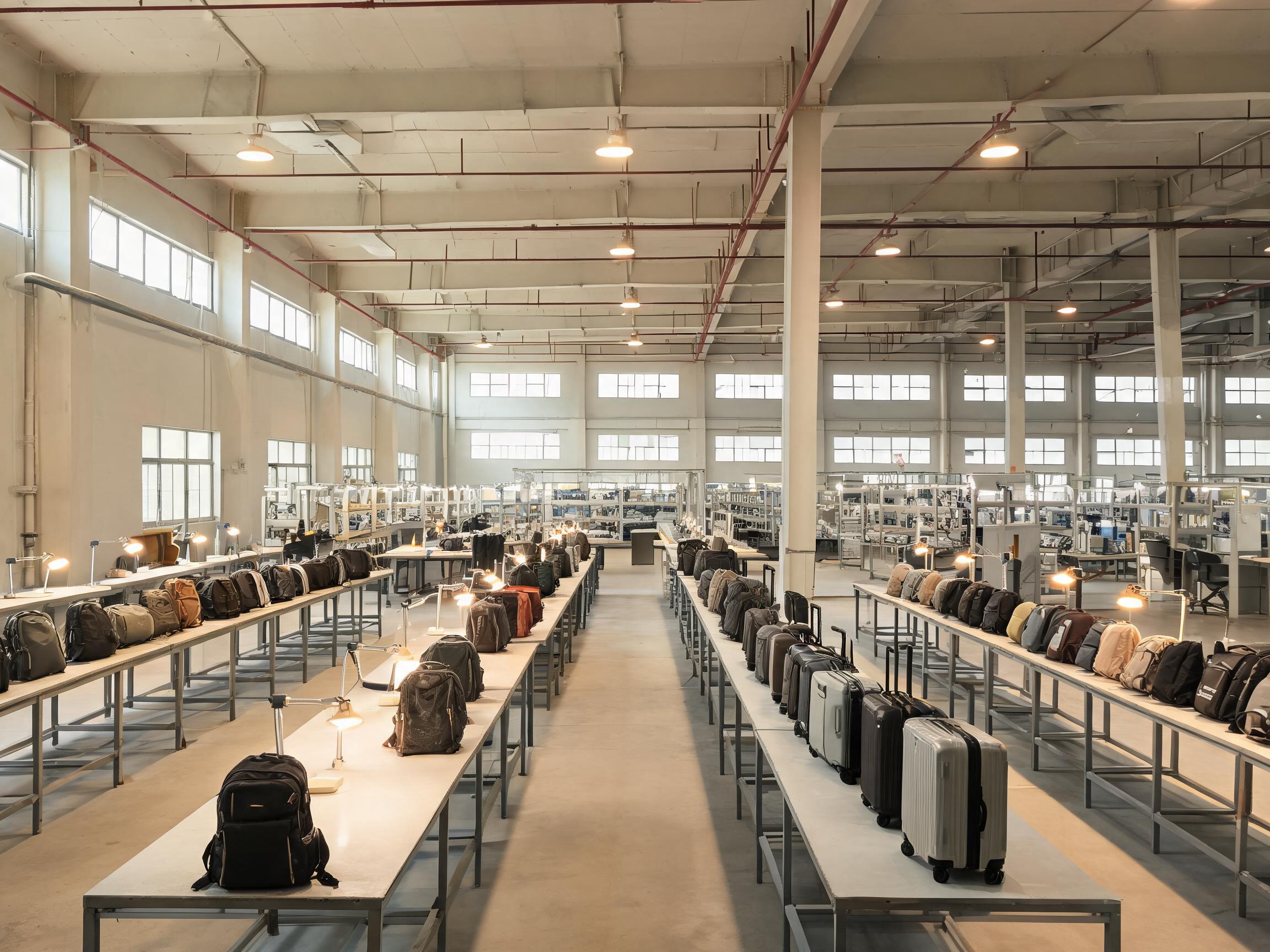
Ask your supplier which tests they perform on production units — impact, roll, handle cycle, and zipper cycle. Confirm the test method and pass criteria in writing. A supplier with an ISO 9001:2015 quality management system, such as Wellmax Luggage (founded in Quanzhou, Fujian in 2013, with a 12,000 sqm production base and approximately 150,000 units monthly capacity), can provide documented inspection procedures as part of the quality agreement.
FAQ
What is the best shell material for a hardside carry-on?
It depends on your target price and positioning. Polycarbonate (PC) offers better flexibility and impact resistance, making it suitable for mid-to-premium programs. ABS is more rigid and costs less, which suits value and high-volume programs. PC/ABS blends sit between the two. Request impact test data and shell thickness specifications for the specific material you are considering.
Are 20-inch and 22-inch carry-ons both airline-compliant?
There is no single global standard. 20-inch is the safer universal spec because it fits more airlines' cabin sizers. 22-inch works for airlines with more permissive limits. Always verify against the specific airlines your retail customers are most likely to fly and measure the complete external dimensions including wheels and handles.
What OEM options are available for hardside carry-on luggage?
Low-cost branding options include shell color and finish, TSA locks, branded interior lining, custom zipper pulls, and woven labels. These require no new tooling. Full shell mold development creates a proprietary shape but requires higher investment and order volume. Discuss tooling ownership, development timeline, and MOQ with your supplier.
How should I test wheels and handles before placing an order?
Request a sample and test it yourself: roll it loaded over multiple surfaces, drop it on a corner, and cycle the handle repeatedly. Ask the supplier what in-house testing they perform on production units and request the method and pass criteria in writing.
What certifications should a hardside luggage supplier have?
ISO 9001:2015 is a baseline quality management system certification. BSCI social compliance audits are also relevant for buyers with supply chain responsibility requirements. Ask for the certificate scope and confirm it covers the specific production site and product category.
For buyers sourcing hardside carry-on luggage, the most reliable path is to request samples, verify test data against your target market requirements, and confirm customization scope and MOQ in writing. Wellmax Luggage supports OEM/ODM programs from its Quanzhou facility with an in-house design team, and serves buyers in 40+ countries. Explore related guides on spinner suitcase wheel systems and materials and sample approval to mass production for adjacent sourcing decisions.