Most guides about luggage suppliers focus on how to choose one. This article covers the stage after that decision: how the cooperation actually runs, from the first inquiry to goods on a vessel. The sequence below follows a standard OEM/ODM order cycle — request for quotation, sample approval, commercial confirmation, mass production, inspection and shipment — and notes at each step what a buyer should prepare and what to confirm in writing.
At Wellmax Luggage, an OEM/ODM manufacturer founded in 2013 in Fujian, China, the same production system handles trolley cases, backpacks, business bags and handbags for buyers in more than 40 countries. The flow described here reflects that order cycle.
- RFQ — sizes, material, colors, lining, hardware, packaging, quantity, destination port.
- Sampling — sample produced and approved; lining, hardware and branding locked.
- Commercial confirmation — per-line MOQ verified; quotation covers terms including payment.
- Production — 30–35 days standard (35–40 for the aluminum set), subject to volume and schedule.
- Inspection and shipment — finished-product checks before packing; third-party inspection and Incoterms confirmed per order.
Step 1: Writing a Useful RFQ
The first message sets the pace for everything after it. A quotation can only be as specific as the request behind it, so a useful RFQ to luggage suppliers typically states:
- Target sizes and configuration. For example, a 22-inch cabin case with zipper closure, or a two-piece checked set with an aluminum frame. The more precisely the configuration is described, the more accurate the first quotation will be.
- Material choice. Polycarbonate (PC) and ABS behave and price differently; fabric softside, nylon, PU and full-grain leather each sit in their own segment. Stating your preferred material, or asking for options within a range, narrows the quote quickly.
- Colors, lining and hardware finish. These are the standard OEM adjustment points: shell color and surface finish, interior lining color, divider layout, and hardware finish are all adjustable on published lines.
- Packaging and labeling needs. Standard export packing is one unit per individual poly bag, then cartons (the PU crossbody flap handbag ships in an individual dust bag plus carton). If you need branded packaging or hang tags, say so early — they are quoted on request.
- Target quantity and destination port. Quantity determines whether you meet a line's MOQ and how production is scheduled; the destination port matters for Incoterms later.
Buyers who include branding plans up front — woven labels, rubber patches, screen printing, metal logo plates, molded marks or hang tags — also get branding costs into the quotation from the start rather than as a later add-on.
Step 2: Sampling Before Mass Production
Sampling is part of the OEM/ODM order cycle, not an optional extra: a sample is prepared for your approval before mass production begins. This is the point where specifications become physical, so treat approval as a locking exercise. Before signing off a sample, confirm:
- Lining and interior layout — color, dividers and pocket arrangement as agreed.
- Hardware and finish — zipper pulls, handles, corners and any frame hardware, in the agreed finish.
- Branding elements — label placement, logo method and packaging, if ordered.
An approved sample becomes the reference the production run is built against. Anything not fixed at this stage is an open variable during mass production, so it pays to be thorough even on small details.
Step 3: MOQ and Commercial Terms
MOQ is set per product line, and the differences follow from construction. Two verified examples from the catalog:
| Product line | Construction | MOQ |
|---|---|---|
| Polycarbonate Cabin Luggage 22" | PC shell, zipper with TSA lock | 300 pcs |
| Aluminum Frame Checked Luggage Set | Aluminum frame + ABS shell, two-piece set | 200 sets |
| Nylon Shoulder Crossbody Bag | Lightweight nylon, adjustable strap | 500 pcs |
| Crossbody Flap Handbag | PU leather, magnetic snap flap | 500 pcs |
The pattern is worth understanding when planning with luggage suppliers. Softside sewn goods such as the nylon crossbody sit at 500 pcs per line. The PC cabin case, which shares shell molding workflows across colorways, runs at 300 pcs. The aluminum-frame set — which adds shell molding and frame assembly to the standard workflow and is quoted as a two-piece set — carries a 200-set MOQ. Each construction draws on different tooling and line time, which is why you should never assume one line's MOQ applies to another; confirm the figure for each product you plan to order.
On commercial terms: payment terms are not published in advance. Commercial terms, including payment, are confirmed in the quotation for each order. If payment structure matters to your planning, raise it when requesting the quotation rather than assuming a default.
Step 4: Production Lead Time Rhythm
Standard lead time is 30–35 days after sample approval and order confirmation for most lines. The aluminum-frame set runs 35–40 days after the same starting point, reflecting the additional frame assembly work. Two conditions sit beside these figures: final timing depends on order volume, and on the production schedule at the time your order enters the queue. A larger order or a busy season can extend the window, so build buffer into your own launch calendar and confirm the specific lead time in your order confirmation rather than treating the standard range as fixed.
Note that the clock starts at sample approval and order confirmation, not at first inquiry. Time spent refining the RFQ and approving the sample is separate from production time — which is another reason to be specific early.
Step 5: Mixed-Container Planning
Because one production system covers trolley cases, backpacks, business bags and handbags, buyers can combine categories within a single program rather than placing each product with a different supplier. A retail chain, for instance, might pair hardshell trolley cases with a softside fabric spinner such as the Softside Spinner Luggage 24", or add bags to a luggage-only range. How many items can be combined into one shipment depends on the mix of products, sizes and packaging — that is calculated at quotation stage, so state your intended category mix in the RFQ if container planning is part of your goal.
Step 6: QC and Shipment
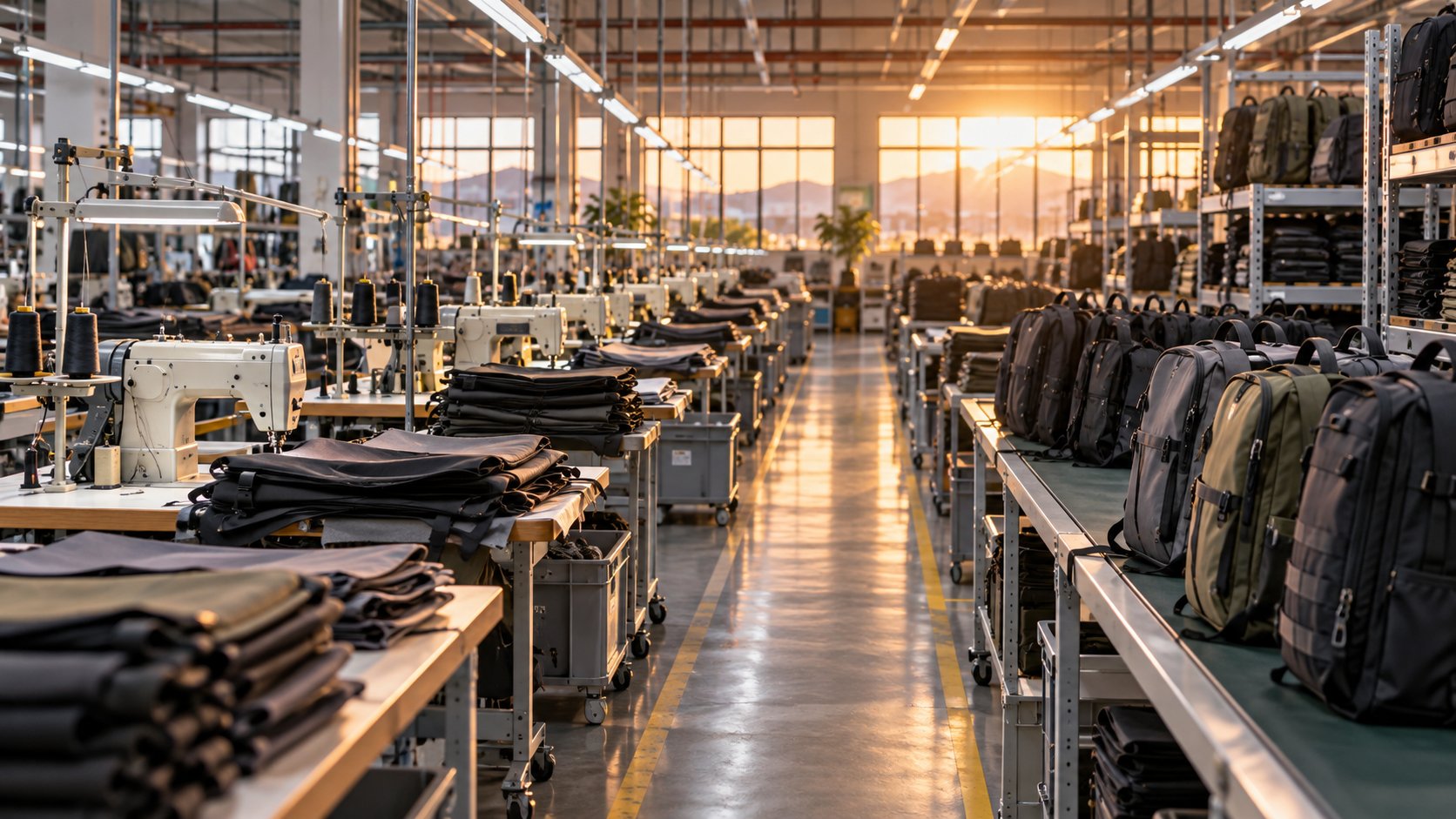
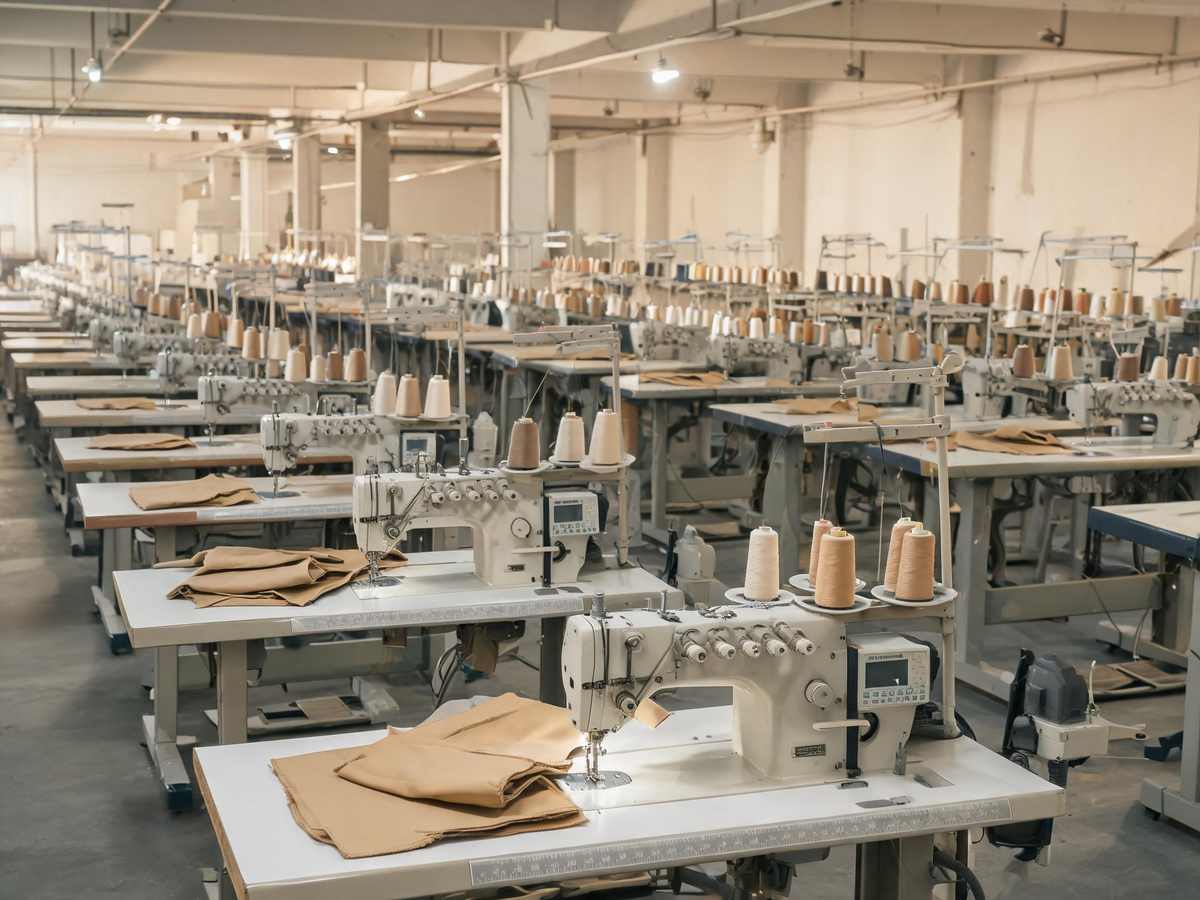
Quality control in this workflow runs inside the production sequence, not only at the end. Dedicated assembly or sewing lines are followed by finished-product inspection before packing. The checks are matched to the product type: frame alignment, lock function and wheel checks on the aluminum-frame set; zipper function and strap attachment strength checks on nylon crossbody bags. Because the facility houses cutting, sewing, assembly and inspection under one roof — roughly 150,000 pieces per month across about 320 staff — inspection sits close to the line rather than at a separate site. The company's quality management system is certified to ISO 9001:2015, and the facility is audited under the BSCI framework for social compliance; these apply at company and factory level to design, manufacturing and sales processes.
For shipment, two points are confirmed with the buyer per order: third-party inspection, if you want an external party to verify goods before release, and the preferred Incoterms that define where responsibility transfers. Standard export packaging — individual poly bag, then cartons — applies unless branded packaging has been quoted and ordered.
The Flow in Brief
- RFQ — sizes, material, colors, lining, hardware, packaging, quantity, destination port.
- Sampling — sample produced and approved; lining, hardware and branding locked.
- Commercial confirmation — per-line MOQ verified; quotation covers terms including payment.
- Production — 30–35 days standard (35–40 for the aluminum set), subject to volume and schedule.
- Inspection and shipment — finished-product checks before packing; third-party inspection and Incoterms confirmed per order.
If you are preparing to work with luggage suppliers and want to see how this flow applies to your own range, the practical next step is simple: send a specification list and a target quantity. A quotation and a sampling plan for the relevant product lines — whether a PC cabin case, an aluminum-frame set or a sewn softside program — follow from that first document.