What a Full-Cycle Luggage Manufacturer Does Differently
Buyers searching for a china luggage manufacturer often start with a spreadsheet of factory names, then try to narrow it down by price. Price is easy to compare. What's harder to compare is whether the factory actually controls the steps that affect your final order — cutting, sewing, assembly, inspection — or whether it outsources part of the process.
Wellmax Luggage is a full-cycle OEM/ODM luggage and bag manufacturer in Fujian, China, founded in 2013. The Quanzhou facility covers 12,000 m2 with cutting, sewing, assembly and inspection under one roof, supported by an in-house design studio and an export sales team serving buyers in 40+ countries. Monthly output is around 150,000 pieces. The company holds ISO 9001:2015 certification and has completed a BSCI audit.
That structure matters for three practical reasons. First, sampling and tooling stay in-house, so design changes don't require coordinating between separate workshops. Second, quality checkpoints happen at each stage rather than only at final inspection. Third, mixed product lines — trolley cases, backpacks, business and laptop bags, handbags — can be produced in the same facility, which makes combined orders more practical.
MOQ: What Drives Minimums and How Mixed Orders Work
There is no single MOQ number across an entire luggage factory. Each product line carries its own minimum for concrete reasons, and those reasons are worth understanding before you ask for a quote.
Factors that raise or lower a minimum
- Material and fabric sourcing. Fabrics with a specific weave, finish or colourway often carry a higher minimum because the mill applies its own minimum when dyeing or weaving.
- Tooling and moulds. A new hard-shell mould or a custom trolley handle is a one-time build cost. The minimum quantity for that model has to amortise the tooling.
- Hardware and components. Non-standard zipper pulls, wheels, locks or telescopic handles have supplier minimums of their own.
- Number of SKUs and colourways. Splitting one order across five colourways of the same bag generally raises the effective minimum for each colour, because the factory still has to set up, cut and run each variant.
- Printing, embroidery and branding method. Screen printing, heat transfer, woven labels and embroidered logos each carry different setup requirements.
How mixed-SKU orders are handled
Because the factory runs trolley cases, backpacks, business bags and handbags in the same facility, buyers can often consolidate several product types into one order. The practical way to do this is to group SKUs by shared material or shared hardware, then ask for a combined quotation. A single container can hold multiple product lines as long as the cartons are planned together — this is the same logic that applies to mixed container ordering for bag programs.
Sample Rounds: From Design Brief to Pre-Production Sample
Sampling is where a luggage order succeeds or fails. There are usually two distinct sample stages, and understanding the difference saves revision cycles.
Stage 1 — Development sample
You send a design brief: a reference bag or photo, dimensions, target materials, hardware preferences, logo placement, and any test or compliance requirements. The in-house design studio turns this into a first sample. Expect this stage to surface questions — hardware substitutions, fabric availability, structure compromises. Answering them in writing helps the second round.
Stage 2 — Revision and confirmation
After reviewing the first sample, you send consolidated feedback: what to change, what to keep, and any spec sheet corrections. Revision rounds vary by how many changes are requested. The goal is to lock the specification before tooling or bulk material orders are placed.
Stage 3 — Pre-production sample
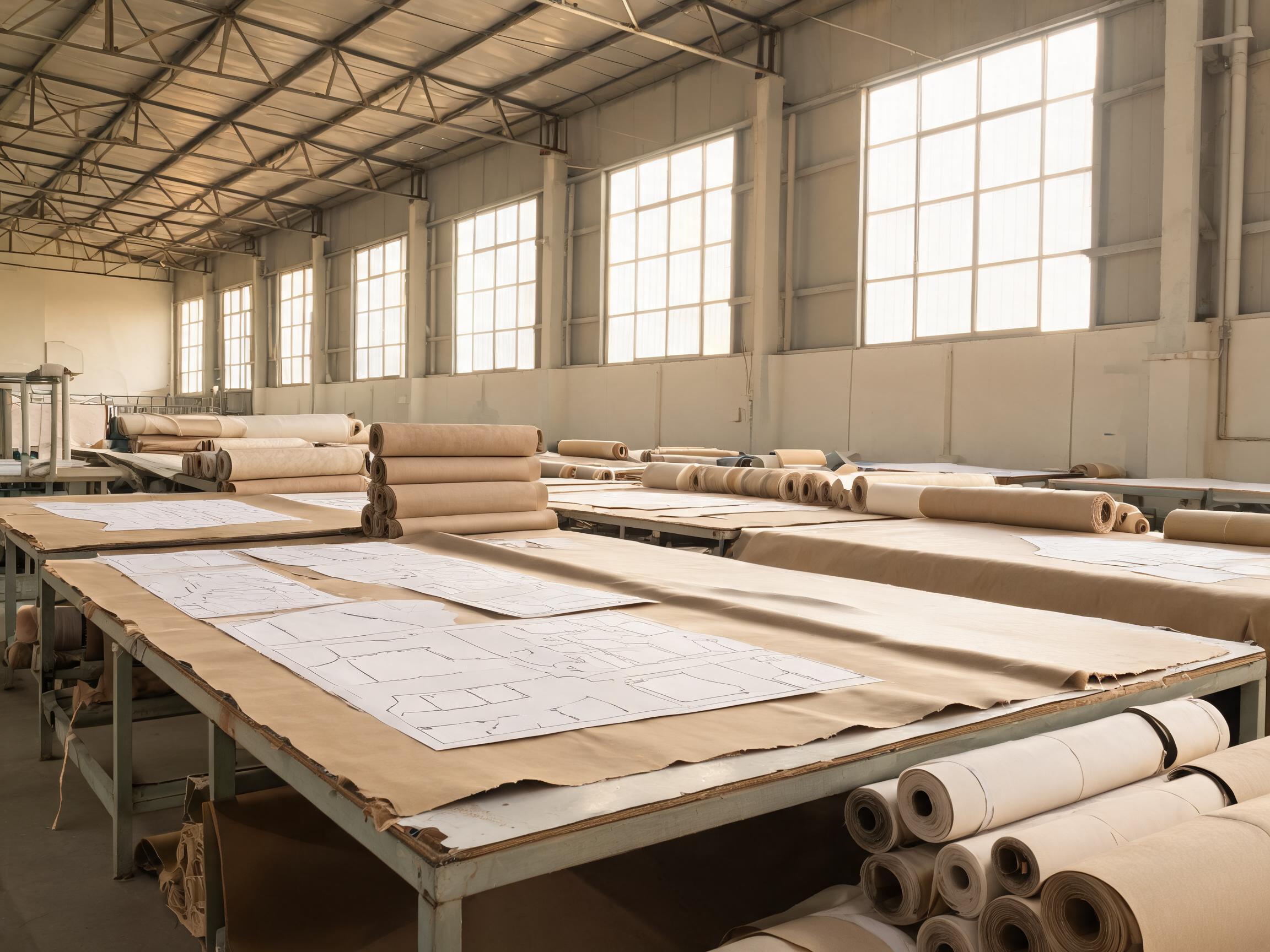
Once the spec is agreed, a pre-production sample is built using the materials, hardware and construction that will be used in mass production. This is the reference piece the factory keeps on the line during production and inspection. Approving it in writing — dimensions, hardware, logo, colour, packaging — is what prevents disputes later. Fabric cutting is the first production step, and pattern accuracy here affects every downstream stage.
Container Loading: Cartons, Mixed SKUs and Documentation
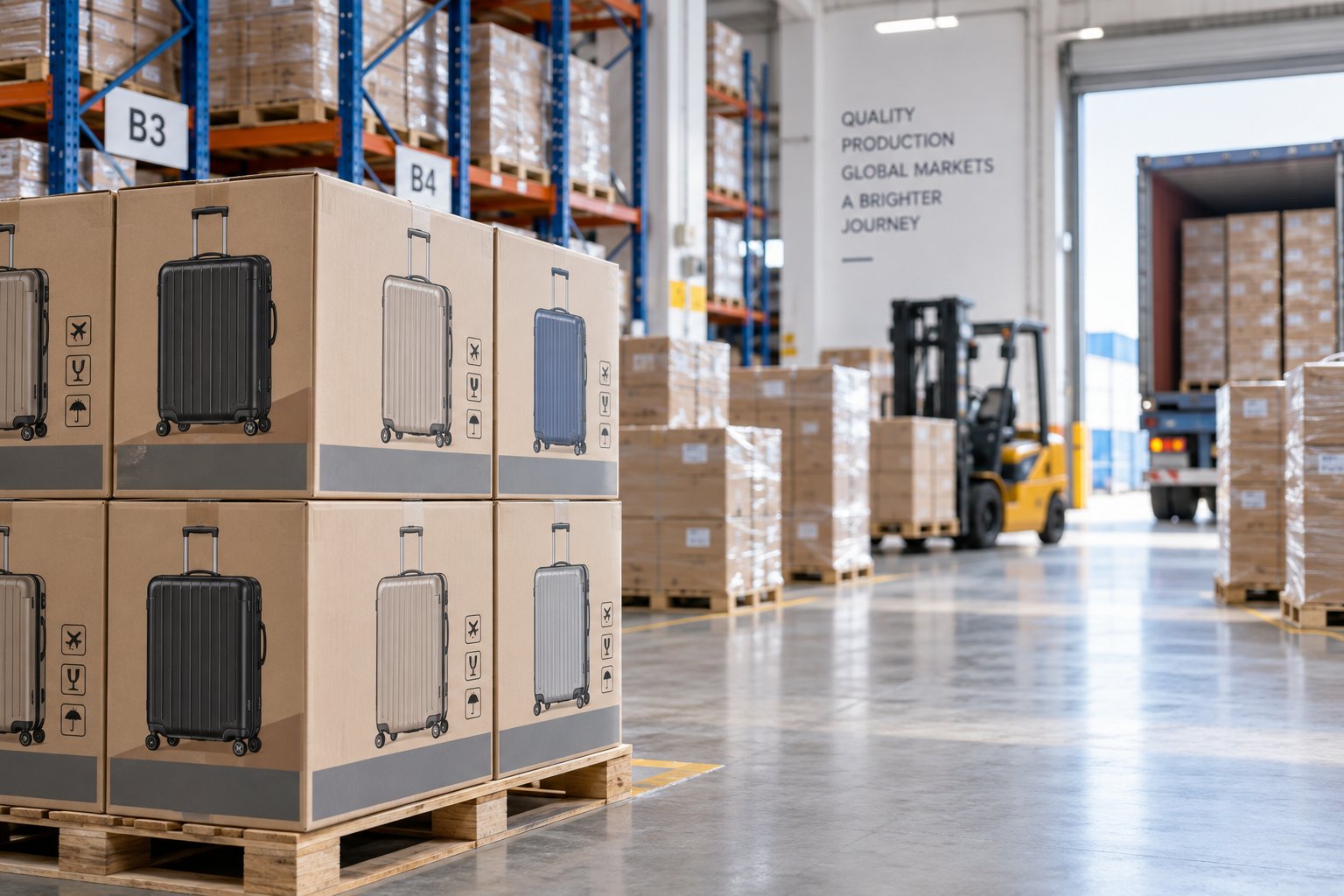
Once production is complete and inspection passed, the export warehouse packs cartons and prepares the shipment for loading. How those cartons are planned determines how much you actually fit in a container.
Carton packing
- Each model has an individual carton dimension and pack quantity — typically negotiated at the quotation stage.
- Soft bags and backpacks are often packed flat or semi-folded; trolley cases usually ship upright or nested depending on the model.
- Cartons are labelled with model, colour, quantity and shipping marks agreed with the buyer.
Mixed-SKU consolidation
When an order combines trolley cases, backpacks and business bags, the loading plan groups cartons so that the container is filled efficiently without crushing softer goods under hard cases. This is why buyers who want mixed product lines should flag it early — the loading plan is built from the confirmed SKU list, not added afterwards.
FCL vs LCL
| Aspect | FCL (full container) | LCL (less than container) |
|---|---|---|
| Best when | Order volume fills most or all of a container | Order volume is smaller or a trial order |
| Cost structure | Fixed container cost; lower per-unit freight as volume rises | Shared container; per-cubic-metre pricing applies |
| Handling | Loaded at origin, sealed, unloaded at destination | Consolidated with other cargo; more handling points |
| Risk | Lower — container stays sealed in transit | Higher — co-loaded cargo and more transfer steps |
| Suited to | Repeat production runs, established SKUs | First orders, new model testing |
Documentation
Export documentation is prepared alongside the loading plan: commercial invoice, packing list, bill of lading, and any certificates or test reports required by the destination market. Buyers should specify documentary requirements — country of origin, labelling rules, or specific test certificates — before production starts, because some documents depend on materials or components that must be sourced accordingly.
What to Prepare Before the First Inquiry
A clear brief shortens the whole cycle. Before contacting a luggage manufacturer in China, prepare the following:
- Product description per SKU. Style reference, dimensions, target weight, material preference, hardware type.
- Target quantity and colourways. Total units and how they should be split across colours.
- Branding requirements. Logo files, placement, print or embroidery method, label and hangtag specs.
- Compliance and testing needs. Which destination market, and whether specific tests or certifications are required.
- Packaging expectations. Retail packaging, polybag, individual carton or bulk carton.
- Delivery terms. FOB, CIF or other Incoterm, and destination port.
- Timeline. When you need the goods, which helps the factory sequence sampling and production.
If you are also comparing factories at this stage, it helps to review how supplier audits, MOQs and lead times are typically assessed — see this guide to choosing a China luggage supplier for the audit and lead-time side of the decision.
Frequently Asked Questions
Is MOQ the same for every product line?
No. Minimums vary by model and depend on fabric, tooling, hardware and colourway. Confirm the minimum per product with the factory before planning quantities.
Can I order different bag types in one container?
Yes, when the factory produces all the relevant product lines in-house. Mixed SKU orders require an early loading plan based on the confirmed carton dimensions.
How many sample rounds are typical?
Most projects involve a development sample, one or more revisions, and a pre-production sample. The number of revision rounds depends on how much changes between versions.
Should my first order be FCL or LCL?
Smaller or trial orders usually ship LCL; orders that fill most of a container are typically more economical as FCL. The factory's export team can advise based on your confirmed volume and carton packing.
What documentation is needed for export?
Standard shipment documents plus any market-specific certificates. Tell the factory your destination market and documentary requirements before production begins.
Request a Quotation for Your Luggage Program
If you are ready to move from research to a real order, the fastest route is to send your SKU list, target quantities, branding requirements and destination market. Wellmax's export team can respond with MOQ, sampling steps and a loading plan tailored to your product mix. Request a quotation with your specifications and we will confirm the next step.