Handing a luggage design to a Chinese factory is not a single email with a tech pack attached. It is a sequence of handovers, each with its own gate: the design package, the sample approvals, the pre-production confirmation, the in-line checks during mass production, and the export documents. Each gate is where buyers lose time or gain certainty. This guide walks through every stage from the buyer's side, with the documents and decisions you should prepare before the next step begins.
- OEM vs ODM: which project you are actually running
- What a complete design handover package contains
- Sampling and golden sample approval
- Pre-production confirmation
- Mass production with in-line quality control
- Export, documentation and delivery
- Communication habits that keep the project on schedule
1. OEM vs ODM: Which Project Are You Running?
The first decision is not about materials or wheels; it is about who owns the design. OEM means you bring the design—dimensions, shell material, frame type, lining, branding—and the factory builds to your specification. ODM means you start from the factory's existing product and modify it: colors, logo, trim, packaging, sometimes hardware. Both are legitimate, and many projects sit between the two, but the distinction changes what you must prepare and how the first sample is judged.
In an OEM project, you carry the design risk. If the factory builds exactly what your drawings specify and the product fails in the market, the specification is yours. In an ODM project, the factory's base design is the starting point, and your changes are usually cosmetic or accessory-level. The ODM factory's existing tooling and patterns shorten development, which is why ODM bag factories are often the faster route for private-label ranges that need to reach shelves quickly.
Be explicit in writing about which model applies before sampling starts. A one-line email—“This is an OEM project; we will provide full drawings and a reference sample”—prevents months of mismatched expectations. If you are unsure, ask the factory to describe its own product lines. Wellmax Luggage, for example, runs four lines (travel luggage, backpacks, business bags and handbags) and an in-house design studio that prepares samples for both OEM and ODM work, so the conversation can start from either direction.
2. What a Complete Design Handover Package Contains
A design handover package is complete when a factory can build a sample without asking you a single question that could have been answered on paper. For luggage and bags, that typically means the following documents, supplied in one version-controlled folder:
- Technical drawings or a tech pack with dimensions, tolerances, seam placements, hardware positions and material callouts. Include a front, side, top and bottom view.
- Bill of materials naming shell material, frame type, wheels, handles, zippers, lining and trim. If you have an approved supplier or brand for any component, say so.
- Color references—Pantone numbers for soft materials, and finish references (matte, brushed, anodized) for hardware.
- Branding assets in vector format: logo files, placement measurements, embroidery or print specifications, and label and hangtag artwork.
- Packaging requirements: individual dust bag or polybag, carton dimensions, shipping marks and any retail-ready packaging.
- A physical reference sample of a similar product if you have one, clearly labeled as reference only, not as an approved standard.
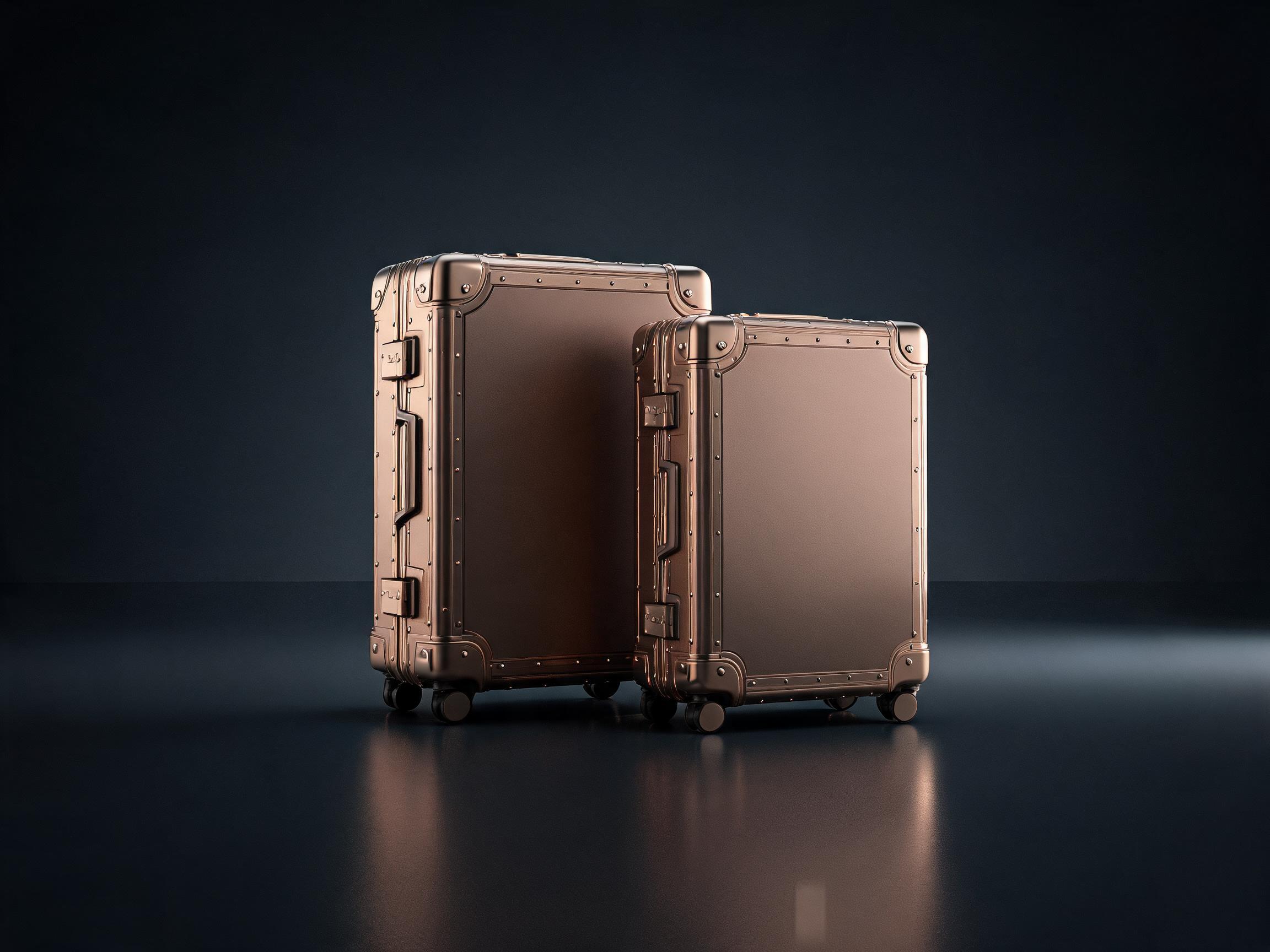
The aluminum-frame checked luggage set (published MOQ 200 sets, 35–40 day lead time) is a useful example of why the package matters: a frame case has an aluminum frame and ABS shell, reinforced metal corners, and hardware that must align precisely when the case closes. Corner reinforcement, frame fit and wheel housing placement are all specified in the drawing, not left to the sample room's interpretation. When those details are in the package, the first sample tests the design; when they are not, the first sample tests the factory's guesswork.
3. Sampling and Golden Sample Approval
Most luggage projects run two sampling rounds, occasionally three. The first round checks construction and proportion; the second refines materials, hardware and branding. Some buyers need a third round for packaging or a color correction. Agree the number of rounds and who bears the sample cost in writing before the first round begins—do not assume it is included.
When a sample passes your review, it becomes the golden sample: the physical reference that production must match. Sign and date it, keep one copy at the factory and one in your office, and reference it by number in every subsequent document. The golden sample should carry the exact materials, hardware, colors, labels and packaging approved for the order. If you approve a sample with a substituted zipper “for now,” the golden sample is compromised before production begins.
For simpler items the cycle is shorter. A polycarbonate cabin luggage 22 inch with a TSA lock, for example, can move from approved sample to a 30–35 day lead time at an MOQ of 300 pieces. A full-grain leather briefcase with a combination lock follows a similar approval logic, with packaging specified as individual dust bag plus carton. In each case, the golden sample—not the email thread—is the standard.
4. Pre-Production Confirmation
Pre-production confirmation is the last gate before materials are cut. It is not a formality. At this stage, the buyer and factory confirm in writing: the approved golden sample reference, the final BOM, order quantity, packaging specification, carton marks, inspection criteria, delivery date and shipping terms. Any open question here becomes a change order later.
Ask for a pre-production sample when the order involves a material change from the golden sample, a new color, or a packaging change. If nothing has changed, the golden sample remains the reference and the pre-production meeting confirms only logistics and quantities. The order cycle at a China luggage manufacturer typically runs sampling, tooling, mass production, quality inspection and export; pre-production confirmation is where the tooling status and the production schedule are locked.
| Confirmation item | What the buyer should receive |
|---|---|
| Golden sample reference | Signed sample ID and photos matching the approved version |
| Final BOM | Component list with any approved substitutions noted |
| Production schedule | Cutting, assembly and inspection dates against the delivery date |
| Inspection criteria | Agreed AQL or checklist covering workmanship, function and packaging |
| Shipping terms | Incoterms, port or door, and document list |
5. Mass Production with In-Line Quality Control
Quality is built during production, not sorted at the end. Ask how the factory handles in-line inspection: checks during cutting and sewing, checks at assembly, and a final inspection before packing. A factory with cutting, sewing, assembly and inspection under one roof can stop a defect at the station where it occurs; a fragmented supply chain usually cannot. Wellmax's 12,000 m² facility in Fujian houses those four stages under one roof, with capacity of about 150,000 pieces per month, and holds company/factory-level ISO 9001:2015 certification covering design, manufacturing and sales of luggage and travel bags, plus a BSCI social compliance audit.
During production, request dated progress photos at agreed milestones—after cutting, after assembly, before packing. For frame cases, ask for photos of the frame-to-shell fit and corner reinforcement before the cases are packed. If your order is large or your brand carries high return risk, book a third-party inspection before shipment and share the checklist with the factory in advance. The golden sample should be at the inspection table.
6. Export, Documentation and Delivery
Export preparation starts well before the production finish date. Confirm the Incoterm and the document set early: commercial invoice, packing list, bill of lading or airway bill, certificate of origin where applicable, and any product-specific documents your market requires. Luggage is a durable good with no battery or liquid content, so the document set is usually straightforward, but the bill of lading details—consignee, notify party, shipping marks—must match the cartons exactly.
Book the freight forwarder or confirm the factory's forwarder in writing, and agree the handover point. Ask for the loading photos and the container or pallet count. If the delivery date is tight, request the production finish date and the planned shipment date separately so you can see where the buffer sits. Wellmax's dedicated export sales team handles inquiries, quotations and order follow-up, and its buyers are in more than 40 countries—useful context for first-time buyers who want a supplier familiar with export paperwork.
7. Communication Habits That Keep the Project on Schedule
Most delays in luggage projects come from unclear approvals, not slow production. Four habits prevent them:
- One decision log. Keep a shared document listing every open question, who owns it and the date it must be closed. Reference it in every call.
- Written approvals with dates. Approve samples, colors and packaging by email with a date and a version number. “Looks good” without a date is not an approval.
- One contact per side. A single buyer contact and a single factory sales contact avoid conflicting instructions reaching the sample room.
- Scheduled check-ins. A short weekly update—production stage, next milestone, open issues—is more useful than daily messages and urgent questions.
Agree the communication channel and response expectation at the start. Time zones matter less than a predictable rhythm: if the factory knows your approval window is 48 hours, it can schedule around it.
FAQ
What is the difference between OEM and ODM luggage?
In OEM, you supply the design and the factory builds to your specification; design risk sits with you. In ODM, you start from the factory's existing product and modify branding, colors, trim or packaging. OEM usually requires a fuller design handover package, while ODM moves faster because the base tooling and patterns already exist. State which model applies in writing before sampling.
How many sampling rounds should we expect?
Two rounds is typical: the first checks construction and proportion, the second refines materials, hardware and branding. A third round may be needed for packaging or color correction. Agree the number of rounds and who pays for samples before the first round starts.
What is a golden sample and why does it matter?
A golden sample is the signed, dated physical sample that production must match. It carries the approved materials, hardware, colors, labels and packaging. Keep one copy at the factory and one in your office, and reference it by ID in the pre-production confirmation and the inspection checklist.
Who inspects the goods before shipment?
Either the factory's own inspection team or a third-party inspection company you appoint. Many buyers use the factory's final inspection for routine orders and book a third-party inspection for first orders or high-value programs. In both cases, the inspection criteria and the golden sample should be shared with the inspector in advance.
Wellmax Luggage is an OEM/ODM luggage and bag manufacturer in Fujian, China, founded in 2013, with about 320 employees and a 12,000 m² facility that keeps cutting, sewing, assembly and inspection under one roof—so the handover from design to mass production happens inside a single, ISO 9001:2015-certified operation.