
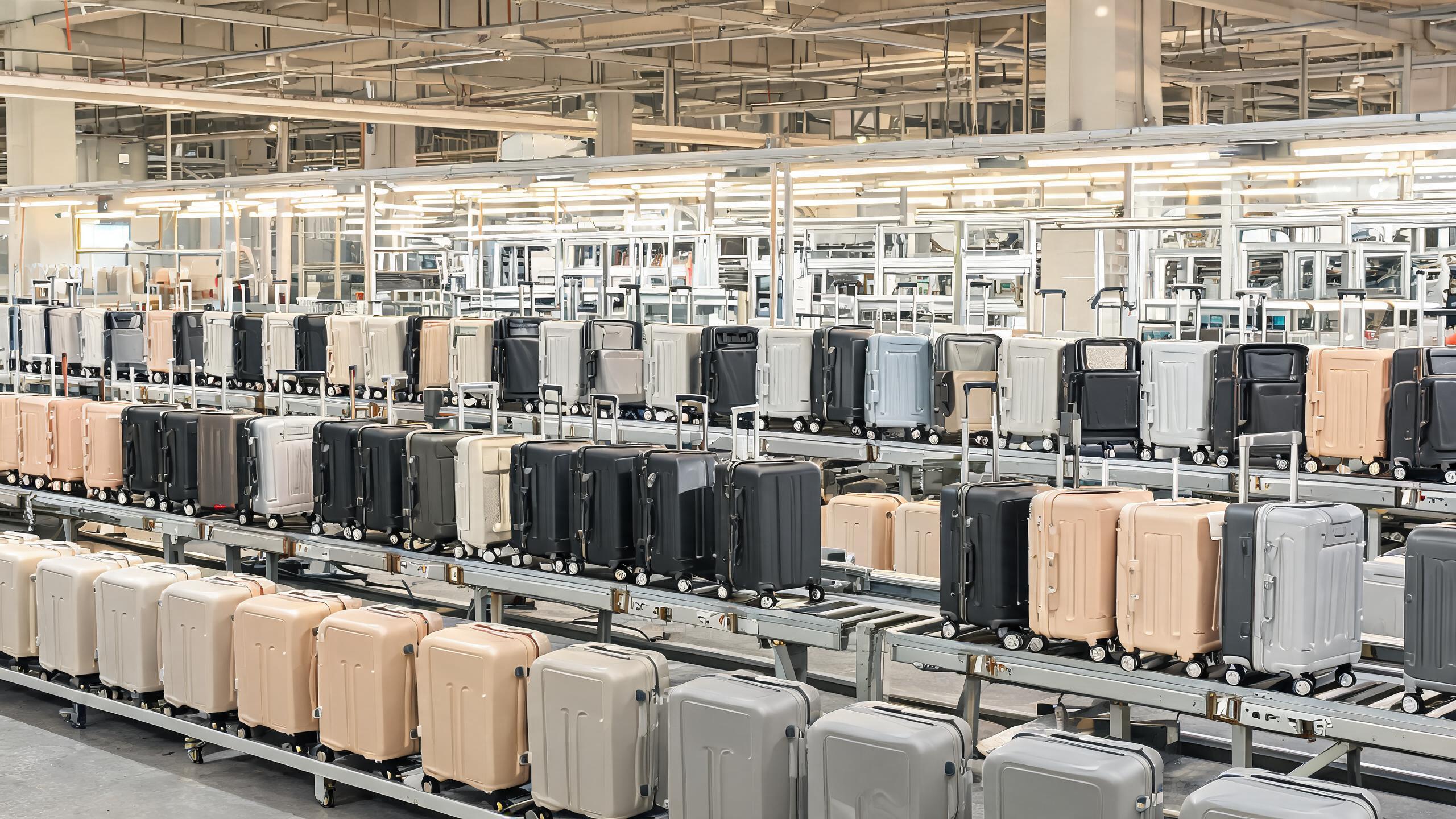
Wholesale Luggage Bags: A Cross-Category Ordering Guide
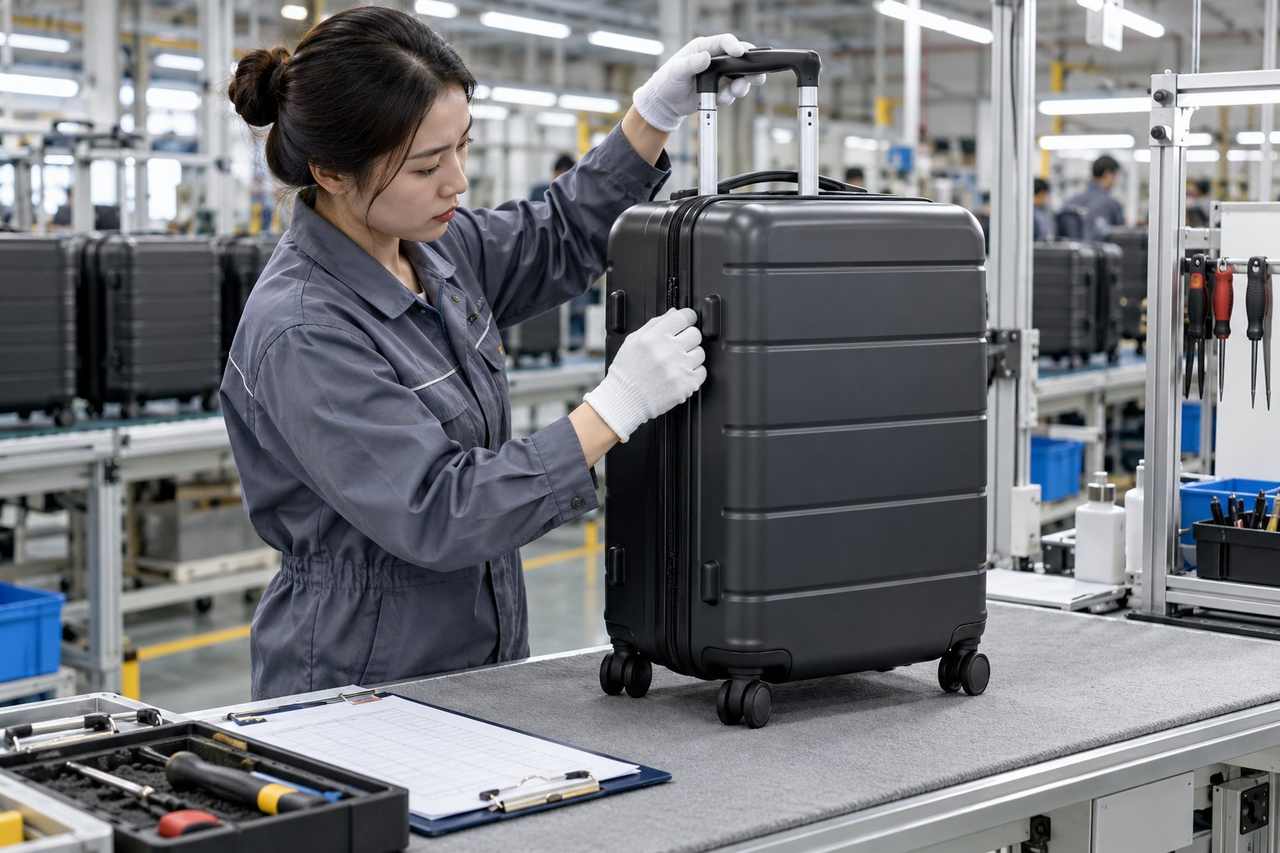
Most wholesale luggage buyers do not order a single product. A distributor filling a retail shelf, a retailer opening a travel season, or a promotional products company assembling a corporate program needs a mix: cabin and checked sizes, hard-shell and soft-side, an entry price point and a premium anchor. This guide walks through that decision using the structure of a working luggage catalog - categories, sizes, materials and minimum order quantities.
Wellmax Luggage is an OEM/ODM luggage and bag manufacturer based in Quanzhou, Fujian, China, producing luggage and bags since 2013 across a 12,000 m² factory with a monthly output of about 150,000 units. The published catalog currently lists 36 products in four categories: Travel Luggage (9 models), Business and Laptop Bags (9), Backpacks (10) and Handbags (8). That range matters for wholesale buyers because a mixed program can be sourced, sampled and produced under one supplier relationship instead of being split across several specialists.
Step 1: Split the Order by Use Case, Not by Look
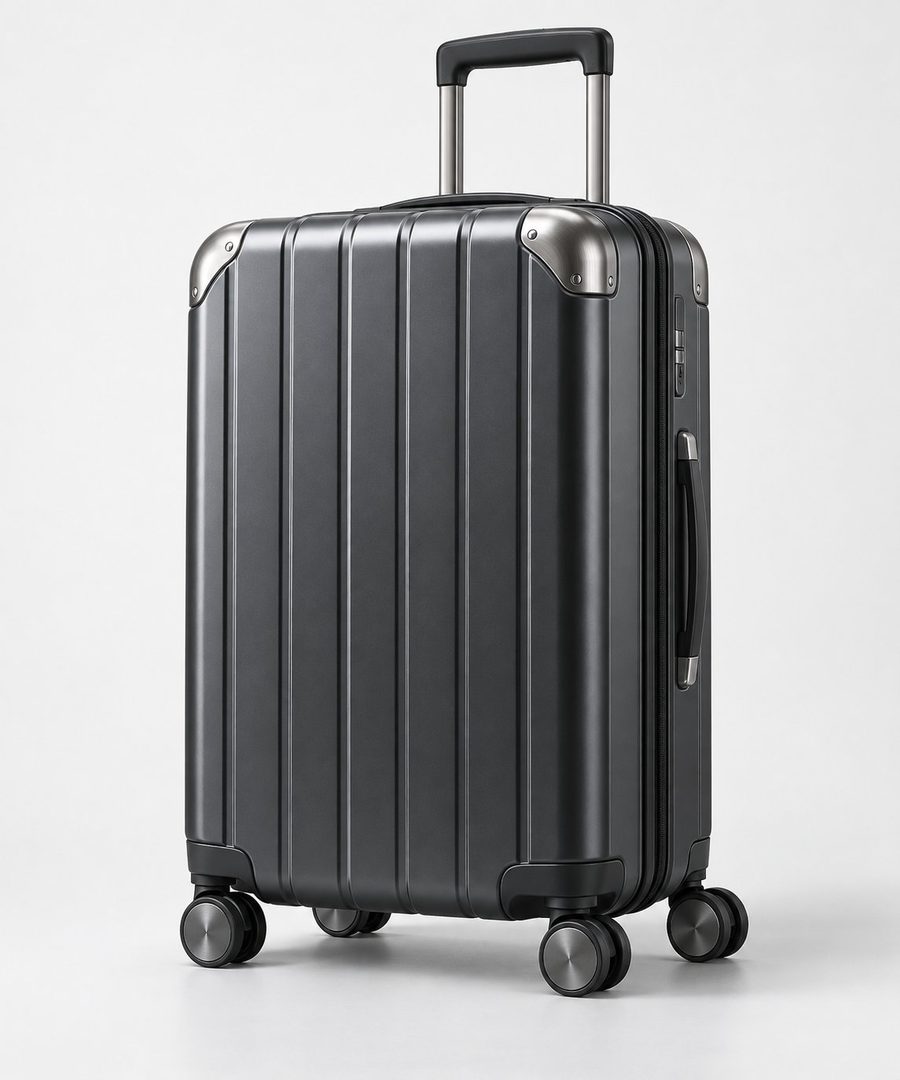
The first split in any mixed luggage order is between how travelers actually use the products. A cabin case is carried onto a plane, lifted into overhead bins and rolled through airports; a checked case is handed over, stacked and handled roughly. Soft-side bags compress into tight spaces and absorb scuffs; hard-shell cases protect contents and hold their shape. These are different purchase reasons, so they belong in the order as separate line items.
In practice, a balanced wholesale program usually answers three questions:
- Which sizes? Cabin sizes (around 20-22 inches) serve frequent flyers and short trips; checked sizes (24-28 inches) serve family travel and long trips.
- Hard-shell or soft-side? Hard shells read as protective and structured; soft-side pieces offer exterior pockets and flexible packing.
- Which traveler? Business travelers, family vacationers and promotional-program recipients each gravitate toward different sizes and styles.
Step 2: Map the Material Tiers
Within a catalog, the material of the shell or frame is the clearest signal of where a product sits in the range. The table below uses products currently listed in the Wellmax catalog, with specifications and order terms as stated on the product pages.
| Tier | Structure | Typical use | Listed terms |
|---|---|---|---|
| Entry hard-shell | ABS shell, lighter construction | Price-point cabin retail, promotional volume | See catalog page |
| Mid hard-shell | Polycarbonate shell, TSA lock on cabin model | Mainstream cabin and checked retail | MOQ 300 units; 30-35 day lead time |
| Soft-side | Polyester body, spinner wheels | Flexible-packing travelers, mixed sets | MOQ 300 units; 30-35 day lead time |
| Premium framed | Aluminum frame with ABS panels, metal corner guards, frame lock | Premium retail anchor, durability-led positioning | MOQ 200 sets; 35-40 day lead time |
Reading the tiers this way turns the catalog into an ordering ladder. A mid-range polycarbonate cabin case such as the 22-inch polycarbonate cabin luggage carries a TSA lock and comes in charcoal, black and navy, with a listed MOQ of 300 units and a 30-35 day lead time - the profile of a volume mainstream seller. The 24-inch soft-side spinner in polyester gives the order a soft-side option at the same listed MOQ and lead time. At the top, the aluminum frame checked luggage set • a two-piece medium-plus-large set with metal corner guards and a frame lock - has a lower listed MOQ of 200 sets but a longer 35-40 day lead time, which matters when you schedule the season.
One caution applies to every tier: the specifications above are listed values on the product pages, not independently tested results. For any model you intend to stock in volume, request the current specification sheet and a pre-production sample, and check shell thickness, wheel assembly, zipper or frame hardware and lock type against your market's expectations.
Step 3: Balance Cabin and Checked Within the Order
Once tiers are clear, the next lever is the size distribution. Cabin and checked pieces sell to different buyers, and a container skewed entirely toward one size leaves the other demand unserved. A practical way to plan is to assign each size a role:
- 20-22 inch cabin: the entry point most customers encounter first; small footprint per unit, so it can fill volume in a container without dominating value.
- 24-26 inch mid and checked: the volume core of most luggage assortments; this is where the polycarbonate and soft-side spinners sit, including expandable checked models such as the 26-inch expandable checked luggage with its expansion zipper.
- 28 inch and sets: the statement pieces. A 28-inch polycarbonate spinner trolley or a two-piece framed set anchors the top of the range and gives the shelf a visible premium option.
The catalog also carries lighter-construction and character-driven options - a lightweight ABS cabin trolley and a cartoon dopamine spinner - which serve promotional programs and younger end markets where price point and appearance carry more weight than shell material. These belong in the mix only if your channel actually has that demand; a role-less line item is dead stock.
Step 4: Order a Mixed Container Deliberately
Because each product line carries its own listed MOQ and lead time, a mixed order needs to be planned at the container level. Three practical checks keep it manageable:
- Confirm the MOQ math early. With listed MOQs of 300 units per model and 200 sets for the framed set, a mixed container can realistically include several models - but only if each line clears its own minimum. Decide which models earn a full MOQ and drop the rest rather than splitting below minimum.
- Sequence lead times. Models list 30-35 day lead times while the aluminum frame set lists 35-40 days. Build the schedule around the longest line so the whole order ships together, or split the shipment deliberately if your channel needs part of the range earlier.
- Lock the specification before production. Colors, sizes, locks and packaging should be confirmed in writing after sampling. The catalog lists color options per model - charcoal, black and navy recur across the hard-shell range, grey and silver appear on others - so align your assortment with the options as listed.
Quality control is the other container-level concern. Wellmax operates dedicated production lines with finished-goods inspection, and the factory holds ISO 9001:2015 certification at the company level and has been BSCI audited for social compliance. For a wholesale buyer, the useful move is to agree in advance what the finished-goods inspection covers - which defects are critical, which are minor, and the sampling method - so the inspection standard matches what your market accepts.
Step 5: Plan Replenishment, Not Just the First Order
A first wholesale order proves the assortment; the ongoing margin comes from replenishment rhythm. Lead times of roughly 30-40 days mean reorder decisions cannot wait until shelves are empty. Two habits keep a program healthy:
- Track by model, not by category. A 22-inch polycarbonate cabin case and a 24-inch soft-side spinner may sell at different speeds even within the same brand. Reorder the fast movers by model number and size, and renegotiate the slow ones instead of topping up the whole range automatically.
- Use color and model refreshes as a lever. Because OEM/ODM covers sampling and tooling, a repeat order is the natural point to adjust colors, add a size or develop a derivative model.
Frequently Asked Questions
Can I mix several luggage models in one wholesale order?
Yes, provided each model meets its own listed minimum order quantity - currently 300 units for the individual spinner models and 200 sets for the aluminum frame set as listed on the product pages. Mixing models across the four catalog categories (travel luggage, business and laptop bags, backpacks, handbags) is the usual way distributors fill a container with a complete brand story.
How far ahead should I place a wholesale luggage order?
Work backwards from the listed lead times: 30-35 days for the polycarbonate and soft-side spinners, 35-40 days for the aluminum frame set, plus sampling and shipping time to your market. Seasonal programs typically need the schedule anchored several months ahead of the selling window.
What should I verify before committing to a model?
Treat the product page specifications as listed values and confirm them against a pre-production sample: shell material and construction, wheel and handle assembly, lock type, color options and packaging. Ask which parts of the production are covered by finished-goods inspection and agree the inspection standard for your order.
Planning Your Own Mixed Order
A cross-category wholesale order rewards preparation more than volume: pick the tiers deliberately, give each size a role, clear every line's listed MOQ and sequence the order around the longest lead time. If you are building a mixed luggage program, request the current catalog with full specifications and listed order terms for the models that fit your channel, then move to sampling. For OEM/ODM development beyond the standard range, the same process applies with your own specification - from sampling and tooling through mass production and export.