Canvas briefcases sell because they read as everyday work bags rather than formal leather cases. For a retailer building an assortment, the sourcing question is rarely "can this be made in China" — it is which fabric and trim combination holds the price point, what actually moves the batch cost, and in what order to lock each decision so the order does not stall. Wellmax Luggage is an OEM/ODM bag manufacturer based in Fujian, China, founded 2013, with about 320 staff, a 12,000 m² factory and roughly 150,000 pcs/month capacity, exporting to more than 40 countries under ISO 9001:2015 and BSCI. This article walks through fabric selection, batch-pricing logic and the retailer ordering sequence, using the mechanics visible in the company's current canvas line.
Key takeaways
- Canvas weight and dye behavior are specification decisions you make before sampling, not after.
- Trim leather grade, hardware finish and branding method are the main structural levers on batch price.
- MOQ on the published canvas shoulder bag is 500 pcs, with 30–35 day lead time — briefcase programs are confirmed per project.
- Sequence matters: assortment → specification → sampling → batch confirmation → inspection and Incoterms.
On this page
- Why canvas works for briefcase assortments
- Fabric selection: weight, dye and trim
- What drives batch price
- The retailer ordering playbook
- FAQ
Why canvas works for briefcase assortments
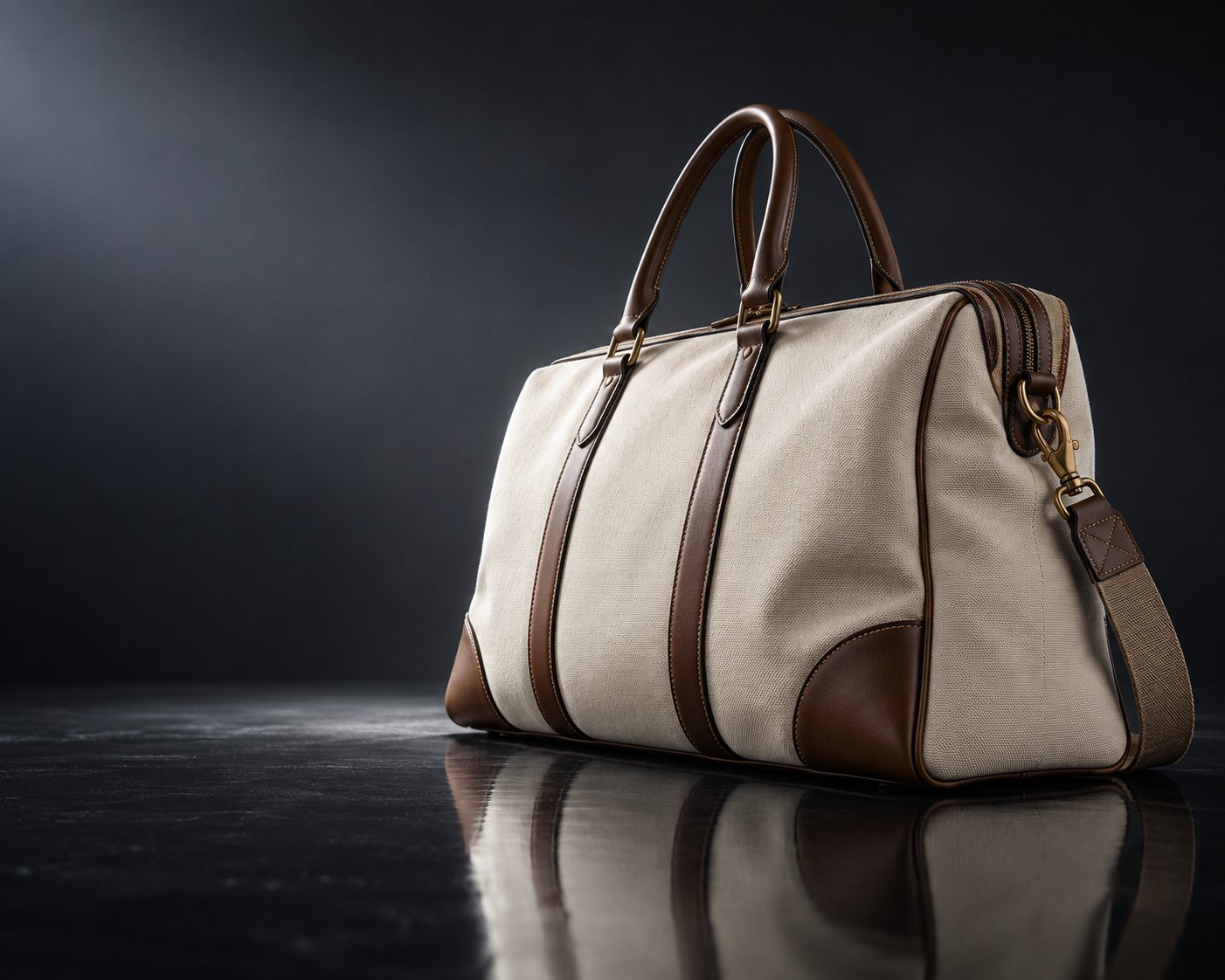
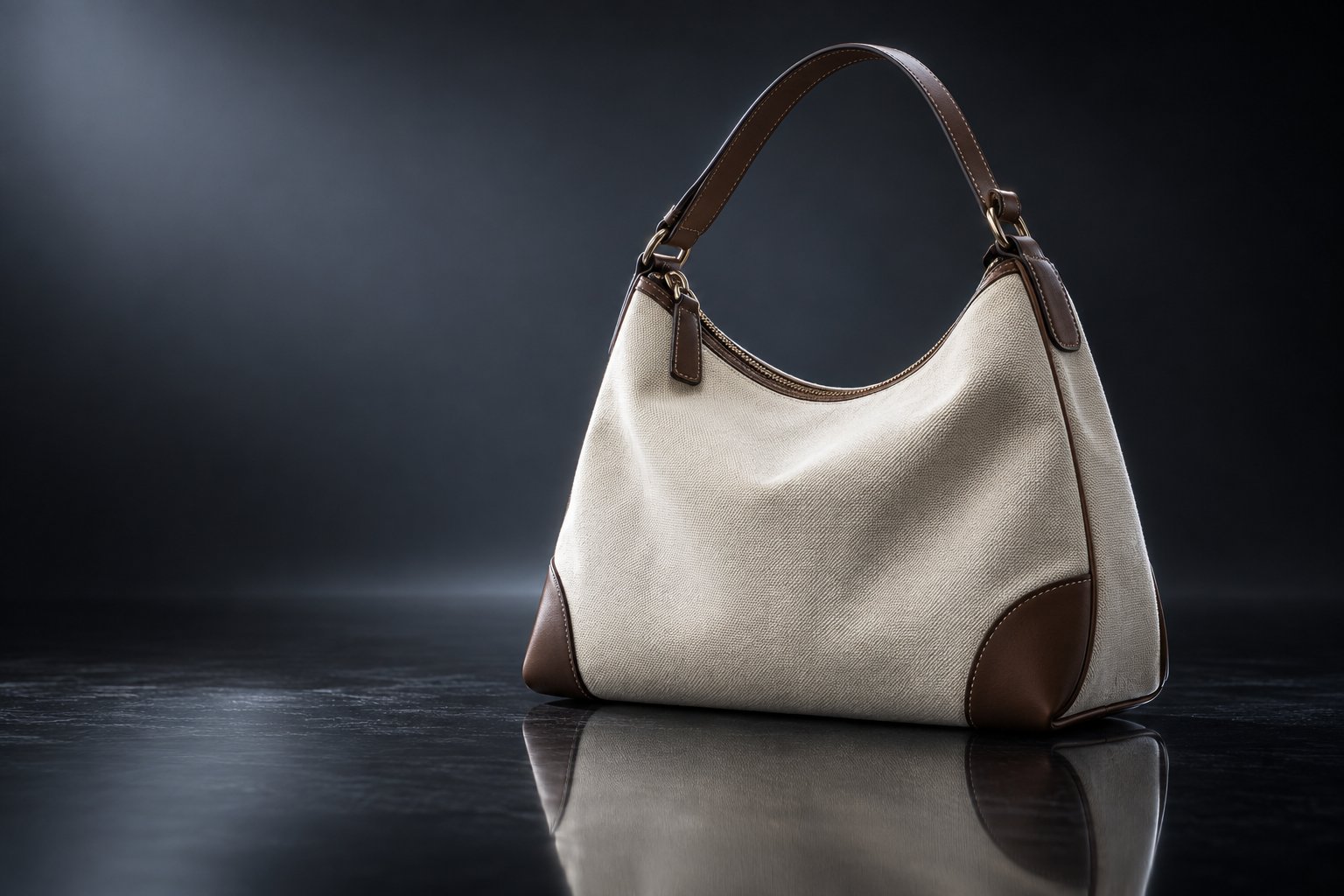
A briefcase in canvas sits in a useful slot between a nylon messenger and a leather attaché. It carries the structure of a work bag but the price flexibility of a textile product, which makes it easier to run seasonal color stories than leather. Canvas surface takes dye and printing well, so a briefcase program can follow a palette (natural beige, black, tan and similar tones) across a season without changing the base construction. That is the same logic already at work in Wellmax's Canvas Weekend Shoulder Bag — natural canvas with leather trim, top zipper, and color and trim options that can be adjusted to a price point.
For a retailer, that flexibility has a practical consequence: fabric weight, trim grade and hardware are all adjustable within one silhouette, so you can place a single briefcase shape at two or three price tiers by changing specification rather than redesigning the bag.
Fabric selection: weight, dye and trim
Fabric selection is where a canvas briefcase program is either easy or expensive. Three decisions drive the rest of the order.
Canvas weight behavior
Heavier canvas holds shape and resists slumping when the bag is half empty; lighter canvas drapes more and costs less in material. The published canvas shoulder bag confirms that canvas weight can be specified to match a seasonal palette, so treat this as a specification input, not a fixed attribute. Decide the target feel first — structured briefcase body versus soft tote-like carry — and let the supplier confirm which available weight supports that behavior. There is no standard weight that suits every briefcase; the usable range depends on the mill and the construction. Confirm with the supplier which weights are currently available for the silhouette you want.
Dye behavior and color consistency
Canvas dyes well, which is why it supports seasonal color stories. The retailer question is consistency: how close a second production run will match the first. Ask the supplier how color approval is handled — physical swatch approval, lab dip, or both — and how color is checked at production. Wellmax's canvas line confirms dye color can be specified to match a seasonal palette; the practical step is to approve color against a physical reference before bulk fabric is committed, and to keep that reference for reorders.
Leather trim grade and hardware
Trim is where briefcases gain their perceived value. On the published canvas shoulder bag, leather trim grade, color and hardware finish are all adjustable to the price point. That means a retailer can offer the same canvas body with a thinner, lower-grade trim at an entry tier and a heavier trim at a premium tier. Hardware finish — matte, brushed or polished — is a second independent lever. Both should be specified in the same conversation, because trim and hardware compete for the same visual weight on the bag. Zipper function and trim attachment are part of the workflow checks, so specify the zipper type and trim attachment method you want rather than leaving them implicit.
What drives batch price in canvas programs
Canvas briefcase batch pricing is structural, not arbitrary. Five variables move it, and each is a decision you control.
| Cost driver | What it changes | Retailer lever |
|---|---|---|
| Fabric weight | Material consumption per bag and body stiffness | Choose target feel, then confirm available weights with supplier |
| Trim leather grade | Trim panel cost and perceived tier | Specify grade, color and coverage (piping vs. full trim) |
| Hardware finish | Component cost and visual weight | Match finish to tier; confirm finish options before sampling |
| Branding method | Tooling and per-unit application cost | Screen printing, embossed leather patches, woven labels, branded packaging |
| Packaging | Unit preparation and carton configuration | Individual poly bag plus carton as standard; confirm any retail packaging |
Branding deserves a separate note. Screen printing suits flat canvas panels; embossed leather patches add a premium cue but introduce tooling; woven labels are the lightest-touch option. Choosing two of these rather than all three usually keeps the spec coherent and the batch cost tighter. Packaging is the last driver — the published line uses individual poly bag plus carton, and any change to that (retail-ready boxes, hangtags, inserts) should be confirmed with the supplier before the batch is quoted.
The retailer ordering playbook
Ordering canvas briefcases wholesale from China runs in a fixed sequence. Skipping a step moves cost or risk to a later stage where it is harder to fix.
- Assortment decision. Decide how many canvas briefcase SKUs you need and at what tiers. One silhouette at two trim levels is easier to manage than three separate designs. Fix color story and target retail price band here.
- Specification. Write the spec sheet: canvas weight behavior, dye color reference, trim leather grade and coverage, hardware finish, zipper type, branding method, and packaging. Use the published canvas bag's customization options as the menu — canvas weight and dye color to palette, trim grade/color/hardware adjustable to price point, branding via screen printing, embossed leather patches, woven labels and branded packaging.
- Sampling. Sampling is part of the OEM/ODM order cycle, and sample approval is required before mass production. Review the sample against your spec sheet, not against a general impression, and confirm color, trim and closure against your approved reference.
- Batch confirmation. Once the sample is approved, confirm the batch: quantity against MOQ, lead time, and final specification. The published canvas bag carries MOQ 500 pcs and a 30–35 day lead time; briefcase quantities and lead times should be confirmed per project.
- Inspection and Incoterms. Agree third-party inspection and Incoterms before shipment. These are set before production, not negotiated at the port.
Where retailers usually lose time
- Approving color on a screen rather than a physical swatch — reorders then drift.
- Adding branding methods after sampling, which forces a second sample round.
- Leaving packaging unspecified until quoting, which changes unit preparation cost late.
Fabric weights, prices, and briefcase-specific MOQ and lead times are project-dependent. Confirm current available weights, trim options and batch terms with the supplier before committing a purchase order.
FAQ
Is there a standard canvas weight for briefcases?
No. Weight is chosen against the target feel — structured versus soft — and against what the mill currently supplies for that silhouette. Confirm available weights with the supplier for your briefcase design.
Can I run the same briefcase in two price tiers?
Yes, by changing trim leather grade and hardware finish while keeping the canvas body and pattern. The published canvas bag confirms trim grade, color and hardware finish are adjustable to the price point.
What is the minimum order for a canvas briefcase program?
The published canvas shoulder bag carries MOQ 500 pcs. MOQ for a briefcase design depends on fabric, trim and branding tooling, so confirm your specific program with the supplier.
How long does production take?
The published canvas bag runs a 30–35 day lead time. Lead time for a briefcase order depends on final specification and branding method; confirm before placing the batch.
Should inspection and shipping terms be agreed early?
Yes. Third-party inspection and Incoterms are agreed before shipment, and they are easier to set before production than after.