A wheeled duffel bag looks simple on a spec sheet, but it is one of the harder softside pieces to buy well: the bag carries load through its base, its wheels take the abuse a suitcase frame would absorb, and small fabric or hardware decisions show up in warranty claims a season later. If you are building a retail line or a travel program around rolling duffels, the questions worth asking a supplier up front are about wheel architecture, fabric weight and how stress points are reinforced — not just price per piece. This guide sets out the comparison criteria, with concrete examples from Wellmax Luggage's published lines where they illustrate how a Fujian-based manufacturer with roughly 150,000 pieces of monthly output actually specifies softside construction.
Where Wheeled Duffels Fit in Retail and Travel Programs
Rolling duffels sell to a different buyer than upright luggage: overland travelers, dive and ski trips, sports teams, and retail shoppers who want one big bag instead of a set. That shapes three buying decisions:
- Capacity and format. Duffels typically run larger than checked spinners, so base construction and wheel load rating matter more than on a 24-inch case.
- Use environment. Rougher handling than airport carousels — gravel, stairs, vehicle loading — favors robust wheel housings and heavier base fabric.
- Program structure. Retail lines want color and branding options; corporate travel programs usually want one durable spec, ordered repeatedly.
Wheel Systems: What to Compare and Confirm
There is no single "best" wheel setup on a duffel; the two architectures trade durability against maneuverability, and the right answer depends on how your customers travel.
Two-wheel rail vs. four-wheel setups
| Criterion | Two wheels (inline/rail) | Four spinner wheels |
|---|---|---|
| Rolling direction | Pulls behind; wheels roll one axis | Rolls in any direction alongside the user |
| Load distribution | Weight concentrated on two contact points and a base rail | Spread across four corners |
| Exposure to impact | Wheels recessed into the base — generally protected | Corner-mounted wheels more exposed on rough ground |
| Best fit | Heavy expedition loads, uneven surfaces | Smooth floors, airport-heavy use |
Details worth confirming with any supplier
- Wheel housing. Is it a separate molded part, and does it sit flush into the base panel or bolt onto it?
- Axle and mounting. Steel axles with proper bearings, and how the axle attaches to the base — stitching alone into fabric is the failure point to ask about.
- Trolley handle. Tube gauge, locking stages, and whether the handle channel is reinforced where it enters the bag.
- Replacement parts. Whether wheels or handles can be supplied as spares for after-sales programs.
As a published reference point on how Wellmax specifies softside wheels: the Softside Spinner Luggage 24" runs four dual spinner wheels with a trolley handle on a polyester body — a four-wheel, airport-oriented spec. For a duffel program the wheel spec would be defined per project.
Fabric Choices: Polyester vs. Nylon Families
Fabric is the other half of the durability equation, and the two main families behave differently.
| Criterion | Polyester | Nylon (incl. ballistic) |
|---|---|---|
| Abrasion behavior | Good general resistance; holds color well | Higher strength-to-weight; ballistic weaves are very abrasion-resistant |
| Cost position | Usually more economical per yard | Typically higher material cost |
| Typical program use | Mid-market retail softside lines | Premium business and heavy-use pieces |
Pin down denier as a written spec. "Polyester" or "nylon" alone tells you little; 600D and 1680D behave very differently in the same design. Wellmax's published lines show this is a spec the factory works with at product level: the Ballistic Nylon Pilot Case is built in abrasion-resistant ballistic nylon with the fabric denier and shell color listed as published customization options. For a wheeled duffel, ask which denier is quoted for the body and separately for the base panel — a heavier base denier is a common and sensible duffel upgrade.
Coatings and backings. Ask what the fabric gets on the inside: a polyurethane or similar coating affects water resistance and stiffness. Confirm whether water resistance is claimed at the fabric level or the finished-bag level, because seams and zips change the answer. Verify these points per quotation.
Hardware and Stress Points Buyers Should Check
A duffel concentrates load at predictable points. On any sample, check:
- Handle-to-body anchor points — both the trolley handle channel and the carry handles; look for box stitching or bar tacks at each anchor.
- Zipper grade and zipper tape — large-capacity bags put real strain on long zip runs; ask which zipper grade is quoted.
- Base panel construction — reinforced material or a separate panel, and how it joins the side walls.
- Corner reinforcement — Wellmax's published pilot case, for example, lists corner reinforcement and hardware tone as specifiable options.
Wellmax's published workflow includes stress-point reinforcement and zipper function checks as built-in steps on its dedicated sewing lines — a reasonable baseline to expect, and worth verifying on your own pre-production sample regardless of supplier.
Bulk OEM Options and Order Terms
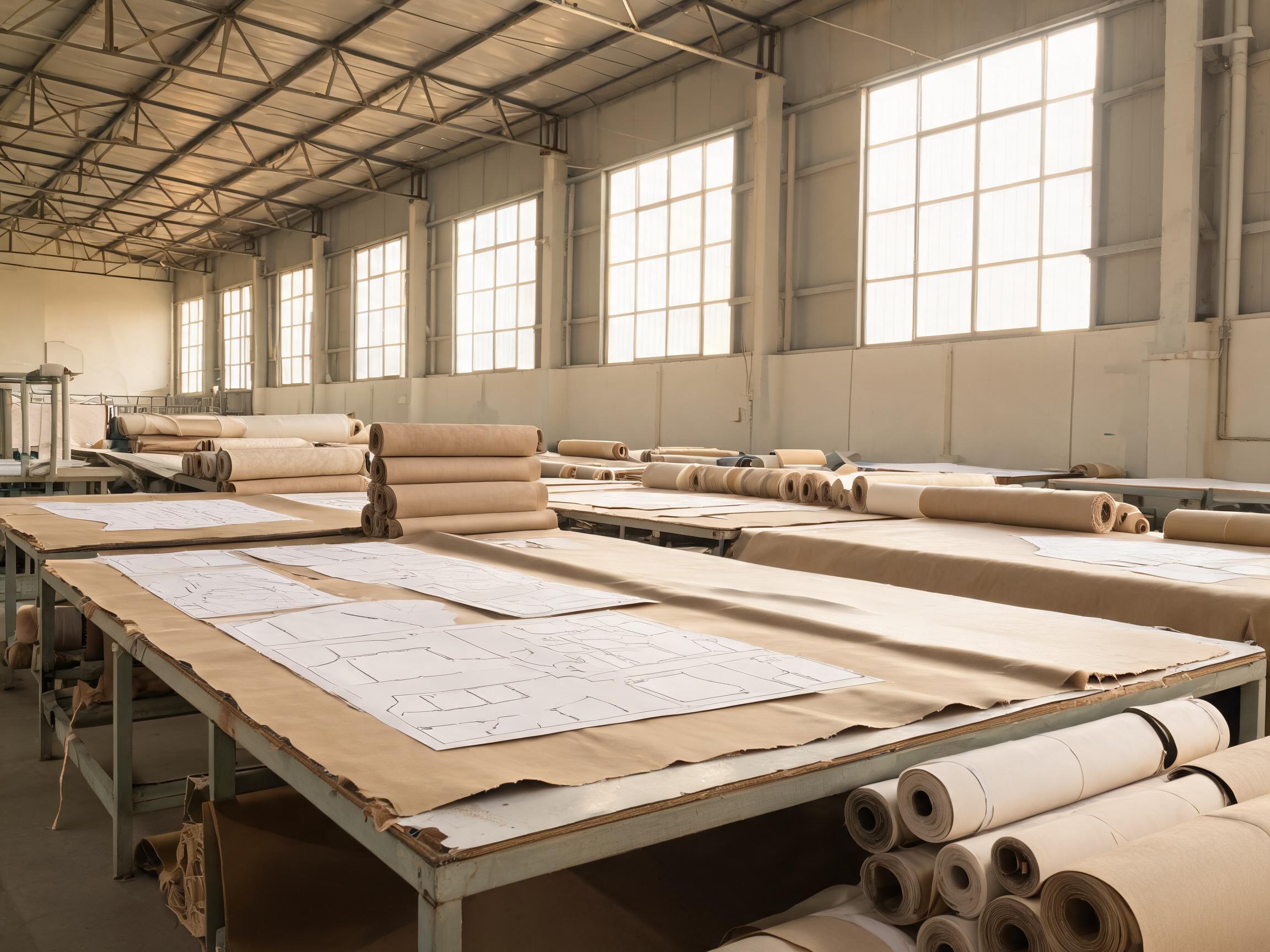
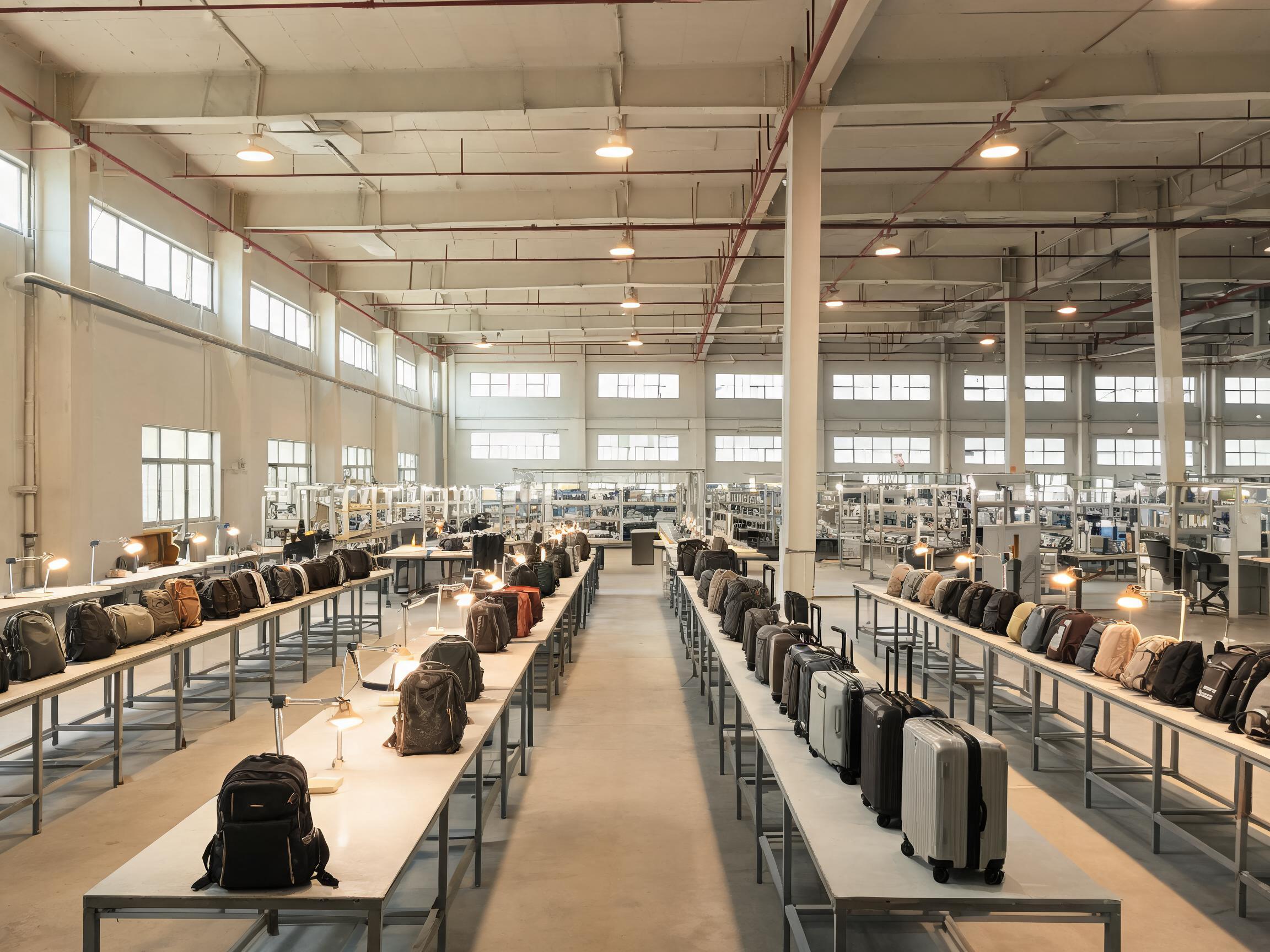
Wellmax Luggage is an OEM/ODM manufacturer founded in 2013 in Fujian, China, with about 320 employees in a 12,000 m² facility covering cutting, sewing, assembly and inspection under one roof. Sampling, tooling, mass production, quality inspection and export are handled in-house, with an export sales team managing inquiries, quotations and order follow-up.
For buyers scoping terms: the published reference points across Wellmax's luggage and bag lines are a 300-piece MOQ and a 30–35 day lead time. Those figures attach to the published products; a wheeled duffel is a project-specific SKU, so its MOQ, lead time and tooling costs are confirmed per project through quotation. Branding options visible on the published line — debossed or metal logos, woven labels and branded packaging quoted on request — indicate how OEM branding is structured, but each duffel program's branding scope should be quoted separately.
Quality Checks Before Shipment
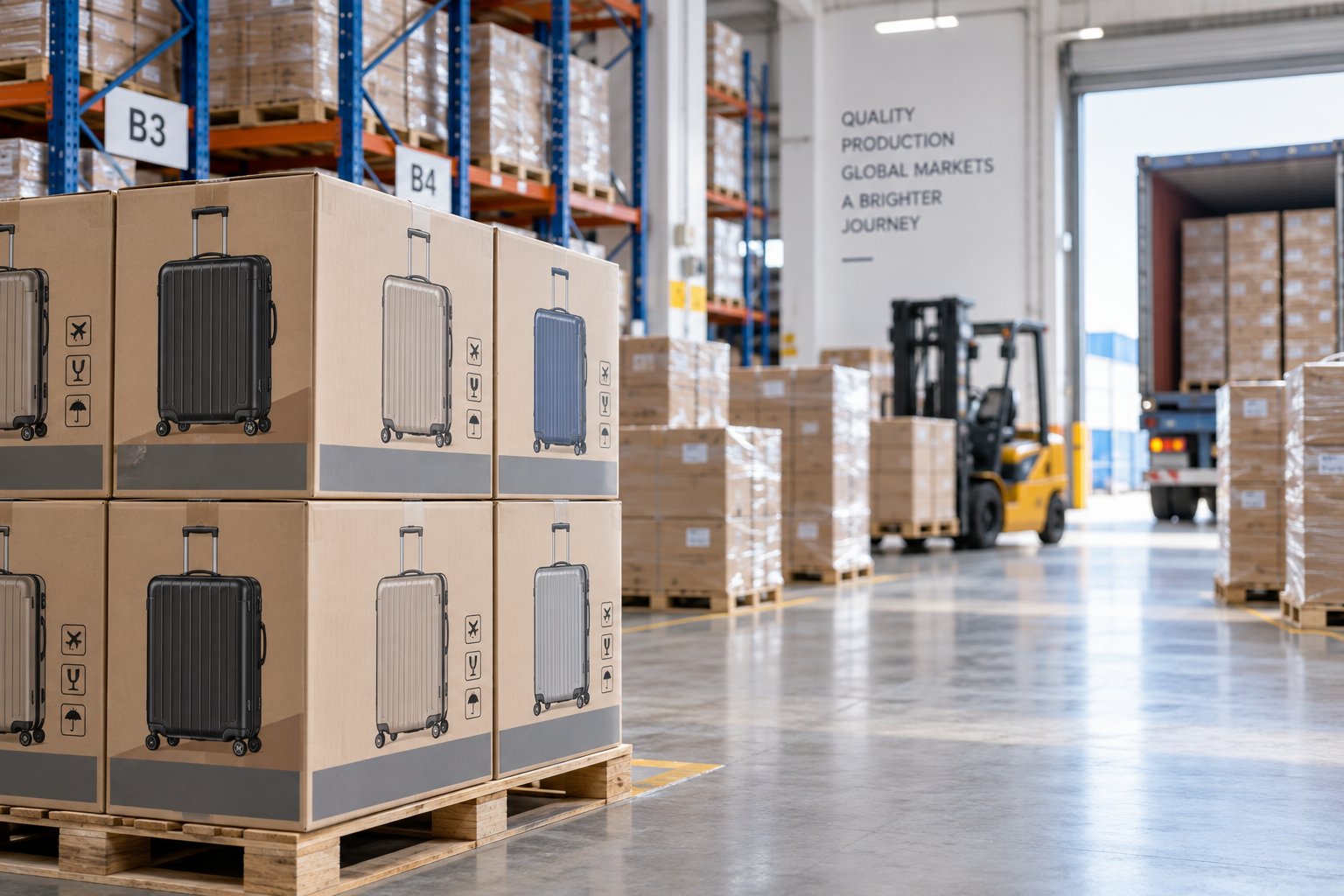
Whatever terms you agree, your inspection plan should match the duffel's specific failure modes. Wellmax's published workflow gives the baseline to build on: finished-product inspection before packing, zipper function checks and stress-point reinforcement during sewing, and cartons packed for export. A pre-shipment checklist for a rolling duffel:
- Roll each sampled unit loaded to representative weight; check wheel wobble and handle locking.
- Open and close every zip run fully, repeatedly, on sampled units.
- Pull-test handle anchors and strap attachment points on AQL-sampled pieces.
- Confirm carton packing spec matches your market's distribution.
On the systems side, the company operates under ISO 9001:2015 quality management and has completed a BSCI social compliance audit at facility level. Both are company-level facts — they describe how the factory runs, not how any individual product performs, which is what your sampling establishes.
FAQ
Is a two-wheel or four-wheel wheeled duffel bag better for a retail line?
Decide from your customer's terrain and load first, then think about after-sales: if wheels are the most likely warranty item in your program, ask the supplier up front whether matching wheel assemblies can be supplied as spare parts for the architecture you choose.
What fabric weight should I specify for a rolling duffel?
Denier is the number to negotiate, not the fabric name alone. Many softside lines work in the 600D–1680D range, but the right figure depends on price point and use case — get the quoted denier in writing, and consider a heavier base panel than body.
What are Wellmax's MOQ and lead time for wheeled duffels?
The published reference points on Wellmax's existing luggage and bag lines are 300 pcs MOQ and 30–35 days lead time. A duffel SKU is not among the published products, so its terms come from a project quotation.
Can I get my logo and packaging on an OEM duffel order?
Branding methods visible on the published line include debossed or metal logos, woven labels and branded packaging quoted on request. Confirm which apply to your duffel design and how they affect unit cost when you request the quotation.
Does ISO 9001 mean the duffels are certified?
No. ISO 9001:2015 at Wellmax is a company-level quality management system covering design, manufacturing and sales; BSCI is a facility-level social compliance audit. Neither is a product certificate, and any product compliance requirements for your market should be discussed separately.
Next Steps
If you are pricing a wheeled duffel program, send suppliers the same one-page spec — capacity, wheel architecture, body and base denier, zipper grade, branding method — so quotations are comparable. With Wellmax, reference the published softside lines such as the Softside Spinner Luggage 24" or Expandable Checked Luggage 26" to anchor the construction conversation, then ask the export sales team for a duffel-specific quotation covering MOQ, lead time and branding. A pre-production sample built to that spec is the cheapest way to find out whether the factory, the fabric and the wheels will hold up in your market.