
Every luggage buyer eventually asks the same question: why do two suitcases that look almost identical quote 40% apart? The answer is that wholesale luggage cost is not one number — it is the sum of shell material, hardware grade, closure system, wheel specification, order quantity and packing efficiency. A buyer who understands those drivers can read a quotation line by line, spot where a low price has been engineered, and compare suppliers on configuration instead of on a single headline figure. This guide breaks down the drivers using the real published configurations in the Wellmax Luggage range, produced by an OEM/ODM factory in Fujian, China serving buyers in more than 40 countries.
Key takeaways
- Shell material — ABS, polycarbonate or aluminum frame — is the largest single cost block in hard luggage.
- Hardware (closure, wheels, trolley handle, zipper grade) is where a headline price is most often disguised.
- Published MOQs: 300 pieces for trolley cases, 200 sets for the aluminum-frame set; lead time 30–35 days standard, 35–40 days for the set.
- Landed cost per unit depends on your size mix as much as on the unit price — ask for cartons-per-container data per size.
Price driver 1: shell material
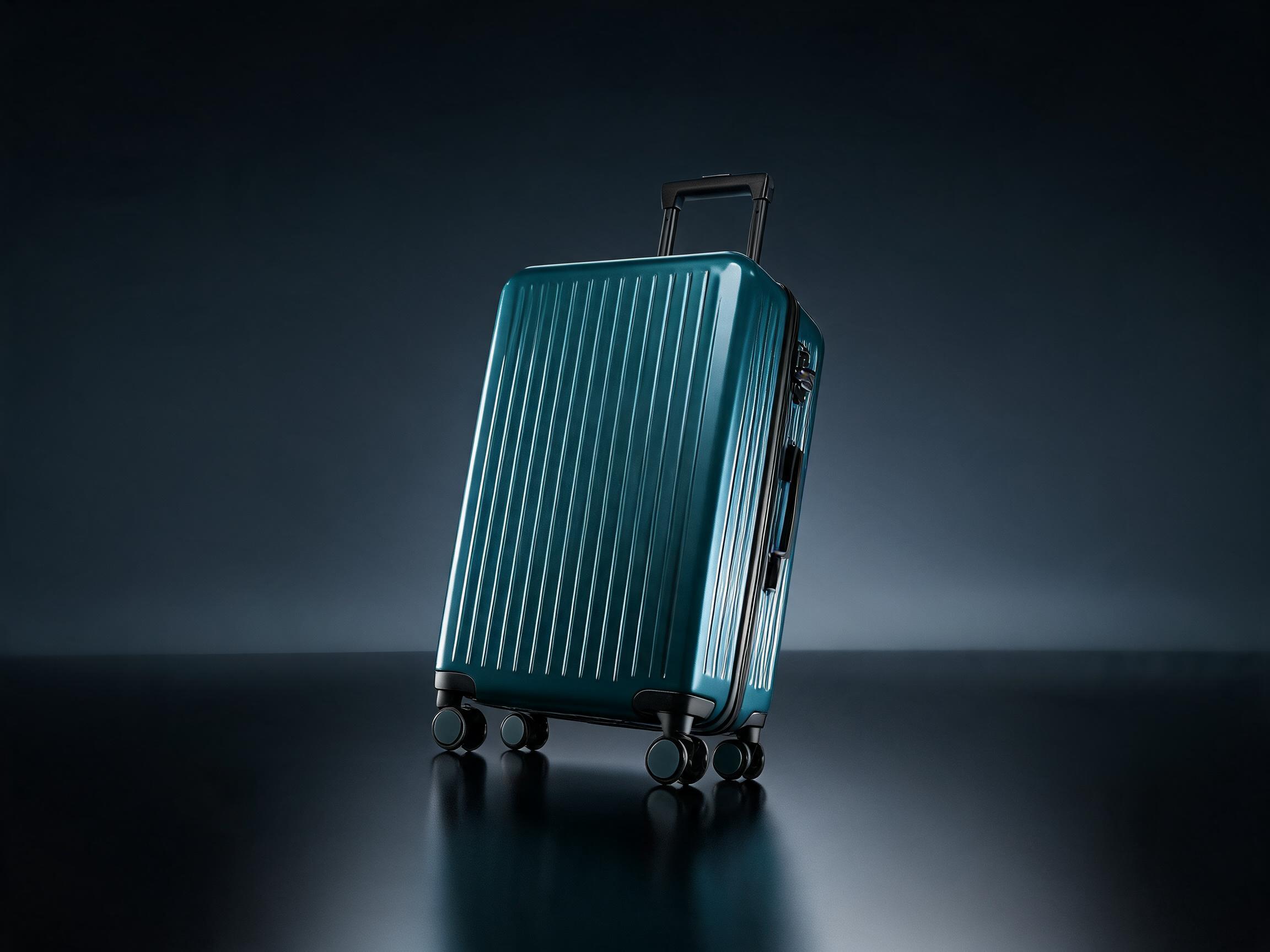
Shell material is the largest single cost block in hard luggage, and the Wellmax range spans the three standard platforms:
- ABS — the cost-efficient, lightweight platform, used in the Lightweight ABS Cabin Trolley 20". ABS keeps the empty weight low and the unit cost accessible, which is why it anchors entry-level and mid-market cabin programs.
- Polycarbonate (PC) — the impact-resistant upgrade, used in the Polycarbonate Cabin Luggage 22" and the Hardshell Trolley Case 28". PC absorbs impacts on the baggage belt better than ABS, and a textured PC shell conceals minor scuffs, which protects resale condition and reduces returns.
- Aluminum frame + ABS shell — the premium structural platform in the Aluminum Frame Checked Luggage Set, where a rigid frame and reinforced metal corners carry the protection instead of shell thickness alone.
For softside programs, fabric replaces the shell discussion: the Softside Spinner Luggage 24" uses polyester, which flexes to fit more into storage and avoids shell molding entirely — a different cost structure from any hard case.
When comparing quotes across suppliers, confirm which material platform each price assumes. A "PC" price on a quote that actually specs ABS is the most common configuration gap in wholesale luggage.
Price driver 2: hardware and closure
Hardware is where a headline price is most often disguised. Within the published range, the closure systems run from a standard zipper, to a zipper with integrated TSA lock on the 22" PC cabin case, to a full frame with integrated lock on the aluminum-frame set. Each step up adds cost but also changes what the product can claim at retail: a TSA-lock closure supports US-bound travel retail; a framed case supports premium positioning.
Wheels follow the same logic. The range moves from four single spinner wheels on the 20" ABS cabin trolley to four double spinner wheels on the 28" PC case and the 24" softside. Double spinners roll more smoothly under load, and their cost difference is real — which is why quotes should specify wheel type explicitly. Telescopic trolley handle grade is the third hardware variable, and zipper grade the fourth.
Wellmax lists wheel type, trolley system and zipper hardware as adjustable specification points at OEM level, so a buyer can hold the shell constant and trade hardware up or down to hit a price point. That is exactly how tiered product families get built from one development.
Price driver 3: size and capacity
Capacity scales cost more than linearly, because material use, frame sections, wheel sets and interior all grow together. The published capacities in the range: approximately 38 L for the 20" ABS cabin trolley, up to approximately 95 L for the 28" PC spinner, with the 22" PC case, the 24" softside and the two-piece aluminum set covering the middle. For assortment planning, the efficient structure is one cabin tier and one checked tier from the same material platform — reusing shell development and hardware across sizes keeps the second SKU's cost well below the first's.
| Published model | Shell platform | Closure | Wheels | Approx. capacity |
|---|---|---|---|---|
| Lightweight ABS Cabin Trolley 20" | ABS | Standard zipper | Four single spinner | ~38 L |
| Polycarbonate Cabin Luggage 22" | Polycarbonate | Zipper with integrated TSA lock | Spinner | Mid-size cabin |
| Softside Spinner Luggage 24" | Polyester softside | Zipper | Four double spinner | Mid-size checked |
| Hardshell Trolley Case 28" PC Spinner | Polycarbonate | Zipper | Four double spinner | ~95 L |
| Aluminum Frame Checked Luggage Set | Aluminum frame + ABS shell | Frame with integrated lock | Spinner | Two-piece set |
MOQ and order tiers
The published MOQ structure in the Wellmax range is 300 pieces for trolley cases and 200 sets for the aluminum-frame luggage set, with lead times of 30–35 days standard and 35–40 days for the set. These are entry quantities for OEM production; the tier breaks above them are commercial terms set in the quotation.
The practical method for a buyer: request the same configuration quoted at the MOQ, at two to three times the MOQ, and at your annual program volume. The shape of that grid tells you where the factory's efficiency steps are. If the price barely moves between tiers, material sourcing is the lever; if it drops sharply, the fixed costs — tooling, setup, consolidation — are being amortized and committing to the next tier may fund a hardware upgrade instead.
Sample-to-container economics
Two stages define the economics between the first sample and the loaded container.
Sample stage: sampling is a formal step in the Wellmax OEM/ODM order cycle — a pre-production sample is built against your target configuration (shell, hardware, interior layout, branding) and mass production starts only after approval. The sample should be quoted with the same hardware grade and wheel type as the intended bulk order; a discounted sample with upgraded hardware is not a valid cost reference for the shipment.
Container stage: packaging is an individual poly bag plus export carton across the published range, and nested hard cases pack efficiently relative to softside, which holds shape in transit. Capacity per container varies directly with case size: a container of 20" cabin trolleys holds far more units than the same container of 28" cases, which is why your landed cost per unit depends on the size mix as much as on the unit price. Before committing, ask the factory for the packing data — units per carton and cartons per container — for each size in your program, and confirm any third-party inspection requirement at the same time so it is planned into the schedule rather than added at the end.
How to read a wholesale luggage quotation
- Shell material and thickness target, per size.
- Closure system: zipper grade, TSA lock, or frame with integrated lock.
- Wheel type: single or double spinner, and trolley system grade.
- Interior: lining color, divider layout and packing straps.
- Decoration: molded logos, printed panels or metal plates, quoted as a separate line.
- Packing data per size and the container plan for your size mix.
- Lead time against your season: 30–35 days standard, 35–40 days for the framed set.
Wellmax produces trolley cases, backpacks, business bags and handbags in a 12,000 m² facility of roughly 320 people, with shell molding, assembly and finished-product inspection under one roof — wheel, handle, zipper and lock function checks are built into the pre-packing workflow. Quality management is certified to ISO 9001:2015 and the facility is audited under BSCI.
Frequently asked questions
What is a realistic MOQ for wholesale luggage?
In the published Wellmax range, 300 pieces for trolley cases and 200 sets for the aluminum-frame luggage set. Smaller trial quantities can be discussed with the export sales team.
Why does polycarbonate cost more than ABS?
PC is the impact-resistant platform: it absorbs baggage-handling shocks and, with a textured finish, conceals scuffs that would show on softer shells. ABS is lighter in cost and weight and anchors entry-level cabin programs. Both are open platforms in the range, and the right choice depends on your market segment rather than on a universal ranking.
How do I compare two supplier quotes fairly?
Normalize the configuration first — shell material, closure, wheel type, handle grade, interior and packaging — then compare unit prices at the same quantities, including packing data per size. A lower price on a weaker hardware spec is not a lower cost.
Next step
Choose the material platform and size mix your market needs from the range above, then send your target configuration, quantities and destination through the inquiry form on this site. The export sales team will return a configuration-matched quotation with tiered pricing and a sampling plan.