Weekender programmes go wrong in three places: the bag is the wrong size for the trip it is sold for, the handles are attached for the empty weight rather than the loaded weight, and the carton plan is discovered after the order is cut. All three are decisions, not accidents.
This guide covers carry weekenders — soft bags with handles and a shoulder strap. If your programme needs wheels and a telescopic handle, that is a different build with its own hardware, testing and carton considerations, and should be specified separately.
Key takeaways
- Fix the trip and the internal dimensions before you look at a pattern; litres alone compare SKUs but don't specify a bag.
- Canvas buys structure and print quality; nylon buys weight and water resistance, and needs interlining to stay upright.
- The handle load path, not the handle itself, decides whether a weekender survives a loaded carry.
- Carton cube and units per carton set your FCL-versus-LCL break point — get the numbers in writing before you commit.
In this guide
- Start from capacity, not from the pattern
- Canvas versus nylon bodies
- Handles, straps and the load path
- Wholesale structure: quantity, colours, sampling
- Loading: FCL versus LCL, and the data you must request
- FAQ
- Choosing your base
Start from capacity, not from the pattern
Define the trip before the dimensions
A weekender is sold against a use case, so the use case has to come first. Two common positions:
- One-to-two night business or gym travel — a change of clothes, a laptop, a pouch of cables and shoes. Smaller body, more structure, cleaner lines.
- Two-to-three night leisure travel — clothing for several days, a laptop or tablet, and a bulky item such as a jacket or shoes. Larger body, softer construction, more give.
Write the packing list, then ask the factory for the internal dimensions that hold it. Volume in litres is a useful comparison number between your own SKUs but a poor specification on its own, because a tall narrow bag and a shallow wide bag of equal volume behave differently on a luggage rack.
Check it against cabin rules
If the bag is sold as carry-on, verify the dimensions against the cabin limits of the airlines your market actually flies, and leave margin for handles and hardware that stick out beyond the body. Cabin allowances vary by carrier and change over time, so treat any single number as a starting filter, not a compliance guarantee, and confirm the current limits for your target routes.
What Wellmax publishes, and what it does not
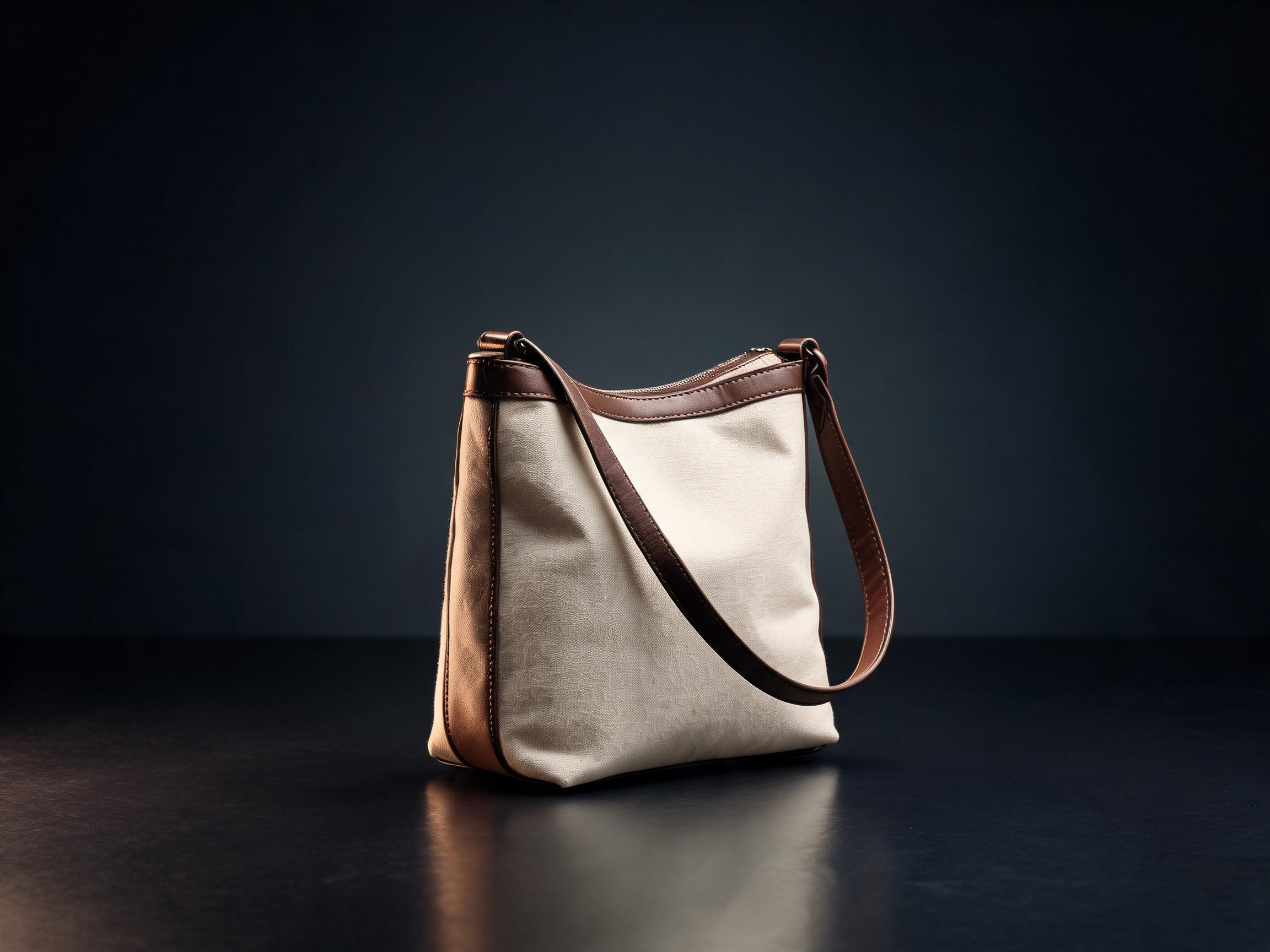
The published Canvas Weekend Shoulder Bag base is documented by material and construction — natural canvas with leather trim, top zipper closure, shoulder strap, in natural beige, black and tan — but not by finished dimensions or litre capacity. Those have to be specified for your programme and confirmed at sampling. The same applies to carton data, which is generated from the finished bag.
Canvas versus nylon bodies
Canvas: structure, dye and print
Canvas gives a weekender its shape. The fabric has body, so the bag stands up on a bench and holds a square silhouette without heavy internal board. It takes screen printing and dye well, which makes it the natural choice for co-branded, promotional and lifestyle retail programmes.
Two cautions. First, dye lots: cotton canvas shifts between production runs, so specify a lab dip and keep a signed physical reference — a digital swatch will not settle a bulk dispute. Second, weight: ask for the canvas weight you are being quoted, because "canvas" covers a wide range, and the same pattern in a light and a heavy canvas behaves like two different bags.
Leather trim is where the price ladder lives on a canvas weekender. Trim grade, trim colour and hardware finish can all be adjusted to a target price point, and each one visibly changes how the bag reads at retail.
Nylon: weight, water resistance and colour
Nylon is lighter and more forgiving in transit. It accepts a wider colour range, packs flatter for shipping, and can be specified as water-resistant — Wellmax's travel backpack base, for example, is documented as water-resistant nylon. The trade-off is structure: a soft nylon weekender needs interlining and a reinforced base panel to avoid collapsing when half loaded, and it shows creases where a canvas bag would simply fold.
A practical answer many buyers land on: canvas for the lifestyle and gifting side of the range, nylon for the travel and commuter side, with shared hardware so the two still look like one collection.
Handles, straps and the load path
A weekender is carried loaded, often by one handle, sometimes over a shoulder for a long walk to a gate. Design for that, not for the flat-lay.
- Handle attachment. The strongest arrangement runs webbing down the body wall and stitches it through a reinforced panel, so the load spreads into the shell. Handles attached only at the rim concentrate all the force on two small stitch clusters.
- Handle length. Long enough for a gloved hand or a shoulder, short enough that the bag does not drag. Agree the drop at sampling with a loaded bag, not an empty one.
- Shoulder strap. Detachable straps need clips rated for the loaded weight, plus a pad if the bag is meant to be carried any distance. Wellmax's published inspection flow for its canvas base includes zipper function and trim attachment checks before packing — ask your supplier where handle and strap load is verified in their line.
- Base reinforcement. A loaded weekender lands on the floor repeatedly. A reinforced or bar-tacked base takes the wear instead of the seam.
Wholesale structure: quantity, colours, sampling
Wellmax publishes 500 pieces as the MOQ for the canvas weekend base, with a 30–35 day lead time after sample approval and order confirmation, packed in individual polybags and cartons. That is the entry point for the style; three things are settled commercially rather than published:
- Minimum per colour. A three-colour order at 500 total is a different run from 500 in one colour.
- Tiered pricing. The site publishes no tier table, so any step pricing by quantity has to be confirmed with the sales team against your actual order — do not build a retail margin model on an assumed discount curve.
- Branding and packaging. Screen printing, embossed leather patches, woven labels and branded packaging are all quoted per project, and each adds its own tooling or set-up step.
Sampling is part of the OEM/ODM cycle: a physical pre-production sample in final fabric, trim and branding, signed and retained, is what protects both sides when the bulk arrives.
Loading: FCL versus LCL, and the data you must request
Ocean freight economics for a soft bag are decided by carton cube, not by unit weight. Before you commit to a quantity, request from the factory, in writing:
- carton dimensions and gross weight
- units per carton, inner pack and polybag spec
- whether the bag ships flat or stuffed
- carton test standard and marking requirements
A worked example — illustration only
Take a carton of 60 × 40 × 30 cm, which is 0.072 m³. A 40HQ container is nominally around 68 m³ of usable space. At perfect cube that is roughly 940 cartons; in practice plan on 85–90% utilisation to allow for pallets, door clearance and irregular stacking, so about 800–850 cartons. At 10 units per carton that is 8,000–8,500 bags; at 20 units per carton, double it.
FAQ
What size weekender sells best?
There is no universal answer, but the split above is the reliable starting frame: smaller and more structured for business and gym use, larger and softer for two-to-three night leisure travel. Compare against what your market already buys rather than against a competitor's hero SKU.
Can the weekender be customised with my logo?
Yes. Screen printing, embossed leather patches, woven labels and branded packaging can be quoted. Approve artwork on the final material, because print on canvas and embossing on leather both shift colour and depth.
Is a water-resistant version available?
Water resistance has to be defined: coated shell, water-repellent finish, taped seams or a tight weave are different things. Tell the factory which one your market needs and have it written into the specification.
How long does production take, and what about a trial order?
Published lead time is 30–35 days after sample approval and order confirmation, depending on volume and schedule. For a smaller trial run, discuss options with the sales team, since 500 pieces is the published MOQ for the canvas base.
Can I combine a weekender and a backpack in one container?
Yes, and it is often the sensible way to fill a container with a balanced range. Ask for cartons to be packed and marked by SKU so the container can be unloaded by store or channel without repacking.
Choosing your base
For a canvas-led wholesale programme, start from the Canvas Weekend Shoulder Bag: natural canvas with leather trim, top zipper, shoulder strap, 500-piece MOQ. If your range also needs a carry-on companion with a luggage pass-through and a padded laptop compartment, the Convertible Travel Backpack 35L runs on the same 500-piece MOQ and the same 30–35 day window.