
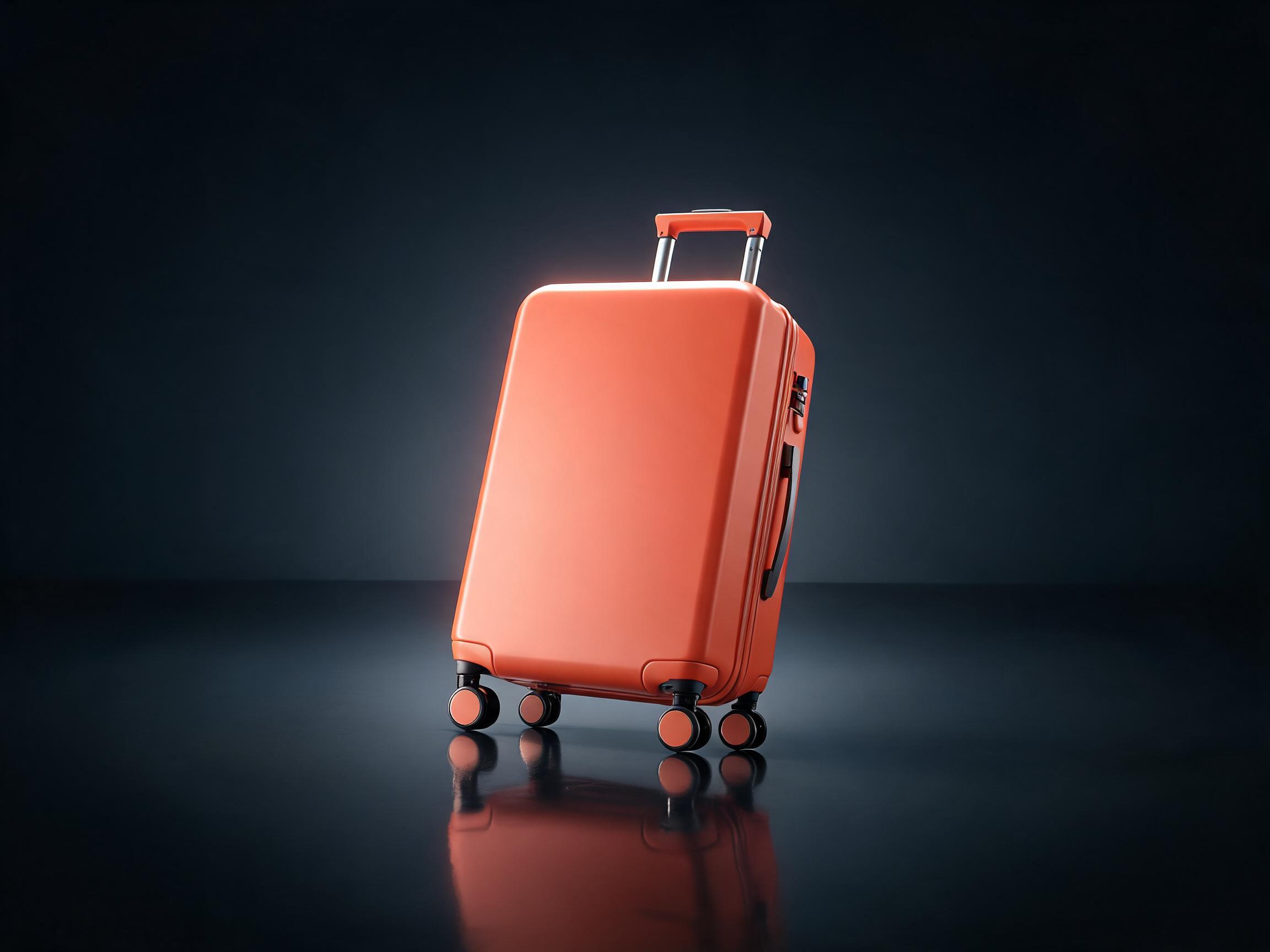
If you are planning a retail cabin-bag line, underseat luggage is one of the few formats where sizing decisions can make or break the program. Get the dimensions wrong and customers get gate-checked; get them right and you have a product that works alongside, not instead of, a standard carry-on trolley. This article covers how to size an underseat program against real airline rules, how to choose between softside and hardside construction, and what a low-MOQ OEM order in this category realistically looks like.
What "underseat" means for a retail program
An underseat bag is designed to fit in the space beneath the seat in front of the passenger. That positioning gives it a distinct retail story: the traveler keeps a laptop, documents, medications and valuables within reach during the flight, rather than buried in an overhead bin. It also means the bag complements a larger carry-on trolley in the same purchase — a two-piece travel set rather than a substitute for one.
For retail buyers, this matters commercially. Cabin trolleys are a crowded category with heavy price competition. A well-sized underseat line, merchandised next to cabin trolleys, gives a program a differentiated SKU with a clear use case and a lower price entry point.
Sizing to airline cabin rules: the honest reference points
There is no single universal "underseat size." What exists is a set of public reference points you can use to frame a target spec:
- IATA's published recommendation for a maximum-size cabin bag is about 56 x 45 x 25 cm.
- Many full-service carriers commonly accept cabin bags of about 55 x 40 x 20 cm.
- Under-seat spaces are smaller than overhead-bin limits and vary by aircraft type and airline. The practical ceiling for an underseat format sits meaningfully below even the 55 x 40 x 20 cm figure, and wheels, handles and side bulges all eat into usable clearance.
Two steps are non-negotiable before you lock a spec. First, verify current baggage policies with each of your target airlines — policies change and vary, and published dimensions are not enforced identically at the gate. Second, check a physical sample against the actual cabin on your target routes. A dimension that looks correct on paper can fail on a seat with a fixed metal leg or an in-flight entertainment box underneath.
Practical implication: keep the body footprint compact, and treat wheels, trolley housings and exterior pockets as part of the true external dimension, not as extras.
Softside vs hardside for the underseat format
Both constructions work in the underseat category, but the trade-offs sharpen as the footprint shrinks.
Softside
A fabric shell flexes when the bag is pushed into a tight space, which helps in real under-seat conditions. Fabric fronts also allow exterior pockets — useful for the items a traveler needs at security: laptop, liquids bag, boarding pass. The factory's softside program is built on polyester construction, as in the Softside Spinner Luggage 24" (polyester shell, four double spinner wheels, telescopic handle, zipper closure, navy/black/grey), which shows the construction language a softside underseat style would draw from.
Hardside
A hardshell holds its shape, protects contents from compression, and wipes clean — attractive for corporate and airline-channel buyers. The downside is rigidity: a hard case cannot squeeze into an awkward space. Weight budget also matters more as the footprint shrinks, since every gram of shell and hardware is a larger share of a small bag's total. Wellmax's hardshell capability covers ABS and polycarbonate cabin trolleys — for example the Lightweight ABS Cabin Trolley 20" (approx. 38 L, four spinner wheels, zipper closure) and the Polycarbonate Cabin Luggage 22" (zipper with TSA lock) — both established as cabin-size hardshell programs.
| Criteria | Softside underseat | Hardside underseat |
|---|---|---|
| Fit in tight spaces | Flexible; fabric gives when pushed in | Rigid; needs accurate clearance margin |
| Access at security | Exterior pockets for laptop and liquids | Single main compartment access |
| Content protection | Good; compressible | Better against compression; easy-clean surface |
| Weight sensitivity | Typically lighter build options | Shell weight matters more in a small footprint |
What to specify with an OEM
An underseat style is a small bag with demanding geometry, so the spec sheet should cover more than color and size:
- External dimensions and weight. State overall dimensions including wheels and handle housing, and a target empty weight.
- Construction. Polyester softside, ABS, or polycarbonate hardshell, with shell thickness or fabric denier where relevant.
- Closure. Zipper spec and lock type — for example, a TSA lock on hardshell cabin cases, as used on the Polycarbonate Cabin Luggage 22".
- Wheels and handle. Configuration for a small footprint; wheel and handle function checks are built into Wellmax's trolley line workflow, and zipper function checks are standard on sewing lines.
- Interior layout. Sleeve placement, divider position and pocket count, matched to the airline-channel use case.
- Branding. On hardshell lines, the factory supports molded logos, printed panels, hang tags and branded packaging. On bag lines: woven labels, embroidery and screen printing.
Low-MOQ OEM options: what comparable programs look like
Wellmax is an OEM/ODM luggage and bag manufacturer in Quanzhou, Fujian, founded in 2013, with about 320 employees in a 12,000 m² facility covering cutting, sewing, assembly and inspection — plus shell molding for hardshell programs and frame assembly for aluminum-frame lines. Capacity is roughly 150,000 pieces per month, serving buyers in more than 40 countries. Sampling, tooling, mass production, quality inspection and export run in-house, so a program moves from sample approval to shipment with one partner.
The factory does not currently list a dedicated underseat SKU; the format would be developed through its in-house design and development studio. What you can use as reference points are the published terms of comparable cabin-size programs:
| Program | MOQ | Lead time (after sample approval) |
|---|---|---|
| Lightweight ABS Cabin Trolley 20" (approx. 38 L, spinner wheels) | 300 pcs | 30–35 days |
| Polycarbonate Cabin Luggage 22" (TSA lock zipper) | 300 pcs | 30–35 days |
| Softside Spinner Luggage 24" (polyester, double spinners) | 300 pcs | 30–35 days |
| Aluminum-frame checked set | 200 sets | 35–40 days |
These are reference points for comparable programs, not a quote. Exact MOQ, tooling cost and lead time for a new underseat style are confirmed at inquiry after sampling, since they depend on construction, hardware and branding depth.
Frequently asked questions
Does the underseat bag replace a carry-on in a retail assortment?
No. It merchandises best as a companion SKU. Buyers typically build it into a set with a cabin trolley, since the two cover different moments of the same trip.
Is a bag that meets the 55 x 40 x 20 cm reference automatically acceptable under the seat?
Not automatically. That figure is a common cabin trolley limit. Under-seat clearance is smaller and varies by aircraft, so a physical fit check against the target cabin is essential.
Can the factory's ISO 9001:2015 certification be printed as product certification on the bag?
No. ISO 9001:2015 covers the company's design, manufacturing and sales systems, and BSCI is a factory-level social-compliance audit. Neither is a product-level certification of a specific SKU; any product claims must be handled separately.
What quality checks apply to a new underseat style?
Finished-product inspection before packing is standard. On comparable trolley lines, wheel, handle and zipper function checks are built into the workflow, and sewing lines include zipper function and strap strength checks. The exact checkpoint list for a new style is agreed during sampling.
How does tooling work for a hardshell underseat model?
Hardshell programs use in-house shell molding, so a new shell shape requires tooling. Tooling scope and cost are quoted after the design is sampled, alongside the confirmed MOQ.
Send your target external dimensions, weight budget, preferred construction and branding requirements, and the sampling team will prepare a first sample and confirm MOQ, tooling and lead time for your underseat luggage program at quotation.