If you are sourcing tote bags for resale, the single most consequential decision is not the fabric or the print method — it is which supplier role you buy from. Factory-direct, trading company, and brand supplier each exist for different reasons, and each carries a different pricing logic, a different level of supply stability, and a different impact on your margin.
This article compares the three roles on the factors that matter for repeat orders: how price is built, how stable supply is across restocks, how replenishment is handled, how deep communication goes, and what all of this means for the margin you keep.
Key takeaways

- Factory-direct suits buyers who value cost control and can commit to a real production run (MOQ from 300 pcs for the Laptop Tote Briefcase, 500 pcs for the PU leather totes listed below).
- Trading companies reduce sourcing effort but add a margin layer between you and production; confirm who actually makes the goods.
- Brand suppliers give you ready-made designs and faster market entry, but leave you less room to differentiate on cost.
- Restock clauses are the least-read part of a supply agreement and the most expensive to get wrong. Get replenishment terms in writing.
When each supplier type makes sense
A factory-direct supplier makes sense when you have a defined product, a real order volume, and a need to protect margin over repeated cycles. You are buying production capacity, so you need to be able to fill it — typically at MOQ levels such as 300 pieces for a laptop tote briefcase or 500 pieces for PU leather tote handbags, with lead times around 30–35 days after sample approval.
A trading company makes sense when you are sourcing a mixed basket of bags from multiple factories and want one point of contact, or when you are testing a new category and do not yet want to commit to a factory relationship. You trade some margin for convenience and reduced coordination work.
A brand supplier — a company selling its own branded tote line — makes sense when you need a proven design, packaging, and market-ready product quickly, and when your business model is built on reselling established designs rather than owning the product specification. Note that these are roles, not always separate companies: the same business may operate as a brand seller in one market and take custom orders in another, so judge by the actual transaction terms you are offered, not the label on the website. A practical check: ask whether the seller accepts custom colors, linings and hardware, and whether it can provide a written specification sheet — custom-capable suppliers will, pure brand resellers usually will not.
How pricing logic differs across the three roles
Factory-direct pricing is built from material, labor, and overhead. When you buy from a manufacturer, the quoted price reflects the cost of PU leather, lining, hardware, cutting, sewing, assembly, and inspection. Because the factory controls production, the quote typically does not include a separate intermediary markup layer — although a small order can still carry a higher unit cost than a trading company's consolidated order. What you gain is a more traceable price structure, so you can usually ask what drives the number.
Trading company pricing adds a sourcing and coordination layer. The trading company buys from one or more factories, handles communication and logistics, and prices the goods to cover its own costs and margin. That layer is real work, but it is also a real cost. Ask the trading company to identify the production factory and confirm whether they hold stock or place fresh orders for your run.
Brand supplier pricing is retail-oriented. The price includes the brand's design, packaging, and market positioning, not just the bag. You are paying for a finished product with an established identity, which can be valuable if that identity sells — but it leaves less room for you to build your own margin through cost control or differentiation.
Supply stability and restock handling
For repeat orders, stability matters more than the first unit price. A factory-direct supplier with in-house cutting, sewing, assembly, and inspection under one roof — such as a facility covering 12,000 m² with roughly 320 staff and output around 150,000 pieces per month — can typically schedule a restock run without re-sourcing materials or re-negotiating with a third party. That does not guarantee identical lead times on every restock, but it removes one layer of uncertainty.
A trading company's restock stability depends on its relationship with the production factory. If the trading company places your reorder with the same factory and the same specification, continuity is usually good. If it has switched factories or is sourcing from stock, the spec can drift. Ask how reorders are handled and whether the production source stays the same.
A brand supplier's restock depends on its own inventory and production planning. You are buying from their stock or their schedule, not yours. That can be fast when stock exists and slow when it does not.
Restock clauses to confirm in writing
- Whether the reorder is produced to the same specification and from the same production source as the original order.
- Whether the original sample or a retained reference sample is kept for reorder comparison.
- The lead time for a reorder versus a first order, stated as a range rather than a single date.
- What happens if a material (lining, hardware, PU color) becomes unavailable — substitution rules and approval steps.
- Inspection terms for reorders: whether finished-product inspection before packing applies to every run.
Where a supplier cannot state a restock commitment in writing, treat that as a checkpoint: ask for the specific term and confirm it in the agreement rather than assuming it.
Communication depth and what it means for margin
Factory-direct communication goes deep because the people answering your questions are close to production. Changes to lining, hardware, or color are discussed with the people who will execute them. That shortens the feedback loop when something needs adjusting between sample and mass production, and it reduces the risk of a costly mid-run surprise. You can verify this before committing: ask who handles your account during sampling and bulk, whether the same engineering/QC contact follows the order through both stages, and whether changes require written confirmation.
Trading company communication is broad but indirect. A good trading company filters and translates, which can save you time. The risk is that technical questions pass through a layer and come back simplified. For straightforward repeat orders this is usually fine; for customization changes it can slow decisions.
Brand supplier communication is product-oriented. They can tell you what is available and how it ships, but they are not set up to discuss how the bag is made or to adjust the build for your margin. If your business depends on customization — color, lining, hardware — a brand supplier is usually not the right fit.
Comparison table: supplier roles side by side
| Factor | Factory-Direct | Trading Company | Brand Supplier |
|---|---|---|---|
| Pricing logic | Built from material, labor, overhead; usually no separate intermediary markup layer | Factory cost plus sourcing and coordination margin | Retail-oriented; includes brand, design, packaging |
| Supply stability | Depends on factory capacity planning; in-house production reduces re-sourcing risk | Depends on relationship with production factory; can vary if source changes | Depends on the brand's own inventory and schedule |
| Restock handling | Reorders scheduled against factory production; confirm spec continuity in writing | Reorders placed through the trading company; confirm same factory and spec | Reorders filled from brand stock or schedule; confirm availability terms |
| Communication | Direct with production; deep on customization and QC | Filtered through account contact; broad but indirect | Product-focused; limited customization discussion |
| Best fit | Buyers with defined specs and repeat volume who want cost control | Buyers sourcing mixed categories who value one point of contact | Buyers who need market-ready branded designs quickly |
What each role means for your margin
Factory-direct gives you the most direct control over cost because the quote is built from production inputs rather than passing through a reseller's markup. That does not automatically make it the cheapest option: on small or consolidated orders, a trading company's rate can still be lower. Your margin then depends on how well you plan order volume, how stable your reorders are, and how much customization you can absorb without disrupting production. A factory that handles sampling, mass production, quality inspection, and export under one roof reduces the number of handoffs where cost and time can leak. To make the comparison concrete, ask any supplier to break the quote into material, hardware, labor, inspection, packaging and freight components — a factory-direct quote should be able to trace its inputs; a trading company quote will bundle them.
Trading companies cost margin but buy convenience. If your team is small or you are sourcing many categories at once, the coordination savings can outweigh the margin layer. The key question is whether the trading company adds enough value — sourcing, consolidation, logistics — to justify its position.
Brand suppliers compress your margin room by design. You are reselling a product whose price already includes someone else's brand and packaging. That can work if the brand sells well in your market, but it is a different business model from building your own product and margin.
What a factory-direct tote supplier looks like
For buyers leaning toward factory-direct, it helps to know what to look for. A manufacturer such as Wellmax Luggage, founded in 2013 in Fujian, China, runs a 12,000 m² facility with cutting, sewing, assembly, and inspection under one roof, about 320 staff, and output around 150,000 pieces per month, exporting to buyers in more than 40 countries. Tote products are made in PU leather with color, lining, and hardware customization, and finished-product inspection happens before packing. Company-level ISO 9001:2015 and BSCI certifications are held at the company and factory level.
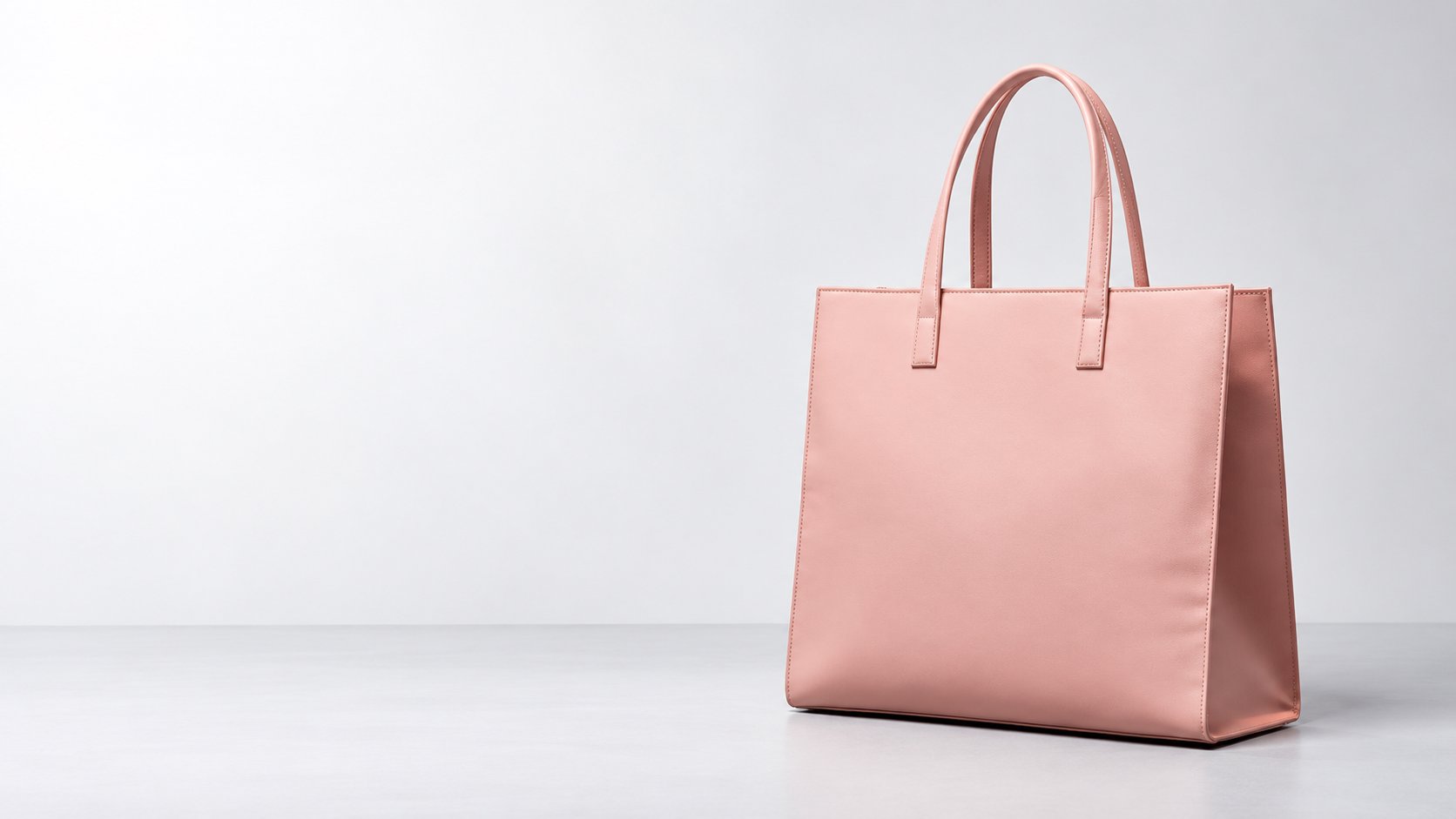
Product examples in the tote range include the Laptop Tote Briefcase (PU leather, top zipper closure, MOQ 300 pcs), the PU Leather Tote Handbag (open top with magnetic snap, MOQ 500 pcs), and the Everyday Tote Handbag (PU leather, MOQ 500 pcs). Each ships with individual dust bag and carton packaging. Lead time is typically 30–35 days after sample approval.
These details matter for supplier comparison because they show what factory-direct actually means in practice: you are buying access to a production line, an inspection step, and a customization scope — not just a bag.
FAQ
How do I choose between factory-direct, trading company, and brand supplier?
Start with your order profile. If you have a defined specification, a repeat volume that meets factory MOQs (300 pcs for the Laptop Tote Briefcase, 500 pcs for the PU leather totes listed above), and you want cost control, factory-direct is the natural fit. If you are sourcing multiple bag categories and want one contact, a trading company can reduce coordination load. If you need market-ready branded designs fast and cost is secondary, a brand supplier fits. Match the role to your business model first, then compare quotes.
What restock clauses should I get in writing?
Confirm the production source stays the same, that a reference sample is retained, the reorder lead time range, the material substitution and approval process, and whether finished-product inspection applies to every run. If a supplier cannot commit to these in writing, ask for the specific term and confirm it in the agreement — do not assume a restock guarantee exists.
What should I verify before committing to a factory-direct supplier?
Verify the facility itself: whether cutting, sewing, assembly, and inspection are in-house, the stated monthly capacity, and any company-level certifications. Check the MOQ and lead time for your specific tote model, confirm the sample approval process, and ask how custom colors, linings, and hardware are handled. Also confirm packaging terms (individual dust bag and carton) and the inspection step before packing.
Can a trading company be cheaper than a factory?
Sometimes, on small or consolidated orders, because the trading company may combine your order with others to reach better factory terms. That advantage usually shrinks as your order volume grows. Ask the trading company to identify the production factory and explain how the quote is built, then compare like for like with a factory-direct quote on the same specification.
Next step
Once you have decided which role fits, the fastest way to test it is to send one specific tote model — for example the PU Leather Tote Handbag — with your target quantity, custom color and hardware requirements, and ask for a written quote and sample terms. Comparing the structure of that reply will tell you more about the supplier than any product listing.