Choosing a Tote Bag Manufacturer for Bulk and Private-Label Orders
For a retailer or brand, the tote bag manufacturer you choose shapes three things at once: your landed cost, the consistency of every unit that reaches your shelves, and whether your launch date holds. Totes look simple, but a bulk or private-label order runs through material selection, sampling, production planning and inspection before a single carton ships. This guide walks through how experienced buyers evaluate a manufacturer and structure the order itself, based on how a working OEM/ODM factory actually operates.
What this guide covers
- What a tote bag manufacturer does on a bulk order
- Evaluating production capacity without taking it on faith
- Material selection for tote programs
- How a bulk tote order is structured
- Questions to put to a prospective manufacturer
What a Tote Bag Manufacturer Does on a Bulk Order
A tote bag manufacturer is not just a sewing workshop. On an OEM/ODM order, the factory takes your design direction or reference sample, advises on materials and construction within your price target, develops a counter-sample for approval, and then runs mass production on its own lines with inspection before packing.
The practical difference between working directly with a manufacturer and going through a trading company shows up in iteration speed. When a sample needs a handle-drop adjustment or a lining swap, a factory that controls cutting, sewing, assembly and inspection under one roof can revise and re-check internally instead of relaying messages to a third party. When you evaluate suppliers, it is worth asking which of those processes are genuinely in-house and which are subcontracted, because that determines how tightly quality and timing can be controlled.
Wellmax Luggage, for example, is an OEM/ODM luggage and bag manufacturer in Fujian, China, founded in 2013. Its 12,000 m² facility houses cutting, sewing, assembly and inspection in one place, with a team of about 320 people producing roughly 150,000 pieces per month across trolley cases, backpacks, business bags and handbags.
Evaluating Production Capacity Without Taking It on Faith
Read monthly output in context
Capacity figures like "150,000 pieces per month" only become useful when you ask what sits behind them. A monthly figure usually covers all product categories, not just totes, so the question to put to any manufacturer is how capacity splits across lines and where your order would slot into the schedule. A factory running trolley cases and handbags on the same sewing infrastructure may have different free capacity in a given month than a tote specialist, and the honest answer to "when can you start my order" depends on the current production schedule, not the headline number.
Ask about the production workflow
Each order moving through dedicated sewing lines and a finished-product inspection stage before packing tells you something concrete: quality checks are built into the workflow rather than added at the end. When you compare manufacturers, ask what specifically gets checked before goods are boxed — zipper function, stitching consistency, trim attachment — and how problems found at inspection are handled.
Use certifications and audits correctly
A manufacturer whose quality management system is certified to ISO 9001:2015 and whose facility is audited under the BSCI framework for social compliance has passed third-party review of its processes and working conditions. These certifications apply at the company and factory level. They are evidence about how the factory operates — design, manufacturing and sales processes — not a performance guarantee for any individual bag, and a serious supplier will present them exactly that way. For retail chains and brands with their own compliance requirements, a BSCI-audited facility often simplifies vendor onboarding.
Material Selection for Tote Programs
PU leather totes
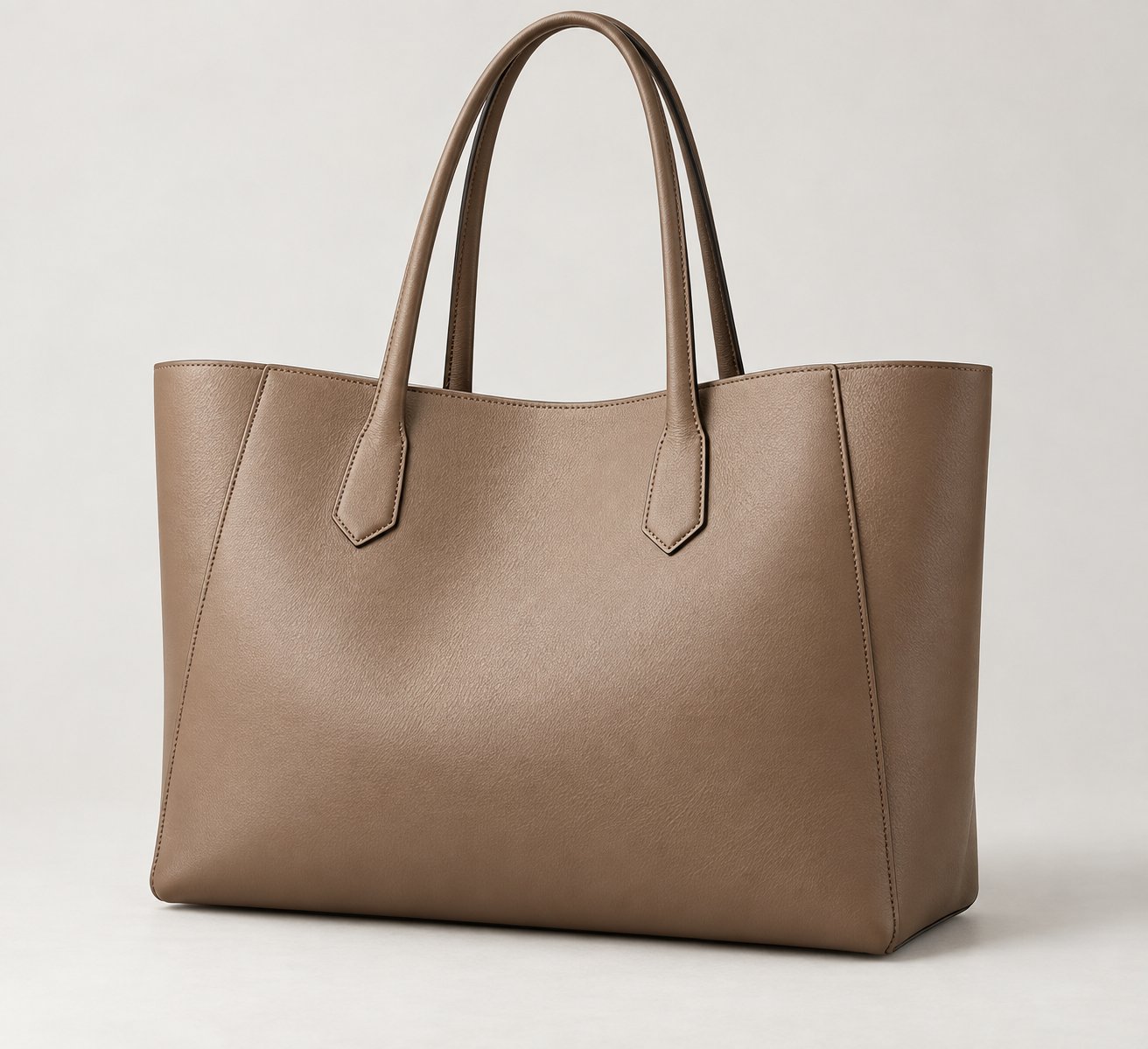
Structured everyday totes are commonly made in PU leather because the material gives a smooth, uniform surface and holds a clean silhouette. A worked example from Wellmax's line: the Everyday Tote Handbag is a roomy structured tote in PU leather with two top handles, an open top closed by a magnetic snap, and a shape that stands upright on a desk or counter. It is offered in three neutral tones — black, camel and tan — which is typical of how manufacturers structure standard colorways to fit most seasonal assortments.
On the OEM side, color, lining and hardware can be adjusted to match a brand direction. The detail to remember as a buyer: customization options and any related tooling or minimums should be confirmed with the manufacturer before sampling, not after, so the sample you approve reflects what mass production will actually deliver.
Fabric alternatives
Canvas and other fabrics suit different price points and brand aesthetics than PU leather, and many manufacturers run both. If your program is fabric-led, it is worth checking that the supplier can specify fabric weight and dye color per order rather than only offering fixed stock options — this is covered in detail in our canvas sourcing guide.
How a Bulk Tote Order Is Structured
| Stage | What happens | What the buyer provides |
|---|---|---|
| Sampling | Manufacturer develops a counter-sample for approval | Dimensions, handle drop, lining, hardware, packaging |
| MOQ & order size | Setup cost is spread across the run; MOQ applies | Target quantity; flag trial-run intentions early |
| Lead time | Production begins after sample approval and order confirmation | Approval date and destination port |
| Packaging & labeling | Individual dust bag into export cartons | Branded packaging or hang-tag needs, confirmed pre-quotation |
Sampling
Sampling is the stage where your decisions become a physical product. Before requesting a sample, prepare: target dimensions (interior size and handle drop), lining fabric and pocket layout, hardware color and finish, and packaging or labeling requirements. A manufacturer that asks for these details upfront returns a more accurate quotation and a sample that is closer to shippable on the first round.
MOQ and order size
MOQ exists because setup — materials procurement, pattern preparation, line scheduling — carries cost whether you order 500 units or 50,000. The Everyday Tote Handbag carries an MOQ of 500 pieces, which is a common working figure for private-label handbag programs. If you are planning a smaller trial run, raise it with the manufacturer directly; many will discuss options for first orders rather than turn the business away.
Lead time and planning
Standard lead time on this tote is 30–35 days after sample approval and order confirmation. Two planning notes for buyers: first, the clock starts at sample approval, so time spent in sampling rounds is separate from production time; second, final timing depends on order volume and the factory's current production schedule, which is exactly why capacity questions belong early in supplier conversations.
Packaging and labeling
This tote ships in an individual dust bag packed into export cartons. Buyers who need branded packaging or hang tags should confirm it before quotation so the cost is visible in the price rather than discovered at packing.
Key takeaways for buyers
- Capacity numbers cover all product categories — ask how your order fits the current schedule.
- ISO 9001:2015 and BSCI apply at company and factory level, not to an individual bag.
- MOQ of 500 pieces on the Everyday Tote; lead time 30–35 days after sample approval and order confirmation.
- Confirm customization and packaging before sampling and quotation, not at packing.
Questions to Put to a Prospective Manufacturer
Before committing, put these to each candidate supplier:
- Which cutting, sewing, assembly and inspection processes are in-house?
- How would my order fit into the current production schedule?
- What is checked during finished-product inspection, and how are defects handled?
- Can you support third-party inspection, and which Incoterms do you quote for my destination port?
- What exactly does your sample include — materials, hardware and packaging as specified?
The answers separate manufacturers that control their process from suppliers that resell one. For a worked example of a production-ready tote program, see the Everyday Tote Handbag, or contact the Wellmax export team with your target quantity and customization needs for a quotation and sampling plan.