
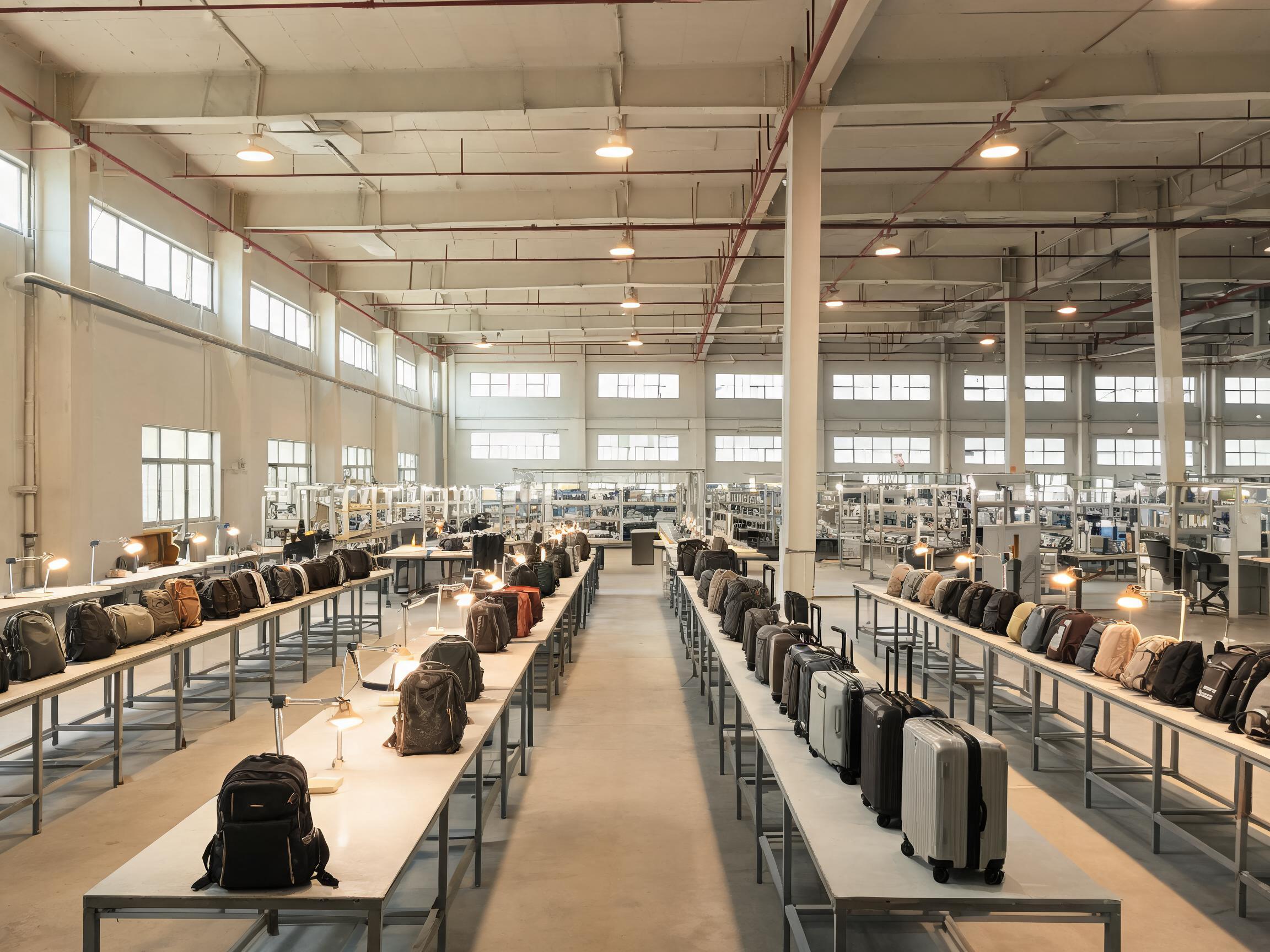
When buyers search for the top luggage manufacturers, most results turn out to be ranked lists. A ranking tells you who someone else picked, but not how to judge. For an importer, retail chain or brand owner planning an OEM/ODM luggage program, the useful question is different: what signals actually indicate that a manufacturer can carry your program, and how should you weigh them before committing?
This article lays out six evaluation dimensions - product-line breadth, the materials system behind a catalog, sampling and customization capability, built-in quality checks, capacity and lead time, and the private-label cooperation model. The goal is a framework you can apply to any supplier conversation, not a scoreboard.
- Product-line breadth
- The materials system
- Sampling and customization
- Built-in quality checks
- Capacity and lead time
- The private-label cooperation model
1. Product-Line Breadth: Serving a Program, Not a SKU
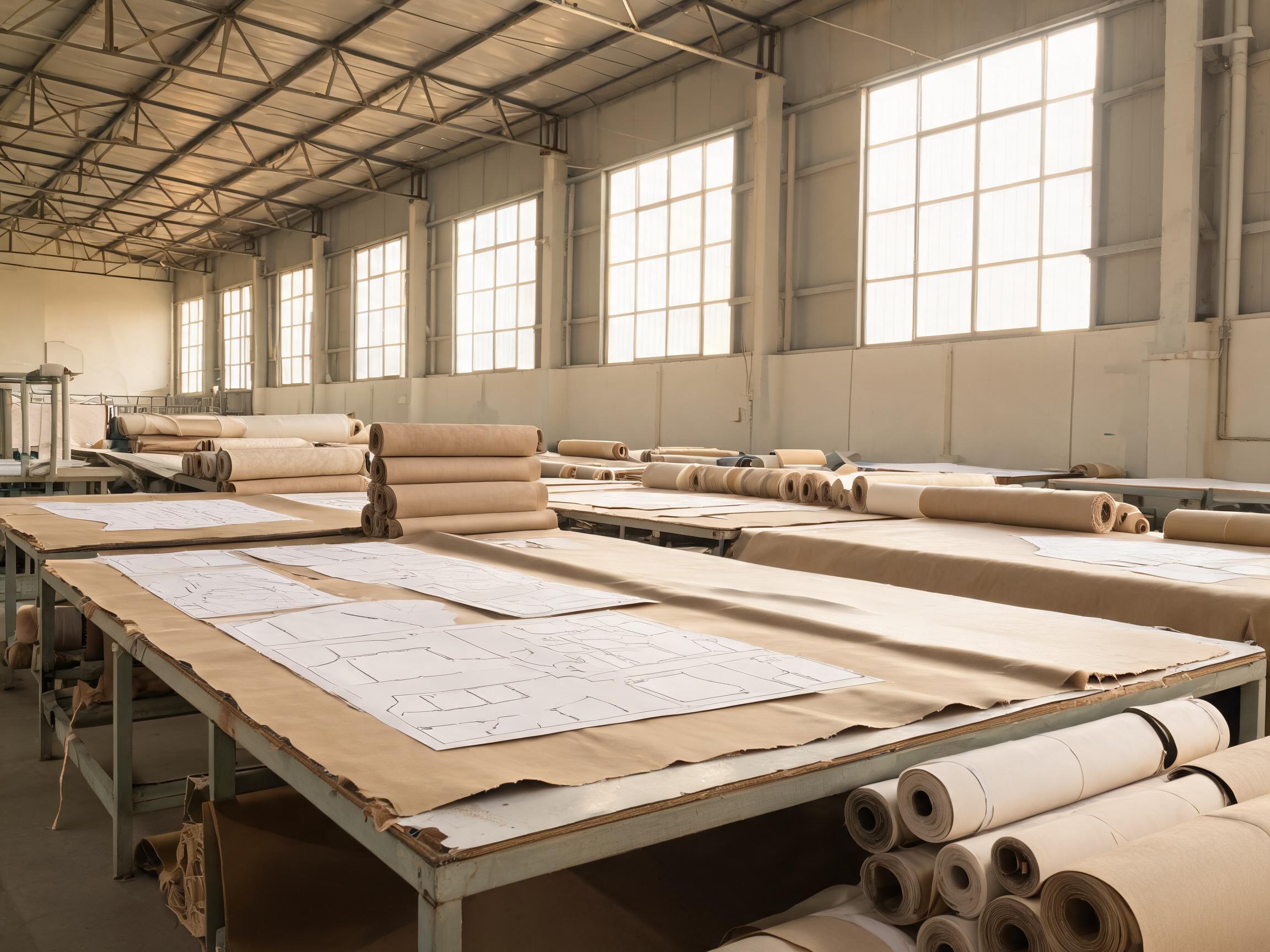
One of the most telling signals is whether a manufacturer can serve an entire travel program or only a single product type. A retail buyer rarely launches one SKU. A travel category usually spans cabin trolleys, mid-size spinners, large checked cases, softside options for a different price tier, and perhaps a premium line. A business or accessories program may add backpacks, briefcases and handbags to the same order cycle.
A manufacturer whose lineup covers hardshell trolley cases in polycarbonate (PC) and ABS, a softside fabric spinner, an aluminum-frame premium set, plus backpacks, business bags and handbags, can support that full span under one production system. That brings consistent sampling workflow, one set of communication channels, and coordinated deliveries across categories. It also signals accumulated experience - a factory that builds PC cabin cases, aluminum-frame sets and leather briefcases has handled very different construction disciplines, which is difficult to fake with a narrow catalog.
Breadth is not automatically a virtue; a specialist in one category can be excellent. But for buyers building a multi-SKU program, breadth under one roof is a relevant planning signal worth verifying rather than assuming.
2. The Materials System: Matching Material to Price Target
Look past the color swatches to how materials are specified at product level. In a well-structured catalog, each product names its shell material and the details that flow from it - PC with a zipper and TSA lock on a 22-inch cabin case, PC with an expandable zipper and four spinner wheels on a 26-inch checked case, ABS on a lightweight 20-inch cabin trolley, fabric on a 24-inch softside spinner, an aluminum frame over an ABS shell on a premium two-piece set.
This shows the manufacturer works across a materials system rather than pushing one construction for every budget. PC, ABS, aluminum-frame and fabric options each sit at a different position in a retail lineup, so when a catalog already assigns material, size, closure and wheel configuration per product, you can map your price tiers to real products and then adjust - rather than starting from a blank spec sheet. For softside and bag lines, check whether nylon type, denier and shell color are listed as adjustable; for leather goods, whether the leather grade is named (full-grain versus other grades carries cost and positioning implications). These are catalog listings, so treat them as a starting point - performance for a specific build should be validated through sampling on your own program.
3. Sampling and Customization for Private-Label Programs
Two signals to evaluate:
- Sampling as a formal step. A sample prepared for buyer approval before mass production is the standard structure in OEM/ODM luggage work. Confirm it is part of the stated order cycle, and use it to verify the specifications that matter to your market - closure function, hardware finish, lining color, branding placement - before committing to volume.
- Named customization options. Vague claims of "full customization" are less informative than a published list. A manufacturer that states exactly what can be adjusted - shell color and surface finish, frame profile and hardware finish, interior lining color, divider layout and packing accessories, nylon type, denier and shell color, strap width, hardware and adjustment range, pocket count, interior dividers and zipper configuration - is telling you where its flexibility actually lies. Branding options should be equally concrete: woven labels, rubber patches, screen printing, metal logo plates, molded marks, hang tags and branded packaging, quoted on request.
When comparing suppliers, ask each to put its customization list in writing for the specific product you intend to order. What a supplier states on its site is a claim; what appears in your sample and quotation is evidence.
4. Built-In Quality Checks in the Workflow
Quality claims are easy to make and hard to distinguish. A more reliable signal is where checks sit in the production workflow, because a check built into the line is harder to skip than a promise in a brochure:
- Finished-product inspection before packing on dedicated assembly or sewing lines, for every product line - not just premium ones.
- Line-specific checks matched to construction. For example, frame alignment, lock function and wheel checks on an aluminum-frame set; zipper function and strap attachment strength checks on nylon crossbody bags. Checks that match a product's actual failure points indicate someone has thought about how it is built.
- Where inspection happens physically. A facility where cutting, sewing, assembly and inspection sit under one roof - a 12,000 m2 setup, for instance - keeps inspection adjacent to production rather than outsourced to an end-of-line step.
Factory-level management systems are another relevant signal: a quality management system certified to ISO 9001:2015 and a facility audited under the BSCI framework for social compliance, applying at company and factory level to design, manufacturing and sales processes. Note the scope - these are organizational certifications, not product-specific performance claims, so your sample and inspection regime still carry the product-level burden of proof.
5. Capacity and Lead Time as Planning Signals
Capacity figures determine whether your retail calendar survives contact with reality. Three figures worth comparing:
- Monthly output. A production rate of roughly 150,000 pieces per month, with a team of about 320 people, tells you the factory is sized for sustained export programs rather than occasional small runs - though you should still confirm how current bookings affect available slots for your order.
- Stated lead times by product line. A standard lead time of 30-35 days after sample approval and order confirmation, extending to 35-40 days for the aluminum-frame set, reflects the additional shell molding and frame assembly steps that line involves. Consistent, product-specific lead times suggest the manufacturer knows its own workflow.
- MOQ per line, stated per product. A polycarbonate cabin case may sit at 300 pcs, an aluminum-frame set at 200 sets, a handbag line at 500 pcs. A supplier that publishes line-level MOQs lets you build a realistic opening order instead of discovering thresholds after you have designed your assortment.
Third-party inspection, preferred Incoterms and payment terms are confirmed with the buyer per order in the quotation - make these part of your quotation discussion before contracting.
6. The Private-Label Cooperation Model
The final dimension ties the others together: how does the manufacturer actually work with a brand owner? Standard export packaging - each unit in an individual poly bag, then packed into cartons (with a dust bag plus carton for certain PU handbags) - should be the baseline; branded packaging and hang tags quoted on request shows the manufacturer can extend that baseline into retail-ready presentation. Combined with the customization options covered above, you should be able to move from a catalog product to a private-label version through a defined sequence: select the base product, agree adjustments, approve a sample, confirm the order, then mass production.
Applying the Framework: Wellmax's Published Product Line
As a concrete reference point, Wellmax Luggage is an OEM/ODM luggage and bag manufacturer founded in 2013 in Fujian, China, serving buyers in more than 40 countries from a 12,000 m2 facility covering cutting, sewing, assembly and inspection under one roof. Its published lines span the full range discussed above:
- Polycarbonate Cabin Luggage 22" • PC shell, zipper with TSA lock, charcoal/black/navy
- Expandable Checked Luggage 26" • PC, expandable zipper, four spinner wheels
- Solid Color Spinner Luggage 24" • PC, four spinner wheels
- Softside Spinner Luggage 24" • fabric shell, four double spinner wheels, front pockets
- Hardshell Trolley Case 28" PC Spinner • PC, four double spinner wheels, telescopic handle
- Business Hardshell Trolley 26" • PC, brushed metal corners
- Lightweight ABS Cabin Trolley 20" • ABS, sized for most airline cabin limits
- Cartoon Dopamine Spinner Luggage 20" • ABS, kids and family segment
- Aluminum Frame Checked Luggage Set • aluminum frame over ABS shell, two-piece medium and large, reinforced metal corners, integrated frame lock
- Crossbody Flap Handbag • PU leather, flap with magnetic snap, adjustable crossbody strap
- Nylon Shoulder Crossbody Bag • lightweight nylon, adjustable strap, zipper closure
Whether you evaluate Wellmax or any other manufacturer, the same six dimensions apply. If you would like to test this framework against a real quotation and sampling plan, request one for the product lines that match your program and compare the answers side by side.