What an Industrial Brand Is Actually Buying From a Tool Bag Manufacturer
Tool bags fail differently from almost any other soft-goods product. A backpack that wears out embarrasses a brand; a tool bag that fails can drop a wrench off a ladder, spill a technician's kit into a server room, or put a service call on hold. Industrial brands and tool distributors evaluating a tool bag manufacturer are therefore buying something more specific than a sewn pouch with handles — they are buying fabric specification discipline, reinforced load paths, hardware that survives jobsite abuse, and a quality control process that catches the failure points before shipment.
This guide covers what separates a genuine tool bag manufacturer from a general pouch factory: the fabric decisions, the structural reinforcements that carry weight, hardware selection, and how to structure an RFQ so factory responses are comparable.
Heavy-Duty Fabric Selection: More Than "Strong"
Tool bag fabric choice is a balance between abrasion resistance, weight, water behavior, and cost — and the right answer changes with the jobsite duty the bag is designed for.
| Fabric family | Strengths | Trade-offs to manage |
|---|---|---|
| Polyester oxford (high denier) | Abrasion resistance, color stability, cost efficiency at volume | Coating quality determines water behavior; lighter deniers puncture on sharp tools |
| Nylon (incl. ballistic weaves) | Very high tear and abrasion performance | Higher material cost; UV and water finishing must be specified |
| Canvas / heavy cotton | Classic tradesman look, natural grip, repairable | Heavier when wet, dries slowly; edge finishing quality is critical |
| Tarpaulin / coated laminates | Water resistance for outdoor and site storage duty | Welding vs sewing of seams changes waterproofness claims; stiffer handling |
Two specification rules protect buyers here. First, match fabric to duty: a service technician's hand-carried bag, a maintenance department's rolling kit, and a site storage duffel have genuinely different fabric requirements. Second, ask the manufacturer to name the fabric weight and coating they are quoting — a quote that says “heavy-duty polyester” without a specification is not comparable to one that names the construction, and any figure the factory proposes should be confirmed on pre-production samples rather than trusted from a quotation.
Reinforced Structures: Where Tool Bags Actually Carry Weight
The defining engineering difference between a tool bag and a general bag is the load path. A loaded tool bag concentrates weight at predictable points, and a manufacturer who understands those points reinforces them deliberately:
- Handle and strap junctions. The single most common failure location. Box-x stitching, bar tacking, and webbing that wraps through or around the panel — rather than being surface-stitched — are the standard reinforcements to ask about.
- Bottom panel. Sharp tool corners point downward under load. A doubled bottom panel, a separate bottom sleeve, or molded feet separate professional bags from consumer-grade lookalikes.
- Seam construction. Load-bearing seams need adequate stitch density and thread matched to the fabric; overheated or under-fed seams on thick fabric are a manufacturing-tolerance problem buyers cannot see in a product photo.
- Mouth structure. Wide-opening tops supported by internal stays or a rigid frame keep the bag usable on site; a mouth that collapses mid-task is a daily annoyance that drives product returns.
- Internal load distribution. Tool-specific layouts — loop rows, dividers, and pockets that position heavy items low and centered — reduce strain on every other component.
When sampling, load the sample to realistic working weight and carry it, set it down hard, and inspect the junctions. No specification sheet substitutes for this test.
Hardware and Components: The Jobsite Abuse Checklist
Hardware on a tool bag is selected for abuse tolerance, not appearance:
- Zippers. Heavy-gauge coil or metal zippers with robust sliders; ask how the slider and pull are specified, since pulls take direct jobsite abuse.
- Buckles and adjusters. Side-release buckles on shoulder straps should be load-rated polymers, not generic clips; ask what the specified component is.
- Grommets and rivets. Used to anchor handles and reinforce tether points; corrosion resistance matters for outdoor and marine-adjacent trades.
- Webbing. Load-bearing webbing should be specified by width and construction; thin decorative webbing on a tool bag strap is a warranty claim waiting to happen.
- Feet and skids. For rolling and hard-duty bags, plastic or metal feet protect the base from wet concrete and steel surfaces.
A capable tool bag manufacturer will name component suppliers or at least component classes in response to an RFQ. Vague answers on hardware are a reliable signal of where corners will be cut at bulk.
Quality Control: What Should Happen Before a Tool Bag Ships
Because the failure points are concentrated and predictable, tool bag QC is unusually well suited to targeted inspection:
- In-line checks on handle and strap junction stitching, before the bag is assembled past the point of repair.
- Load testing of sampled units from production — carrying realistic weight and cycling the closures.
- Hardware function checks: zipper cycling, buckle engagement, rivet and grommet pull checks.
- Final inspection of fabric defects, print/branding placement, and cleanliness before packing — metal filings and cutting debris inside a tool bag are a real complaint category.
Ask each prospective manufacturer which of these checks they run, where in the process they happen, and whether third-party or customer-appointed inspection is accommodated. The answers reveal whether QC is a process or a final-glimpse formality.
Structuring an RFQ for a Tool Bag Program
Tool bag programs reward buyers who specify precisely. A comparable RFQ includes:
- Duty description. Who carries the bag, in what environment, with what typical load. This lets the factory propose fabric and reinforcement intelligently.
- Fabric specification or request for proposals. Name the weight and coating if you have a target; otherwise require the factory to propose and document it.
- Structure and load features. Mouth type, bottom protection, internal layout, number and placement of handles and straps.
- Hardware classes. Zipper gauge, buckle type, grommet and rivet expectations.
- Branding method. Printing, embossed patches, woven labels, or metal brand plates — industrial brands frequently use low-key branding that survives abrasion.
- Volume and replenishment. Initial order plus annual repeat volume, which determines where the program can be priced.
- QC and inspection expectations. In-line checkpoints, load testing, and third-party inspection access.
Working With an OEM Bag Factory on Industrial Programs
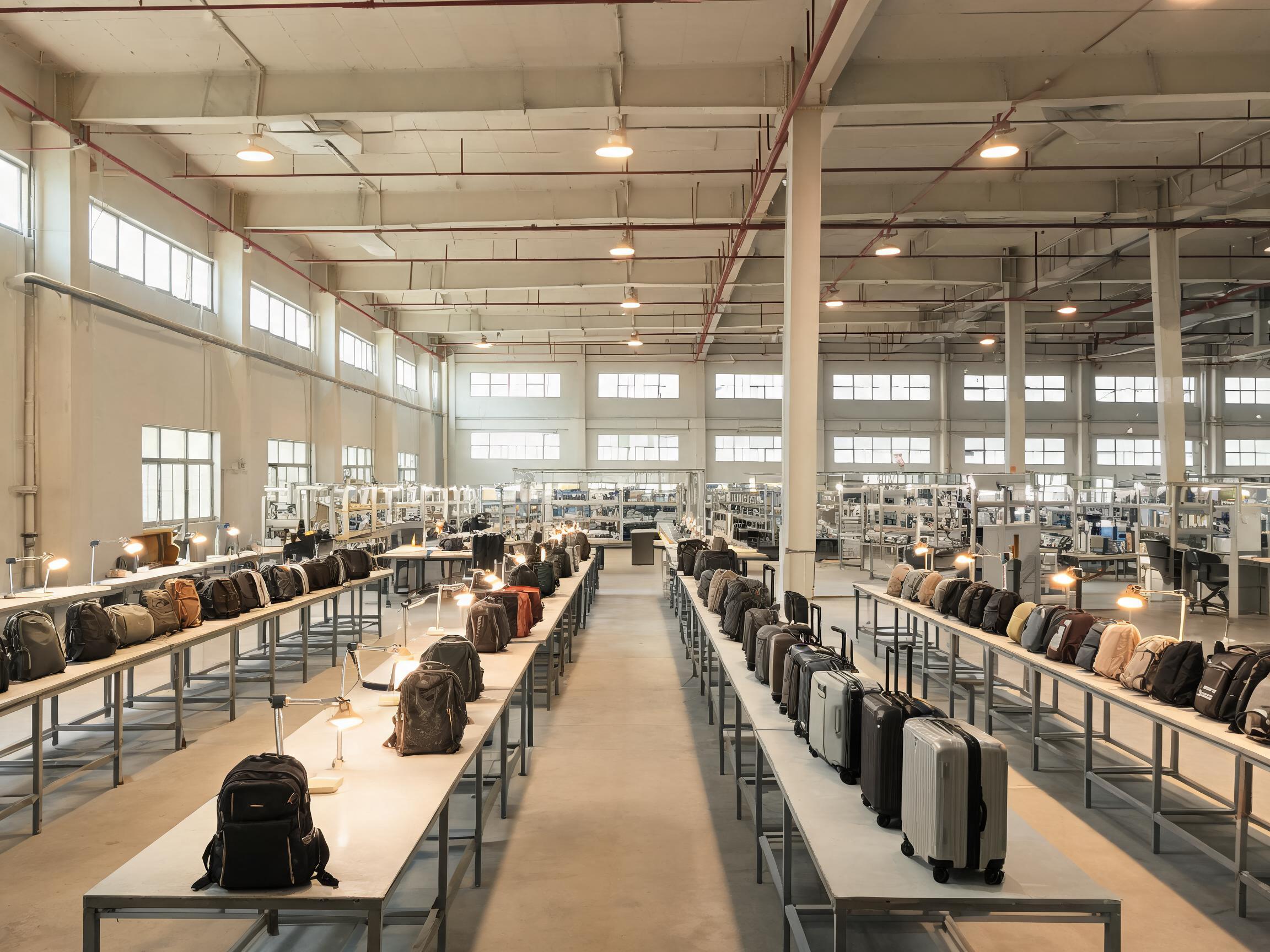
Tool bags belong to the sewn soft-goods family, and the fundamentals that decide their quality — cutting accuracy, stitch discipline, reinforcement at load points, hardware integration, and pre-shipment inspection — are the same fundamentals behind any serious bag program. Buyers can therefore evaluate a tool bag manufacturer using evidence that crosses categories: an in-house cutting and sewing floor rather than fully outsourced stitching, a sampling studio able to iterate reinforcement variants before bulk, and inspection integrated into the production flow rather than bolted on at the end.
Wellmax Luggage operates integrated cutting, sewing, assembly, and inspection lines in Quanzhou, Fujian, with an in-house sampling studio supporting program buyers across more than 40 countries, including brands with heavy-duty requirements in the backpack and business-case lines. Our published catalog centers on luggage, backpacks, business bags, and handbags; tool-specific constructions are confirmed against current production capability and project experience directly during RFQ and sampling, so buyers receive an honest answer on fit before committing a program.
Whichever factory you select, keep one discipline non-negotiable: samples built to your specified load path, tested under realistic weight, approved before bulk. In this category, that single step filters out more future warranty claims than any clause in a purchase contract.
Frequently Asked Questions
What fabric weight should a heavy-duty tool bag use?
It depends on the duty: a technician's hand-carried bag, a maintenance rolling kit, and site storage duffels have different requirements. Rather than defaulting to the heaviest option, define the load and jobsite environment first and have the manufacturer propose a documented specification, confirmed on physical samples before bulk.
How can buyers verify stitching quality before a bulk order?
Load-test pre-production samples to realistic working weight, carry and set them down repeatedly, and inspect handle junctions, seams, and closure hardware. Ask the factory which in-line checks catch stitching defects during production, not just at final inspection.
Can tool bags be customized with a brand logo?
Yes — common methods include silkscreen printing, woven labels, embossed patches, and metal brand plates. Industrial brands often choose low-key branding that survives abrasion; confirm durability of the chosen method on washed and abraded samples.