When buyers shortlist a leather bag manufacturer in China, the first decision is not the factory — it is the material. Genuine leather and PU differ in cost structure, durability, aging, labeling requirements and the way quality problems show up. Getting the material decision right shapes everything downstream: the quote you receive, the MOQ you face and the QC checkpoints that actually matter.
Genuine Leather vs PU: What You Are Actually Comparing
"Genuine leather" is a broad label covering several different materials. Full-grain leather keeps the outer surface of the hide and is the most durable and expensive tier. Top-grain is lightly sanded and more uniform in appearance. Split leather comes from the lower layer of the hide, and bonded leather is reconstituted from leather fibers with a binder — the least durable option that can still be called leather. Each tier behaves differently in durability, patina, edge finishing and how it ages in daily use.
PU (polyurethane) and PVC are coated fabrics: a textile or knit backing with a polymer surface layer. They emboss well, hold color consistently, clean easily and cost less. Their predictable weaknesses are coating cracks at flex points and peeling where the coating separates from the backing. Microfiber synthetics sit between leather and PU in feel and price.
The practical question for your program is not "real versus fake" but whether the material matches your price point, use case and labeling claims. A tote positioned as premium leather should use leather in the load-bearing areas, not only on the front panel. If the material is synthetic, your marketing language must say so in markets that regulate leather claims.
What Drives a Leather Bag Quote
Two suppliers can quote the same design 40% apart. The gap usually comes from:
- Hide type and grade — full-grain and top-grain cost more than split or bonded; hide size and origin also move price.
- Tanning method — chrome tanning is common and cheaper; vegetable tanning is slower and usually priced higher.
- Thickness and temper — thickness changes cutting yield and shipping weight.
- Lining — cotton twill, polyester, suede split or leather lining; a full leather lining is often one of the largest line items.
- Hardware — zinc alloy, brass or stainless steel, plus plating quality, which affects rust and tarnish in humid markets.
- Zippers and closures — branded zipper tape and sliders cost more but reduce returns.
- Stitching density and edge work — more stitches per inch, painted or folded edges all add labor minutes per unit.
- Custom elements — embossed logos, custom hardware molds, printed linings and packaging.
Ask for a line-by-line breakdown rather than a single number. If a quote is unusually low, check what was quietly downgraded: the lining, hardware plating, edge finishing or the actual leather grade.
MOQ in Leather Programs
MOQ is usually a material constraint rather than a factory whim. Tanneries and coated-fabric mills have their own minimums, measured in hides, square meters or full rolls, and a low-volume hardware color can set the floor for the whole order. Practical levers include standardizing on materials the factory already buys regularly, using one lining and one hardware finish across a color run, accepting a mixed-color order within one material, and starting with a trial order at the stated minimum before scaling. Ask whether sampling charges are credited against the first bulk order, and whether MOQ applies per color, per size or per material. Be cautious with a supplier who accepts any MOQ without conditions — it often means outsourcing or material substitution.
QC Checkpoints That Matter for Leather and PU
Pre-production: approve a sealed golden sample covering material, color reference, hardware finish, stitch count, dimensions and logo placement. Where your market requires it, confirm restricted-substance test reports for the exact material in your order rather than assuming a report covers everything.
During production: an in-line inspection catches cutting errors and stitching problems before thousands of units are assembled. Typical checkpoints include stitch density, backstitching at stress points such as handle attachments, seam alignment, edge-paint uniformity, hardware attachment and lining fit.
Pre-shipment: use an AQL-based sampling inspection. Record color deviation from the approved swatch, uneven edge finishing, scratches, glue marks, wavy zippers, loose threads and dimensions outside tolerance. On leather, check grain consistency and hide defects; on PU, check for coating separation at fold lines. Lab tests — colorfastness, flex resistance, adhesion for coated fabrics — should use samples drawn from actual production.
Our overview of quality control in bag manufacturing explains how these stages fit together across bag categories.
Leather and PU Programs at Wellmax
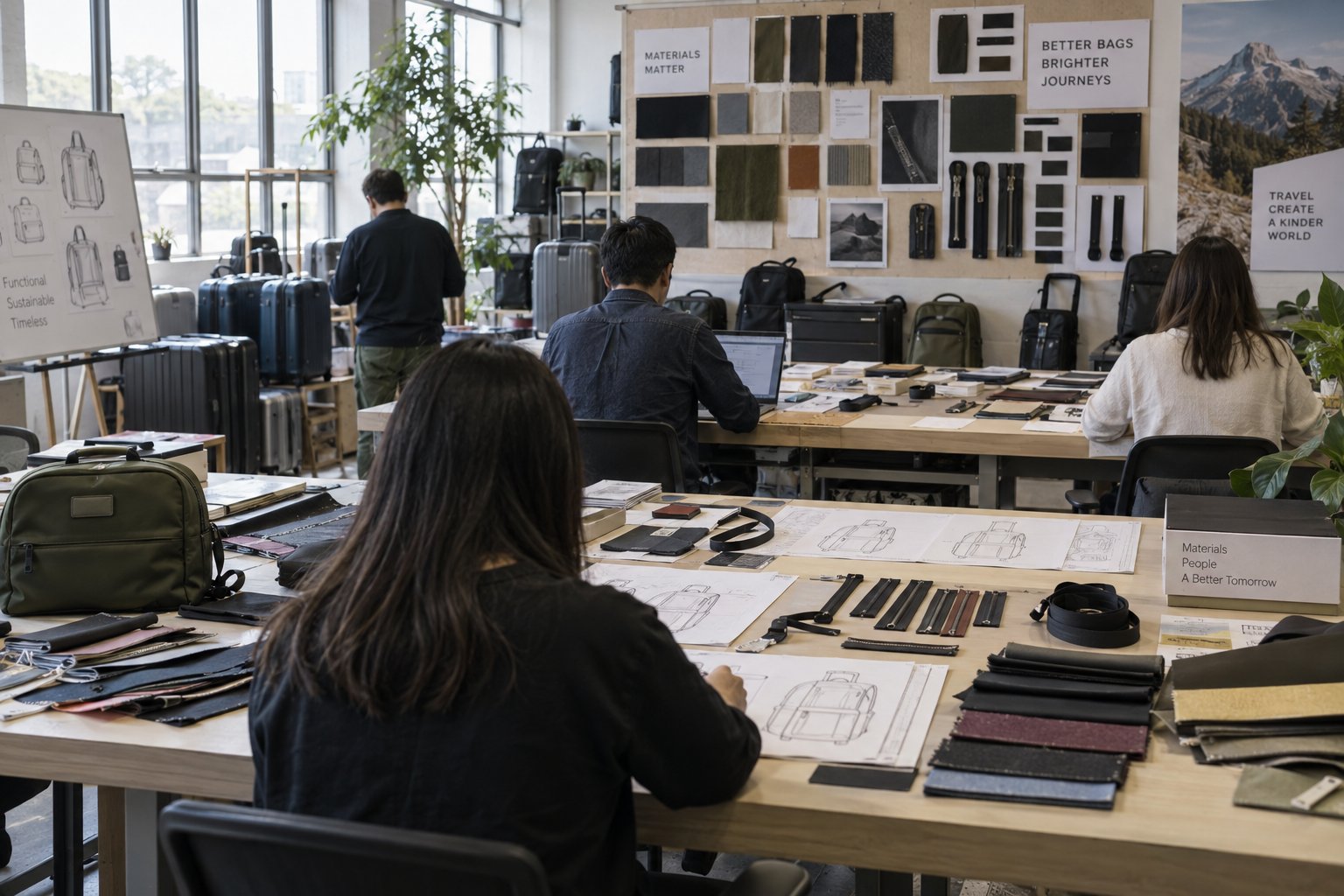
Wellmax Luggage produces business and handbag lines alongside its luggage and backpack programs, including an executive leather briefcase, a leather laptop messenger bag and a PU leather tote handbag. Founded in 2013, the company runs a 12,000 m² facility in Fujian with about 320 employees and monthly output of roughly 150,000 pieces, certified to ISO 9001:2015 and audited under BSCI, exporting to more than 40 countries. In-house designers develop styles, select materials and prepare samples for OEM and ODM programs, and finished bags pass inspection stations before packing.
Next Step
Send a complete brief: dimensions, material specification for shell, lining and trim, hardware finish, logo method, target quantity per color, packaging requirements and destination country. Ask for unit price at three quantity tiers, MOQ per SKU, sample lead time and inspection terms. One spec sheet sent to every supplier on your shortlist is what makes the quotes genuinely comparable — and if one of them is us, we will respond with a material recommendation and a cost breakdown you can check line by line.