
Procurement Guide
Handheld laptop bags — totes, briefcases and messengers — are specified differently from backpacks. The buyer's real questions concern compartment protection, material durability, how a logo sits on a finished bag, and what order volumes each style demands. This guide covers the specification decisions that determine whether a bulk order arrives sellable or needing rework.
Key takeaways
- Compartment protection is a construction decision: padded walls, sleeve fit, closure type and divider placement all matter.
- Ballistic nylon, PU leather and full-grain leather serve different price points and wear patterns; confirm denier and coating with your supplier rather than assuming.
- Logo methods should be chosen per bag structure — embroidery disappears on PU, debossing disappears on nylon.
- MOQ and lead time vary by style; plan your launch around the highest-MOQ item in the assortment.
What laptop bag buyers actually specify
The compartment is the product. Everything else — handles, hardware, lining color — is secondary to whether a 15.6-inch laptop sits still inside the bag and comes out undamaged after a commute. Buyers who get this wrong end up with returns and reviews mentioning "no padding" or "laptop slides around." Four construction elements determine protection:
- Padded compartment walls. Padding thickness and the foam density behind the lining determine how much impact the compartment absorbs. Specify padding on both faces, and ask for the foam thickness in millimeters and whether it runs the full compartment height.
- Sleeve fit. A compartment sized for a 15.6-inch device should hold it with minimal lateral movement. Ask for the internal sleeve dimensions and test with a device of the intended size — not a stack of paper.
- Closure type. Top zipper, magnetic flap or fold-over each impose different daily-use patterns. A top zipper keeps the device enclosed and out of rain; a magnetic flap is faster to open but exposes the sleeve. Match the closure to the end-use story, not to the price target alone.
- Divider placement. A divider separates the laptop from a tablet, documents or charger. Specify whether dividers are stitched top-to-bottom or only at the mouth — a mouth-only stitch will sag.
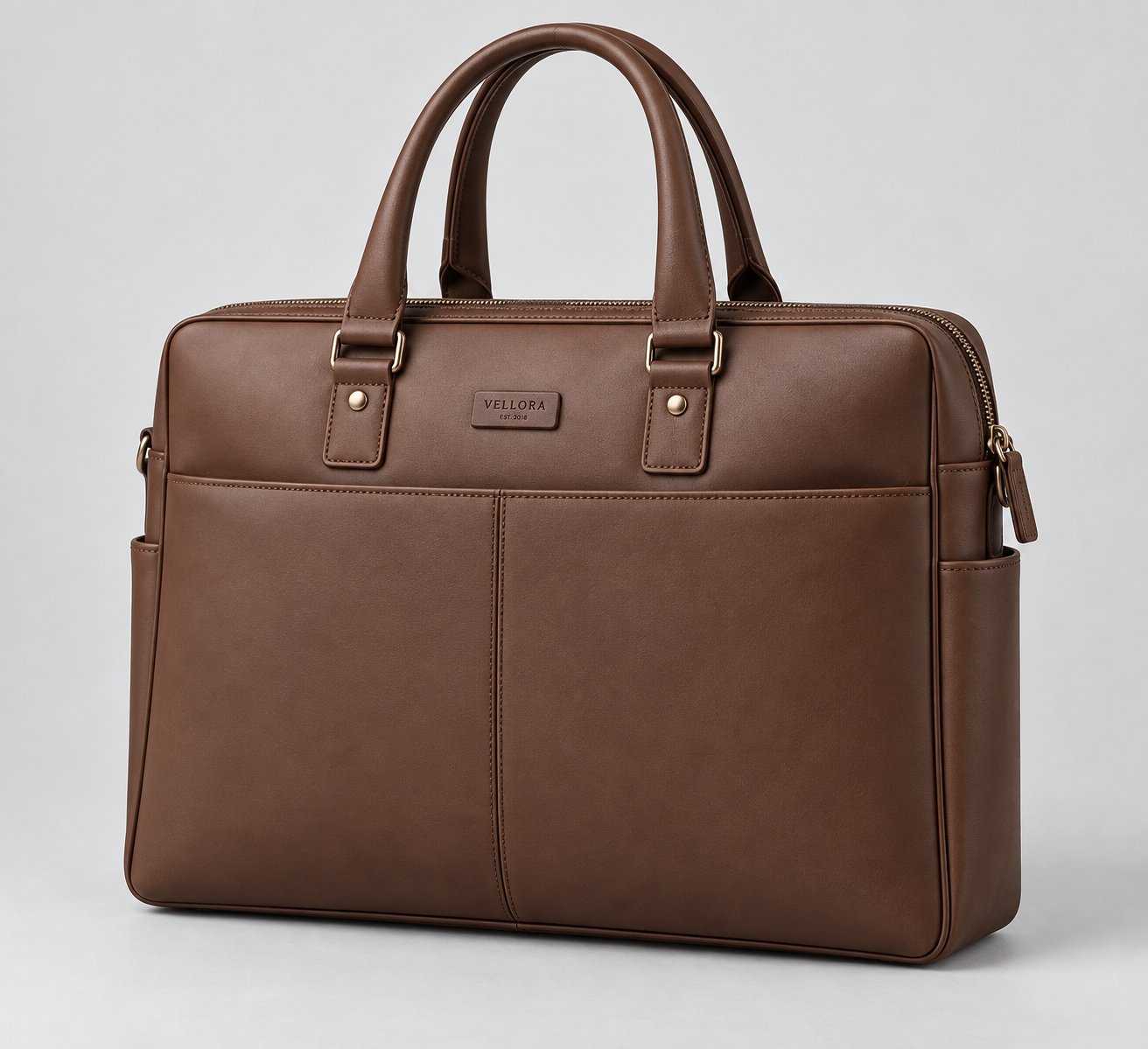
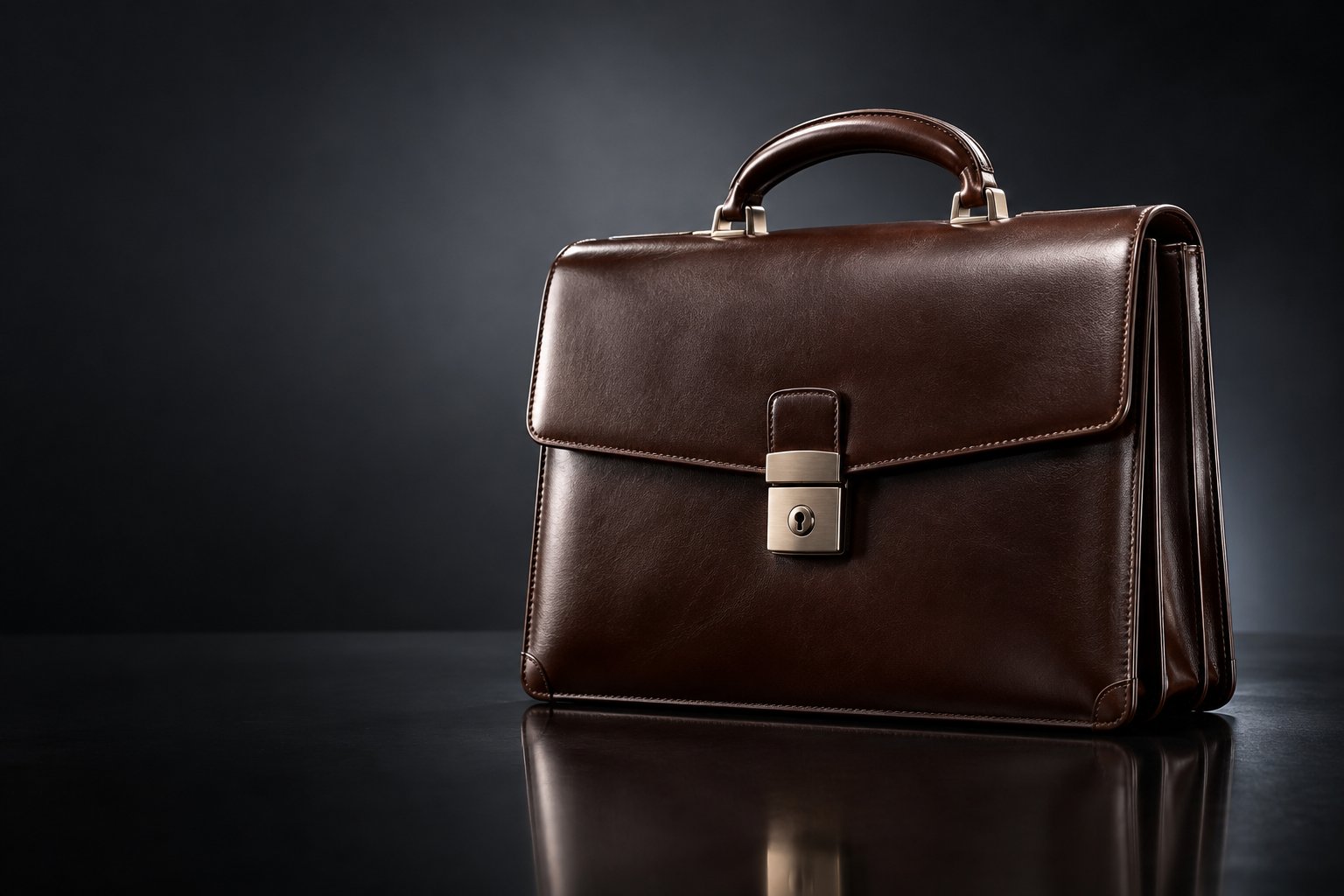
For reference, our Leather Business Briefcase 15.6" Laptop uses a padded compartment sized for devices up to 15.6 inches, and the Slim Laptop Messenger Bag carries a padded sleeve up to 14 inches with a magnetic flap closure — a different protection profile from a zippered briefcase.
Material choice: ballistic nylon vs PU leather vs full-grain leather
Material is a price-point and positioning decision. Each option has a different relationship to abrasion, moisture, weight and perceived formality.
| Material | Typical positioning | Wear behavior | What to confirm with the supplier |
|---|---|---|---|
| Ballistic nylon | Functional, commuter, tech-oriented | Resists abrasion and scuffing; texture hides daily wear | Denier, coating type, backing, whether the weave is genuine ballistic or a cosmetic imitation |
| PU leather | Mid-market, office and promotional | Holds shape and color well; can crack at fold points over time | Base fabric, PU thickness, embossed or smooth surface, cold-weather flexibility |
| Full-grain leather | Premium, executive, gifting | Develops patina; scratches can be buffed; heaviest option | Hide origin, thickness in millimeters, finish, color consistency across the order |
One caution: ballistic nylon is often marketed by denier number, and higher denier is not automatically better. A very heavy weave adds weight and stiffness; a mid-weight weave with a good coating may handle daily commuter use better. Confirm the actual denier and coating with your supplier and ask for a swatch before committing to a bulk order.
PU leather is the volume material for corporate and promotional programs because it takes color consistently and holds a printed or debossed logo well. Full-grain leather is the opposite — each hide varies slightly, which is part of the appeal but complicates color matching across a large run. For a premium briefcase line, order a pre-production sample from the actual hide batch you will use, not a generic swatch.
Our own range spans these directions: the Laptop Tote Briefcase uses PU leather with a top zipper in brown, black or tan, while the Leather Business Briefcase uses full-grain leather. The choice between them is a positioning choice as much as a materials choice.
Corporate branding and private-label decoration
Logo method follows material and structure. A method that works on one bag can fail on another.
- Embroidery works on woven fabrics like nylon and on some PU surfaces. On smooth PU or full-grain leather, embroidery holes can tear the surface or leave a raised patch that looks out of place.
- Debossing and embossing work on leather and PU, creating a recessed or raised logo without adding material. Debossing is the standard choice for executive briefcases.
- Metal hardware plates work across materials but add weight and cost.
- Printed patches or woven labels are the most flexible option for nylon and polyester, common in promotional programs where the logo may change between orders.
- Custom lining and pullers are a low-cost way to make a private-label bag feel branded without touching the exterior.
At the program level, decide whether the logo is applied per order or whether you want a standing die or embroidery file. Ask your supplier how logo setup is handled across repeat runs — the answer affects your unit economics on the second order.
How MOQ tiers work across tote, briefcase and messenger styles
MOQ is driven by material and construction complexity, not by bag size. A small messenger bag with a magnetic flap and a simple sleeve can carry a higher MOQ than a larger briefcase because the production line runs faster and the material is more standardized. Across our verified product records:
| Style | Material | MOQ | Lead time | Packaging |
|---|---|---|---|---|
| Laptop Tote Briefcase | PU leather | 300 pcs | 30–35 days | Individual dust bag + carton |
| Leather Business Briefcase 15.6" Laptop | Full-grain leather | 200 pcs | 35–40 days | Per order confirmation |
| Slim Laptop Messenger Bag | Polyester | 500 pcs | 30–35 days | Per order confirmation |
Two readings of this table. Full-grain leather carries the lowest MOQ because it is cut and assembled in smaller batches — but also the longest lead time. The polyester messenger requires the highest MOQ because it is the most standardized construction. If your assortment mixes all three, plan your launch date around the 35–40 day lead time of the leather briefcase.
Pre-order checklist
Run this list against your spec sheet before you issue a purchase order.
- Internal sleeve dimensions confirmed against the actual device size, not a nominal screen size.
- Padding thickness specified in millimeters and confirmed on both compartment faces.
- Closure type locked and tested on a sample.
- Divider stitching pattern confirmed (top-to-bottom or mouth-only).
- Material swatch approved from the production batch, not a generic sample card.
- Logo method approved on the target material, not just on paper.
- MOQ and lead time confirmed in writing for each style in the assortment.
- Packaging confirmed: dust bag, poly bag, carton configuration, hangtags.
- Sampling timeline built into the production schedule — sampling is part of the OEM/ODM order cycle.
- Inspection point agreed: finished-product inspection before packing.
FAQ
What is the typical MOQ for a custom laptop bag?
It depends on the style and material. In our verified product records, MOQ ranges from 200 pieces for a full-grain leather briefcase to 500 pieces for a polyester messenger bag, with PU leather totes at 300 pieces.
How long does production take after sample approval?
Lead time runs 30–35 days for PU leather totes and polyester messengers, and 35–40 days for full-grain leather briefcases. It starts after sample approval and deposit, not after the initial inquiry.
Can you customize the laptop compartment for a specific device size?
Yes. Provide the actual device dimensions — length, width, thickness — not just the screen size, because a 15.6-inch laptop varies in width and thickness across models. This is one of the reasons a pre-production sample matters.
What certifications does your factory hold?
Our facility holds ISO 9001:2015 certification for its quality management system and is BSCI-audited. These apply at the company and factory level, not as per-product claims. If your program requires product-level documentation, discuss the scope during the quotation stage.
Next step
Sourcing laptop bags in bulk comes down to specifying the compartment correctly, choosing a material that matches your price point and wear expectations, and confirming MOQ and lead time in writing. If you are building a corporate or private-label program, share your target device size, material direction, logo method and order quantity — the sourcing team can confirm which styles and MOQ tiers fit.