
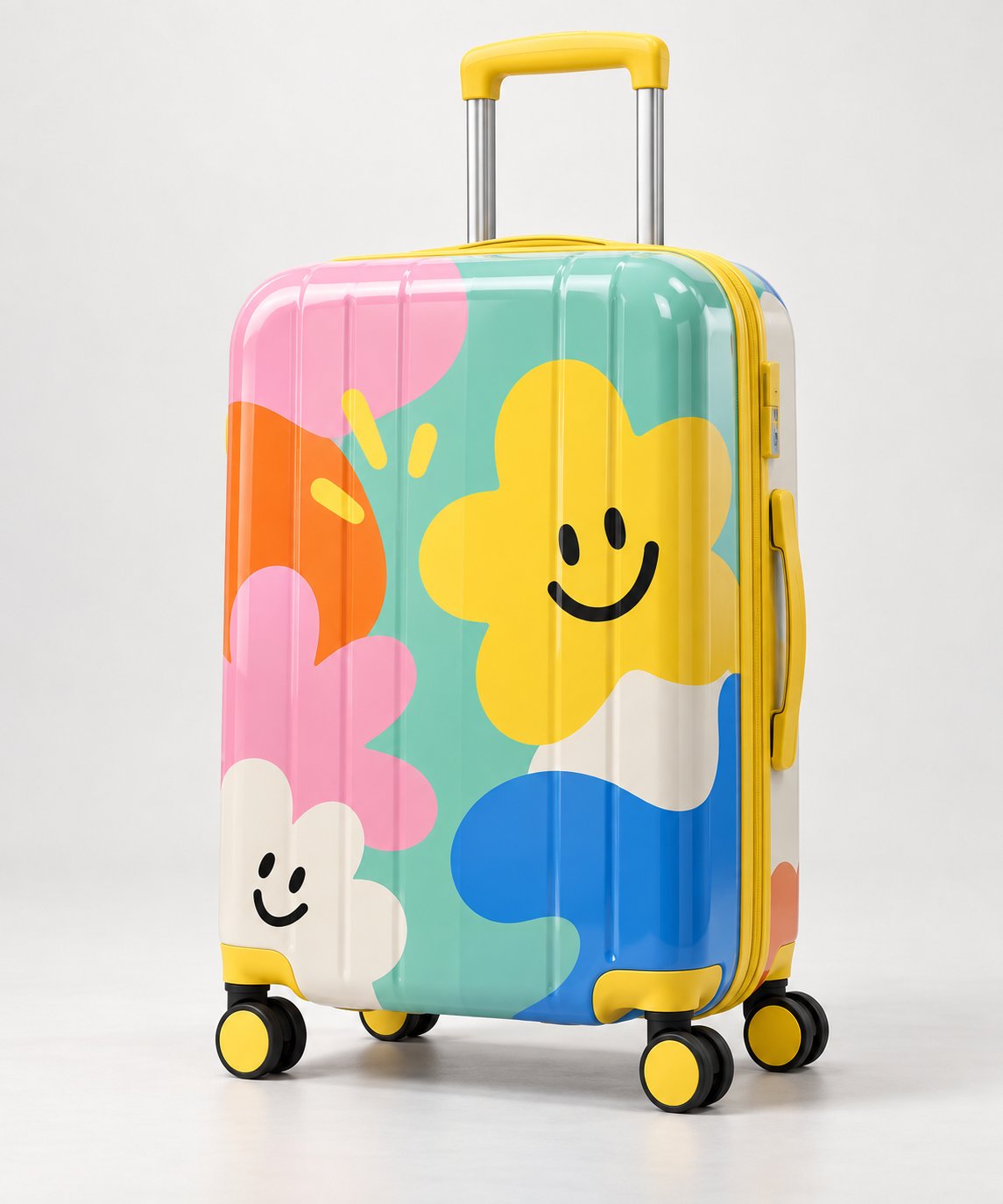
A carry on spinner is one of the best-suited luggage categories for online retail. It is compact enough to ship economically relative to checked cases, and standardized enough that product photography sells it honestly. But the same attributes make the channel economics unforgiving: packaging waste, volumetric freight and platform size rules all eat margin faster online than in a store. This guide covers the four decisions that separate profitable carry on spinner e-commerce programs from breakeven ones.
Key takeaways
- Packaging level is your main lever on both freight cost and damage rate, so set it per SKU before production, not after the first return.
- Air and express carriers price cabin spinners on volumetric weight. Ask for chargeable weight per shipping carton, not per case.
- An online spec and a retail spec are different products. Build the e-commerce SKU deliberately.
- Marketplace fulfillment size tiers are set by the platform and change over time. Measure the carton, then check the current published thresholds yourself.
On this page
Packaging: the first cost and damage decision
Every carry on spinner sold online is handled more times than one sold in a store, from factory line to consolidation, container, warehouse, courier sort and doorstep. Packaging choice is your main lever on both freight cost and damage rate.
Three packaging levels and when each fits
- Full color retail box: highest unit cost and largest shipped volume, but the strongest presentation for marketplace listings where the box arrives at a consumer's door. Justified for flagship SKUs where unboxing is part of the brand promise.
- Plain carton (bare-box) export: the case ships in a simple protective carton with branding handled by the listing itself. Lowest packaging cost and best freight density, the standard choice for volume e-commerce where the end customer never sees a retail shelf.
- Reinforced intermediate option: bare-box plus corner protectors or an inner bag. Worth testing on your first container: corner impacts during last-mile handling are the most common e-commerce damage mode on hardshell cases, and a small protector cost is cheap insurance against a full return plus replacement.
The practical approach is to agree packaging options with your supplier per SKU before production. Wellmax's range of cabin-size spinners, including the 20-inch lightweight ABS cabin trolley, the 22-inch polycarbonate cabin case with TSA lock and the 20-inch kids' dopamine-colorway spinner, can be quoted with different packaging levels. Testing one carton of each on your first order is a low-cost experiment with permanent freight consequences.
Volumetric weight: do the math before you price
Air and express freight price on volumetric weight, the space a carton occupies rather than what it weighs. A hardshell carry on spinner is bulky relative to its actual weight, which makes it a volumetric-priced product by default. Two working habits matter.
- Calculate the chargeable weight per shipping carton, not per case. Cartons of 2 to 3 nested cases change the math substantially versus single-case cartons, so ask your supplier to quote pack-per-carton configurations.
- Re-run the math for every packaging change. Moving from retail box to bare box shrinks shipped volume per case, which on a high-volume cabin SKU compounds into a meaningful freight saving across a season. Conversely, adding molded end caps to cut damage raises volume. Model both directions before deciding.
Because actual carton dimensions depend on the specific model and packaging level, get the real carton specs from the supplier's quotation rather than estimating from the case size alone.
Channel-specific SKUs: do not ship your retail spec online
Carry on spinner cases sold in physical retail and sold online face different constraints, and the difference is worth a dedicated SKU rather than a compromise spec.
- Presentation versus protection: retail SKUs optimize shelf impact; e-commerce SKUs optimize transit survival. An online SKU can drop cosmetic features nobody sees in a listing and reinvest in protective packaging.
- Listing photography replaces in-store handling: the details a shopper would test in a store, such as wheel action, handle extension and zipper feel, must be covered by photos and video, so choose e-commerce SKUs whose best features photograph well.
- Color depth: online, long-tail colors cost you nothing in floor space, which is why bright accent colorways like the dopamine kids' spinner can be carried as e-commerce-only extensions of a conservative core line.
Wellmax supports OEM buyers with in-house design and sampling, which is what makes a separate e-commerce spec practical: the changes are made at the development stage, not retrofitted.
| Decision | Retail channel priority | E-commerce channel priority |
|---|---|---|
| Packaging | Shelf impact and unboxing | Transit survival and freight density |
| Feature spend | Touch-and-feel details | Details that read clearly in photos |
| Color range | Limited by floor space | Long-tail accent colorways viable |
| Cost driver | Shelf-ready presentation | Chargeable weight per carton |
FBA and overseas-warehouse size handling
Marketplace fulfillment programs and third-party warehouses apply their own size and weight tiers with fee jumps at defined thresholds, so a carry on spinner can sit near a boundary where a centimeter of packaging padding moves it into a higher fee band. Three precautions.
- Get the carton's exact outer dimensions and weight from your supplier before creating the listing, and check them against the destination program's current published size tiers yourself. Thresholds and fee schedules are set by each platform and change over time.
- Where a SKU sits close to a boundary, a packaging revision such as a thinner box or tighter carton nesting is often cheaper than absorbing the higher tier permanently.
- For bulk shipments to your own overseas warehouse instead of platform fulfillment, ocean freight sidesteps volumetric air pricing but introduces container-fill planning. Bare-box packaging again wins on cases per container.
Carton dimensions, pack quantity and any platform fee threshold should come from two sources only: your supplier's quotation for the first, and the destination program's own current documentation for the second. Estimating either one from general industry figures is how e-commerce luggage programs get their margins wrong.
The economics checklist for your first online spinner program
- Packaging level chosen per SKU, with a damage-rate test planned for the first shipment?
- Chargeable weight calculated from real carton dimensions, not case dimensions?
- Separate e-commerce SKU spec defined, or is the retail spec being reused?
- Destination program's size and fee tiers checked against exact carton measurements?
- Reserve for returns and damage set as a line in the program budget, not an afterthought?
Carry on spinner luggage is a strong online category precisely because its size discipline rewards planning. If you are building an e-commerce program, share your target marketplace and expected volumes with Wellmax's export team. The cabin spinner range can be quoted with the packaging and carton configurations your channel math needs.
Planning a carry on spinner program for an online channel?
Send your target marketplace, expected volumes and preferred packaging level. Wellmax's export team can quote the 20-inch ABS cabin trolley, the 22-inch polycarbonate cabin case and the 20-inch dopamine-colorway kids' spinner with the carton and pack-per-carton details your freight math depends on. Carton dimensions and packaging options are confirmed per model against the quotation.
View the 22-inch polycarbonate cabin case or the 20-inch dopamine-colorway spinner to start a specification conversation.