For airline crews, corporate road warriors and aviation retailers, the pilot case occupies a specific niche: a structured, upright business case built for frequent travel, not a week of vacation. If you are sourcing pilot cases for a corporate gifting program, an airline or aviation-channel retail line, this guide covers how the category is structured, why ballistic nylon dominates the fabric choice, and what to confirm before placing an OEM order.
What Is a Pilot Case — and Who Buys It?
A pilot case is the tall, slim business case traditionally carried by flight crews — hence the name. Compared with a laptop messenger or a soft tote, it stands upright, opens on a wide top access, and holds documents, a laptop or tablet, headsets, chargers and personal items in an organized interior. Typical buyers include:
- Airlines and crew services procuring uniform-consistent cases for cockpit and cabin crew
- Corporate programs ordering executive gifts or onboarding kits
- Aviation- and travel-retail brands building a private-label business line
- Uniform and workwear distributors adding a travel category
Because the silhouette is conservative and recognizable, the same basic style can serve several channels at once — which is exactly why retailers ask factories for OEM variants rather than entirely new developments.
Flight-Crew Case Structures: What Defines the Category
Upright form and wide top access
The defining structure is an upright body with a zip-around top opening, so the case can be opened on an airport counter or aircraft floor without spilling contents. A reinforced base and stand-up posture matter: crews set the case down repeatedly in places where a slouching bag is impractical.
Carry systems built for terminals
Pilot cases typically combine a top handle with a shoulder strap. The handle serves the frequent pick-up-and-go of terminal life, while the strap frees both hands at security checks and jet bridges. A trolley pass-through or luggage-tag attachment can be added for buyers whose users travel with rolling crew bags.
Organized interior over volume
Unlike duffels, pilot cases sell on organization: document sections, device pockets and divider positions. When comparing suppliers, review the interior layout as carefully as the exterior — this is where end-user satisfaction is won or lost.
Ballistic Nylon: Why Flight Cases Use It
Ballistic nylon is a dense, high-tenacity nylon weave originally developed for flak jackets, and it remains the reference fabric for frequent-travel bags. Its practical advantages for pilot cases are straightforward:
- Abrasion resistance: constant dragging across counters, trolley handles and overhead-bin edges is the main wear mode of a business case; a tight ballistic weave resists this surface wear far better than lighter weaves.
- Structure: the dense weave helps the case hold its upright shape without heavy stiffeners.
- Serviceable appearance: the fabric's matte texture hides scuffs better than smooth synthetics, keeping a corporate-assortment case looking uniform across a fleet.
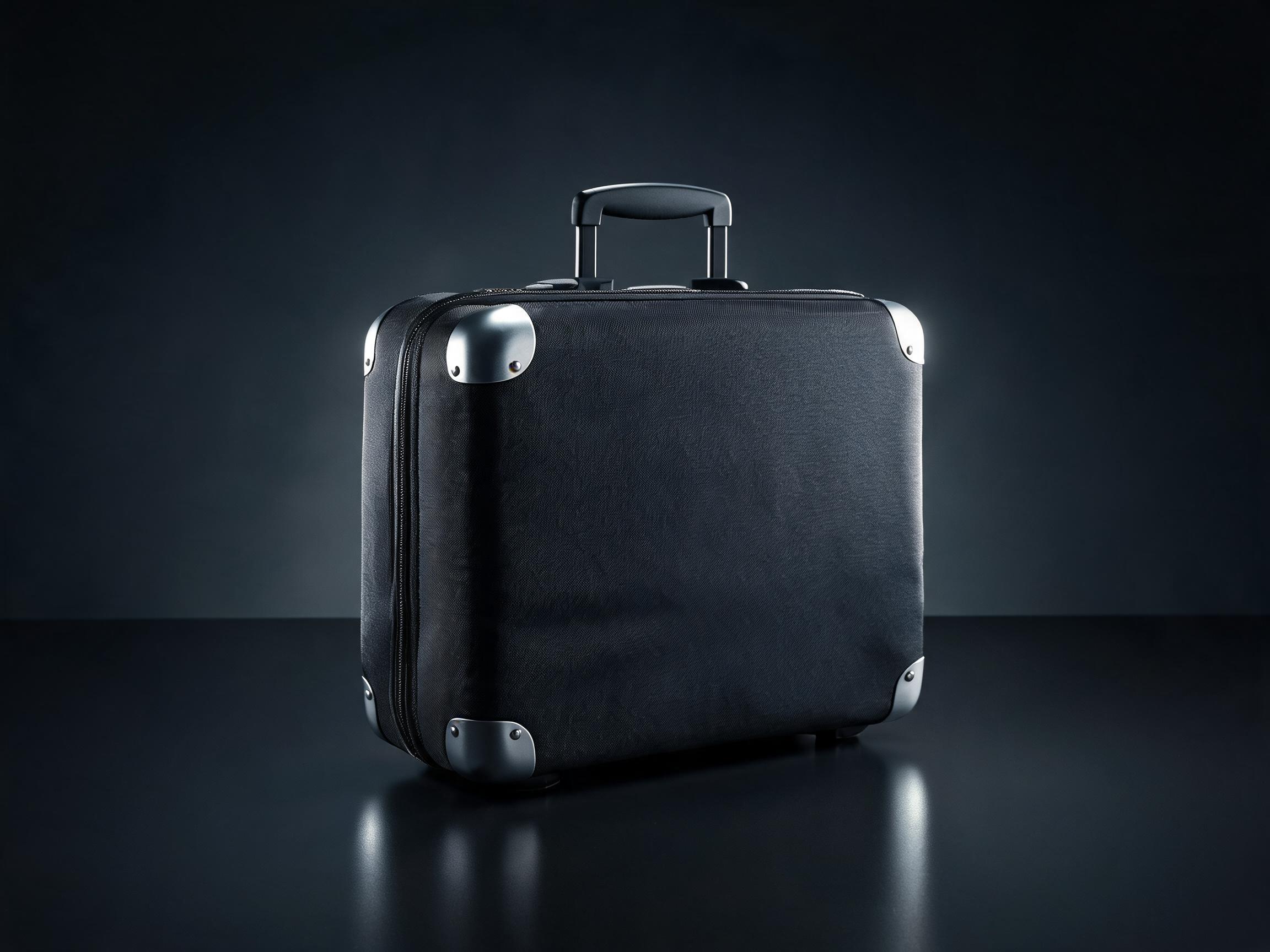
For OEM buyers, fabric denier is a specification decision, not a detail: higher denier generally means more durability and cost, lighter denier reduces weight and price. Specify the denier you want before sampling so the sample matches your price target. Both Ballistic Nylon Pilot Case and Ballistic Nylon Pilot Case (Black & Gray) are built on abrasion-resistant ballistic nylon with reinforced construction, and the denier can be specified to your program.
Corner reinforcement and hardware
The points that take the most impact are the corners and the base. Reinforced metal corners protect these high-wear zones and also reinforce the professional look of the case. Zipper grade and hardware finish should be confirmed on the sample, since they carry both durability and brand-tone implications.
OEM Customization: From Stock Design to Private Label
A capable pilot case factory should be able to adjust, at minimum:
- Fabric and color: ballistic nylon denier and shell color to match your brand palette — for example black and charcoal, or black and gray.
- Hardware: corner reinforcement, zippers and metal fittings finished in your preferred tone.
- Interior layout: document sections, device pockets and divider positions for your market.
- Branding: debossed or metal logos, woven labels and branded packaging, quoted on request.
Confirm options and any related tooling or minimums with the factory before sampling — this keeps the quotation and the sample aligned and avoids surprises at mass production.
Order Terms Buyers Ask About
Based on current Wellmax Luggage pilot case programs, the working terms are:
- MOQ: 300 pieces
- Lead time: 30–35 days after sample approval and order confirmation
- Packaging: individual poly bag or dust bag, then cartons for export
- Sampling: part of the OEM/ODM order cycle — submit target specifications, approve the sample, then start mass production
- Inspection and shipping: third-party inspection welcome; state your preferred Incoterms and destination port when requesting a quotation
Wellmax Luggage is an OEM/ODM luggage manufacturer founded in 2013 in Fujian, China, operating a 12,000 m² facility with cutting, sewing, assembly and inspection under one roof, producing roughly 150,000 pieces per month for buyers in more than 40 countries. The company's quality management system is certified to ISO 9001:2015 and its facility is audited under the BSCI framework — factory-level credentials that corporate and airline procurement teams typically require.
How to Compare Pilot Case Suppliers
Before awarding the order, check:
- Whether the factory produces ballistic nylon business cases in-house (cutting and sewing under one roof shortens sampling loops)
- Whether interior layouts can be customized, not just shell color
- What packaging formats are standard — dust bag versus poly bag affects perceived quality at unboxing
- Whether certifications are factory-level and verifiable
- Sample-approval process and realistic lead times after approval
FAQ
What is the difference between a pilot case and a briefcase?
A pilot case is an upright, structured case with wide top access, designed for frequent travel; a briefcase is generally flatter and tuned for the commute-to-meeting day. Many programs carry both, aimed at different use moments.
Is ballistic nylon worth the premium for a corporate program?
For programs where cases are dragged across terminals daily, the fabric's abrasion resistance typically extends the serviceable life of the case, which supports the uniform look of a fleet over time. Lighter weaves reduce cost but wear faster on the same duty cycle.
Can I get samples before committing to 300 pieces?
Yes. Sampling is part of the OEM/ODM order cycle. Provide your target specifications — fabric, colors, interior layout and branding — and the sample is prepared for your approval before mass production.
What branding methods work on ballistic nylon?
Woven labels and rubber or metal logo patches are common on this fabric; debossed branding applies to leather-trimmed elements. Confirm the method with the factory during sampling, and quote branded packaging at the same time.