What Stationery Buyers Are Really Evaluating in a Pencil Case Manufacturer
When a stationery brand, a school-supply program, or a promotional-products agency searches for a pencil case manufacturer, the product looks deceptively simple: a zippered pouch. But anyone who has run a stationery program at volume knows the failure modes — zipper pulls that snap off after two weeks of student handling, seams that split at the corners when the case is overpacked, prints that crack after a few months on a shelf in a hot classroom, and shipments that arrive with color lots that do not match the approved sample.
Those failures are almost never about the product concept. They are about manufacturing choices: which fabric, which zipper specification, which reinforcement at stress points, and which quality controls run before packing. This guide breaks down the decisions a B2B buyer should evaluate — and specify — when comparing pencil case manufacturers for an OEM or private-label program.
Material Logic: Matching Fabric to Program Duty
Pencil cases are made from a handful of dominant material families, each suited to a different kind of program:
| Material family | Best suited for | Buyer considerations |
|---|---|---|
| EVA / molded structures | Rigid and semi-rigid cases for school programs; protection for instruments | Structural integrity of molded seams; surface finish quality; drop behavior |
| Canvas / cotton blends | Natural-look stationery brands; eco-positioned product lines | Abrasion behavior; color fastness; edge finishing on unlined versions |
| Polyester (incl. recycled) | Volume school and promotional programs; printed brand graphics | Print method compatibility; denier/weight matched to duty; lining quality |
| PU / leather-effect | Executive and gift-positioned cases | Coating durability and cracking resistance; stitching density on thicker panels |
Two practical rules follow from this table. First, decide the program duty — daily student use, seasonal promotion, executive gifting — before choosing material, not after. Second, ask each prospective manufacturer how their cutting and sewing lines handle the specific material you plan to use: molded EVA construction, woven canvas edge finishing, and thin polyester print work are different production disciplines, and factories strong in one are not automatically strong in the others.
Zipper and Closure Specifications: The Most Common Failure Point
Across soft-goods categories, the closure is where student handling meets manufacturing tolerance. For a pencil case opened and closed dozens of times a day, the zipper specification matters more than almost any other single component:
- Zipper type. Coil zippers dominate pencil cases because they flex around curved panels and tolerate dust. Ask which zipper size (gauge) is specified — too light a gauge is the classic cost-cutting failure.
- Slider and pull. Pulls take the most abuse in school use. Reinforced pull attachments, and pull materials matched to the user age group, separate durable programs from warranty-prone ones.
- Tape integration. How the zipper tape is sewn into the seam — and whether stress ends are bar-tacked — determines whether the zipper stays in the bag or migrates out of it.
- Alternative closures. Snap-flap and open-top designs still exist in stationery ranges, mainly for younger age groups and quick-access classroom use. They change both cost structure and the sealing behavior of the case.
When you request quotes, name the closure expectation in the RFQ rather than leaving it to the factory's default. A quote without a named zipper specification is not comparable to one that names it.
Construction Details Worth Specifying
Beyond fabric and zipper, experienced stationery buyers pin down these details before sampling:
- Structure. Flat pouch, gusseted (stands up when open), box-shaped with panels, or multi-compartment. Structure drives both tooling complexity and per-unit sewing time.
- Lining. Lined cases protect contents and hide internal seams; unlined versions reduce cost but expose edge finishing quality. If unlined, ask how raw edges are finished.
- Internal organization. Elastic loops for instruments, mesh pockets, or flap dividers — each adds sewing steps that a factory must do consistently at volume.
- Reinforcement. Corner stress points and handle junctions (for cases with wrist straps) are the standard failure locations. Ask whether these are bar-tacked or reinforced with additional stitching.
- Safety and compliance expectations. Stationery products for children often carry market-specific requirements for materials and accessories. Raise your target market's requirements explicitly in the RFQ and confirm with the manufacturer what their compliance documentation covers — do not assume a general factory certification extends to your specific market's toy or stationery rules.
Branding Surfaces: What Can Be Customized at OEM Volume
Pencil cases are one of the most branding-friendly products in the soft-goods category, and the available methods differ in cost, durability, and visual effect:
- Silkscreen printing — economical for flat logo marks on polyester and canvas; durability depends on ink and curing quality.
- Heat transfer printing — supports multi-color and gradient artwork; quality varies significantly with the transfer film and press calibration, so check wash and rub results on samples.
- Woven labels — sewn-in brand labels that survive the product's life; standard for school programs where the case outlasts the school year.
- Embroidery — premium look on canvas and PU; adds per-unit cost and has design-size limits.
- Custom zipper pulls and hardware — a brandable component buyers often overlook; molded logo pulls are common in established stationery programs.
For private-label programs, also confirm how the manufacturer handles labeling compliance — care labels, origin marking, and any market-required markings — and who supplies which label elements.
OEM Terms: Structuring the Commercial Side of a Pencil Case Program
The manufacturing decisions above shape the commercial terms. When comparing manufacturer quotations, structure your RFQ so responses are genuinely comparable:
- Named specifications, not descriptions. State the material family, closure type, structure, and branding method. "Similar to the attached photo" invites divergence.
- Sample terms. Ask what pre-production sampling includes, how many revisions are covered, and how long each sampling round takes. Sampling discipline is the best available predictor of bulk discipline.
- Quantity structure. Give the factory your realistic first order and expected annual repeat volume. Low minimum-order-quantity programs often trade against per-unit price or decoration options — know which trade-off you are accepting.
- Lead-time definitions. Confirm whether quoted lead time runs from order confirmation, sample approval, or deposit — these are not interchangeable.
- Quality control points. Ask which inspections happen in-line versus at final inspection, and whether third-party inspection is accommodated.
A manufacturer that responds to a specified RFQ with clarifying questions is demonstrating exactly the process discipline stationery programs need. A same-day quote on an unspecified brief should be read as a red flag, not a convenience.
Why Soft-Goods Manufacturing Capability Matters Across Categories
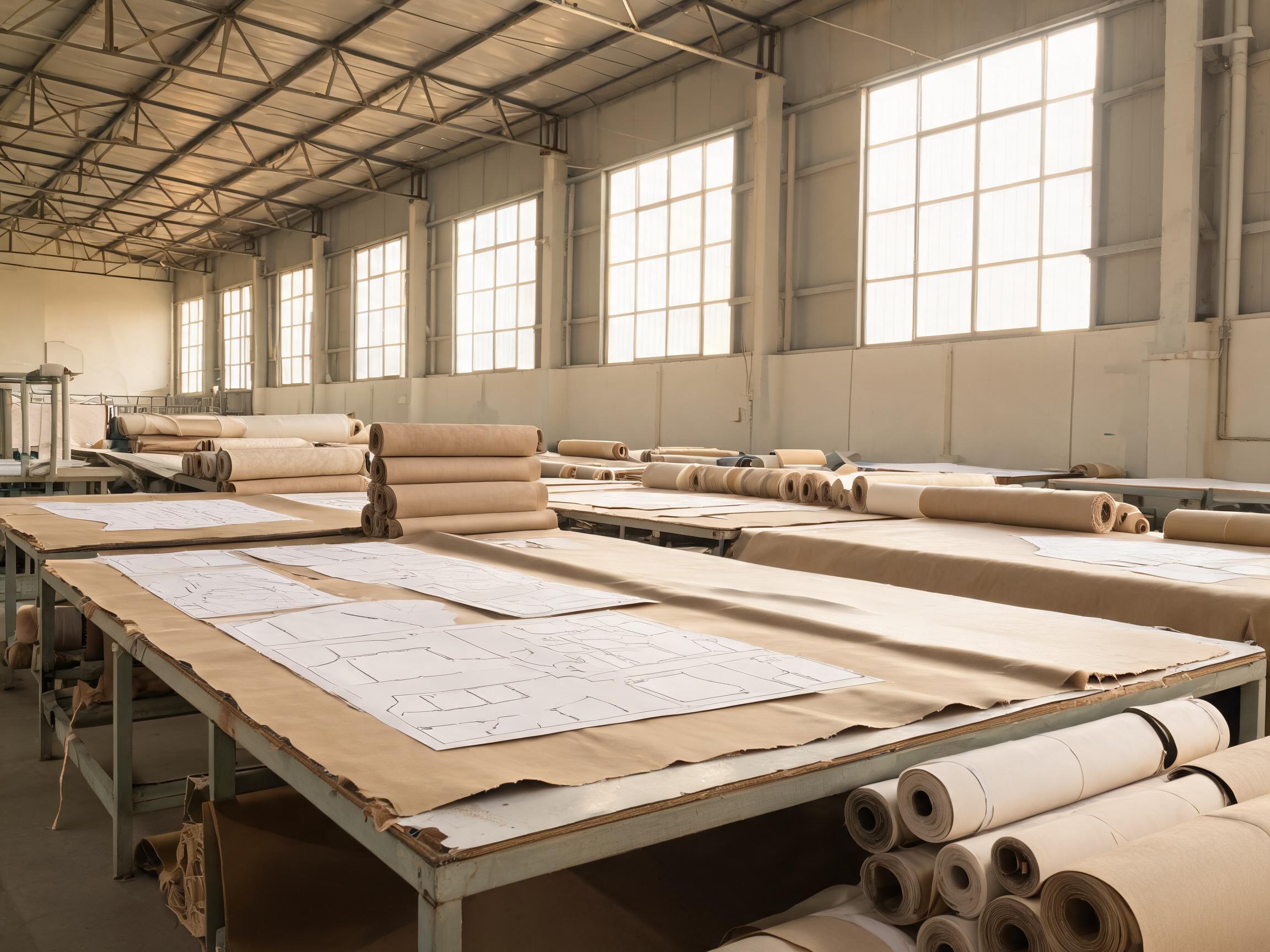
Pencil cases sit in the same production family as other sewn soft goods: cutting accuracy, stitch consistency, webbing and zipper integration, and systematic inspection determine quality whether the product is a travel backpack, a tote, or a school pencil case. Buyers evaluating a pencil case manufacturer can therefore look at fundamentals that apply across the bag category: an in-house cutting and sewing floor rather than fully outsourced stitching, a sampling studio capable of iterating construction variants, and integrated inspection before packing.
Wellmax Luggage manufactures luggage, backpacks, business bags, and handbags on integrated cutting, sewing, assembly, and inspection lines in Quanzhou, Fujian, supplying program buyers in more than 40 countries. Stationery pouches share that same soft-goods production capability — and we confirm current category experience, capacity, and compliance documentation directly with buyers during RFQ and sampling, rather than assuming every stationery program maps onto our catalog products.
Frequently Asked Questions
What is the typical minimum order for custom pencil cases?
Minimums vary by manufacturer, structure, and customization method — printed stock shapes generally run lower minimums than fully custom molded or multi-compartment constructions. Ask each prospective factory to quote your actual program volume rather than relying on generic MOQ claims.
Can pencil case manufacturers match a specific Pantone color?
Reputable manufacturers work from Pantone references for fabrics and printing, but exact matching should be confirmed on physical samples — fabric base color, coating, and print ink all shift the final result. Approve a lab-dip or sample before bulk production.
How long does sampling usually take?
Sampling timelines depend on structure complexity, decoration method, and how many revisions the program needs. Ask each manufacturer to define what one sampling round includes and how revisions are handled, then compare on that basis.