Wholesale Sourcing Guide
A custom suitcase program succeeds or fails on three things: how you split hard sizes and soft sizes into order lines, which customization options actually belong at each retail price point, and whether the shipped container matches the approved sample. This guide is for retailers and private-label buyers placing wholesale orders with a China custom suitcase manufacturer, and it focuses on execution rather than mold development.
Key takeaways
- A wholesale suitcase order is a size-mix decision first and a decoration decision second. Confirm the mix before you negotiate the artwork.
- Verified MOQ on standard hardshell and softside models is 300 pcs, with lead time of 30–35 days after sample approval.
- Customization splits into five layers: shell, wheels and trolley, zipper and hardware, interior, and branding. Each layer has a price-point ceiling.
- Pre-shipment verification should include function checks on wheels, handles and zippers during pre-packing, plus a container-loading plan that matches carton dimensions to the pallet or floor-load sequence.
Why the order structure decides your margins
Buyers searching a China custom suitcase wholesale supplier usually start from a price target and a shelf plan. The mistake is to fix the artwork brief before the size mix. Size mix affects carton count, container utilization and the per-unit landed cost of the whole order, so it belongs in the same conversation as the purchase order itself.
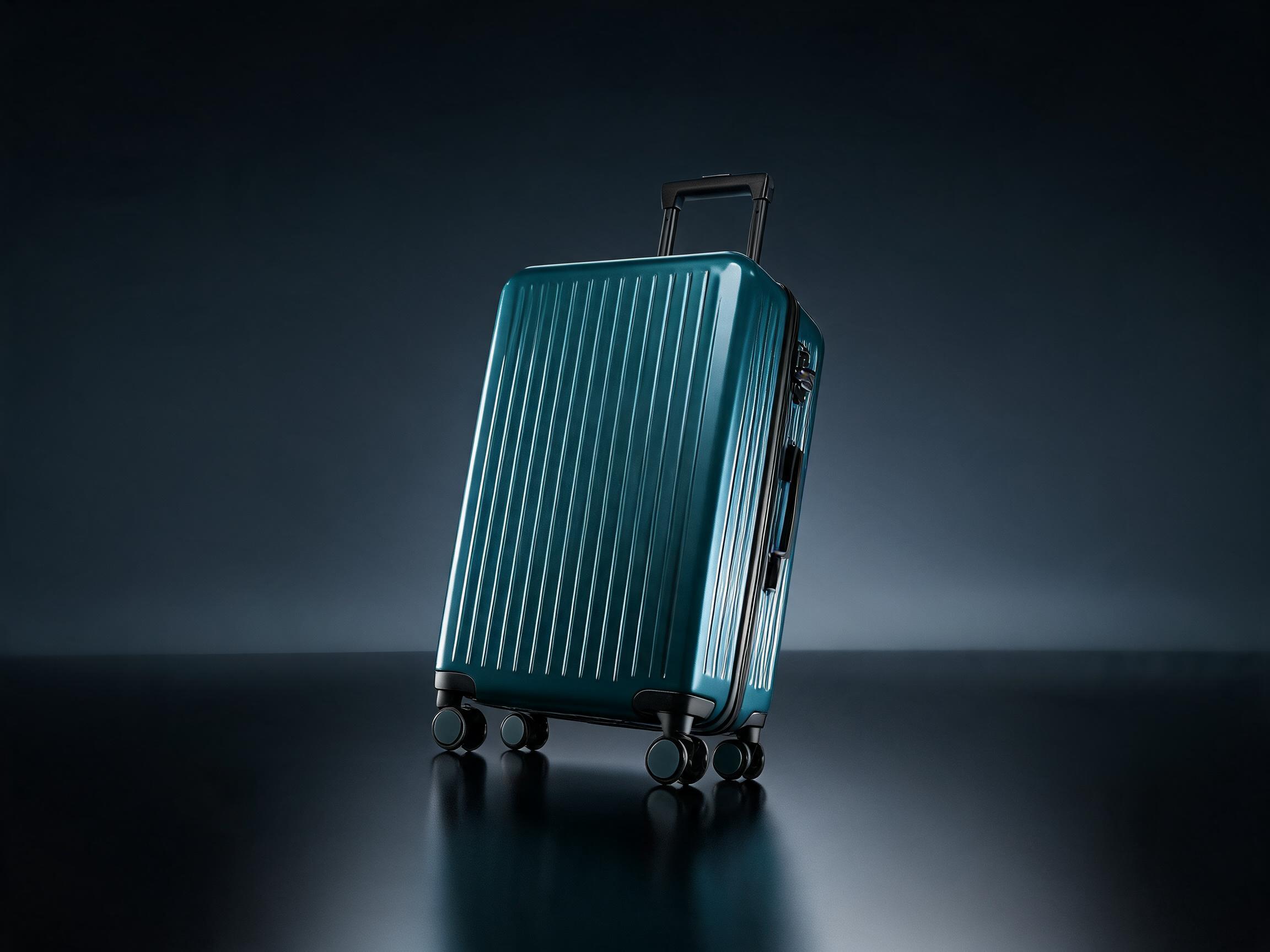
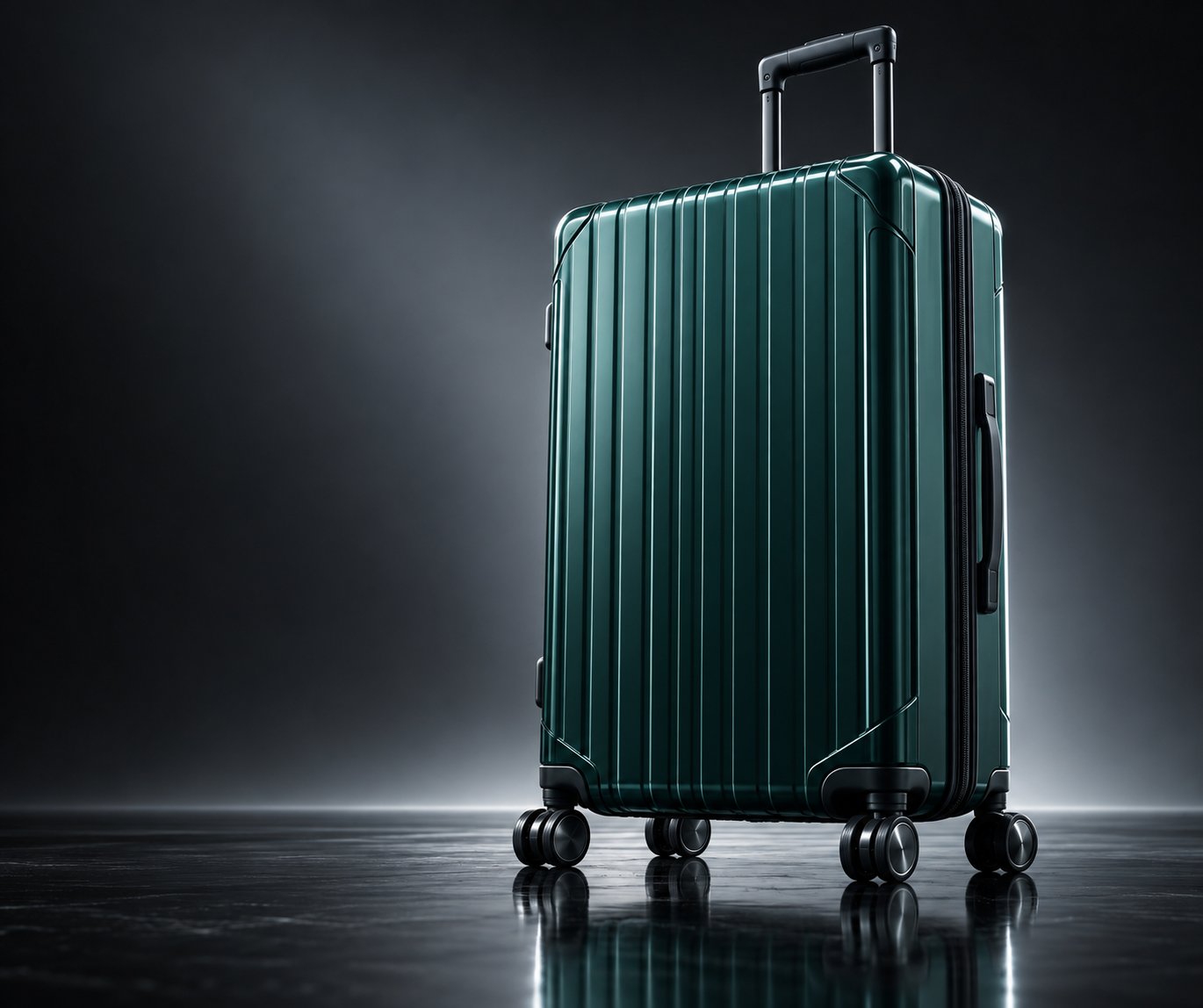
A suitcase program is normally built as a family: one 28-inch hardshell trolley as the volume driver, a 24-inch mid-size either in hard or soft construction, and a carry-on or 20-inch entry model as the traffic builder. On a verified product line, the flagship item is a Hardshell Trolley Case 28" PC Spinner in polycarbonate at approximately 95 L, with four double spinner wheels, a telescopic handle and zipper closure. The matching mid-size is available in two constructions: a Solid Color Spinner Luggage 24" in polycarbonate and a softside 24-inch version in polyester fabric. Both carry four double spinner wheels and the same 300 pcs MOQ.
When you write the PO, express each line by size, construction and color rather than by a single product code. That makes it possible to shift volume between sizes without reopening the whole quotation.
Building the size mix across a suitcase program
Start from the shelf, not the factory
Retail shelf plans, not factory convenience, should set the ratio. A three-size program typically orders more 24-inch units than 28-inch because the middle size turns fastest in most markets, with the 28-inch carrying higher unit margin and the carry-on covering the entry price. Once you have a rough ratio, ask the supplier to confirm which lines share the same shell tooling and color range, since shared construction reduces the color-matching workload across the order.
Keep colors consistent across sizes
The 28-inch PC spinner is offered in matte black, navy and silver. If your 24-inch line uses a different color set, the program starts to look like two unrelated products on the shelf. A simple rule: pick one shared neutral across all hardshell sizes, then add a seasonal accent only on the mid-size if your market supports it.
Verify MOQ per line, not per order
MOQ is quoted per model and color where customization is involved. A 300 pcs MOQ on each size means a three-size program starts at 900 pcs before any color variation. Plan your first order around fewer colors and more depth per color; add colors in season two once the sell-through data exists.
The customization menu and where each layer fits
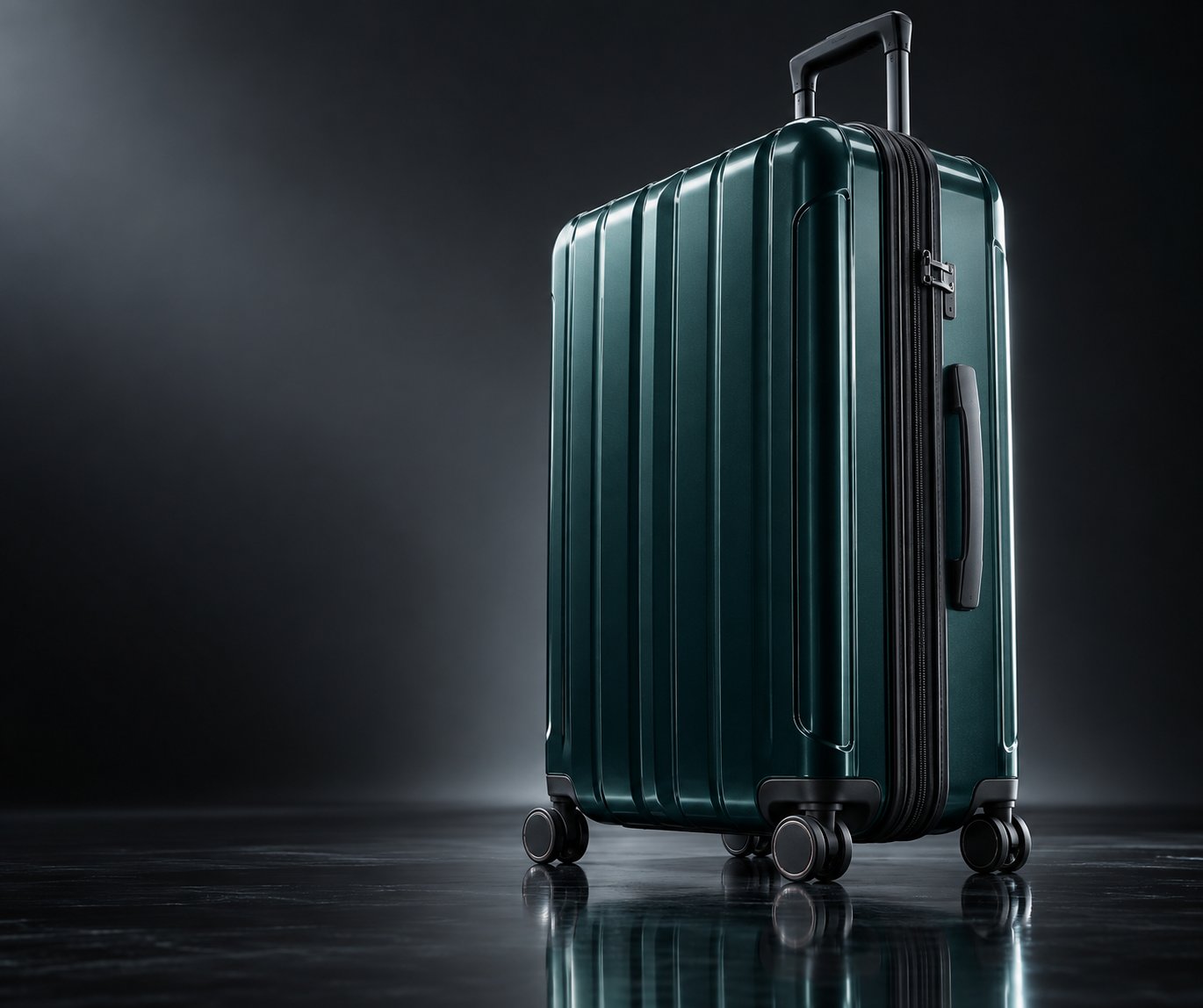
Customization is a menu, not a single switch. The verified menu for the flagship hardshell model covers shell color and texture, trolley system and wheel type, zipper hardware, interior lining, dividers and straps, and molded logos, printing, hangtags or branded packaging on request. Treat these as five layers and decide, layer by layer, how far your price point reaches.
| Layer | What can be specified | Where it earns its cost |
|---|---|---|
| Shell | Color and texture on polycarbonate construction; matte black, navy or silver on standard runs | Entry to mid-tier private label; the most visible differentiator on shelf |
| Wheels & trolley | Trolley system and wheel type; four double spinner wheels on verified models | Mid-tier and above, where handling feel is part of the brand promise |
| Zipper & hardware | Zipper hardware selection and color coordination | Programs competing on build perception rather than price alone |
| Interior | Lining, dividers and packing straps | Private label where unboxing and repeat purchase matter |
| Branding | Molded logos, printing, hangtags and branded packaging on request | Any line sold under your own name |
Sequence matters more than the wish list. Shell color and texture set the visual identity; hardware and interior decisions should follow the shell, not precede it. Branding sits last because molded logos and printed packaging depend on final artwork, and artwork approval is what releases the production slot.
Pre-shipment checks that protect the container
Function checks belong in pre-packing, not at the port
On a 300-piece line, a wheel that binds or a telescopic handle that sticks is not a cosmetic issue. Wheel, handle and zipper function checks are built into the pre-packing workflow on this product line, which means units are exercised before they are packed rather than sampled after cartoning. For buyers, the practical question is not whether checks happen, but where they sit in the sequence: if function checks occur before packing, a failed unit is caught while it is still accessible on the line.
Match the carton to the container plan
Container loading is a separate discipline from product QC. Before shipment, confirm the packed carton dimensions and the load sequence for each size line. Mixed-size orders load unevenly if cartons from different sizes are not grouped, and a floor-loaded container can still leave void space at the doors. Ask for the loading plan alongside the packing list so the sequence is agreed before the container arrives.
Reconcile counts against the approved sample
Pre-shipment inspection should reconcile three things: quantity per size and color against the PO, the shipped configuration against the approved sample or golden sample, and the packing list against the physical cartons. This is also the point to confirm branding items — molded logos, hangtags and branded packaging — are present and matched to the correct size line, since branding mistakes are expensive to correct after the container has sailed.
Supplier-side factors buyers should confirm before ordering
Order execution depends on who actually runs the processes. Wellmax Luggage is a Fujian, China OEM/ODM manufacturer founded in 2013, with roughly 320 staff and a 12,000 m² facility that keeps shell molding, cutting, sewing, assembly and inspection under one roof. Capacity is approximately 150,000 pieces per month, and the company exports to more than 40 countries. It holds ISO 9001:2015 at company and factory level and is BSCI audited.
For a wholesale buyer, the relevant question is not the headline number but the handoffs: where the shell leaves molding, where assembly begins, and at which point inspection is performed. A single-site flow reduces the number of handoffs between your order and the shipped carton, which is easier to audit.
Frequently asked questions
What is the MOQ for a custom suitcase order?
The verified MOQ on the 28-inch PC spinner, the 24-inch solid color spinner and the 24-inch softside spinner is 300 pcs per model. Because MOQ applies per line and color where customization is involved, a multi-size program totals the combined quantity across lines.
How long does production take after the sample is approved?
Lead time is 30–35 days after sample approval. That window starts when the sample is approved, not when the inquiry is sent, so artwork and sample approvals are the schedule-critical steps.
Can interior and branding be customized at the same time as the shell?
Yes. The verified customization menu covers shell color and texture, trolley and wheel type, zipper hardware, interior lining, dividers and straps, and molded logos, printing, hangtags or branded packaging on request. In practice these are approved in sequence so the shell decision anchors the rest.
What should be verified before the container is loaded?
Function checks on wheels, handles and zippers during pre-packing, quantity reconciliation against the PO by size and color, comparison of the shipped configuration against the approved sample, and agreement on the carton and loading sequence.
Next step
If you are building a first wholesale custom suitcase program, send your target size mix, construction preference and branding scope. You can request specifications and current availability for the 28-inch PC spinner and the 24-inch solid color spinner directly, and ask for the packing and loading details for your destination container. Confirming the size mix, the customization layers and the pre-shipment checkpoints before the PO is issued is what keeps a 30–35 day production window predictable.