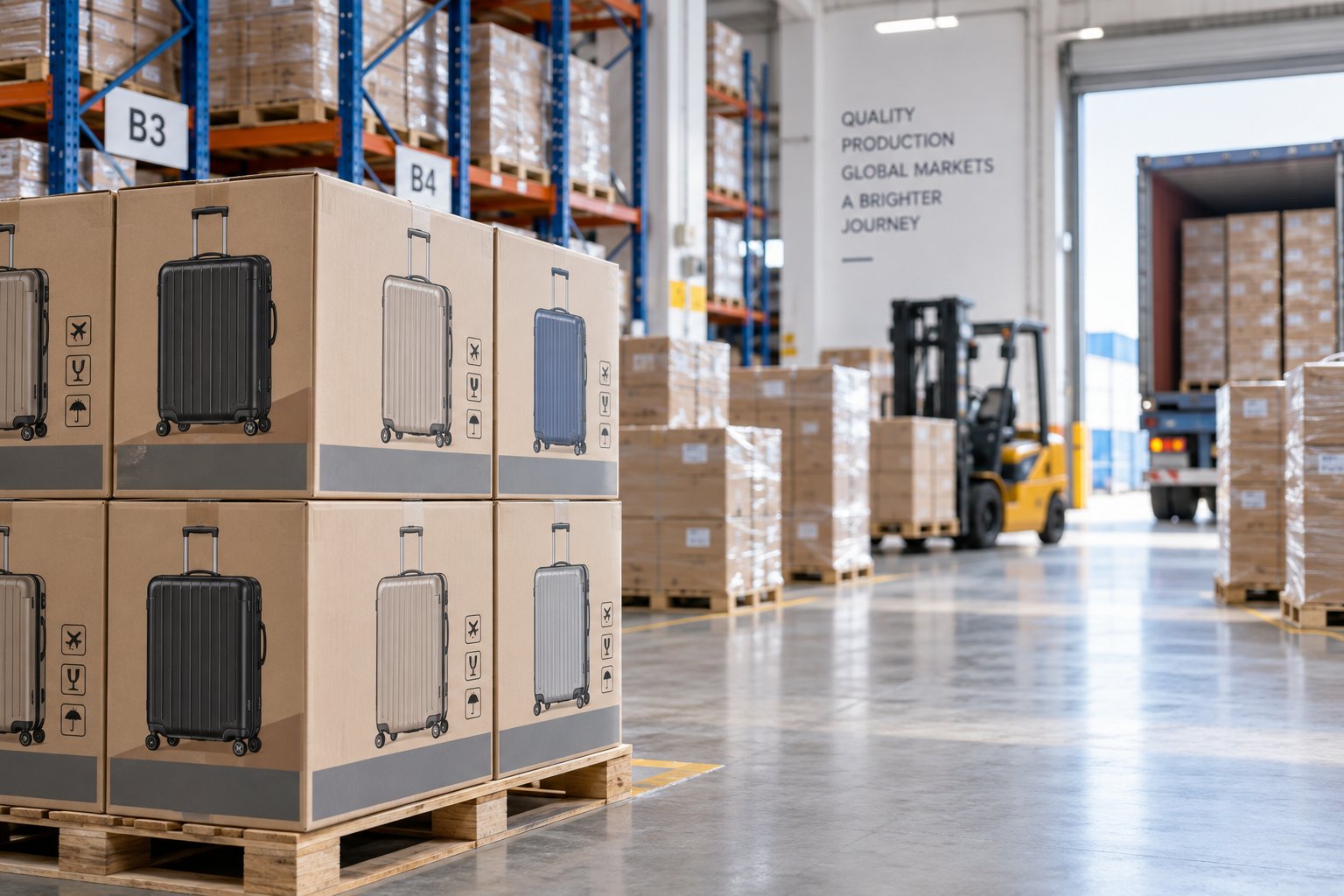
Search interest in luggage made in China sits at a monthly volume of 10 on Google Ads, with high ad competition and an average cost per click around 82.66 USD. That combination tells you something important: the buyers searching this term are not casual shoppers. They are sourcing professionals comparing factory capabilities, compliance records, and production scale before committing to a program. This article gives you the full picture — where China's bag-making clusters are, what separates a capable factory from a trading desk, how to source trolley cases, backpacks and handbags, and what to verify before you place a purchase order.
- China's bag manufacturing is clustered by product type and export route, not spread evenly across the country.
- Trolley cases, backpacks and handbags draw on different tooling, materials and assembly skills — one factory rarely excels at all three at the same level.
- Qualification is a pre-order exercise: confirm the legal entity, audit status, in-house processes and export documentation before sampling.
- Wellmax Luggage, founded in 2013 in Fujian, runs a 12,000 m² facility with about 320 employees and roughly 150,000 pieces per month across trolley cases, backpacks, business and laptop bags, and handbags.
Why China Remains the Default Source for Luggage and Bags
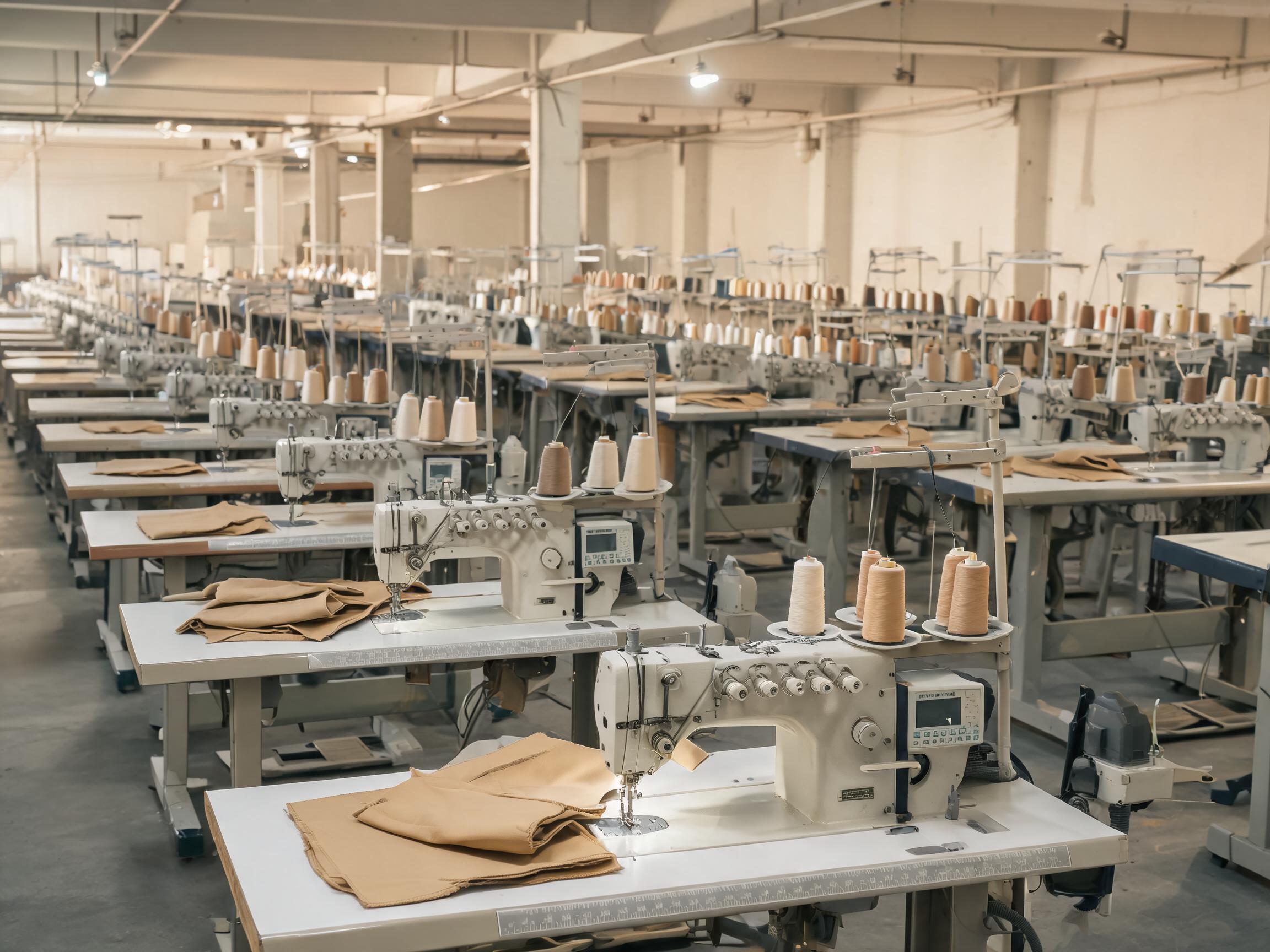
China's advantage in bag manufacturing is not a single factory story. It is an ecosystem: hardware suppliers, zipper and fabric mills, wheel and trolley-handle specialists, printing and embroidery shops, and export consolidators all sit within a few hours of the main production zones. For a buyer, that density translates into faster sampling rounds, more material options, and a deeper bench of subcontractors when a program scales.
The country also exports to a wide range of markets, which means factories are used to different compliance expectations — from REACH and Prop 65 documentation to social audit requirements. Wellmax Luggage, for example, holds ISO 9001:2015 certification and has been audited under the BSCI social compliance framework, and its export sales team serves buyers in more than 40 countries.
China's Bag-Making Industrial Clusters
Knowing where production concentrates helps you target the right region for your product category and avoid wasting sampling cycles on factories that are outside their specialty.
Fujian and Zhejiang: Trolley Cases and Structured Bags
Fujian province, particularly around Quanzhou and Xiamen, has become a major base for hardshell and softside trolley cases. The region benefits from proximity to polycarbonate and ABS sheet suppliers, wheel and handle component makers, and port infrastructure that shortens inland transport before export. Zhejiang, around Wenzhou and Yiwu, is strong in soft bags, business cases and handbags, with a dense network of fabric and hardware markets.
Guangdong: Backpacks, Laptop Bags and Fashion Handbags
Guangdong's Pearl River Delta remains the most diversified bag cluster. Factories here handle everything from technical backpacks and laptop bags to fashion handbags, often with in-house cutting, sewing and finishing. The region's advantage is speed and variety — useful if your program mixes materials or requires frequent design changes.
Hebei and Jiangsu: Mid-Volume and Component Supply
Hebei, around Baigou, is known for mid-volume bag production and component trading. Jiangsu offers a mix of textile and bag manufacturing with strong logistics links to Shanghai. These regions can be competitive for simpler constructions or when you need a second source alongside a primary factory.
Manufacturing Capability: What a Real Factory Looks Like
When buyers ask about luggage made in China, the underlying question is usually about capability. Can this factory actually produce what I need, at the volume I need, with consistent quality? The answer lies in the production floor, not the catalog.
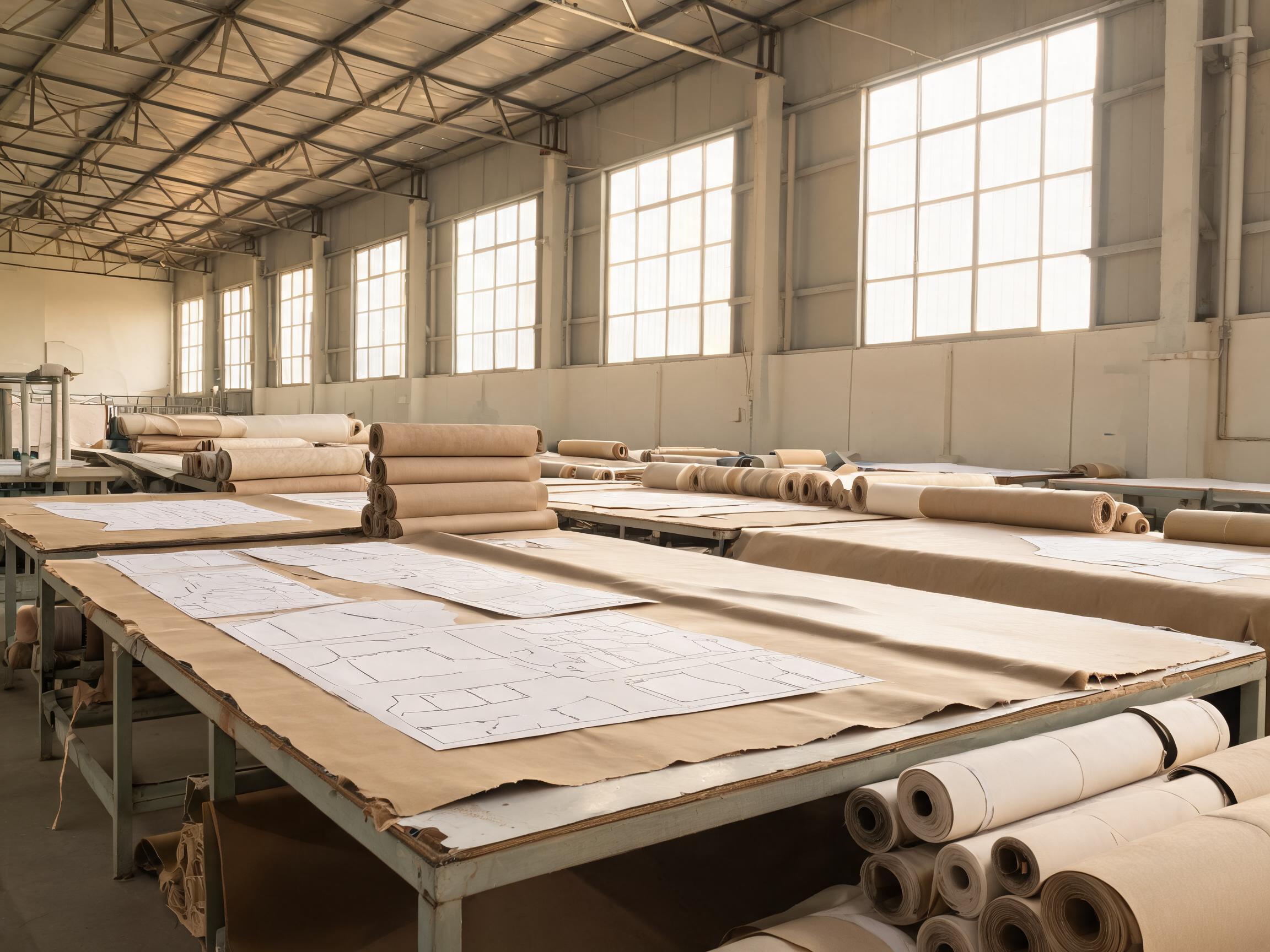
A factory with genuine manufacturing depth typically has:
- In-house cutting and sewing — not just final assembly. This affects lead time control and quality consistency.
- Tooling and mold capability for hardshell trolley cases, or a stable relationship with a dedicated tooling partner.
- Component sourcing discipline — wheels, telescopic handles, zippers and linings sourced from qualified suppliers with traceable specifications.
- Quality inspection stations at incoming material, in-process and final stages.
- Export documentation experience — commercial invoice, packing list, bill of lading, and any certificate of origin or test report your market requires.
Wellmax Luggage, based in Fujian, operates a 12,000 m² facility with about 320 employees and produces roughly 150,000 pieces per month. Its product range covers trolley cases, backpacks, business and laptop bags, and handbags, and it supports the full order cycle from sampling and tooling through mass production, quality inspection and export.
How to Source Trolley Cases, Backpacks and Handbags
The sourcing process differs by product type because the technical risks differ. Trolley cases hinge on shell material, wheel and handle durability, and telescopic system testing. Backpacks depend on fabric weight, stitching reinforcement, zipper quality and ergonomic structure. Handbags are driven by material hand-feel, hardware finish, lining quality and edge finishing.
Step 1: Define Your Specification Before Contacting Factories
Factories respond faster and more accurately when you provide a clear brief. Include dimensions, material preference, target market, compliance requirements, and expected order volume. If you are still exploring, ask the factory for their standard constructions in your category — many will share existing models you can adapt.
Step 2: Request Samples and Evaluate Against Your Brief
Sampling is where you learn the most about a supplier. Look at stitching density, hardware alignment, zipper smoothness, lining attachment, and whether the sample matches the agreed specification. For trolley cases, test the telescopic handle and wheel movement. For backpacks, check strap attachment points and load distribution. For handbags, inspect edge paint, hardware plating and interior finishing.
Step 3: Confirm Tooling and Production Readiness
If your design requires new molds or dies, clarify who owns the tooling and how it will be maintained. For hardshell trolley cases, tooling is a significant investment; for soft bags, pattern making and sample approval are the critical path. Wellmax Luggage supports tooling as part of the full order cycle, which matters when you are developing a new model rather than buying an existing one.
Step 4: Agree on Inspection and Shipping Terms
Specify the inspection standard, the inspection point (pre-shipment is most common), and who bears the cost. Confirm Incoterms, port of loading, and documentation requirements. If your market requires specific testing, arrange it before production or during the sampling stage so there are no surprises at customs.
Pre-Order Qualification and Compliance Checklist
Use this checklist before you place a purchase order. It is designed to surface risks early, when they are still cheap to fix.
| Area | What to Verify | Why It Matters |
|---|---|---|
| Legal entity | Business license, registered name, factory address vs. office address | Confirms you are dealing with a manufacturer, not an intermediary |
| Quality system | ISO 9001:2015 or equivalent certificate, scope and validity | Indicates a documented quality management process |
| Social compliance | BSCI or similar audit report, date and rating | Required by many EU and US buyers; affects market access |
| Production capacity | Monthly output, current order load, peak season constraints | Ensures your delivery schedule is realistic |
| Material compliance | REACH, Prop 65, or other market-specific test reports for fabrics, coatings and hardware | Prevents customs holds and returns |
| Sampling process | Sample lead time, revision rounds, approval sign-off | Sets expectations for development timeline |
| Inspection | In-house QC stations, third-party inspection acceptance | Gives you an independent quality checkpoint |
| Export documentation | Invoice, packing list, B/L, certificate of origin, test reports | Smooth customs clearance at destination |
Product Focus: Matching the Factory to the Item
Different bag types reward different factory strengths. If your program includes multiple categories, consider whether one supplier can cover them all or whether you need a primary and secondary source.
- Trolley cases: Look for hardshell tooling capability and wheel/handle testing. A factory that makes both hardshell and softside luggage can often offer more construction options. For example, a 28-inch polycarbonate hardshell trolley case and a 24-inch softside spinner require different assembly lines and material handling.
- Backpacks: Prioritize fabric sourcing, stitching reinforcement and ergonomic design. A 35L convertible travel backpack is a good test of whether a factory can handle multiple carry configurations and hardware placement.
- Handbags: Focus on material hand-feel, hardware quality and finishing. Handbag production is often more labor-intensive and less automated than trolley case assembly.
Wellmax Luggage produces across these categories — trolley cases, backpacks, business and laptop bags, and handbags — which allows buyers to consolidate development and production with one supplier when their range spans more than one bag type.
Common Sourcing Mistakes to Avoid
- Choosing on price alone. A low quote often reflects thinner materials, lower-grade hardware or outsourced assembly. Compare specifications, not just numbers.
- Skipping the sample stage. Approving a catalog photo instead of a physical sample is the fastest way to receive a shipment that does not match your expectations.
- Ignoring compliance until shipment. Testing after production is expensive. Build compliance into the sampling stage.
- Assuming one factory can do everything. A factory strong in hardshell trolley cases may not be the best source for fashion handbags. Match the factory to the product.
- Not clarifying tooling ownership. If you pay for a mold, confirm in writing that it remains yours or is reserved for your orders.
Frequently Asked Questions
Is it better to work with a factory or a trading company?
A factory gives you direct control over production, sampling and quality inspection. A trading company can offer convenience and a wider product range, but you may pay a margin and have less visibility into the production floor. For custom programs, a factory with in-house manufacturing is usually the stronger choice.
What certifications should a luggage factory have?
ISO 9001:2015 is a baseline quality management certification. Social compliance audits such as BSCI are important if you sell into markets with ethical sourcing requirements. Material test reports (REACH, Prop 65) depend on your destination market and product materials. Always ask for the certificate scope and validity date, not just the certificate itself.
Can I source trolley cases, backpacks and handbags from the same factory?
Some factories, including Wellmax Luggage, produce across these categories. This can simplify development and logistics, but you should still evaluate the factory's strength in each category. A factory that is excellent at hardshell trolley cases may have a different level of expertise in handbags.
How do I verify a factory's export experience?
Ask for their main export markets, the documentation they routinely provide, and whether they have experience with your destination country's import requirements. Wellmax Luggage's export sales team serves buyers in more than 40 countries, and the company exhibits at international luggage fairs.
What should I include in my first inquiry?
Provide your product type, target specifications, estimated order volume, destination market, and any compliance requirements. If you have reference samples or design files, share them. The more specific your brief, the more useful the factory's response will be.
Next Steps for Your Sourcing Program
Sourcing luggage made in China is a process of narrowing down: from country to cluster, from cluster to factory, from factory to sample, and from sample to production order. The buyers who get the best results are the ones who qualify suppliers before they commit, test samples against a written specification, and keep compliance documentation in order from the start.
If you are evaluating suppliers for trolley cases, backpacks or handbags, start with a clear brief and a sample request. Wellmax Luggage, founded in 2013 in Fujian, supports sampling, tooling, mass production, quality inspection and export for buyers worldwide. Its 12,000 m² facility and roughly 150,000 pieces per month capacity make it a practical starting point for programs that need a manufacturer with in-house capability across multiple bag categories. Reach out with your specifications to begin the qualification process.