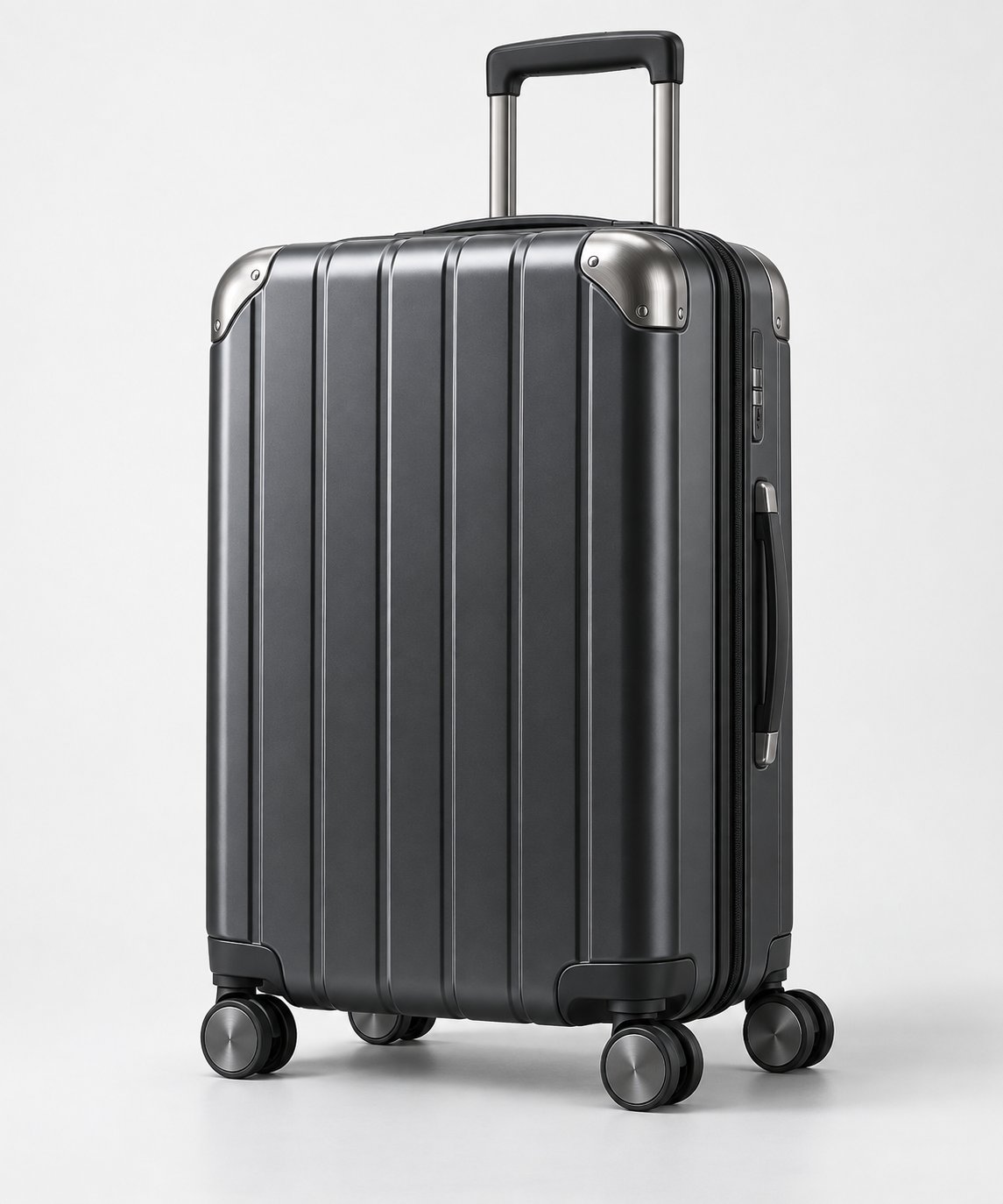
Rolling cases that protect a laptop are standard equipment in corporate programs — field sales teams, consulting crews, executive gifts. If you are sourcing a laptop trolley bag for such a program, the decisions that matter are structural: one-piece trolley or two-piece system, how the laptop compartment is built, and what the wheels and handle can survive. This guide walks through each decision point, then covers OEM order terms with a China-based manufacturer.
Why Programs Specify Laptop Trolley Bags
A laptop trolley bag consolidates device protection and rolling transport into one piece of kit. For buyers running branded programs, the appeal is consistency — everyone carries the same case, logo placement and interior layout. For distributors, it is a repeat-purchase category with clear specification checklists.
One clarification on sizing before anything else. Carry-on limits differ by airline and region, and manufacturers publish product dimensions, not airline approvals. Treat cabin compliance as a verification step: list the airlines your users fly most, pull their stated carry-on dimensions, and confirm your target case's external measurements against them before locking a specification. The same logic applies to laptop sizing — measure the devices your program actually uses, including sleeves and bumper cases.
Structure Choices: One-Piece Trolley vs Two-Piece Systems
The first decision is a single rolling case with a padded laptop section inside, or a two-piece setup — a rolling base plus a detachable briefcase or pilot case.
One-piece rolling case
- Pros: fewer parts, simpler SKU management, typically lower unit cost.
- Trade-offs: the laptop shares a cavity with clothing and cables, so the compartment's closure and positioning carry more of the protection load; checkpoint access depends on the opening design.
Two-piece system (rolling base + pilot case / briefcase)
- Pros: the laptop piece detaches for meetings, so one purchase covers travel and daily use; users can take only the top piece on short trips.
- Trade-offs: more components to specify and inspect — attachment points, straps or integrated sleeve, plus the connecting hardware.
Map the usage pattern first. If users fly to a client and go straight into a meeting, the two-piece format usually wins. If the case is checked or stays in a hotel, a one-piece checked-size trolley is often simpler per user.
Laptop Compartment Specs to Pin Down
This is where OEM specifications get lost in translation. Confirm each of the following in writing, on a physical sample:
- Device size range: maximum device footprint in centimeters, not "fits 15-inch laptops." A 16-inch workstation with a thick bumper case may not fit a "15-inch" pocket.
- Padding: where foam sits (back panel, base, sides), its thickness, and whether the compartment is suspended above the base to absorb drops.
- Closure: zippered, hook-and-loop, or snap strap. Straps are quicker at checkpoints; zips seal better against shifting contents.
- Access: laptop-first access through a separate front or side panel versus opening the whole main cavity. Business users usually require separate access.
- Organizer: document sections, device pockets, divider positions, pen and cable slots — cheapest to change at sampling, most expensive after production.
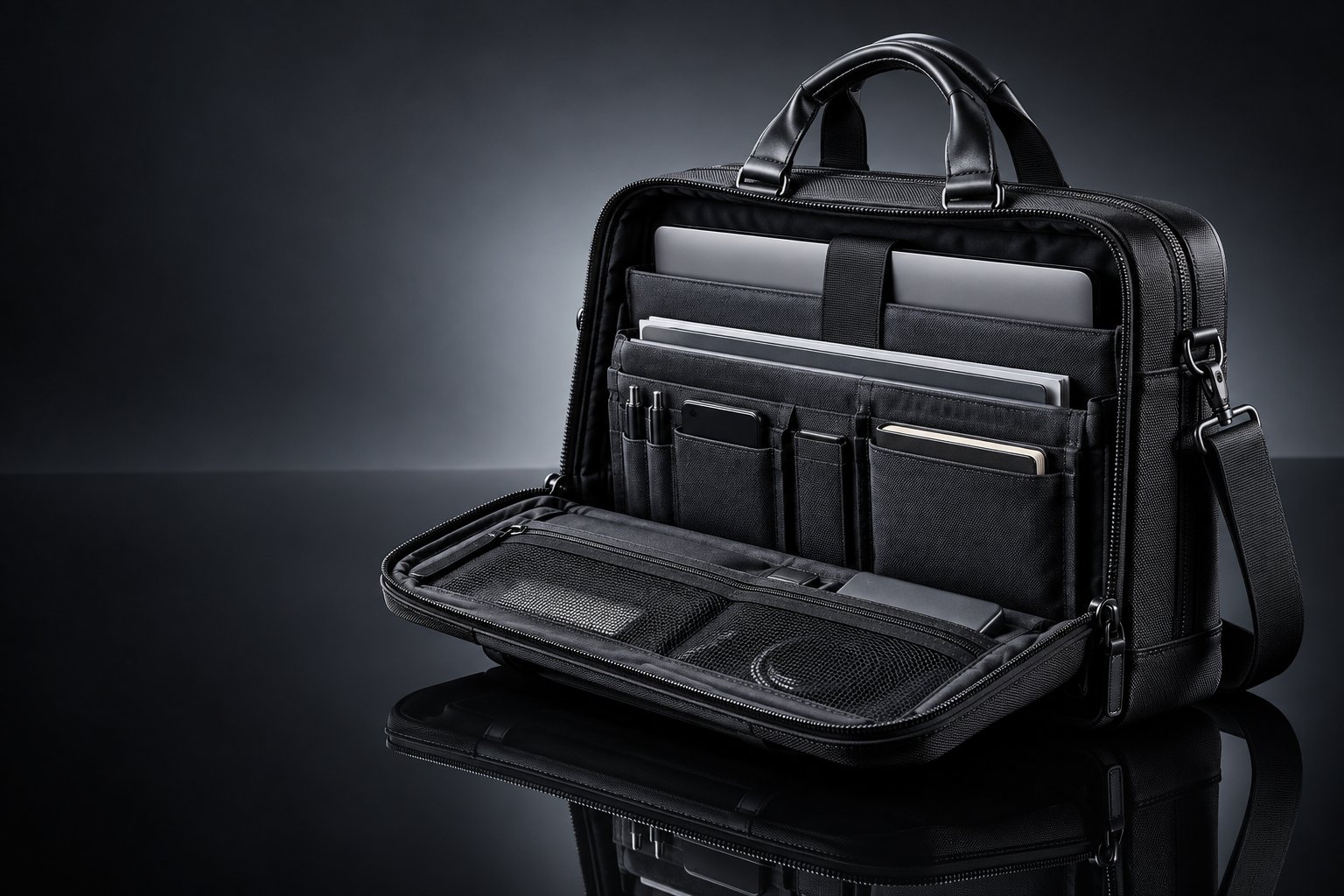
Interior layout — document sections, device pockets and divider positions — is a confirmed customization point on Wellmax's published pilot case.
Wheels, Handles and Bases for Business Use
Business trolleys run on pavement, carpet and airport floors, with a laptop adding concentrated weight. Compare wheel and handle systems on criteria, not marketing names:
- Wheel count and type: two inline wheels vs four spinners. Spinners roll in every direction and reduce wrist strain but expose more components. The published reference across Wellmax's trolley lines is four spinner wheels on the business trolley and four dual spinner wheels on the softside 24-inch model.
- Handle: telescoping stages, locking positions, and wobble tolerance at full extension — where budget cases fail first.
- Base and corners: these take the standing and impact loads. Wellmax's published business line uses metal corner guards on its 26-inch polycarbonate trolley and reinforced metal corners on the ballistic nylon pilot case.
- Stress points: ask how the factory reinforces areas where straps, handle mounts and wheels anchor — stress-point reinforcement is built into Wellmax's workflow, but the details on your SKU are confirmed on your sample.
Materials and Hardware: Reference Points from a Published Business Line
Concrete examples make specification conversations faster. Wellmax Luggage, an OEM/ODM luggage and bag manufacturer in Fujian, China founded in 2013, publishes three business-line products that map to the structure choices above.
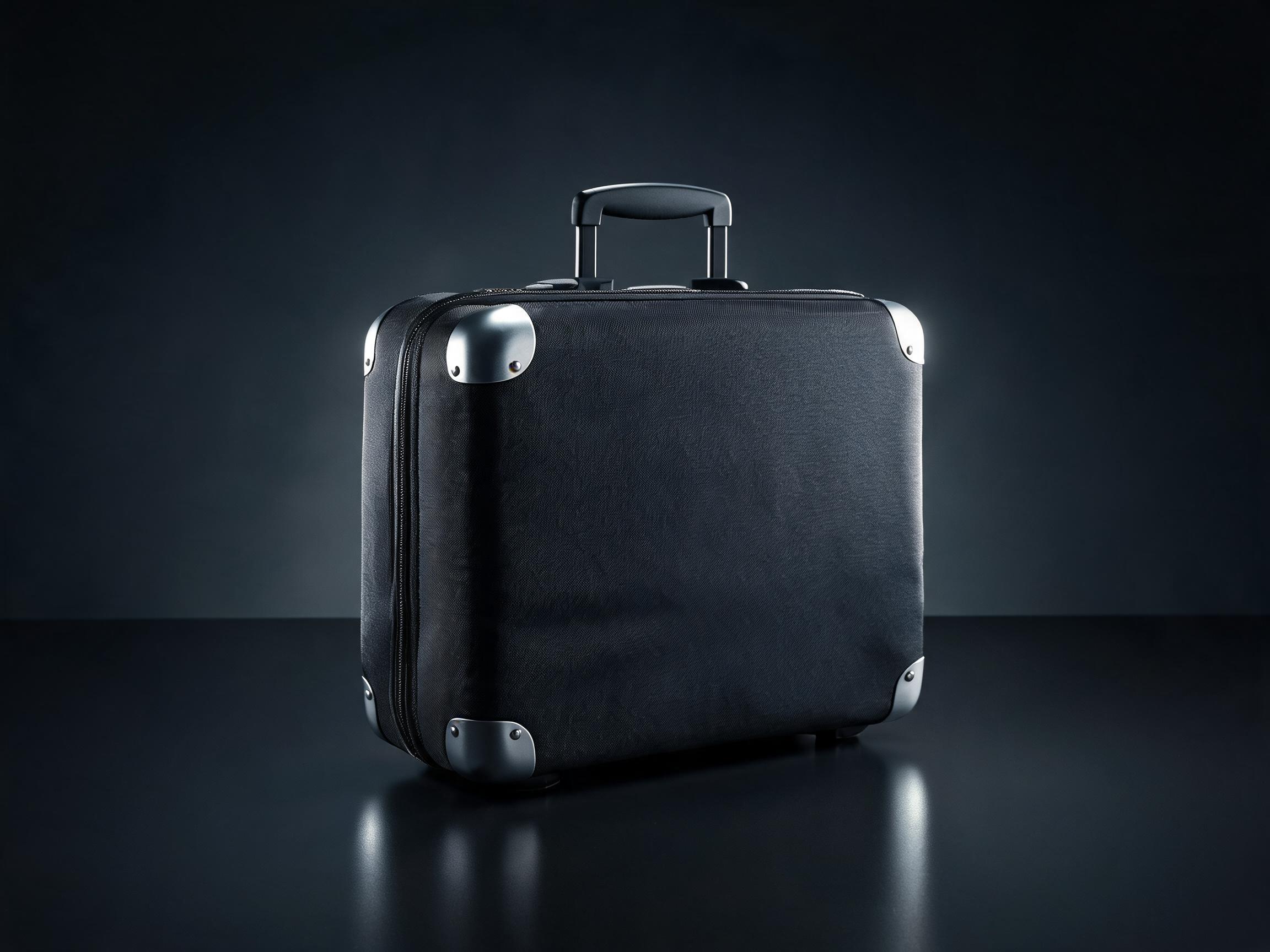
Ballistic nylon pilot case with reinforced metal corners — the detachable-top format for two-piece programs.
| Product | Material | Key hardware / features | Packaging |
|---|---|---|---|
| Business Hardshell Trolley 26" | Polycarbonate hardshell | Metal corner guards, 4 spinner wheels; Charcoal/Black | Single carton |
| Ballistic Nylon Pilot Case | Abrasion-resistant ballistic nylon | Reinforced metal corners, zipper closure, organizer interior, top handle + shoulder strap; Black/Charcoal | Polybag + carton |
| Laptop Tote Briefcase | PU leather | Top zipper closure, padded laptop compartment; Brown/Black/Tan | Dust bag + carton |
Two notes for buyers. First, the 26-inch trolley is a checked-size case, not published as carry-on-compliant — if your program needs a cabin-friendly one-piece format, confirm target dimensions and verify them against your airlines' limits. Second, the published laptop tote page confirms a padded laptop compartment as a standard feature; the compartment's exact dimensions are a sampling-stage confirmation.
The pilot case's published customization options show what an OEM conversation covers: fabric denier and shell color; corner reinforcement, zipper grade and hardware tone; interior layout including document sections, device pockets and divider positions; and branding via debossed or metal logos, woven labels and branded packaging quoted on request. Those categories translate to most laptop trolley bag projects.
OEM Order Terms: What to Expect
Wellmax runs about 320 employees in a 12,000 m² facility with cutting, sewing, assembly and inspection under one roof, outputting roughly 150,000 pieces per month to buyers in more than 40 countries. Sampling, tooling, mass production, quality inspection and export are handled in-house, with an export sales team handling inquiries, quotations and follow-up.
For the five published bag lines, the reference points are an MOQ of 300 pcs and a lead time of 30–35 days. These are published reference points for those products, not universal guarantees: for other SKUs, materials or categories, MOQ and lead time are confirmed per project through quotation, which is normal practice since fabric sourcing and tooling drive both numbers.
Sampling and quality checkpoints
- Start with a counter-sample built to your specification list — device footprint, padding, closure, organizer layout, branding. Revise against the sample, not renderings.
- Wellmax's published workflow includes stress-point reinforcement and zipper function checks during production, plus finished-product inspection before packing into export cartons. Ask how inspection results are documented for your order and whether third-party inspection access is arranged.
- The factory operates under an ISO 9001:2015 quality management system and has completed a BSCI social compliance audit — both company- and facility-level facts. Product-level compliance for your market is a separate item to raise in your quotation request.
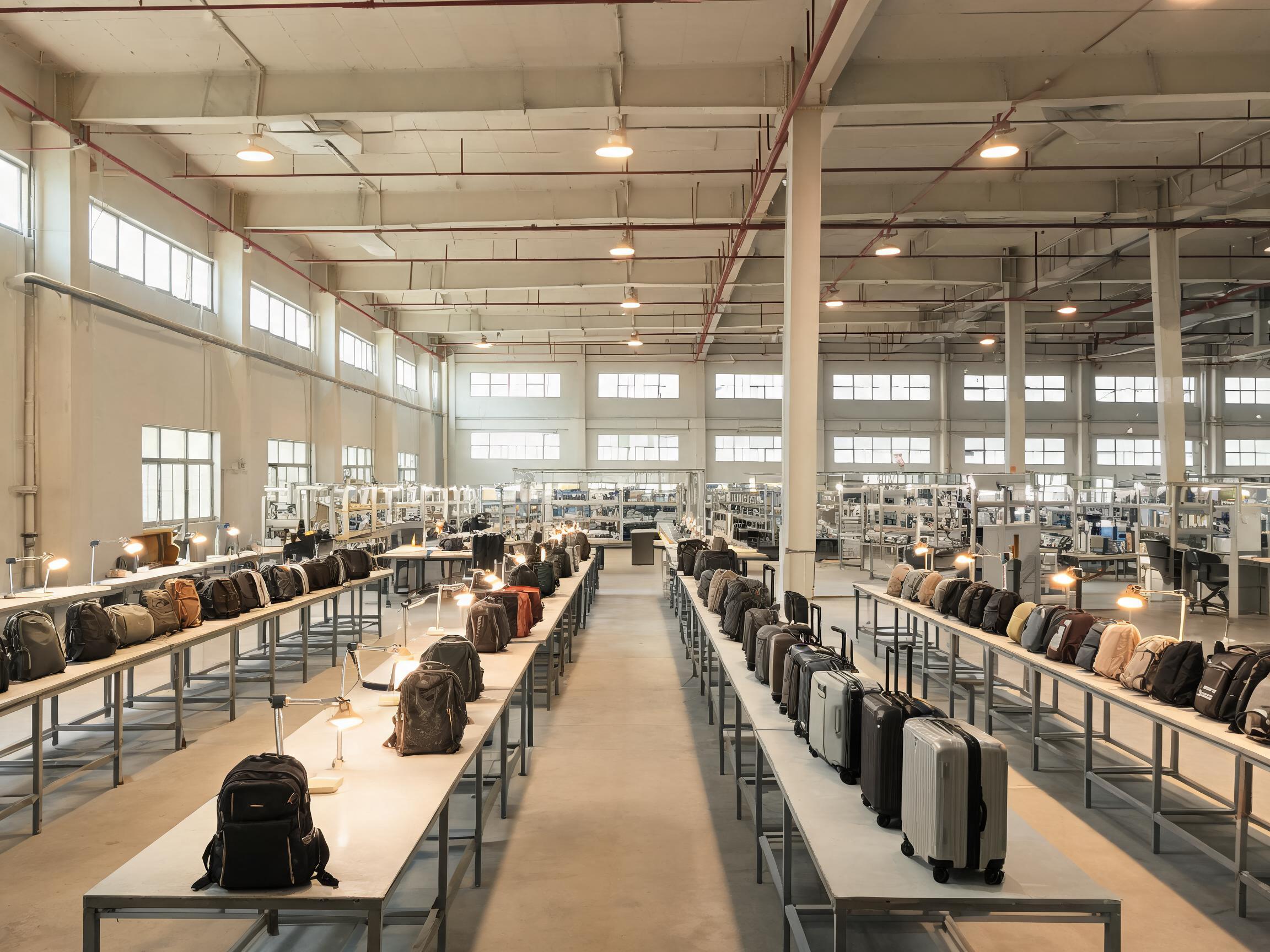
Finished-product inspection before packing — one of the published checkpoints in Wellmax's in-house workflow.
FAQ
Can Wellmax's published laptop cases be taken as carry-on?
No published product is stated to be cabin-compliant. The 26-inch trolley is a checked-size case, and the pilot case and laptop tote are carry or personal-item pieces. Check your target airlines' carry-on dimensions and confirm external measurements with the supplier before finalizing a specification.
What branding methods are available on the pilot case?
Published options are debossed or metal logos and woven labels; branded packaging is quoted on request. For a different SKU, confirm feasible branding methods on your specific material during sampling.
Is the 300-piece MOQ available for a custom laptop trolley design?
The 300 pcs MOQ and 30–35 day lead time are published reference points for the five listed bag lines. A new or modified laptop trolley design is quoted per project, with terms depending on materials and tooling.
Do ISO 9001 or BSCI cover the bags themselves?
No. ISO 9001:2015 is the factory's quality management system covering design, manufacturing and sales of luggage and travel bags, and BSCI is a facility-level social compliance audit. Neither is a product-level certificate; any product compliance testing your program needs should be raised separately.
Can interior layout be changed for our corporate program?
Interior layout is a published customization option on the ballistic nylon pilot case — document sections, device pockets and divider positions. Layout changes on other structures are confirmed during sampling through quotation.
Next Steps
Build your specification sheet before contacting suppliers: structure format, target device footprint, compartment access, wheel and handle expectations, branding, and the airlines your users actually fly. Send it with your quantity and target date. Wellmax's 26-inch business hardshell trolley and ballistic nylon pilot case pages give concrete starting specs to react to, and the export sales team will quote MOQ, lead time and customization per project. Ask for a sample built to your spec list — reviewed against your checklist, it will tell you more than any brochure.