When buyers search for a "tote bag factory," they are usually trying to answer three questions at once: Can this factory actually produce at my quality level? Where in the process could quality go wrong? And if I buy direct from the factory instead of through a trading company, what am I really paying for? This article answers those questions from the inside — using a real production system as the example — so you can walk into your next factory conversation knowing what to ask.
Key takeaways
- A tote moves through four stages under one roof: fabric cutting, sewing, assembly and hardware, finished-product inspection.
- Our Fujian facility runs about 320 people across 12,000 m², producing roughly 150,000 pieces per month.
- Our listed tote platforms carry MOQs of 300–500 pieces per style with 30–35 day lead times after sample approval.
- Factory-direct pricing combines five components: materials, construction time, customization and tooling, packaging, and volume.
- Quality management is certified to ISO 9001:2015; the facility is audited under the BSCI framework.
What this article covers
- The production line, step by step
- The QC checkpoints buyers should ask about
- How factory-direct pricing is actually built
- From sample to shipment: what the timeline looks like
- Frequently asked questions
- Where to look next
The Production Line, Step by Step
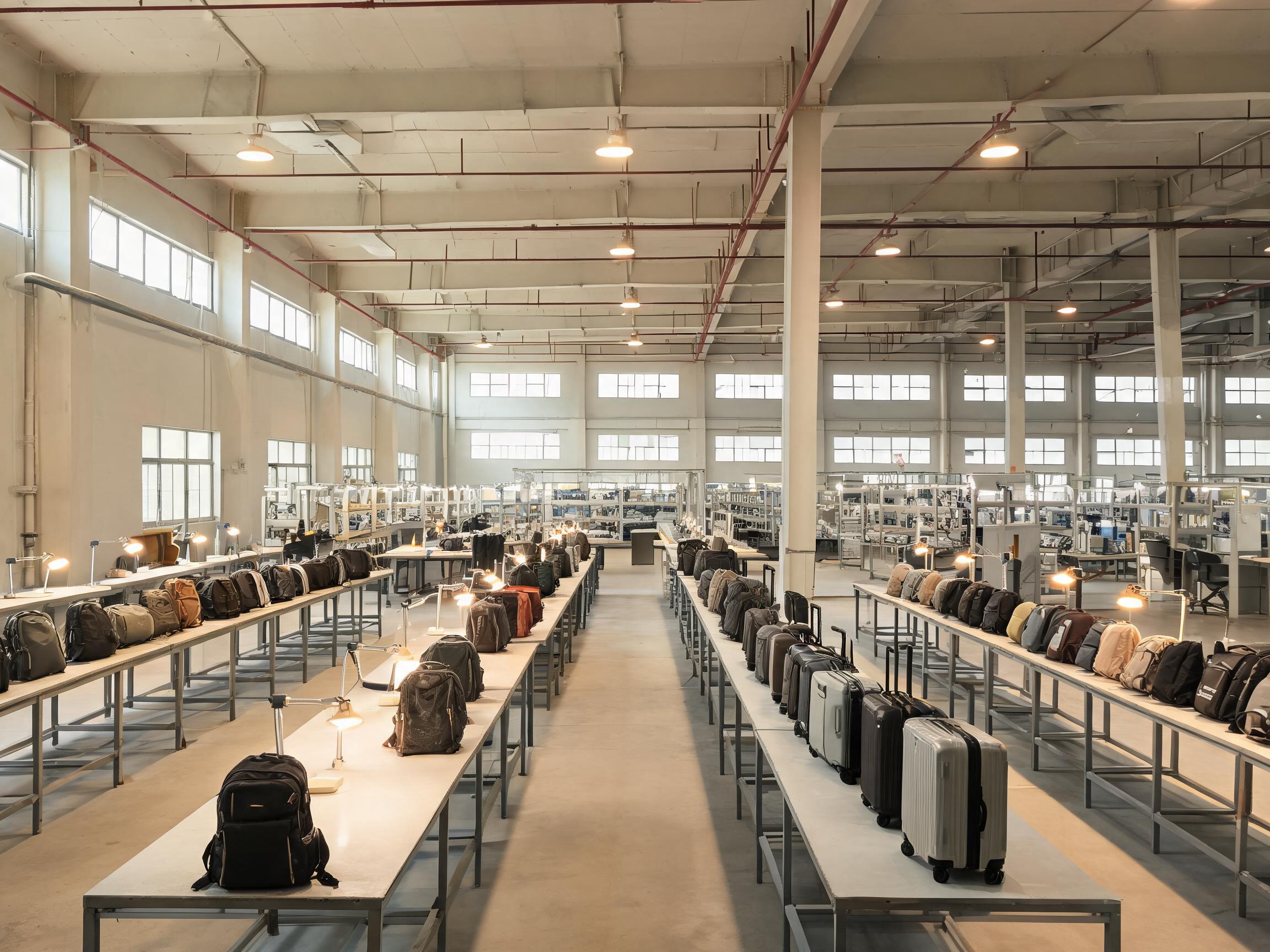
A tote bag is a simple product, which is exactly why process discipline shows. At our Fujian facility — about 320 people across 12,000 m², producing roughly 150,000 pieces per month across luggage and bag categories — totes move through four stages under one roof.
Fabric Cutting
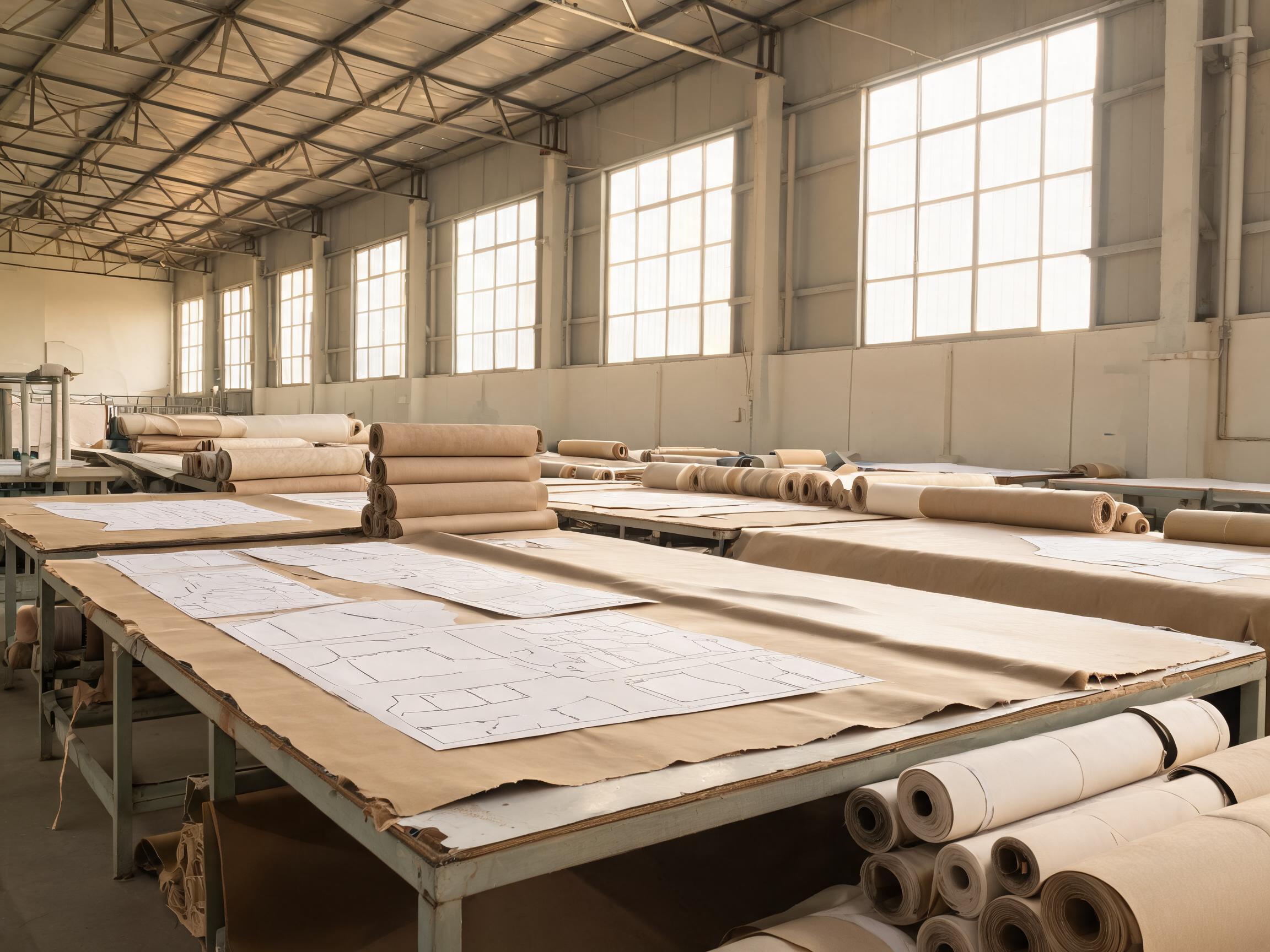
Production starts in the cutting workshop, where stacked rolls of material are laid out against pattern templates and cut into consistent panels. Panel consistency at this stage is what keeps silhouette and symmetry uniform thousands of units later — a tote whose two front panels differ by millimeters is visible on the shelf. Precision cutting with stacked rolls and pattern layouts is how a factory keeps every unit in a 500-piece run looking like the approved sample.
Sewing
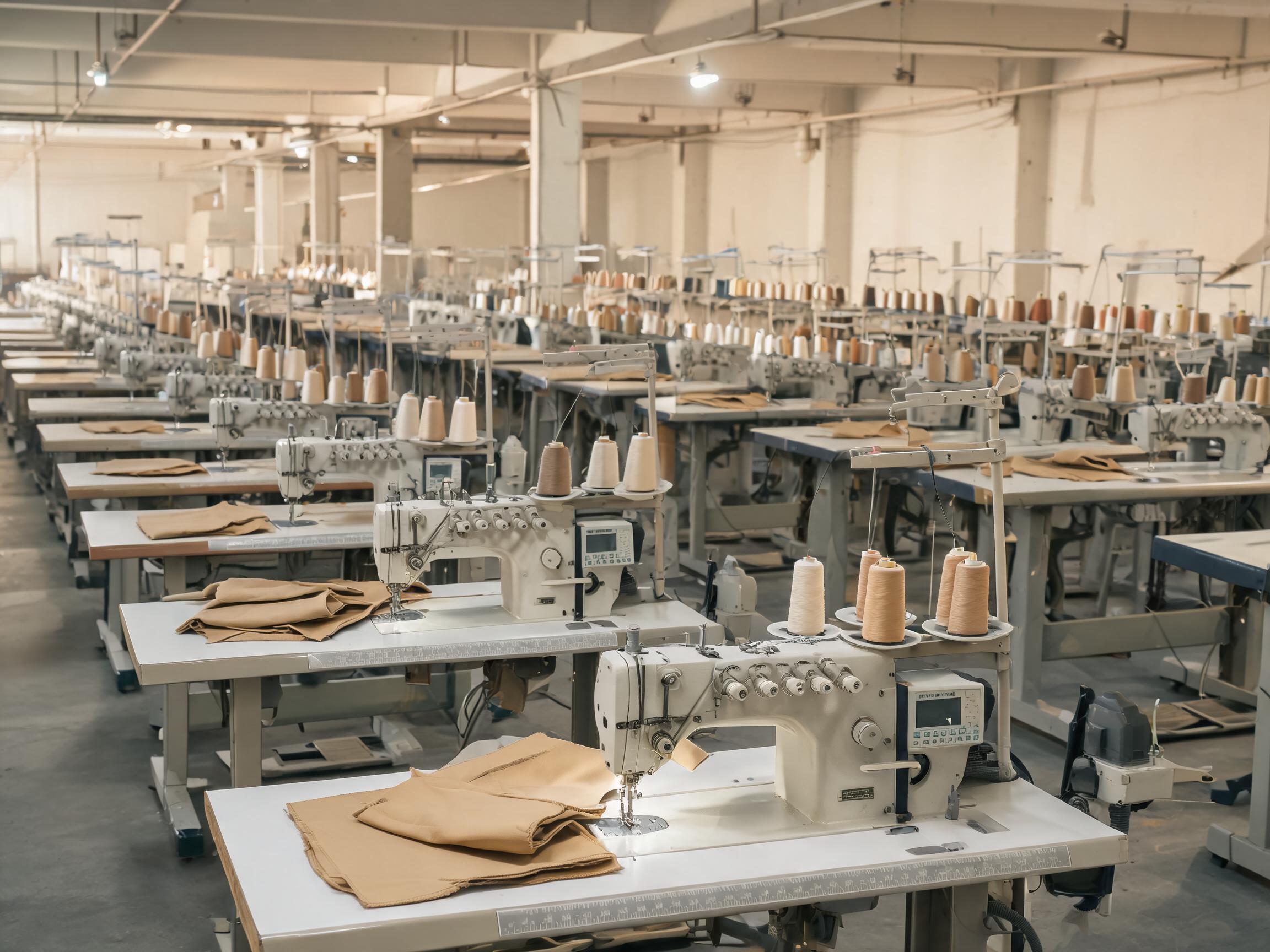
Cut panels move to dedicated sewing lines, each staffed by operators who produce the same construction across bag types. For a structured PU leather tote — like our PU Leather Tote Handbag, which stands upright on a desk or counter — seam straightness, handle attachment strength and edge finishing are the make-or-break operations. Dedicated lines with skilled operators are how stitching stays consistent from the first carton to the last.
Assembly and Hardware
Handles, magnetic snaps, zippers and lining are attached and the bag takes its final shape. On our tote platforms, hardware finish and lining are specification items — buyers choose colors and finishes (for example gold, silver or antique hardware) before sampling, so assembly runs against a locked bill of materials rather than improvisation.
Finished-Product Inspection
Before packing, finished bags and trolley cases pass inspection stations where completed units are checked. Only after inspection do bags go into individual dust bags and cartons for export. This final gate is where stitching consistency and overall workmanship are verified — and it is the checkpoint a buyer should always confirm exists.
The QC Checkpoints Buyers Should Ask About
Any tote factory you evaluate should be able to describe its quality controls in process terms, not just slogans. Here is what to ask, and what our own system answers.
Is the quality system certified? Our quality management system is certified to ISO 9001:2015, covering design, manufacturing and sales of luggage and travel bags. A certificate is not a product guarantee, but it tells you inspection and corrective-action processes exist and are audited.
Is there in-process control, not just final inspection? Dedicated sewing lines with trained operators are the first quality control — the operator catches a seam problem before 200 more units inherit it. Ask how defects found mid-line are fed back.
Is there a documented final inspection? Our finished-product inspection stations check bags before packing and shipment. Ask what the inspection covers and whether third-party inspection is welcomed — we structure quotations to include it when buyers require it.
Is the factory audited for social compliance? Our facility is audited under the BSCI framework for working conditions. For brands with retail compliance requirements, this matters as much as stitch quality.
Buyer action: when you audit or video-tour any tote factory, spend your time on the cutting tables and the inspection stations. Those two rooms tell you more than any showroom.
How Factory-Direct Pricing Is Actually Built
"Factory direct" is only a real advantage if you understand what the price is made of. A tote bag quotation typically combines these components — treat this as a method for reading any quote, not as fixed numbers, which only a quotation can confirm.
Materials
Shell material (PU leather, canvas, nylon), lining fabric, and hardware. Material grade is the largest single lever; this is why our product pages specify materials at the product level, so buyers can evaluate against their own quality and price targets before sampling.
Construction Time
A structured tote with panel interlining, a top-zipper business tote with a padded laptop compartment, and a simple open-top shopper do not consume the same sewing minutes, and their prices reflect that.
Customization and Tooling
Color matching, custom lining, branded hardware, molded or printed logos, hang tags and branded packaging. On our tote platforms, color, lining and hardware can be adjusted to your brand direction; any related tooling or minimums are confirmed before sampling.
Packaging
Standard export packaging on our totes is an individual dust bag plus carton; branded packaging changes the unit price and should be quoted, not assumed.
Volume
Order size affects material purchasing and line scheduling. Our listed tote platforms carry MOQs of 300–500 pieces per style with 30–35 day lead times after sample approval — real, currently published terms rather than theoretical ones.
What you are buying when you buy factory-direct is visibility into all five components — and one partner covering the full order cycle: sampling, tooling, mass production, quality inspection and export. A trading company adds a layer between you and those decisions; a factory lets you negotiate them directly.
From Sample to Shipment: What the Timeline Looks Like
On our current tote platforms, the sequence is consistent: you confirm specifications (dimensions, handle drop, lining, hardware finish, packaging), a sample is made for approval, and mass production runs 30–35 days after sample approval and order confirmation. Orders move through dedicated sewing lines and finished-product inspection before cartons are packed for export. Buyers in more than 40 countries receive against this same cycle.
Buyer action: build your calendar backward from your on-shelf date. Sample approval is the hinge — every week a sample cycle slips moves production with it.
Frequently Asked Questions
What is your MOQ for tote bags?
Our listed tote platforms carry MOQs of 300–500 pieces per style — for example, the Laptop Tote Briefcase at 300 pieces and the PU Leather Tote Handbag and Everyday Tote Handbag at 500 pieces. Smaller trial runs can be discussed with the export team.
Can I customize colors, lining and hardware?
Yes. Color, lining and hardware can be adjusted to your brand direction on our tote platforms. Confirm specific options and any related tooling or minimums before sampling.
How is each bag packed for export?
Individual dust bag plus carton is standard on our totes; branded packaging and hang tags can be included in the quotation on request.
Can I arrange third-party inspection?
Yes — tell us your inspection requirement and preferred Incoterms in the RFQ.
What certifications does the factory hold?
ISO 9001:2015 for the quality management system (covering design, manufacturing and sales) and a BSCI social compliance audit at facility level. These are company- and factory-level certifications rather than product-level performance claims.
Where to Look Next
Buyers can review the real product platforms behind these terms:
- PU Leather Tote Handbag — structured everyday tote, MOQ 500 pcs
- Laptop Tote Briefcase — padded laptop compartment, MOQ 300 pcs
- Everyday Tote Handbag — roomy private-label base, MOQ 500 pcs