Searching for a bag factory in China returns thousands of results, and most of them look identical from the outside: product galleries, "OEM/ODM welcome," and confident lead-time promises. The differences that decide whether your bulk order arrives on spec are not on the homepage. They are in the factory's real capacity, its compliance documents, and — most critically — whether the production line that will make your goods matches the line that made your sample. This guide gives importers, brands and retail buyers a practical verification checklist across those three areas.
Key takeaways
- Verify capacity in units, square meters and headcount — not adjectives — and ask where the output figure is measured.
- Read the scope line on every certificate; a management-system certificate is not a product-level performance guarantee.
- Require a golden sample cut and sewn on the production line that will take your order.
- Build third-party pre-shipment inspection and export terms into the order before signing.
Part 1: Auditing real capacity and production lines
Capacity claims are the easiest thing for a trading company or an overstretched factory to inflate, so verify them in units, not adjectives.
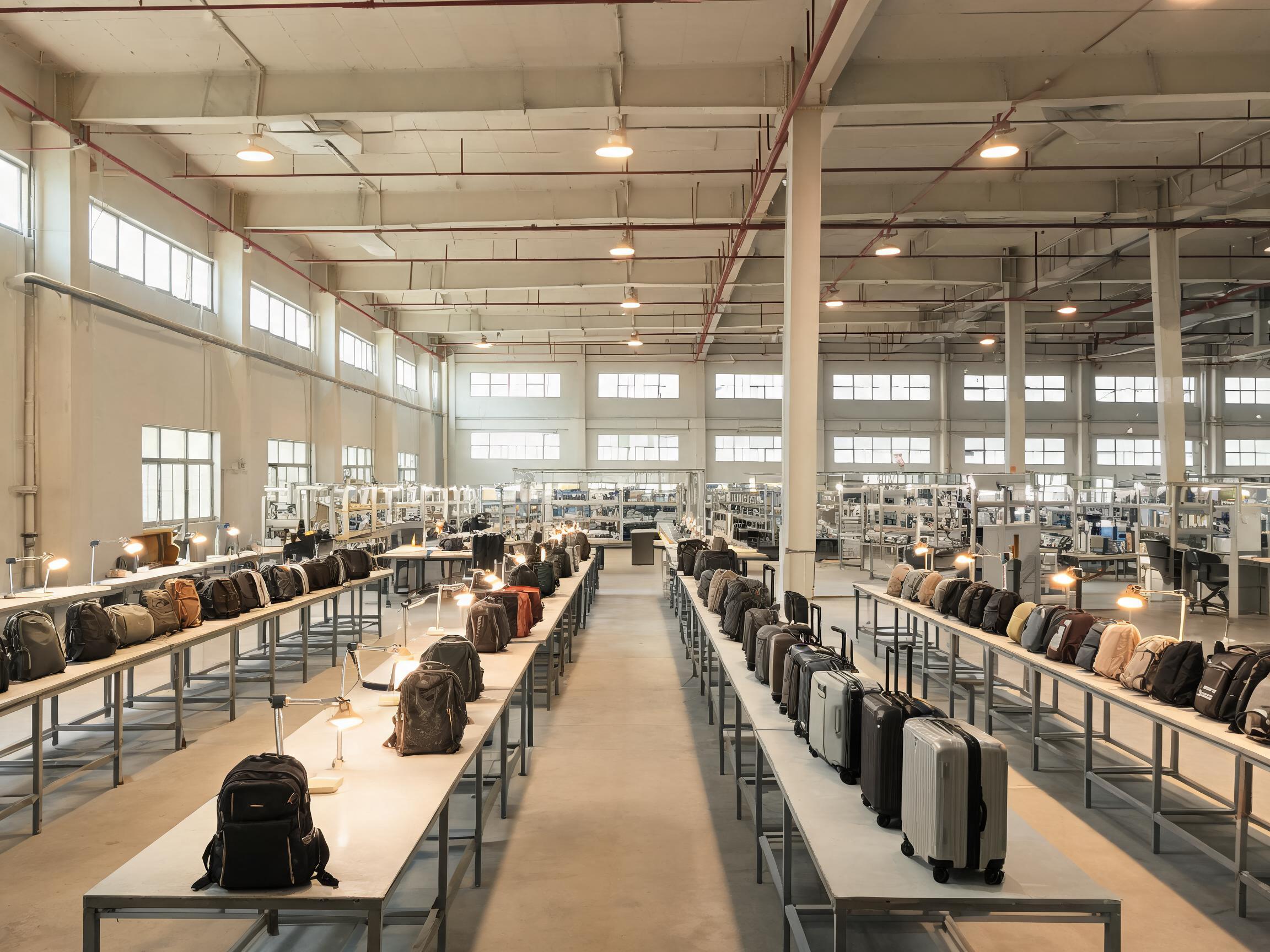
What to ask for. Facility size in square meters, headcount by department, monthly output in pieces, and the breakdown between cutting, sewing, assembly and inspection areas. A factory that publishes these numbers — for example, our own facility is 12,000 m² with about 320 staff producing roughly 150,000 pieces per month, with cutting, sewing, assembly and inspection under one roof — is stating something you can check against payroll records, floor plans and production logs during an audit or video walkthrough.
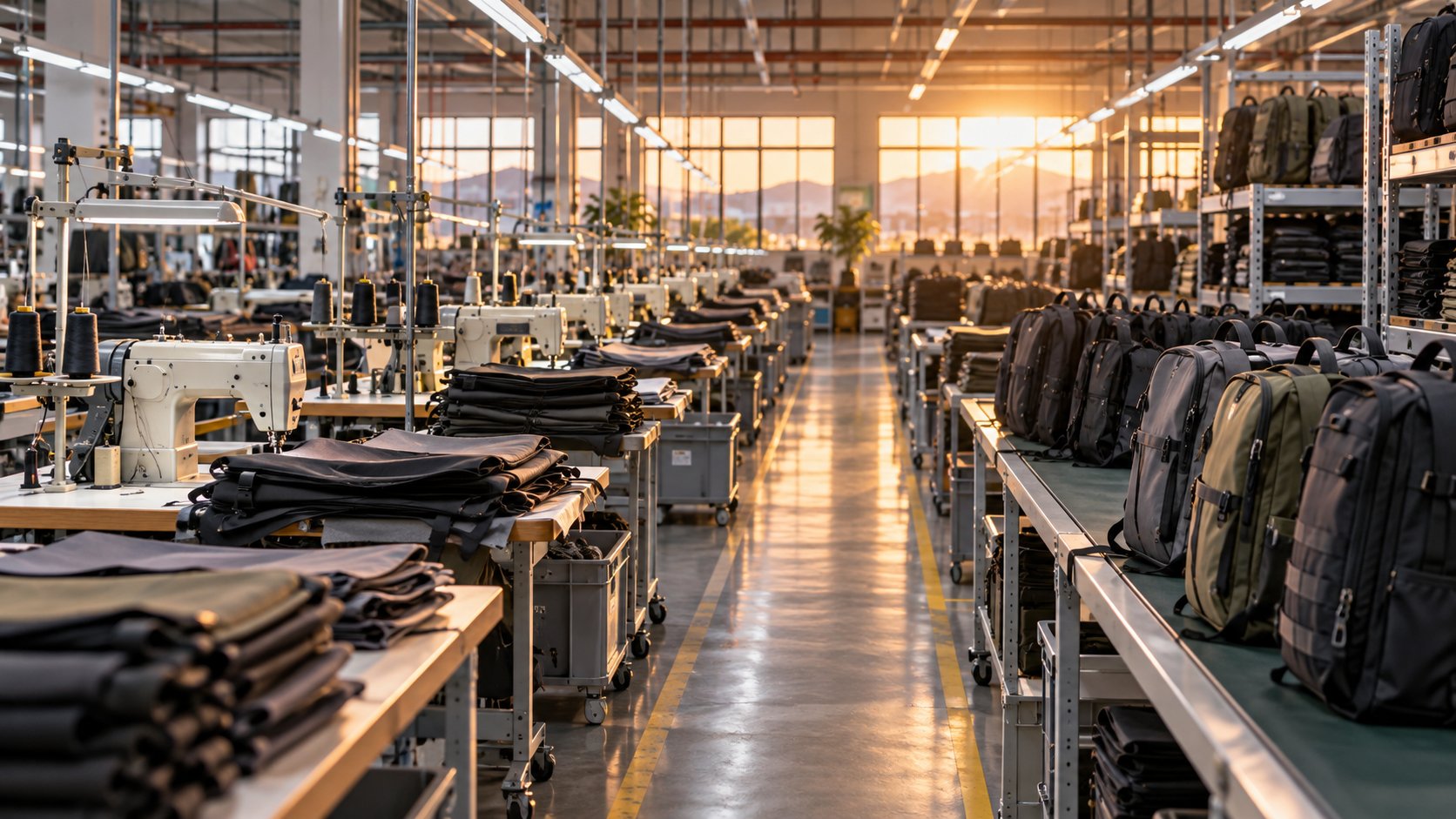
What to check on the floor. Whether the lines are dedicated by product type. Soft goods (backpacks, duffels, handbags) and hard goods (trolley cases) run on different machine sets and different operator skills. A full-category factory such as ours runs dedicated sewing lines across all bag types, which matters because a shared, retooled line is where schedule slippage and mixed quality usually begin. During a walkthrough, count active machines, look at work-in-progress buffers between stations, and ask which lines would actually take your order in which month.
Where the numbers come from. Ask how monthly output is measured: finished pieces shipped, or pieces cut? Output measured at cutting inflates the figure, because cut panels that fail at sewing or inspection never ship. A factory comfortable with this question is usually a factory with nothing to hide.
Part 2: The compliance document checklist
Documents do not sew bags, but they tell you whether a factory's management system can hold a spec across thousands of units. Request these in writing before placing a bulk order:
- Business license — confirms you are dealing with a manufacturer, not a middleman, and shows registered scope.
- ISO 9001:2015 certificate — a certified quality management system covering design, manufacturing and sales. Read the scope line: ours covers luggage and travel bags specifically. A certificate scoped to an unrelated activity is a red flag.
- Social compliance audit, e.g. BSCI — many European retail groups require it before onboarding a supplier. Note that audits apply at the factory level, covering the production facility and working conditions.
- Material and product test reports — for the specific fabrics and components in your order, obtained from the factory's material suppliers or third-party labs.
- References for the certification dates — certificates expire; confirm validity at order time, not at negotiation time.
One boundary worth respecting in both directions: company-level certifications like ISO 9001:2015 and a BSCI audit cover management systems and working conditions — they are not automatic product-level performance guarantees. A serious factory will say so plainly; a factory that turns a management certificate into a product claim is selling you paperwork.
Part 3: Sample-line vs. mass-line consistency
The single most common failure mode in China bag sourcing is the "sample was beautiful, the shipment was not" problem. It usually has one root cause: the sample was made in a sample room by senior operators, and the bulk run moved to a different line with different workers, materials or machine settings. Your verification should close that gap deliberately.
Ask where the sample was made. If the pre-production sample came from the design or sampling studio, require a golden sample that is cut and sewn on the actual production line planned for your order, with production-intent materials.
Walk the paper trail. The approved sample should anchor a written spec: fabric and denier, coating, hardware, thread, zipper brand and type, stitching density per centimeter, and labeling. Our own order flow runs from the design and development studio — where in-house designers select materials and prepare samples for OEM and ODM programs — into mass production, and consistency depends on that spec sheet traveling intact from sample to line.
Inspect the checkpoints. Confirm in-line quality control exists between stations, not only at the end, and that finished-product inspection happens before packing — at our facility, inspection stations check finished bags and cases before they are boxed for export. Stress-point reinforcement and stitching consistency checks belong in the workflow itself, not in a promise.
Accept third-party inspection. A factory confident in its process welcomes buyer-appointed or third-party inspection before shipment. Build it into the order terms.
Part 4: Export readiness
Finally, verify that the factory finishes the job: goods packed in individual polybags and export cartons, a warehouse organized for container loading, and an export team that handles quotations, documentation and order follow-up. Experience shipping to your market matters — our export sales team supports buyers in more than 40 countries — because paperwork errors cost more delay than production errors.
Your verification checklist, condensed
Before a bulk order with any bag factory in China, you should be able to tick:
| Area | What you should be able to confirm |
|---|---|
| Capacity | Verified capacity in units and floor space |
| Production lines | Dedicated lines for your product type |
| Compliance | Valid ISO 9001:2015 and social-compliance audit with readable scopes |
| Sampling | A golden sample from the production line with a complete written spec |
| Quality control | In-line QC plus finished-product inspection before packing |
| Third-party inspection | Accepted and written into the order terms |
| Export terms | Confirmed Incoterms and packaging |
Wellmax Luggage, founded in 2013 and based in Fujian, China, manufactures trolley cases, backpacks, business bags and handbags for global buyers, and supports the full order cycle from sampling and tooling through mass production, quality inspection and export. If you are evaluating factories for an upcoming program, share your product list and target quantities — we will send our capacity overview, certifications and a sampling plan for your verification.