A wholesale tote bag order looks straightforward until the quotation arrives: one style, one logo, one quantity, and then a minimum quantity that does not match the order, a decoration charge that appears per colorway, and a reorder date that no longer fits the season. Those three answers are connected, and they are all decided before the first sample is sewn. This guide walks through the ordering sequence for wholesale totes and shows, using the tote and handbag styles currently listed by Wellmax Luggage, how each decision gets written down so that the sample, the price and the repeat order stay aligned.
Step one: fix the shell material before naming a style
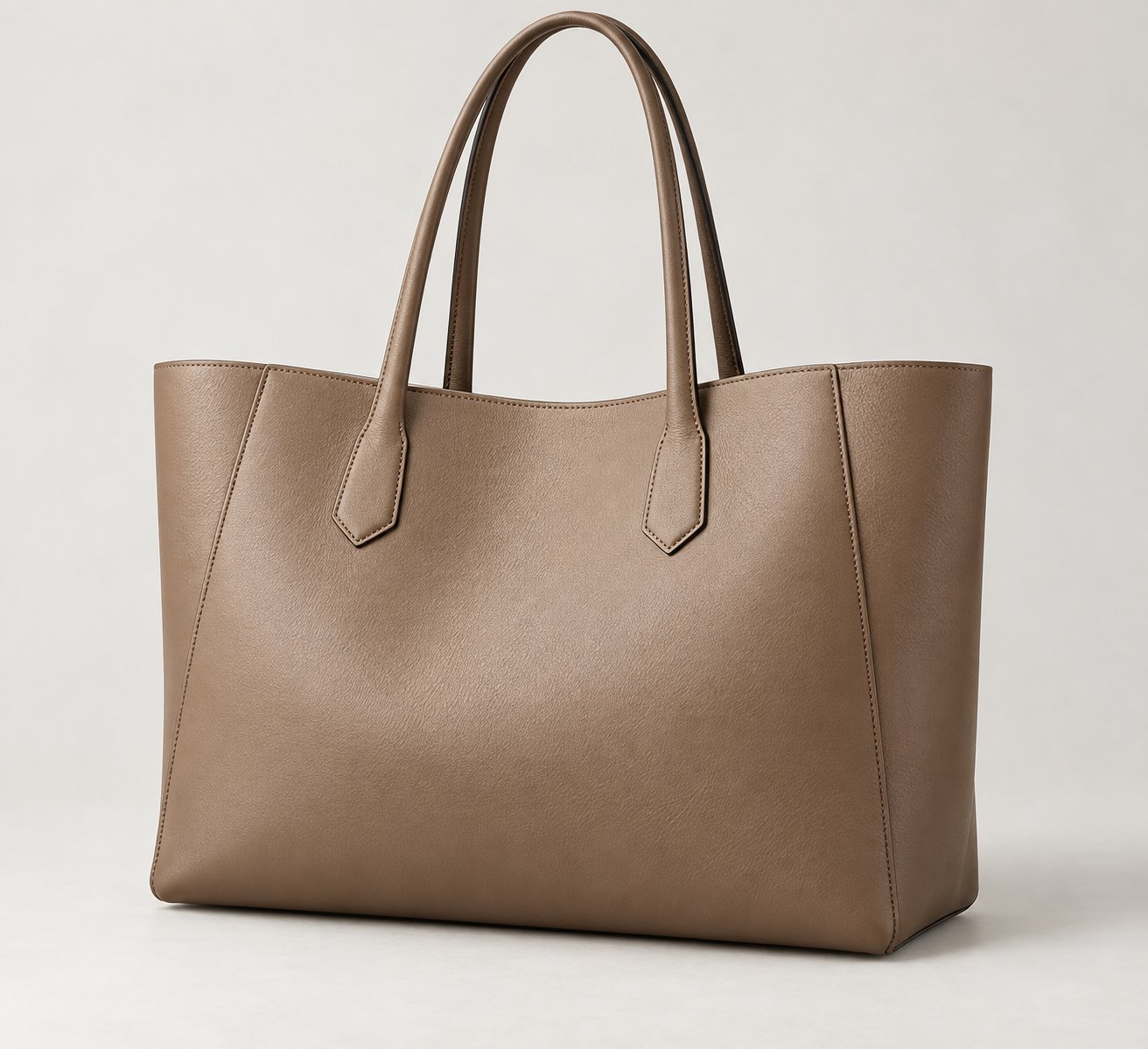
Tote bags divide by shell material long before they divide by shape. The current Wellmax Luggage tote group is PU leather: the Laptop Tote Briefcase uses a PU leather shell with a top zipper, in brown, black and tan, while the Everyday Tote Handbag and the PU Leather Tote Handbag use PU leather with a magnetic closure in black, camel and tan. Canvas and nylon sit in adjacent handbag styles, and those two pages show how the alternative materials behave in an OEM program: the Canvas Weekend Shoulder Bag is natural canvas with leather trim and a top zipper, and the Nylon Shoulder Crossbody Bag is lightweight nylon with an adjustable strap and a zipper closure.
Material choice changes three things a wholesale buyer has to plan around. It changes the surface available for decoration, it changes how a repeat color will behave, and it changes the wear pattern the retail customer sees first. A coated PU leather shell presents an even, uniform face. A natural canvas carries visible weave, and the canvas page states that the surface takes dye and printing well, which supports seasonal color stories and co-branded programs. A fine nylon weave reads lighter and more technical, and suits flat decoration such as woven labels and rubber patches. The logo decision therefore belongs at this stage, not at the end of the conversation.
Closure is the second structural decision, and it is the first thing a shop customer operates. A top zipper closes the bag completely in transit, which matters for a laptop or commuter tote. A magnetic closure gives quicker access with fewer moving parts, which suits an open everyday shopper. Neither closure is better as a category; the purchasing point is that one closure type must run through the purchase order and appear on the approval sample, because a substitution changes both the price line and the customer experience.
Step two: read the minimum quantity as a per-style figure
Minimum order quantity on a tote is stated per style, not per shipment. In the current range the Laptop Tote Briefcase runs at 300 pieces, while the Everyday Tote Handbag, the PU Leather Tote Handbag, the Canvas Weekend Shoulder Bag and the Nylon Shoulder Crossbody Bag all run at 500 pieces. Standard lead time across those styles is 30-35 days after sample approval and order confirmation, and final timing depends on order volume and the production schedule at the time of booking.
A price ladder is comparable step by step only if every step describes the same style in the same material, with the same decoration and the same packing. If the 500-piece line is plain and the 1,000-piece line carries a two-color print, the difference is partly decoration rather than volume. Name the quantity bands first, hold everything except quantity constant, and ask for each band as a separate quotation line.
Step three: build the mixed order from shared variables
A wholesale tote program usually needs more than one style: a structured laptop tote for the commuter tier, an open everyday tote for the retail and gift tier, and one lighter style for seasonal color. The composition question is not how many styles to include, but how many variables change between them.
Keep the packing identical across the styles in one order. The canvas and nylon pages state individual poly bag plus export carton as standard, and one packing specification across a mixed order keeps carton counts and receiving work predictable at the destination warehouse. Keep the decoration method identical wherever the surfaces allow it, so that one setup covers several styles instead of one setup per style. Vary colorway and closure freely, because those are merchandising decisions rather than procurement ones.
Ask for the response as a table with one row per style and the same columns for every row: material, closure, colorway, minimum quantity, decoration method, packing, production lead time. A reply in that shape can be compared line by line against a second supplier. A reply in prose cannot, which is why the specification format is part of the buyer's own work rather than something the factory supplies.
Step four: choose the bulk logo method by surface and placement
The decoration methods named across the current range are screen printing, embossed leather patches, woven labels, rubber patches and branded packaging, all quoted on request. Which of them is available on a given tote depends on the shell surface and on where the mark sits on the bag.
| Method | Surface it suits | What has to be settled before sampling |
|---|---|---|
| Screen printing | Printable fabric faces such as natural canvas | Artwork, color count, print area and whether the approval sample carries the print |
| Woven label | Nylon, canvas and trim panels | Label size, placement seam and whether a label is also required inside the bag |
| Rubber patch | Fine nylon weave and flat panels | Moulded patch size, stitch-down area and thread color |
| Embossed leather patch | Leather trim panels | Trim panel dimensions, emboss depth and patch color |
| Branded packaging | Any style, applied at packing | Bag, hangtag and carton marking, and whether packing is per style |
On the PU leather group the shell is a coated synthetic, so print adhesion and embossing must be confirmed against that actual shell at sampling rather than carried over from the canvas and nylon pages. The controlling step is the decorated sample: an unmarked approval sample verifies neither color against the shell nor whether the decoration survives packing.
Step five: set the reorder point from the lead time, not from the sell-through curve
Reorder planning starts with the calendar the factory can commit to. Production is 30-35 days after sample approval and order confirmation. Freight is a separate, route-specific interval. As a worked example with its assumptions stated: at 30 days of production plus an assumed 35 days of ocean transit and port handling, the pipeline from approval to goods received is about 65 days; at 35 days of production the same transit assumption gives about 70 days (35 + 35 = 70). A buyer working back from an in-store date should therefore place the reorder that many days earlier, plus whatever receiving and allocation time the warehouse needs.
The arithmetic is a planning frame, not a transit forecast, and the freight leg has to be replaced with the figure for the actual route. What the frame does show is that a 30-35 day production window is not the reorder interval; treating it as the interval is what leaves seasonal stock arriving after the season.
A repeat order also depends on records: confirm which approved sample, color standard and packing specification the repeat will be measured against before the first shipment leaves, so the second run matches the first instead of being re-decided. The per-style minimum applies again, and lead time is confirmed at booking.
FAQ
Does a mixed order of several tote styles count toward one minimum?
Minimums are per style: 300 pieces for the Laptop Tote Briefcase, 500 for the PU leather, canvas and nylon styles. Whether styles can combine into one purchase order is a quotation question.
What does a tote cost at 500 pieces?
The product pages list minimum quantity, lead time and material specification, but not unit prices. A comparable figure needs the style, material, decoration, packing and destination port, so it comes back as a written quotation per style.
Next step
Buyers can review the tote and handbag styles and then send one request that covers the target quantity bands, the decoration method and the destination port — Laptop Tote Briefcase, Everyday Tote Handbag, PU Leather Tote Handbag, Canvas Weekend Shoulder Bag and Nylon Shoulder Crossbody Bag — so that minimums, decoration options and a sampling plan come back on the same written basis.
Wellmax Luggage is an OEM/ODM luggage and bag manufacturer founded in 2013 in Fujian, China, with a 12,000 m² facility, about 320 people and a monthly output of roughly 150,000 pieces. Its quality management system is certified to ISO 9001:2015 and the facility is audited under the BSCI framework; both apply at company and factory level rather than as a product-specific claim.