Outdoor OEM Guide
Hiking backpacks are the volume engine of the outdoor bag category — and the segment where fabric and suspension decisions most directly decide whether a retail line earns shelf space or returns. If you are building or expanding an outdoor line, this guide covers how capacity tiers map to user types, how back panels and hip belts transfer load, how ripstop and denier fit into fabric selection, and what an OEM program with a hiking backpack manufacturer actually involves.
Key takeaways
- 35L and 40L anchor most outdoor assortments: one day SKU, one multi-day entry SKU.
- Back-panel ventilation and a load-transferring hip belt are the two suspension decisions that carry the price tier.
- Ripstop is a weave, not a material; denier is the cost-versus-durability dial, specified before sampling.
- MOQ from 300 pieces (40L) and 500 pieces (35L); 30–35 and 35–40 day leads after sample approval.
The Capacity Tiers Buyers Actually Order
Outdoor retail assortments cluster around a few capacity bands, each serving a distinct user:
- 20–30L daypacks: short hikes, travel days, everyday carry crossover
- 35L: the full-day hike — clothing, food, water and layers for one person from dawn to dusk
- 40L: the multi-day entry tier — sleeping gear and provisions for overnight and two-to-three-day treks, and the top of the carry-on-friendly range
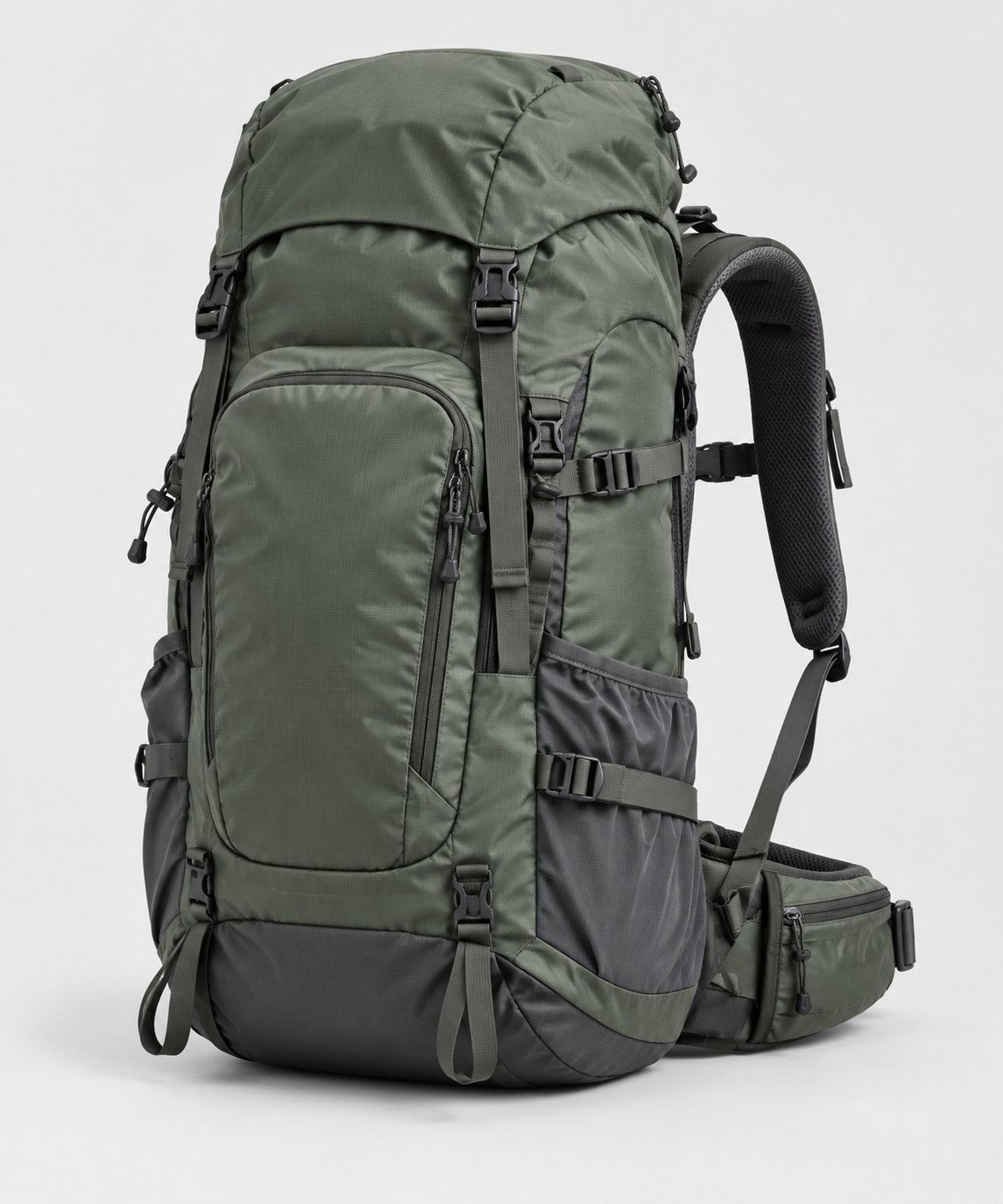
For most outdoor brands, 35L and 40L are the two SKUs that anchor a hiking line: one converts day hikers, the other converts weekend trekkers, and both share fabrics, hardware and carry-system components — which is exactly why factories can quote them efficiently as a program. Wellmax Luggage's current outdoor program covers this pairing directly: the Outdoor Trekking Backpack 35L for day hikes and the Outdoor Hiking Pack 40L for multi-day treks.
Suspension Systems: Back Panels and Hip Belts
What a ventilated back panel does
A ventilated back panel — a structured, airy panel between the pack body and the wearer's back — keeps air moving on climbs and reduces the sweat-soaked-shirt effect that end users remember and review. For retail brands, back-panel comfort is one of the highest-leverage comfort features per unit of cost.
Why a hip belt is the multi-day divider
Below roughly 30L, many packs ship with straps only. From the 35–40L tier upward, a supportive, load-transferring hip belt moves the majority of the pack's weight from the shoulders onto the hips, which is what makes a full day and a multi-day load sustainable. When comparing suppliers' spec sheets, treat "hip belt: yes/no" and "load-transferring vs. stabilizer strap" as a primary line item, not a footnote. The 40L hiking pack in Wellmax's program pairs a ventilated back panel with a supportive hip belt for exactly this reason.
What to confirm on the sample
Suspension comfort is fit-dependent: back-panel height, hip-belt shape and strap configuration should be evaluated with a loaded sample, not empty. Specify back-length sizing for your market when you request the sample.
Fabric Selection: Ripstop, Denier and Water Resistance
Ripstop weaves in plain language
Ripstop fabrics are woven with a reinforcement grid of thicker threads at regular intervals. The practical benefit for trail use: if the fabric catches on rock or brush and starts to tear, the grid limits the tear to a small square instead of letting it run. For outdoor buyers, ripstop is less a single material and more a construction principle available across nylon and polyester bases.
Denier: the cost-versus-durability dial
Denier measures thread weight; higher numbers generally mean thicker, more abrasion-resistant and heavier fabric. Typical OEM decision logic:
- Body panels in a mid denier for weight and cost balance
- Reinforced stitching at stress points, with heavier fabric at base and wear zones
- The final denier choice tuned to your price point — specify it before sampling
Water resistance vs. waterproofing
Most hiking packs in this tier use water-resistant fabric: it sheds drizzle and spray but is not a sealed waterproof system, which is why brands add rain covers as accessories or spec roll-top closures on dedicated waterproof models. Be precise in your product copy — "water-resistant" claims that drift into "waterproof" drive returns. Wellmax's 35L trekking pack is built from water-resistant nylon; rain cover options and fabric specification can be confirmed during OEM sampling.
OEM Programs for Outdoor Retail Brands
A hiking backpack program with Wellmax Luggage covers:
- Fabric and color: base fabric, denier and shell color specified to your brand direction — for example forest green, black and gray outdoor tones
- Carry system: back panel design, hip belt style and strap configuration adjusted for your market
- Organization: compartment layout, attachment points and rain cover options customized
- Branding: woven labels, rubber patches, screen printing and branded packaging, quoted on request
The company is an OEM/ODM manufacturer founded in 2013 in Fujian, China, with a 12,000 m² facility housing cutting, sewing, assembly and inspection under one roof. Around 320 staff produce roughly 150,000 pieces per month across trolley cases, backpacks, business bags and handbags for buyers in more than 40 countries. Quality management is certified to ISO 9001:2015, the facility is audited under the BSCI framework, and each order runs through dedicated sewing lines with load-point stitching and buckle function checks built into the workflow before finished-product inspection.
Order Terms for Hiking Backpack Programs
- MOQ: 300 pieces (40L hiking pack) and 500 pieces (35L trekking pack)
- Lead time: 30–35 days (35L) and 35–40 days (40L) after sample approval and order confirmation
- Packaging: individual polybag plus carton for export
- Sampling: submit target capacity, back-length sizing, fabric denier and carry-system configuration; the sample is prepared for approval before mass production
- Inspection and shipping: third-party inspection welcome; state preferred Incoterms and destination port when requesting a quotation
How to Compare Hiking Backpack Suppliers
- Confirm the factory sews outdoor packs in-house rather than trading — suspension stitching is where generalist bag factories struggle
- Ask how hip-belt and shoulder-strap attachment points are reinforced
- Verify fabric specification is written into the quotation (base, denier, coating), not just "polyester"
- Check whether compartment layout and attachment points are customizable or fixed
- Confirm branding methods available on technical fabrics
FAQ
What is the difference between a trekking backpack and a hiking daypack?
A daypack (roughly 20–35L) carries one day's gear; a trekking or multi-day pack (typically 40L and up in the entry tier) adds sleeping gear and provisions, and normally pairs a ventilated back panel with a load-transferring hip belt.
Do I need ripstop fabric for a hiking line?
Not mandatory, but for trail-use products it meaningfully limits tear propagation from rock and brush contact, and it is a recognized quality signal for outdoor retail buyers. The fabric base, weave and denier can all be specified in an OEM program.
What MOQ applies to the 35L and 40L packs?
The Outdoor Trekking Backpack 35L starts at 500 pieces and the Outdoor Hiking Pack 40L at 300 pieces. Discuss trial-run options with the export sales team if you are testing the category.
Can the carry system be adjusted for my market?
Yes. Back panel design, hip belt style and strap configuration can be adjusted, and back-length sizing should be confirmed for your market before sampling.