
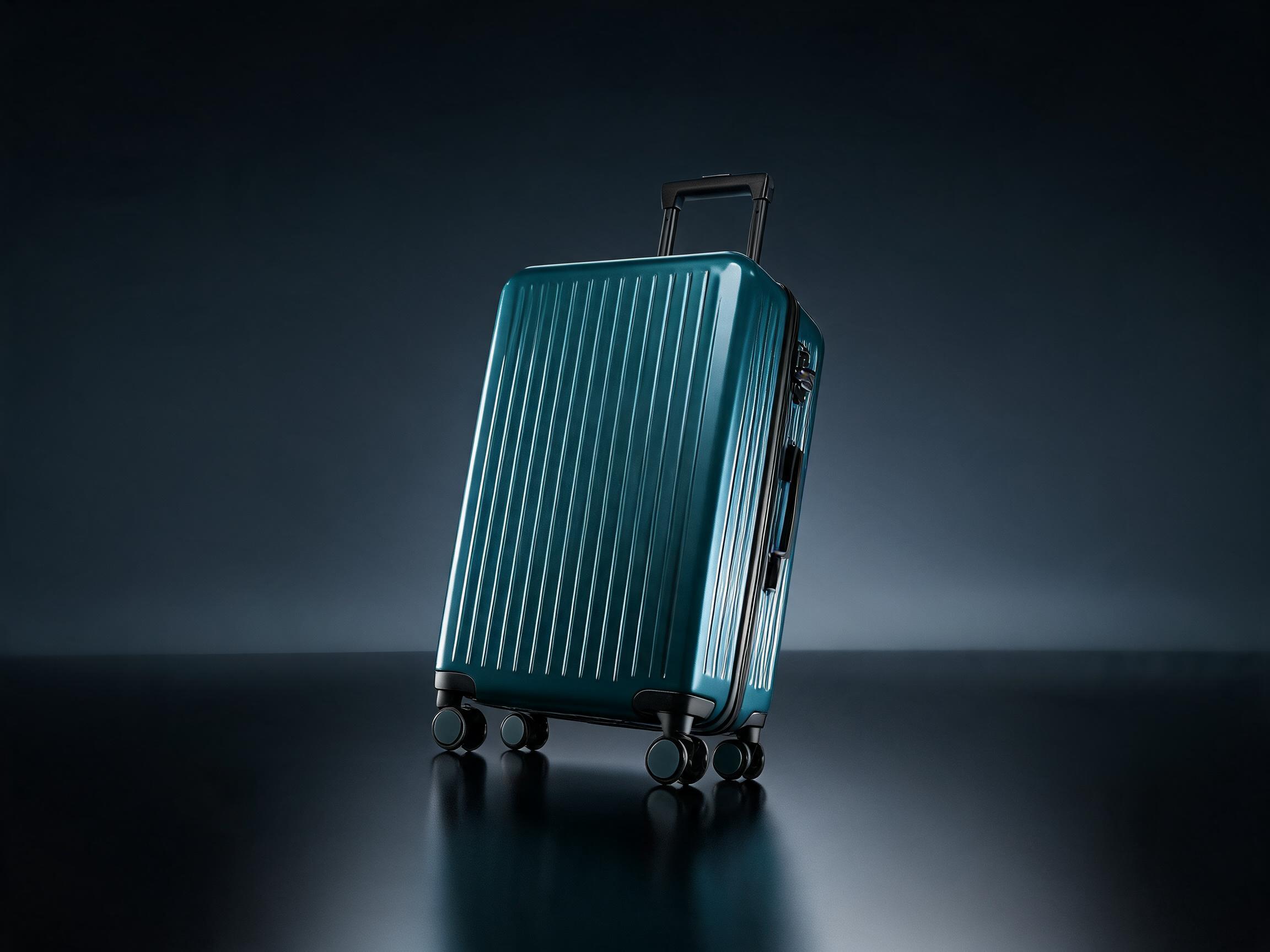
Start With the Shell Spec, Not the Quoted Unit Price
Most China OEM quotations for a hard sided suitcase arrive as a single line: ABS, 20/24/28 inch, spinner, TSA lock, one price. That line hides nearly every variable that decides whether the case survives its first year in an airport baggage system. Before comparing prices, force the specification to commit on four things: shell resin and grade, wall thickness, hardware class, and the test protocol the factory will actually run.
Everything below assumes you are buying containers, not samples, and that you intend to hold a supplier to a written spec.
Key sourcing takeaways
- Pin the shell resin and grade before price: ABS, ABS+PC blend, or pure PC behave differently under cold impact.
- Set nominal wall thickness with tolerance and defined measurement points.
- Specify hardware by part number, not by adjective.
- Write drop, rolling, and cold-conditioning tests with numbers into the PO.
- Verify with a golden sample, lab report, and traceable batch code.
ABS, ABS+PC, and Pure PC: What Actually Differs
- ABS. Lowest resin cost, easy to mold, and it holds high-gloss finishes well. It is also the most temperature-sensitive of the three: rigidity is fine at room temperature, but impact resistance drops noticeably in cold handling. Shell walls usually run thicker than PC for the same rigidity, which eats back part of the resin saving.
- ABS+PC blends. Mid-price. Suppliers vary the blend ratio widely and describe it loosely, so the same label can behave differently between factories. Ask for the stated ratio and a resin datasheet instead of accepting the blend name.
- Polycarbonate (PC). Highest impact resistance and ductility, including at low temperature, the best recovery on denting, and generally the thinnest wall for a given strength. It costs more per kilogram, scratches more visibly when glossy, and usually needs a texture or film layer if you want a scuff-tolerant matte surface.
There is no universally better shell. There is a correct shell for your retail price band, your shipping route, and the warranty you are willing to fund.
Wall Thickness, Texture, and Color Control
Two factories can quote PC and deliver visibly different products. Pin down:
- Nominal wall thickness in millimetres, with a tolerance (for example ±0.2 mm) and the measurement points on the shell.
- Texture method: in-mold texture, sprayed coating, or laminated film. Film hides scratches best; spray is cheapest but tends to chip at corners.
- Color: masterbatch supplier, a ΔE tolerance between batches, and whether the finish is gloss, matte, or brushed.
- Virgin vs recycled content, stated in writing. Recycled ABS is common in low-cost programs and is one of the most frequent causes of cold-weather cracking.
Match the Shell to the Market
A value-market hard sided suitcase sold through discount retail and shipped by sea can accept an ABS shell with a thicker wall and generous corner guards. A premium case sold with a multi-year warranty should not, and neither should a case that ships as its own parcel through e-commerce networks. Parcel shipping exposes the case to repeated handling and to the buyer's own return flow, so a ductile PC or PC-blend shell with a protective film is usually the cheaper decision once return rates are counted.
Hardware: Where Warranty Claims Actually Originate
Shells rarely crack first. Hardware does. Specify by part, not by adjective:
- Zippers: size (#8 or #10 for main compartments), slider type, and whether the tape and teeth survive your loaded packing test. Ask for the supplier and reject vague equivalents without a side-by-side sample.
- Telescopic handle: tube material and wall thickness, number of stops, wobble tolerance in millimetres at full extension, and cycle count.
- Wheels: spinner or inline, wheel diameter, tread material (PU and TPE wear differently from hard PP), and axle or bearing construction.
- Locks: TSA-accepted mechanism, shackle material, and combination reset reliability.
- Small parts: corner guards, feet, rivets, hinge plates, and lining. Lining is quoted in denier, and a thin lining tears at the zipper seam long before the shell fails.
The telescopic tube and the wheel bearings are the two most common sources of wobble complaints in returns data.
Set Cycle and Drop Targets in Numbers
Ask for the protocol, not a pass or fail word.
- Rolling test: distance target on a tumbling or rolling tester with the case loaded to rated capacity. Many retail programs use a figure in the 20–30 km range; premium programs go higher.
- Trolley handle cycles: extend and retract under load, with a wobble check before and after.
- Wheel abrasion and impact: repeated curb drops onto the wheel assembly.
- Drop test: height, surface (concrete or steel), orientations (corner, edge, face), sample count, and whether the case is conditioned cold first.
- Cold conditioning: typical programs hold samples around −18 °C for several hours before dropping. This is the test that separates ABS from PC more reliably than any datasheet.
Packaged-product distribution testing is normally mapped to a recognized procedure such as ASTM D4169 or an ISTA series protocol, while the shell itself is tested unpackaged against the buyer's own matrix. Decide both and write both into the purchase order.
Verification Steps Before You Release Mass Production
- Resin and component datasheets with grade names, plus a written virgin and recycled content statement.
- Golden sample, signed and dated by both sides, retained by the factory and by you.
- Pre-production sample built on the actual mold and actual hardware, drop-tested and photographed.
- Third-party laboratory report from an accredited testing house — the large international inspection companies are the names most often quoted for this work.
- Witnessed or recorded testing with the batch or mold ID visible in frame.
- Incoming quality control records for resin, masterbatch, zippers, locks, and wheels.
- Traceability: a batch code on the shell or inner label that maps back to the test report.
If a supplier will not show test video or IQC records, treat the specification as unverified no matter how competitive the price looks.
Keep the Fact Fields Fixed Across Languages
If you sell into several markets, build the spec sheet once in English and translate from it. Model numbers, SKU codes, mold numbers, dimensions, net weight, HS code, and country of origin are fact fields: keep them in their original form and hold one unit convention (mm/cm or inch) throughout. Silent unit conversion is one of the most common sources of dispute at inspection, because the factory and the buyer end up reading different numbers for the same case.
What Drives the Price
Unit price is mostly resin cost, hardware class, wall thickness, and color run size, roughly in that order. Tooling for a new shell mold is a one-time cost, and MOQ is usually set per color because of masterbatch changeover. Small color runs on a PC shell are where quotations inflate fastest, so consolidate colors where your range allows.
Risks to Write Into the Contract
- Undocumented substitution of recycled or blended resin.
- Shell thickness below the agreed nominal value, especially at corners.
- Batch-to-batch color drift beyond the stated ΔE.
- Wheel or telescopic handle failure before the agreed cycle count.
- Zipper burst under the loaded packing test.
- Carton failure on the parcel or pallet drop test.
Next Steps
Send the factory a written specification covering shell resin and grade, wall thickness with tolerance, a hardware part list, and the full drop, rolling, and cold-conditioning protocol — then ask for test video and the lab report on the pre-production sample before you release the bulk order. If you want a hard sided suitcase program built around your own test matrix rather than a stock catalog item, share your target market, price band, and warranty terms, and request a matched sample set for evaluation.
Keywords
China hard sided suitcase Purchasing, hard sided suitcase