
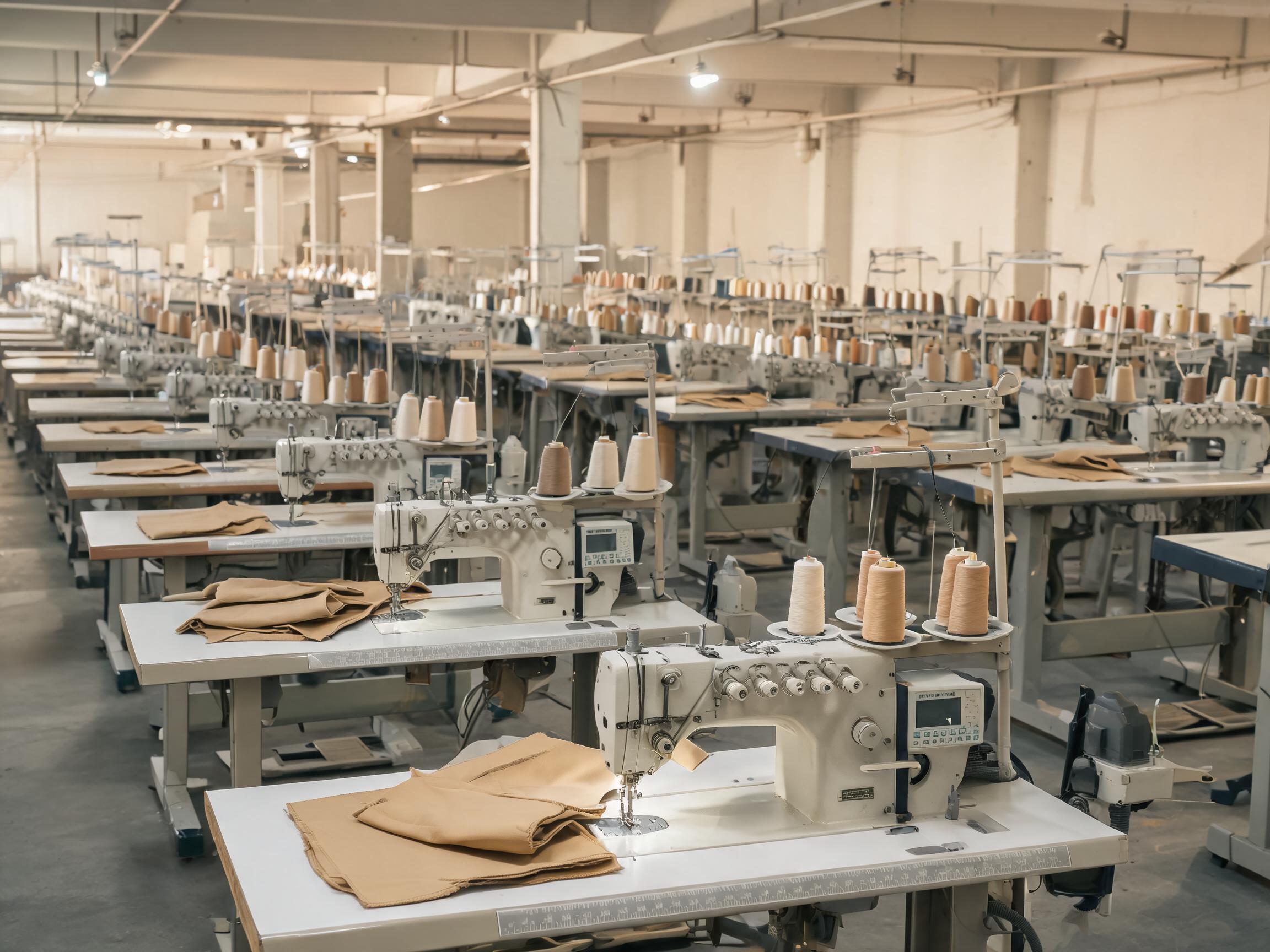
You have a handbag design ready. You have shortlisted a few factories. Now you need to know: can this factory actually produce your bag at the quality you need, in the quantity you need, on the schedule you need? The answer is not in a catalog or a price quote. It is in the details of how they cut fabric, set hardware, stitch seams, and pack finished goods.
This guide walks through the handbag-specific checkpoints that separate a capable factory from one that merely claims to make bags. It covers what to verify, what to ask, and how to check it both remotely and on-site.
What "Capacity" Really Means for Handbags
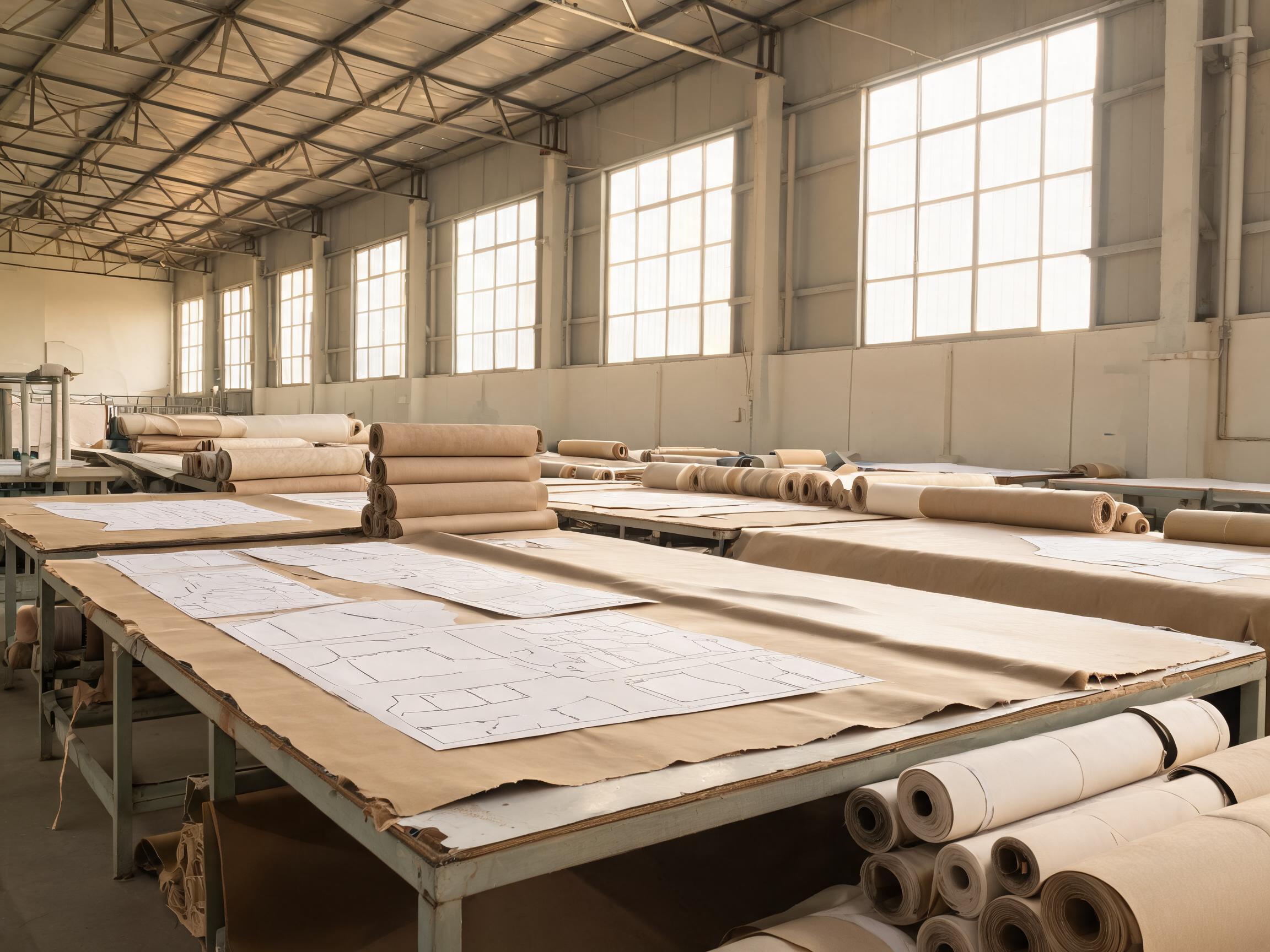
When a supplier says "we can produce 100,000 bags per month," that number rarely tells the whole story. For handbags, capacity is not a single figure. It is a combination of factors that determine whether your specific bag can be made well and on time.
Ask the factory to break down capacity by these dimensions:
- Line allocation: How many sewing lines are dedicated to handbags versus other bag types (backpacks, trolley cases, laptop bags)? A factory that spreads the same lines across many product categories may have less flexibility when your order peaks.
- Skilled labor: Handbag assembly requires different skills than, say, backpack assembly. Ask how many sewers are trained specifically on handbag construction—setting zippers, attaching handles, lining insertion.
- Peak vs. average output: A monthly capacity figure is often an average. Ask what the factory's peak month looks like and how they handle seasonal surges without dropping quality.
- Material readiness: Capacity means nothing if fabric or hardware is not in-house. Ask whether they hold stock of your specified materials or rely on external suppliers with their own lead times.
For context, a mid-sized factory might operate a 12,000 m² facility with around 320 employees and produce roughly 150,000 pieces per month across its product range. But that total includes all bag types. Your handbag order will only get a portion of that capacity. The real question is: what portion, and can it be reserved for you?
Fabric and Hardware Checks
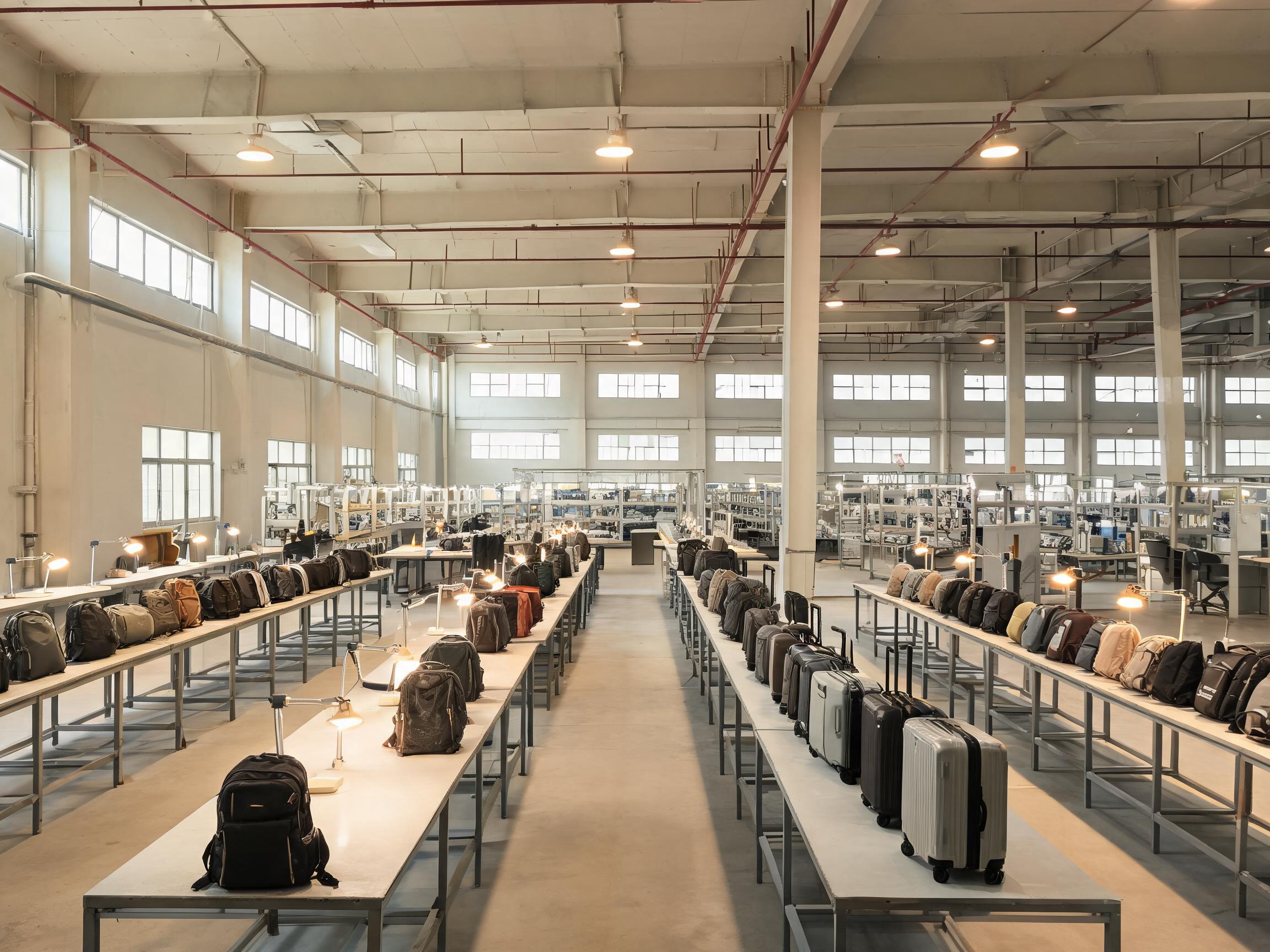
Handbags live or die by their materials. A beautiful design in the wrong fabric or with weak hardware will fail in the market. Here is what to verify before production starts.
Fabric
- Composition and weight: Confirm the exact fiber content (e.g., 100% polyester, genuine leather, PU) and weight (GSM for woven fabrics, ounce weight for leather). Ask for a test report or a material certificate from the mill.
- Color consistency: Request a lab dip or a production swatch against your Pantone reference. Check for color variation under different lighting.
- Hand feel and drape: For soft-sided bags, the fabric's drape affects how the bag hangs. Ask for a sewn sample using the actual production fabric, not a substitute.
- Backing and reinforcement: Many handbags use interfacing or foam backing. Confirm the type and thickness, and how it is applied (fusing vs. sewing).
Hardware
- Material and finish: Is the hardware zinc alloy, brass, or stainless steel? What is the plating—nickel, gold, antique brass? Ask for salt-spray test results if the bag will be used in humid climates.
- Weight and feel: Lightweight hardware can feel cheap. Request samples of zipper pulls, rings, and buckles to assess weight and smoothness.
- Zipper performance: Test the zipper for smoothness, self-locking function, and resistance to pulling apart. Ask about the brand and model if specified.
- Attachment method: How are handles and straps attached? Rivets, stitching, or both? Ask to see a cross-section of a production sample.
During a factory visit or video audit, ask to see the material inspection area. A factory that checks incoming fabric and hardware before cutting is more likely to catch issues early.
Stitching and Construction Checks
Stitching is where craftsmanship shows. A handbag can have perfect materials and still fail if the seams pucker, the lining is loose, or the edges are unfinished. Here is what to inspect.
- Stitch density and consistency: Ask the factory what stitch length they use for different seams, then check a sample: are the stitches even, with no skipped or loose threads?
- Seam type: For stress points like handle attachments, look for reinforced stitching (e.g., box-X or bar-tack). Ask how they reinforce high-wear areas.
- Edge finishing: Are edges folded, bound, or painted? For leather bags, ask about edge paint thickness and drying time. For fabric bags, check for raw edges that may fray.
- Lining and interior: Is the lining sewn neatly with no loose threads? Are pockets aligned and functional? Check that the lining is attached securely at the top edge.
- Symmetry and alignment: Fold the bag, close the zipper, and check that both sides match. Handles should be level. Hardware should be centered.
- Structure and shape: Does the bag hold its shape when empty? For structured bags, ask about internal reinforcement (e.g., board or foam).
Packing and Shipment Checks
Packing is not just about protecting the bag. It affects retail presentation, shipping cost, and damage rates. Verify these points before the first shipment.
- Individual wrapping: Is each bag wrapped in tissue paper or a poly bag? Is hardware protected with foam or paper?
- Stuffing: For structured bags, is the interior stuffed to hold shape? What material is used (paper, foam, air pillows)?
- Carton configuration: How many bags per carton? What are the carton dimensions and weight? Ask for a carton drop test report if shipping by sea.
- Labeling and barcodes: Confirm carton markings, shipping marks, and any barcode or RFID requirements. Ask for a sample label before production.
- Moisture protection: For humid routes, ask about desiccant packets or moisture barrier liners.
- Container loading plan: Ask for a loading plan that maximizes container space without crushing cartons.
During inspection, check a random carton from the finished goods area. Open it, inspect the bag, and confirm it matches the approved sample. Then check the carton itself for proper sealing and labeling.
Remote vs. On-Site Verification Checklist
Not every buyer can visit China. Remote verification is possible, but it requires more structure. Here is how to approach both.
| Checkpoint | Remote (video/photo) | On-Site |
|---|---|---|
| Factory capacity breakdown | Request a written breakdown by line and product type; ask for a live video walkthrough of the sewing floor. | Walk the floor yourself. Count active lines and ask operators what they are making. |
| Material inspection | Ask for photos of incoming material inspection records and test reports. | Visit the material warehouse and inspection area. Check labels and batch numbers. |
| Stitching quality | Request close-up photos of seams, handle attachments, and lining. Ask for a video of a sewer working on your bag style. | Inspect a sample on the line. Ask to see the golden sample and compare. |
| Hardware | Ask for hardware samples to be shipped to you. Test them yourself. | Check hardware inventory. Ask about salt-spray test reports. |
| Packing | Request photos of packed cartons and a packing list. Ask for a carton drop test report. | Watch a packing line in action. Open a finished carton and inspect. |
| Quality control process | Ask for their QC checklist and inspection report template. Request a video of an inspection in progress. | Observe an inspection. Ask how defects are recorded and corrected. |
For remote verification, insist on live video, not pre-recorded clips. Ask the factory to show specific areas on demand. For on-site visits, bring your golden sample and a checklist. Do not rely on memory.
Red Flags
Watch for these signs that a handbag factory may not be able to deliver:
- Vague answers about capacity: If they cannot tell you how many handbag lines they run or how many sewers are trained on handbags, they may be a trading company or a generalist factory.
- No material test reports: A factory that cannot provide fabric or hardware test reports may be using unverified materials.
- Reluctance to share video or photos: If they refuse a live video walkthrough or hesitate to show specific areas, something may be hidden.
- No golden sample process: If they do not insist on a signed pre-production sample, quality control is likely informal.
- Pressure to skip sampling: A factory that wants to go straight to mass production without a sample is a risk.
- No clear QC checklist: Ask to see their inspection checklist. If they do not have one, they are not inspecting systematically.
FAQ
How many handbags can a typical China handbag factory produce per month?
Capacity varies widely. A mid-sized factory might produce 150,000 pieces per month across all bag types, but handbag-specific output depends on line allocation and labor. Ask the factory for a breakdown by product category and confirm how your order fits into their schedule.
What certifications should I look for in a handbag factory?
Look for ISO 9001:2015 for quality management and BSCI for social compliance. These indicate that the factory has documented processes for quality and labor standards. However, certifications are not a guarantee of product quality—always verify with samples and inspections.
Can I verify a handbag factory remotely?
Yes, but it requires more effort. Request live video walkthroughs, close-up photos of stitching and materials, and samples shipped to you. Insist on a golden sample approval process and a clear QC checklist. If possible, hire a third-party inspection agency for pre-shipment inspection.
What is a golden sample and why is it important?
A golden sample is a pre-production sample that both you and the factory approve and sign. It serves as the physical standard for all subsequent production. Without it, quality disputes are hard to resolve because there is no agreed reference.
How do I check stitching quality on a handbag sample?
Look for even stitch length, no skipped stitches, and no loose threads. Check stress points like handle attachments for reinforcement (e.g., box-X stitching). Fold the bag and check symmetry. Compare the sample to your golden sample if you have one.
Next Steps
Verifying a handbag factory in China is not about finding the cheapest quote. It is about finding a factory that can consistently produce the quality you need. Use the checkpoints in this guide to ask specific questions, request evidence, and inspect samples.
If you are evaluating a factory, start with a live video walkthrough of their sewing floor. Ask for a capacity breakdown by product type. Request material test reports. And always insist on a golden sample before mass production.
For buyers seeking a handbag manufacturer in China with experience across luggage and bags, look for a factory that can show you its processes, not just its catalog. A factory that welcomes verification is more likely to deliver on its promises.