
Supplier Evaluation
A gym bag is a bag that gets loaded, thrown into a locker, dragged across a changing-room floor and handed to a member who expects it to survive the same week again. If you are sourcing an OEM or ODM gym or sports duffel program, the questions worth asking a gym bag manufacturer are narrower than a general bag-sourcing checklist. This article sets out the evaluation dimensions that actually affect a sports-use program, and how to read the answers you get.
Key takeaways
- Evaluate the material and hardware program against sports use, not against a generic tote or travel bag brief.
- Stress-point stitching and construction consistency are the clearest signals of how a factory will build your program.
- The sampling stage is where you learn how the manufacturer interprets a brief, not only how the sample looks.
- Capacity, quality management and social compliance should be read from what the factory can evidence, not from claims.
- A due-diligence checklist with a simple three-tier recording method at the end of this article helps you compare candidates on the same terms.
What this framework covers
- Material and hardware programs for sports use
- Stress-point stitching and construction consistency
- Sampling and development process
- Production capacity signals
- Quality management and social compliance
- Communication and export support
- Due-diligence checklist
1. Material and hardware programs for sports use
A gym bag brief is defined by what goes into it: shoes, a water bottle, a towel, sometimes a laptop and a change of clothes. The loads are uneven, the bag is set down wet, and the straps take the weight from a single hand or shoulder. When you evaluate a gym bag manufacturer, you are not only checking whether a fabric or zipper exists in the catalog. You are checking whether the factory can build a material program from the brief and explain the trade-offs.
At the evaluation stage, ask the manufacturer to describe the material and hardware options it would propose for the specific use case, and why. The answers should separate body fabric from lining, base reinforcement from trim, and webbing from the hardware that carries the load. A supplier that can talk through these choices, including what it would avoid for a bag that will be loaded and unloaded daily, is showing a design capability rather than a stock list.
Record the proposed options in the same format across all candidates, so comparisons remain fair. A candidate may recommend a heavier or more structured construction, and that is a choice to price and test, not an automatic advantage. What matters is whether the recommendation is tied to your use case and whether the factory can explain what each option does to durability, weight and cost.
2. Stress-point stitching and construction consistency
On a gym bag, failures cluster at a small number of places: the handle attachment, the shoulder-strap attachment, the base corners, the zipper ends and the seams that carry the weight of the contents. These are the stress points. How a manufacturer builds them tells you more about production quality than a general claim of good workmanship.
Ask how the factory reinforces handle and strap attachments, where it uses bar tacks or box-and-cross stitching, and how the base is constructed so it holds shape under load. Then ask about consistency: how the factory ensures that the first piece off the line and the last one are stitched the same way. The answer should point to defined operations and to dedicated sewing lines with consistent stitching across bag types, not just to individual operator skill.
What to look for in a construction review
- Handle and strap attachment methods and how they are reinforced.
- Seam construction at base corners and zipper ends, where the bag is most often pulled and stressed.
- Hardware selection for the parts that carry load, such as D-rings, hooks and buckles.
- How the factory documents the construction so a repeat order matches the approved sample.
Read the answers critically. A strong answer names the actual reinforcement method for each stress point, describes the operation sequence on the line, and shows how the construction is recorded so a repeat order matches the approved sample. A weak answer stays general — “we sew everything twice” — or defers every question to the sample without explaining why. Between the two, treat answers that are specific but undocumented as “verbal only”: workable in early discussions, but they should be converted into written construction records before production starts.
If a factory can explain its stress-point construction in detail and show that the same operations are planned across an order, consistency becomes a process question you can check, not a hope.
3. Sampling and development process
The sample is a test of the manufacturer's interpretation of your brief. Useful evaluation means reading the process behind it. Does the factory have an in-house design and development studio that develops styles, selects materials and prepares samples? If so, you can hold a single conversation across design, material selection and sampling rather than managing a chain of subcontractors.
During the sampling stage, note the following:
- How clearly the factory restates your requirements before sampling, so that any difference between your brief and its understanding surfaces early.
- How the factory handles changes, and whether revisions come with a clear explanation of what changed and why.
- Whether the sample is accompanied by a record of the materials and construction used, so the approved sample can be repeated.
A smooth sample run does not by itself prove production quality, but a disorganized sampling stage almost always repeats itself on the production floor. Treat sampling as a working test of the relationship, not just a product review.
4. Production capacity signals
Capacity should be read from what the supplier can evidence: the size of the facility, how production is organized, and how many pieces go out per month. As a concrete reference point, Wellmax Luggage — the manufacturer behind this site — is an OEM/ODM bag manufacturer founded in 2013 in Quanzhou, Fujian, China, with about 320 staff and a 12,000 m² facility that keeps cutting, sewing, assembly and inspection under one roof. It produces about 150,000 pieces per month and exports to more than 40 countries. Treat these figures the way you would treat any candidate's figures: as a starting indication of scale to be confirmed with evidence, not as an acceptance criterion.
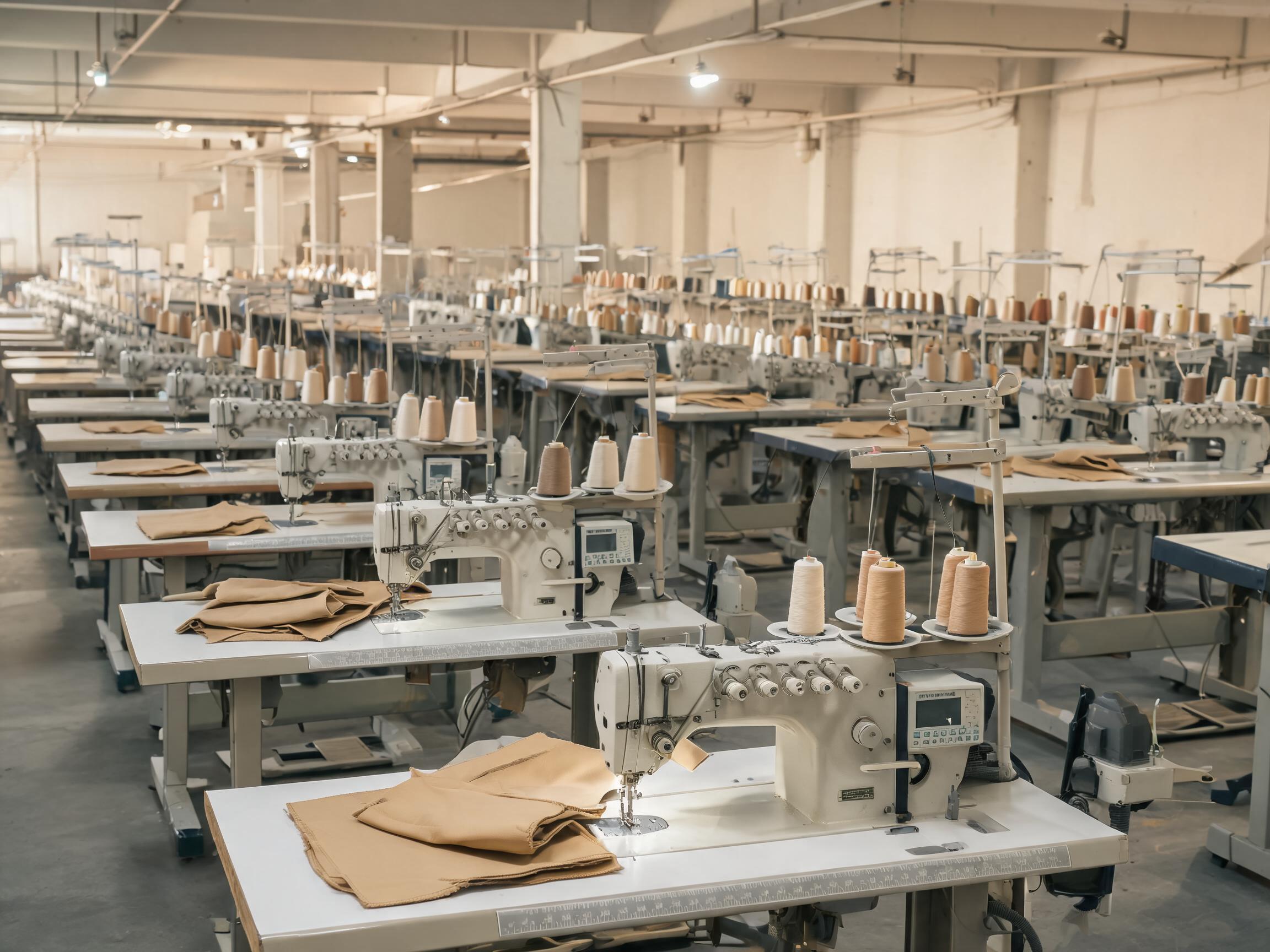
What you should look for in any candidate is whether the key stages sit under one roof or are split across subcontractors. When cutting, sewing, assembly and inspection are together, the factory controls the sequence that determines whether construction stays consistent. When stages are spread out, you need to understand how hand-offs are controlled.
| Capacity signal | What it tells you | What to ask next |
|---|---|---|
| Facility size and staffing | Rough scale of the operation and how many people touch your order | How are lines assigned to programs? |
| Stages under one roof | Control over cutting, sewing, assembly and inspection | Which stages, if any, are outsourced? |
| Monthly output | Volume the factory is organized to handle | How is capacity planned around peak seasons? |
| Export experience | Familiarity with overseas orders and documentation | Which markets and channels does the factory serve? |
These are indicators, not guarantees. A factory with the right scale still needs a workable program for your order, and the conversation about capacity should end with a clear picture of how your volume fits into its production plan.
5. Quality management and social compliance
Two company-level credentials are worth verifying in the first round of evaluation: a quality management system and a social compliance audit. For example, Wellmax Luggage, the manufacturer behind this site, operates under an ISO 9001:2015 quality management system covering the design, manufacturing and sales of luggage and travel bags, and is audited under the BSCI social compliance framework. Apply the same verification steps to every candidate, including us: request the certificate or audit report, check that the stated scope covers your product category, confirm the validity period and the issuing or auditing body, and record what you received.
Read these carefully. A management-system certificate indicates that the company operates a defined quality system within the stated scope; it is not a product certification for any individual gym bag. A social compliance audit reports on the framework and the audited operation, not on the performance of a specific order. Both are useful because they tell you the manufacturer has a structure for process control and social compliance, and because they give you documents you can request and check.
Ask how finished products are inspected before packing and shipment. A factory that inspects finished goods before packing has a place in its process where problems can be caught before they leave the building. Ask what the inspection covers and how results are recorded, so you can understand what you will receive with an order. As a minimum, a useful answer describes inspection of appearance, function and packaging, states where in the sequence inspection happens, and names the record you receive with the shipment.
6. Communication and export support
Communication is an evaluation dimension in its own right. Overseas buyers need a manufacturer that can handle English-language correspondence, answer technical questions with specifics, and manage export documentation and shipping coordination. Ask how inquiries and changes are handled, who your contact will be, and what information the factory needs from you to quote and plan.
The quality of early communication is a sample of the whole relationship. If the first exchanges are clear, complete and prompt, the working relationship has a better foundation. If they are vague, the sampling and production stages will likely feel the same.
7. Due-diligence checklist
Use a single checklist across all candidates so you compare like with like. Each item below should be answered with evidence or a clear explanation, not a general assurance.
| Area | What to confirm |
|---|---|
| Company identity | Legal name, founding year, location, ownership of the facility |
| Material program | Options proposed for sports use, with reasoning and trade-offs |
| Construction | Stress-point reinforcement methods and how consistency is maintained |
| Sampling | In-house design and development capability; revision and approval process |
| Capacity | Facility size, staffing, monthly output, stages under one roof |
| Quality | ISO 9001:2015 certificate and scope; finished-goods inspection process |
| Compliance | BSCI audit status and current report |
| Export | Markets served, documentation support, named contact |
Record every answer on the same three-tier scale: documented (evidence such as a certificate, report or construction record was provided), verbal only (a specific answer with no document behind it) and not answered. A page of “documented” entries with a few honest gaps is a workable candidate; a page of “verbal only” entries signals a factory whose answers are not yet auditable. Treat missing answers as open questions to raise before you commit. The manufacturer that closes those open questions with specifics, documents and a clear process is the one best positioned to carry your gym bag program from sample to repeat order.