Program planning guide
Most sourcing problems in corporate bag programs start before the factory quote. They start with three different programs being briefed as if they were the same purchase. A gift box for 200 executives, an onboarding kit for 3,000 new hires and a channel rollout for 12,000 dealer outlets need different bags, different branding, different quantities and different paperwork. This guide separates those three buying logics so you can brief a China factory once and get comparable answers.
- Corporate gifting is decided by perceived value per unit; employee kits by repeatable consistency; channel branding by volume and shelf visibility.
- Material and bag category should follow the program goal, not the other way round.
- Branding method suitability depends on the material and model and should be confirmed on an actual sample.
- MOQs vary by model — from 200 sets on an aluminum frame luggage set to 500 pcs on several bag styles.
- One factory can run mixed programs, but only if each program's specs are kept separate in the purchase order.
Three program types, three sets of economics
Buyers searching for china custom bags for business are usually running one of three programs. Each has a different cost per unit logic, and mixing them up is what makes quotes hard to compare.
Corporate gifting: fewer units, higher perceived value
Gifting orders are small relative to the recipient list and are judged on how the bag feels in the recipient's hands — material, hardware, stitching, packaging. A briefcase or a structured tote at a few hundred pieces per year is normal. Per-unit cost matters, but it is secondary to whether the item looks appropriate beside the company's other gifts. Each unit often ships in its own protective packaging.
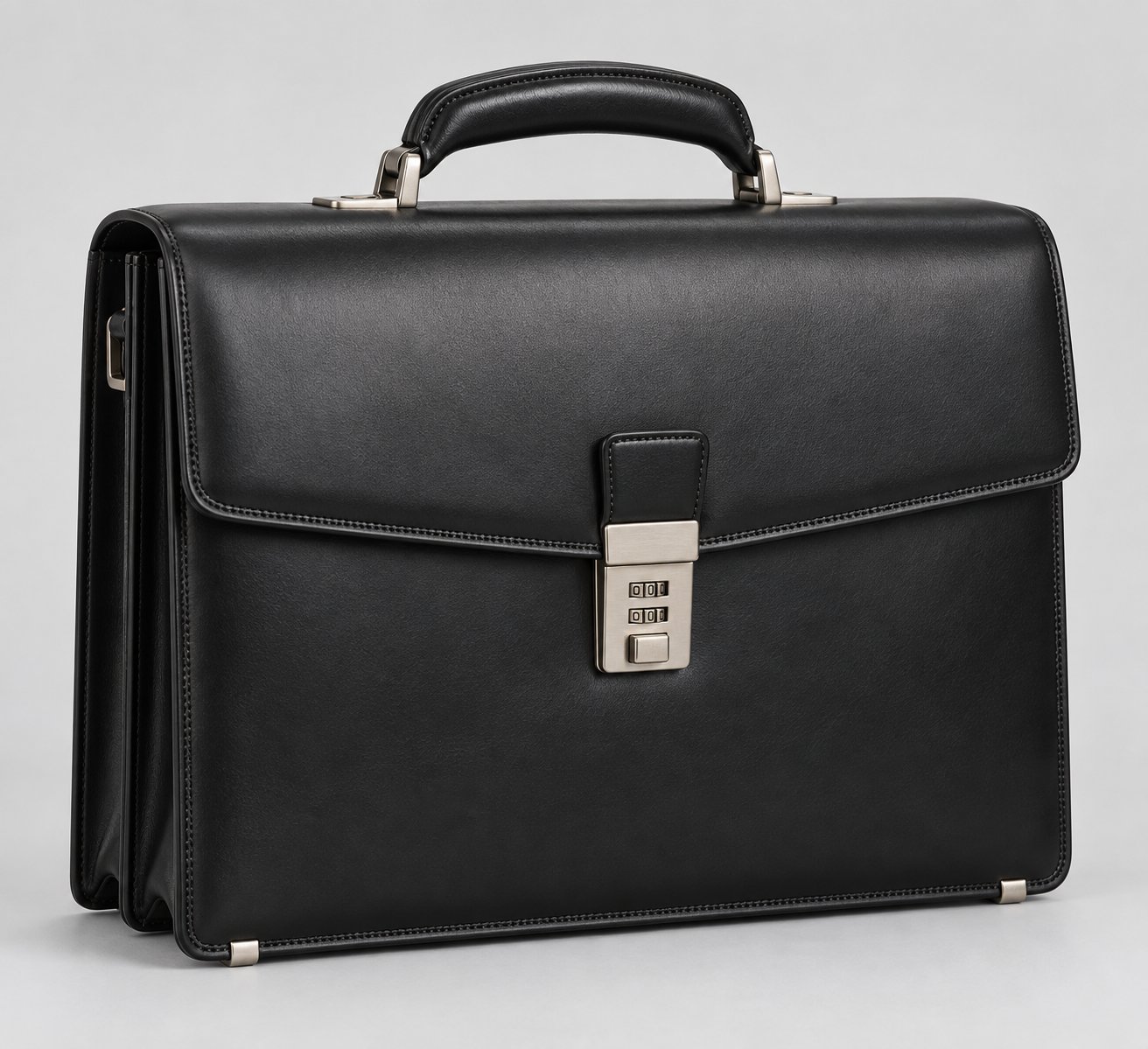
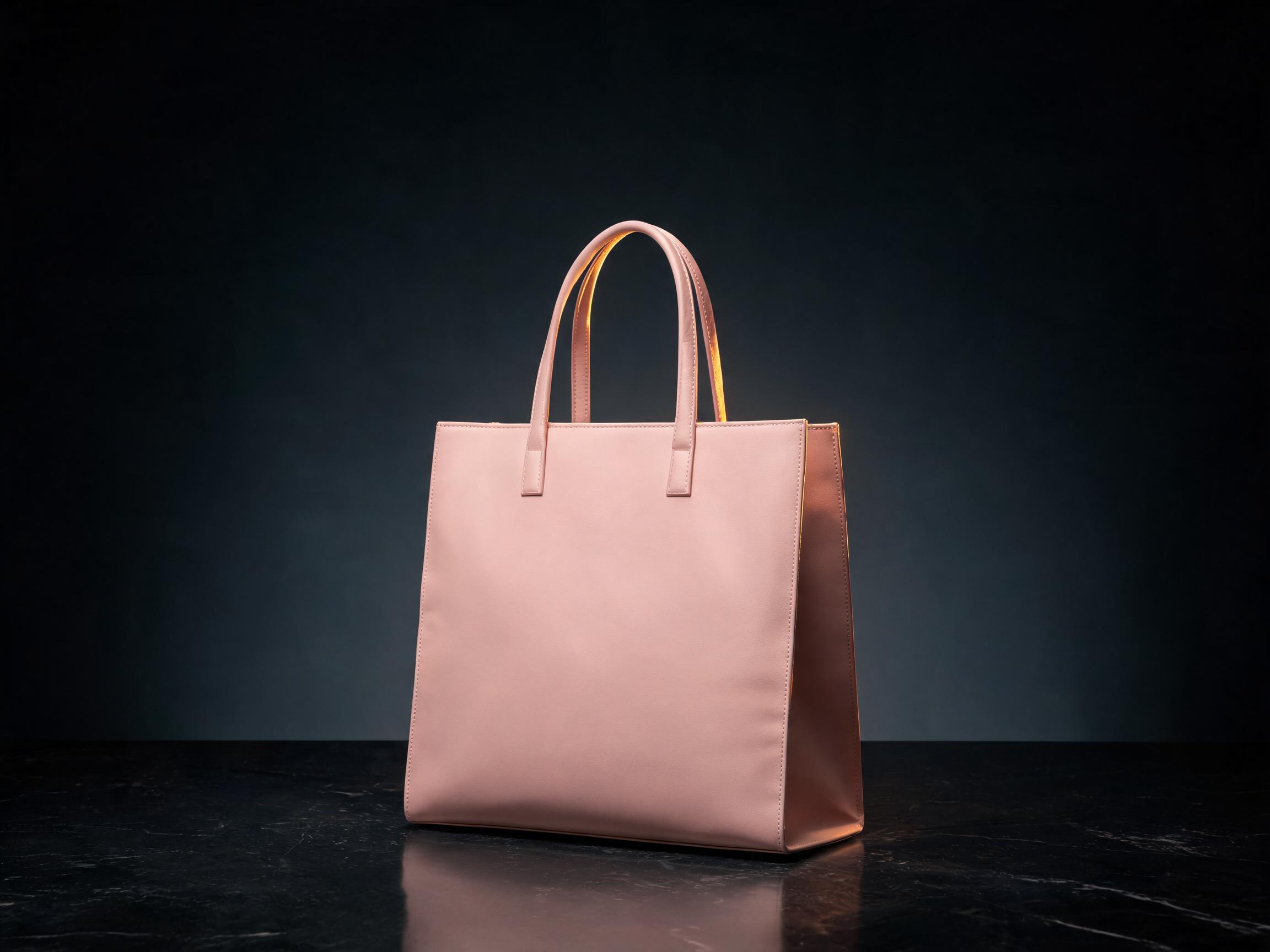
The black full-grain leather executive briefcase shown as this article's cover image is the clearest example of the category: full-grain leather, a combination lock, individual dust bag plus carton packaging, MOQ 300 pcs. That combination — leather, hardware and per-unit packaging — is what gifting programs pay for. For a structured tote in the same program logic, the PU leather tote handbag (magnetic snap, MOQ 500 pcs) reads as a gift at first glance, and the shape does the branding work before the logo is noticed.
Employee kits: consistency at scale
Onboarding and employee kits are the opposite problem. Hundreds or thousands of identical units go to people who will compare notes. Variation between units is the risk, not per-unit luxury. What the program needs is a bag that can be reproduced to the same specification across multiple production runs — same fabric, same color, same logo position.
Practical implications: pick materials with stable supply, keep customization to elements the factory can repeat reliably, and agree a color standard early. A slim laptop backpack (16 liters, polyester, MOQ 500 pcs) or a canvas weekend shoulder bag (canvas with leather trim, top zipper, MOQ 500 pcs) fits this logic better than a high-hardware leather piece, because the branding is repeatable and the unit cost holds at volume.
Channel branding: volume and shelf appeal
Dealer, distributor and retail-partner programs use branded bags as visible brand assets. Quantities are the largest of the three, and the bag has to work in a display context — strong color block, readable logo at distance, shape that holds when empty. Durability under handling matters more than fine finishing. This is where PU leather totes, canvas shoppers and mid-size backpacks earn their place.
Matching bag categories and materials to the program goal
Start from the recipient and the setting, then choose the material. Below is a working mapping, not a rulebook.
| Program | Bag categories that fit | Materials to consider | What drives the choice |
|---|---|---|---|
| Corporate gifting | Briefcase, structured tote, handbag | Full-grain leather, PU leather, canvas with leather trim | Hand feel, hardware, stitching, individual packaging |
| Employee kits | Laptop backpack, tote, shoulder bag | Polyester, canvas, PU leather | Repeatability of color and logo, unit cost at volume |
| Channel branding | Tote, shopper, backpack, luggage for sales incentives | PU leather, canvas, polycarbonate | Visibility, color saturation, durability in handling |
Two details are worth confirming in writing at this stage. First, whether the bag format fits the recipient's normal use — a 16-liter backpack suits daily commuting; a briefcase suits a client-facing role. Second, whether the interior spec is part of the brand experience: Wellmax offers OEM customization of color, lining and hardware, which matters most in gifting programs where the inside of the bag is seen every day.
Luggage belongs in a separate conversation. A leather briefcase is a personal gift; a 22-inch polycarbonate cabin case (MOQ 300 pcs) or an aluminum frame checked luggage set (MOQ 200 sets) is more often a channel incentive or a long-service award, and it is budgeted per winner rather than per headcount.
Plan the branding before you ask for samples
Branding decisions made after sampling cause the most rework in custom bag programs. Settle four things first.
Placement
Front panel center, lower corner, strap, lining, hardware, hangtag — each placement has a different visibility and a different constraint on the model. A logo across a zipper seam or a curved pocket edge will not reproduce cleanly. Mark positions on a flat drawing with dimensions from the nearest seam.
Application method
Factories offer methods such as printing, embroidery, woven labels or patches. Suitability depends on the material and the model — a method that works on canvas does not automatically transfer to coated PU leather or to a small hardware-facing panel. Ask the factory which methods they recommend for your specific model, and why.
Artwork
Send vector artwork (AI, EPS, PDF) with the logo in a single color or with clearly defined color separations, plus a note on the minimum reproducible line weight. Raster files screenshot from a website rarely survive the transfer to embroidery or a woven label.
Verify on the actual sample
A digital mock-up confirms placement; only a physical sample confirms size, color, texture and method. Approve the pre-production sample against your own checklist — logo dimensions, color reference, material hand feel, packaging — and keep that approved sample as the bulk reference.
Quantities, samples and compliance documentation
Quantities follow the model, not the program name. Published minimums in the Wellmax range run from 200 sets on the aluminum frame checked luggage set and 300 pcs on the executive leather briefcase and 22-inch polycarbonate cabin case, to 500 pcs on the slim laptop backpack, PU leather tote and canvas weekend shoulder bag. Plan the program quantity against the model you actually want, and remember that splitting one order across several styles multiplies the sampling work.
On the factory side, Wellmax Luggage is an OEM/ODM luggage and bag manufacturer in Fujian, China, founded in 2013, with about 320 employees and a 12,000 m² facility covering cutting, sewing, assembly and inspection under one roof, at about 150,000 pieces per month. The company holds ISO 9001:2015, with a scope covering design, manufacturing and sales of luggage and travel bags at company/factory level, and a BSCI social compliance audit. Buyers in more than 40 countries source from it, supported by a dedicated export sales team.
For a program, decide early which documents you need and request them with the quotation rather than after the order: the quality management certificate and its scope, the social compliance audit report, and any product-level test reports that apply to your specific material and market. Note that a factory-level ISO 9001:2015 certificate covers the management system within its stated scope; it is not a product certificate, and product test reports apply to the model and batch tested.
Running mixed programs with one factory
Many buyers eventually need all three programs from one supplier — 200 gift briefcases for executives, 1,500 onboarding backpacks and 6,000 channel totes. One factory is usually the better commercial answer, provided the brief is structured.
- Separate the programs in the purchase order. Different SKUs, different branding specs, different packaging, different delivery windows. A single blended PO invites mix-ups on the line.
- Name one owner per program. The person approving the gifting sample is not necessarily the person approving channel artwork.
- Confirm the production sequence. Mixed orders need a stated priority so the gifting delivery is not held behind the channel volume run.
- Keep one approved reference sample per program. Three programs, three master samples.
Four product lines — travel luggage, backpacks, business bags and handbags — under one roof makes this workable, since the gifting, kit and channel items can come from the same cutting and inspection process.
What to send for a quotation
A quotation request that includes the following usually comes back accurate the first time:
- Program type and recipient count, with the split by style if the order is mixed.
- Bag category and, where you have one, a reference model or product link.
- Material preference, or a statement that you are open to the factory's recommendation.
- Branding: logo placement, preferred method if any, and vector artwork.
- Color requirements for the body, lining and hardware.
- Packaging requirements, including whether individual dust bags or gift boxes are needed.
- Destination market and any product test reports or compliance documents you require.
- Required delivery window, so the factory can confirm feasibility against its production schedule.
FAQ
What is a typical MOQ for custom logo bags?
It depends on the model. In the Wellmax range, the aluminum frame checked luggage set starts at 200 sets, the executive leather briefcase and the 22-inch polycarbonate cabin case at 300 pcs, and the slim laptop backpack, PU leather tote and canvas weekend shoulder bag at 500 pcs. Ask for the MOQ of the exact model you want rather than a general figure.
Can I combine several bag styles in one program?
Yes, and it is common when a program serves different recipient groups. Each style keeps its own MOQ, sample and branding specification, so combining styles increases sampling and approval work even when the total quantity is large. Confirm the split with the factory before committing to a launch date.
Which bag types work best for onboarding kits?
Bags that can be reproduced consistently and suit daily commuting: a 16-liter laptop backpack, a canvas shoulder bag or a PU leather tote are practical starting points at 500 pcs each. The deciding factor is not the category but whether the material and logo application can be repeated to the same standard across runs.
How do I verify compliance for a bag program?
Request the documents at quotation stage and read the scope. ISO 9001:2015 covers the management system at company/factory level within its stated scope. BSCI is a social compliance audit. If your market requires product-level testing for the specific material, ask which test reports apply to the model and confirm they match your destination requirements.
Wellmax Luggage makes custom bags for corporate gifting, employee kit and channel branding programs from its 12,000 m² OEM/ODM facility in Fujian, China, and quotes each program against its own specification.