Sourcing Guide
Why Cosmetic Bag Programs Fail at the Specification Stage
Cosmetic bags look simple from the shelf side: a zipped pouch, a lining, maybe a brush roll. On the factory side, most disappointing first shipments trace back to decisions made before sampling — a shell that cannot hold print registration, a lining chosen for cost rather than sealing method, or decoration quoted against the wrong artwork. These are specification mismatches, not manufacturing defects, and they surface at bulk stage because they were never resolved on paper.
This guide is written for beauty brand owners, retail buyers and promotional distributors briefing a China soft-goods manufacturer. It covers the four decisions that drive cost, durability and lead time — shell material, waterproof lining, interior structure and decoration — plus how MOQ is actually determined.
- Shell material is a positioning decision: PU leather, canvas and nylon each support a different retail story and a different decoration method.
- TPU and PU linings are both viable waterproof options, but they bond, seal and fold differently — verify seam sealing and zipper choice on a sample.
- MOQ is driven by shell material, lining and decoration method, not by a single factory-wide number.
Shell Materials: PU Leather, Canvas and Nylon
The shell is what the buyer touches first, and it determines which decoration methods are available later.
PU leather
PU leather reads as premium and sits comfortably in gift-with-purchase and travel retail contexts. It accepts debossing and hot-stamp foil well, and it wipes clean easily — which matters for cosmetics, because the bag will be handled with product residue on hands. The trade-offs: surface feel varies noticeably between grades, and it is less forgiving than fabric for multi-color artwork. Approve the exact PU grade by touch and by bending the sample, not from a swatch card.
Canvas and woven cotton
Canvas supports screen printing and embroidery in a way PU does not, making it the natural choice for promotional and lifestyle positioning where a bold multi-color logo is the point. It fits clean-beauty and sustainable-positioned lines. The considerations: a heavier canvas holds shape better in a structured case, and canvas shows soiling faster than a coated surface.
Nylon and synthetic woven fabrics
Nylon gives the lightest shell and the most compact packed size — useful for travel kits and multi-piece sets. It takes printing and can be paired with a coated backing for water resistance. A light nylon shell without a stiffener tends to collapse, so it works best in flat pouch formats or over a structured base panel. Decide early whether the bag needs to stand open during use.
| Shell material | Best-fit positioning | Decoration fit | Main consideration |
|---|---|---|---|
| PU leather | Premium, gift-with-purchase, travel retail | Debossing, foil stamp | Surface feel varies by grade; approve by sample |
| Canvas / woven cotton | Promotional, lifestyle, clean-beauty | Screen print, embroidery | Shows soiling; weight affects structure |
| Nylon / synthetic woven | Travel kits, compact multi-piece sets | Printing, coated backing | Collapses without stiffener or base panel |
Waterproof Linings: TPU vs PU Approaches
Most cosmetic bag failures that reach the consumer are lining problems: a leak seeps through a seam, a zipper wicks moisture, or a bonded lining separates after repeated flexing. Both TPU and PU are used as waterproof or water-resistant linings; evaluate them against how the bag is built.
TPU linings
TPU films suit a wipe-clean interior and can be bonded or laminated to a backing fabric. The relevant question is not "is TPU waterproof" but how the TPU is attached, and whether that bond survives folding at the corners and along the zipper tape.
PU linings
PU-coated linings read as softer and quieter inside the bag and can be specified in colors matching the shell. Coating adhesion and edge finishing become the critical variables: a coating not properly sealed at the cut edge is a leak path regardless of how good the film is.
What to verify on the sample
- Seam treatment and zipper choice. A sealed or taped seam behaves differently from a plain stitched seam, and the zipper is often the weakest point in a "waterproof" claim — confirm the seam method, zipper type and whether a flap or guard is included.
- Lining bonding and edges. Ask whether the lining is laminated or free-floating, check corners and base for separation after repeated opening, and inspect how exposed edges are finished.
Structure Planning: Compartments, Brush Holders and Closures
Interior structure is where a cosmetic bag earns repeat purchase or loses it. Answer these questions before sampling.
Compartments, dividers and brush holders
Decide between a single open volume, a fixed divider, or removable inserts. Fixed dividers add sewing steps and affect MOQ; removable inserts can be manufactured and packed separately. For brush storage, the variables are loop count, elastic width, and whether the panel is stitched flat to the lining or mounted on a removable flap — loop count directly increases sewing time, so it belongs in the brief.
Flat vs structured base
A flat pouch packs small and is the simplest construction. A structured base lets the bag stand open for brushes and bottles, but adds materials and assembly steps that influence cost and MOQ.
Closure types
Zippers dominate for security and low profile; flap-and-snap, magnetic and drawstring closures each change the pattern, sewing sequence and decoration placement. Choose the closure before finalizing artwork position.
Decoration for Private Label: Printing vs Embroidery vs Debossing
For low-MOQ private label, decoration choice is where cost and lead time move most.
| Method | Shell fit | Cost behavior at low volume | Lead-time consideration |
|---|---|---|---|
| Printing (screen / transfer) | Canvas, nylon, some PU | Setup cost amortized across the run; multi-color art raises setup | Requires artwork approval and a print proof before bulk |
| Embroidery | Canvas, woven fabrics | Digitizing is a one-time setup; stitch count drives per-piece time | Needs a digitized file approved on a sewn sample |
| Debossing / foil | PU leather, coated surfaces | Requires a die or plate; simple logos are most cost-efficient | Die production adds a step before bulk |
At small volumes the dominant cost is usually setup, not per-piece material. A single-color debossed logo on PU is often the most predictable low-MOQ route, multi-color printing on canvas carries the highest setup burden, and embroidery sits between the two.
How MOQ Is Actually Determined for Cosmetic Bags
There is no single factory-wide cosmetic bag MOQ. For this category it is driven by a combination of:
- Shell material. Specialty or dyed-to-order materials usually require a higher minimum than stock fabrics.
- Lining construction. A sealed or laminated lining with more assembly steps typically raises the minimum.
- Decoration method. Debossing dies, embroidery digitizing and print setups are fixed costs, so the economic minimum depends on the technique.
- Structure complexity. Dividers, elastic loop panels and structured bases add sewing operations that affect the minimum.
Because MOQ is a function of your specific brief, present the full specification — shell, lining, structure, decoration and target volume — and confirm the category MOQ with the manufacturer rather than quoting a number from a general page. Cosmetic cases fall under the small soft-goods category; confirm whether your specific format is covered.
Working with a China Soft-Goods OEM/ODM Manufacturer
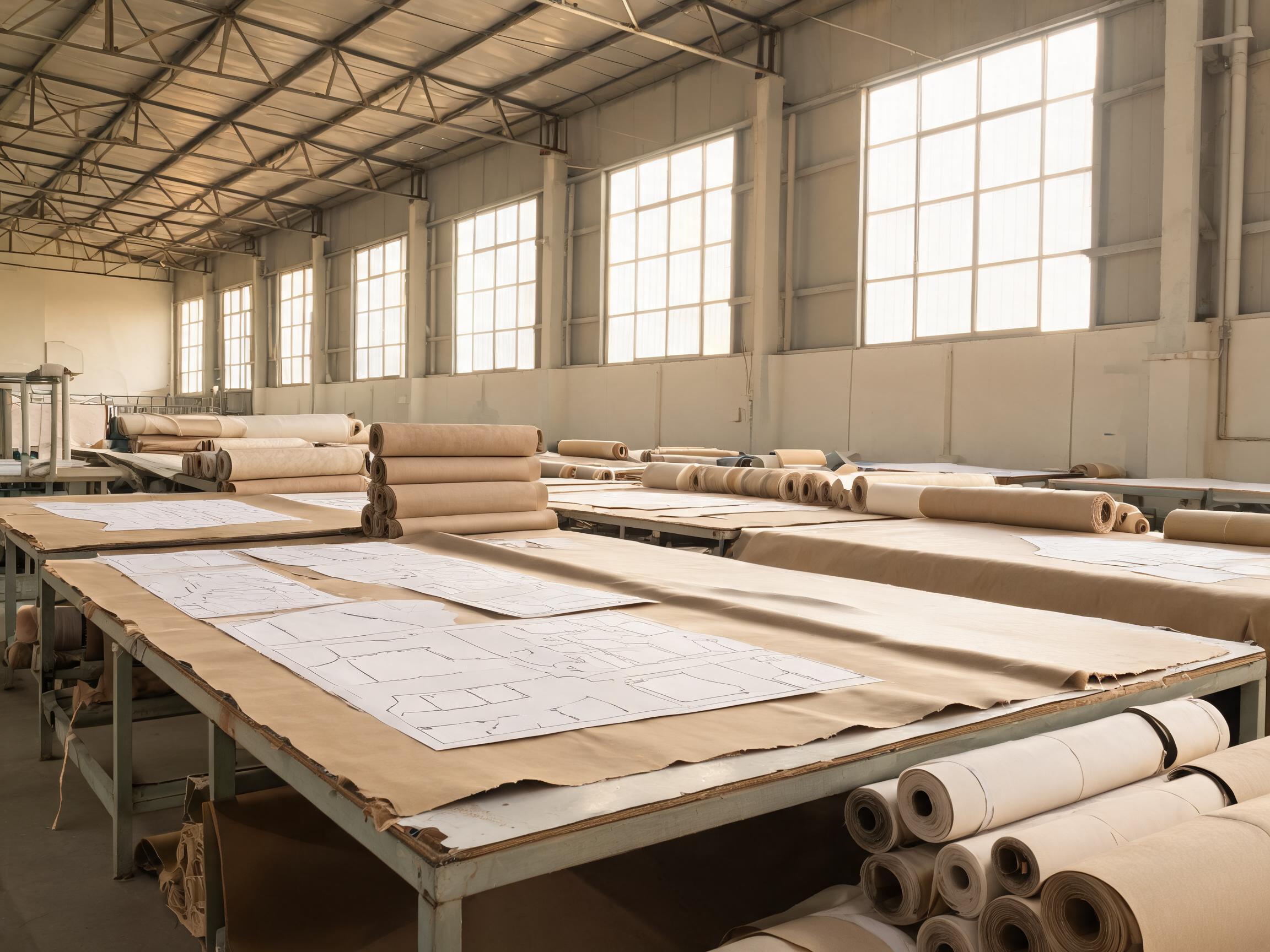
A realistic cosmetic bag program is built on sampling first. Wellmax Luggage is an OEM/ODM luggage and bag manufacturer founded in 2013 in Fujian, China, with about 320 staff and a 12,000 m² facility keeping cutting, sewing, assembly and inspection under one roof. The factory runs roughly 150,000 pieces per month across trolley cases, backpacks, business bags and handbags, and serves buyers in more than 40 countries. It is ISO 9001:2015 certified and BSCI-audited at company and factory level. Sampling is the right moment to settle shell grade, lining bonding and decoration position.
Pre-Order Checklist for Beauty Brands
- Define the position: premium, promotional or travel — this decides the shell family.
- Choose the shell material and approve a physical sample by touch and flex.
- Specify the lining — TPU or PU — and how it will be bonded or sealed.
- Confirm seam treatment, zipper type and whether a zipper guard is included.
- Decide interior structure: compartments, divider type, elastic loops, base panel.
- Select the decoration method that fits the shell, then simplify the artwork.
- Ask for the category MOQ against your full brief, not a generic figure.
- Request a sample with the final lining and decoration so bulk matches the approved piece.
Frequently Asked Questions
Is TPU or PU better for a waterproof cosmetic bag lining?
Both are used, and the better choice depends on how the bag is built. What matters more than the film itself is how the lining is bonded, how seams are finished and what zipper is used — the zipper tape is often the weakest point. Verify these on a physical sample rather than by material name alone.
To move a cosmetic bag program forward, prepare a brief covering the shell family, lining approach, interior structure, closure type and decoration method, and request a sample against that brief.