OEM & Private Label Guide
Brand owners and retail chains sourcing from China face a familiar problem: the luggage market offers endless low-cost options, but the gap between a generic suitcase and a product that carries your brand identity and meets your market's expectations is wide. This guide explains the practical OEM options available for personalized luggage, the customization methods suppliers actually use, and the questions that separate a reliable manufacturing partner from a trading intermediary.
- OEM and ODM are different sourcing models with different cost and lead-time profiles.
- Personalization ranges from logo printing to full structural customization.
- MOQ, tooling cost, and sample approval workflow are the three numbers that determine project feasibility.
- Material and hardware specifications matter more than catalog photos when judging durability.
- OEM vs ODM: which model fits your program
- Customization options for personalized luggage
- Materials and hardware: what to specify
- MOQ, tooling, and cost drivers
- Quality checks before bulk production
- Personalized luggage for promotions and retail chains
- How to evaluate a China luggage OEM supplier
- FAQ
OEM vs ODM: which model fits your program
In the luggage industry, OEM (original equipment manufacturing) means the factory produces to your design or specification. ODM (original design manufacturing) means you select from the factory's existing designs and apply your branding. Most China-based luggage manufacturers offer both, but the choice affects cost, timeline, and how much control you retain.
OEM is the right path when you have a defined product concept, proprietary features, or a design that differentiates your brand. It requires you to provide technical drawings, material specifications, and often a mold or tooling investment. The factory builds to your requirements, and the resulting product is yours to control.
ODM suits faster market entry or promotional programs where speed and cost matter more than exclusivity. You choose from the factory's catalog, add your logo and packaging, and go to production with minimal tooling. The trade-off is that similar products may be available to other buyers.
Some buyers use a hybrid approach: start with an ODM base model for a first order, then transition to OEM once the product proves itself in their market. This reduces initial risk while preserving the option to customize later.
Customization options for personalized luggage
Personalization in luggage covers a spectrum. Understanding where your requirement sits helps you communicate clearly with suppliers and anticipate cost and lead time.
- Logo application: Silkscreen printing, heat transfer, embroidery, rubber patches, metal nameplates, or debossed leather tags. Each method has different durability and cost characteristics.
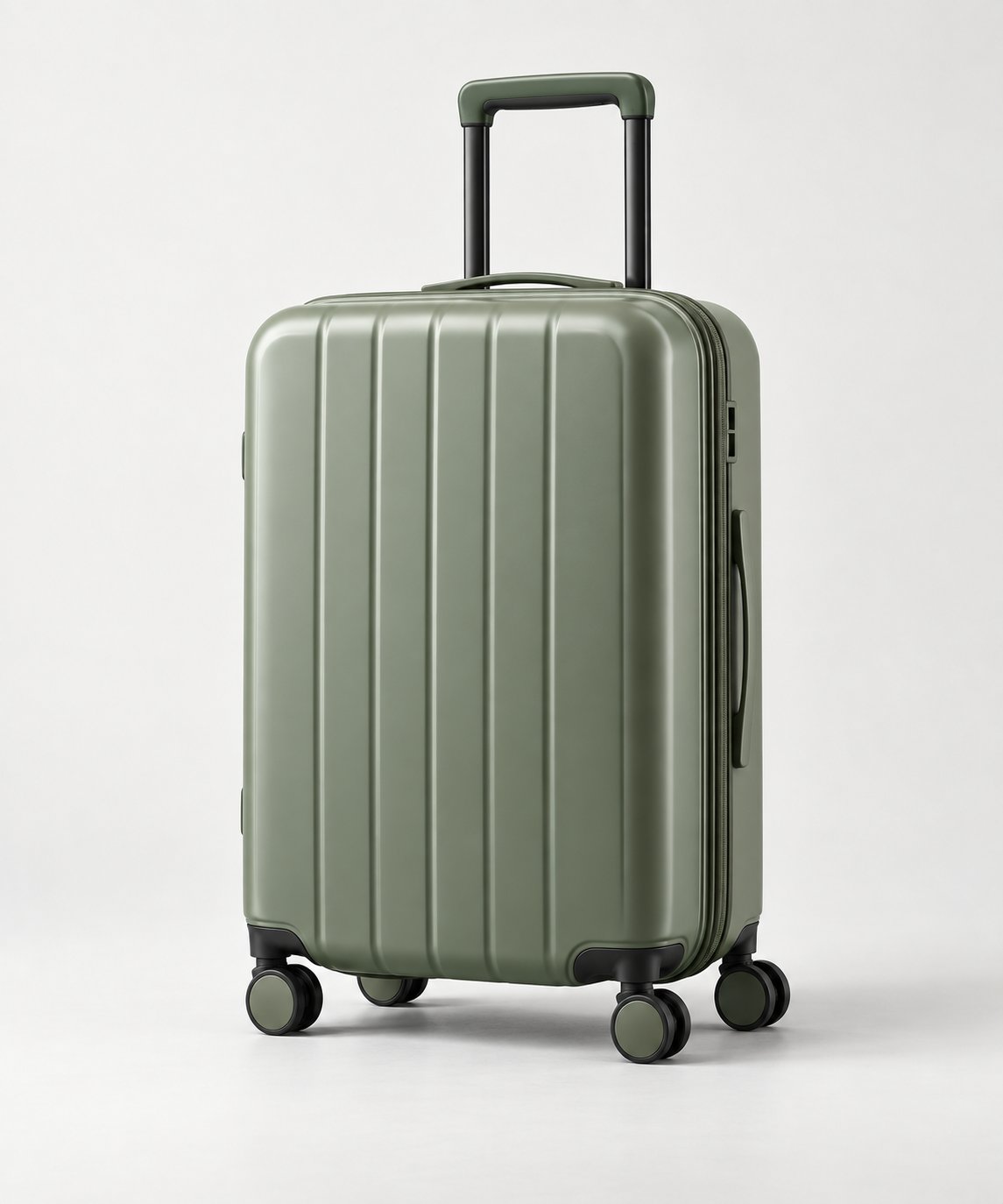
- Color and material: Custom shell colors, interior lining colors, zipper tape colors, and hardware finishes (gunmetal, gold, matte black, etc.).
- Trim and hardware: Custom zipper pulls, handles, wheels, and locks. TSA-approved locks are common for North American retail.
- Interior configuration: Compartment layout, packing straps, mesh pockets, and lining material can be adjusted for specific use cases.
- Packaging: Retail-ready packaging, hang tags, polybags, and master carton printing with your brand and barcode.
- Structural changes: Size adjustments, handle placement, wheel type, and expansion features. These typically require new tooling and higher MOQ.
For promotional luggage, logo printing and color customization are usually sufficient. For a private label retail line, buyers often go deeper into hardware, interior, and packaging to create a distinct product.
Materials and hardware: what to specify
Luggage durability is largely determined by shell material, wheel quality, and zipper construction. When evaluating a supplier's sample, ask for the specific material grades rather than generic descriptions.
| Component | Common options | What to verify |
|---|---|---|
| Shell | ABS, polycarbonate (PC), ABS+PC blend, polypropylene | Thickness, flexural strength, scratch resistance |
| Wheels | Single-wheel, dual-wheel spinner, inline skate wheels | Material (TPE, PU), bearing type, noise level, replacement availability |
| Zippers | Nylon coil, metal, YKK or equivalent | Brand, size, pull strength, anti-theft design |
| Handles | Aluminum telescopic, soft grip, ergonomic | Tube thickness, locking mechanism, wobble tolerance |
| Lining | Polyester, nylon, custom printed | Denier, colorfastness, stitching quality |
Specifying these details in your purchase order prevents substitution during production. If a supplier cannot provide material specifications or test reports for the components they use, that is a signal to look elsewhere.
MOQ, tooling, and cost drivers
Minimum order quantity (MOQ) for personalized luggage varies by customization level. Logo printing on an existing model may start at a few hundred units per color. Custom shell colors or new molds typically require higher volumes, often in the thousands. Tooling costs for new molds are a one-time expense that can be amortized over production.
Cost is driven by:
- Shell material and thickness
- Hardware brand and quality
- Customization complexity (number of print colors, custom molds, special packaging)
- Order quantity
- Inspection and testing requirements
When comparing quotes, ensure you are comparing the same specifications. A lower price often reflects thinner materials or generic hardware. Ask for a detailed bill of materials (BOM) to make an apples-to-apples comparison.
Quality checks before bulk production
Approving a sample is the first step. Before bulk production, consider these checkpoints:
- Pre-production sample: Confirm that the sample matches your approved specifications, including logo placement, colors, and hardware.
- Material verification: Request test reports for shell impact resistance, wheel durability, and zipper strength if available.
- In-line inspection: Arrange for a third-party inspection during production to catch issues early.
- Pre-shipment inspection: Verify quantity, packaging, labeling, and functionality before the goods leave the factory.
These steps add cost and time but reduce the risk of receiving a container of luggage that does not meet your market's expectations. For retail chains, a single quality failure can affect shelf space and customer trust.
Personalized luggage for promotions and retail chains
Promotional luggage and retail private label programs have different priorities. Promotional buyers often need fast turnaround, low MOQ, and competitive pricing for giveaways, corporate gifts, or seasonal campaigns. Retail chains need consistent quality, reliable replenishment, and packaging that meets retail standards.
For promotions, focus on:
- Stock models with quick logo application
- Simple color options
- Lightweight packaging to reduce shipping cost
- Clear lead time commitments
For retail chains, prioritize:
- Dedicated production slots to avoid stockouts
- Consistent hardware and material sourcing across orders
- Retail-ready packaging with barcodes and hang tags
- Compliance with destination market regulations (e.g., labeling, chemical restrictions)
Some suppliers specialize in one segment over the other. Matching your program type to the supplier's strength reduces friction and improves outcomes.
How to evaluate a China luggage OEM supplier
Use this checklist when shortlisting suppliers:
- Manufacturing capability: Are they a factory or a trading company? Ask for a factory tour video or visit in person.
- Customization experience: Have they produced similar products for your market? Ask for references or examples (without disclosing confidential client information).
- Quality control: Do they have an in-house QC team? What inspection equipment do they use?
- Communication: Do they respond to technical questions with specific answers, or do they deflect?
- Certifications: Do they hold relevant certifications for the materials they use? Verify the certificate scope covers your product.
- Lead time and capacity: Can they meet your delivery schedule? What is their monthly output for the product type you need?
Request a sample and evaluate it against your specifications. A supplier who is transparent about limitations is often more reliable than one who promises everything.
FAQ
What is the typical MOQ for personalized luggage from China?
MOQ depends on the customization. Logo printing on stock models may start at a few hundred units. Custom colors or new molds often require 1,000 units or more. Confirm with your supplier based on your specific requirements.
Can I get a sample before placing a bulk order?
Yes, most suppliers provide samples. Expect to pay for the sample and shipping. Some suppliers refund the sample cost after a bulk order is placed. Confirm the sample policy upfront.
How long does production take?
Production lead time varies by order size and customization complexity. For stock models with logo printing, it may be 30–45 days after sample approval. Custom molds can add several weeks. Always get a written lead time commitment.
What certifications should I look for?
Certifications depend on your destination market. For the EU, REACH compliance for materials is common. For the US, CPSIA may apply for children's products. Ask your supplier for relevant test reports and verify they cover your specific product and materials.
Can I mix colors and models in one order?
Some suppliers allow mixed containers, but this may affect MOQ per color and lead time. Discuss your assortment plan with the supplier early to find a workable arrangement.
For brand owners and retail chains, sourcing personalized luggage from China is a balance of customization, cost, and reliability. Start by defining your program type, then match it with a supplier whose capabilities align. Request samples, verify specifications, and plan quality checks before committing to bulk production. If you are evaluating suppliers for an upcoming program, prepare your specification sheet and sample requirements to get accurate quotes and timelines.