Distributors who search for China luggage wholesale usually arrive with one question already formed: should I build a private-label line through a factory program, or buy ready stock in mixed assortments? These are not two versions of the same purchase. They pull different levers—cash, brand control, replenishment speed, inventory risk—and the right answer depends on how you sell and how much working capital you can tie up.
This article compares the two paths only. It does not cover mixed-container logistics or general wholesale cost breakdowns; those are separate decisions. The focus is the core trade-off: white-label program versus stock assortment.
- White-label programs give brand control and differentiation but demand higher upfront MOQ and longer lead time.
- Stock assortment moves faster and lowers initial investment, but leaves you competing on the same standard SKUs as everyone else.
- Your sell-through channel and cash cycle—not the unit price alone—should decide the route.
- What each path actually is
- MOQ and upfront commitment
- How far brand customization goes
- Replenishment cadence
- Inventory and cash-flow trade-offs
- Where each fits: a decision table
- FAQ
What Each Path Actually Is
A white-label program means the factory produces luggage to your specification—shell color, lining, hardware, logo—under your brand. You are not buying a catalog product; you are commissioning a run. This requires agreement on MOQ, tooling or color approval, and a production window before anything ships.
A stock assortment means you buy from what the factory or wholesaler already holds, or from short-run standard production, in small mixed quantities. You pick from existing colorways and configurations. No logo, no customization, no long production commitment. You can often ship sooner.
Both routes can work with the same manufacturer. The question is which one matches your sales rhythm.
MOQ and Upfront Commitment
MOQ is where the two paths diverge most sharply. A private-label run needs a minimum order per SKU and per color because production lines are set up for a batch. A stock buy lets you take a low quantity of several items, but you accept whatever colors and specifications are available.
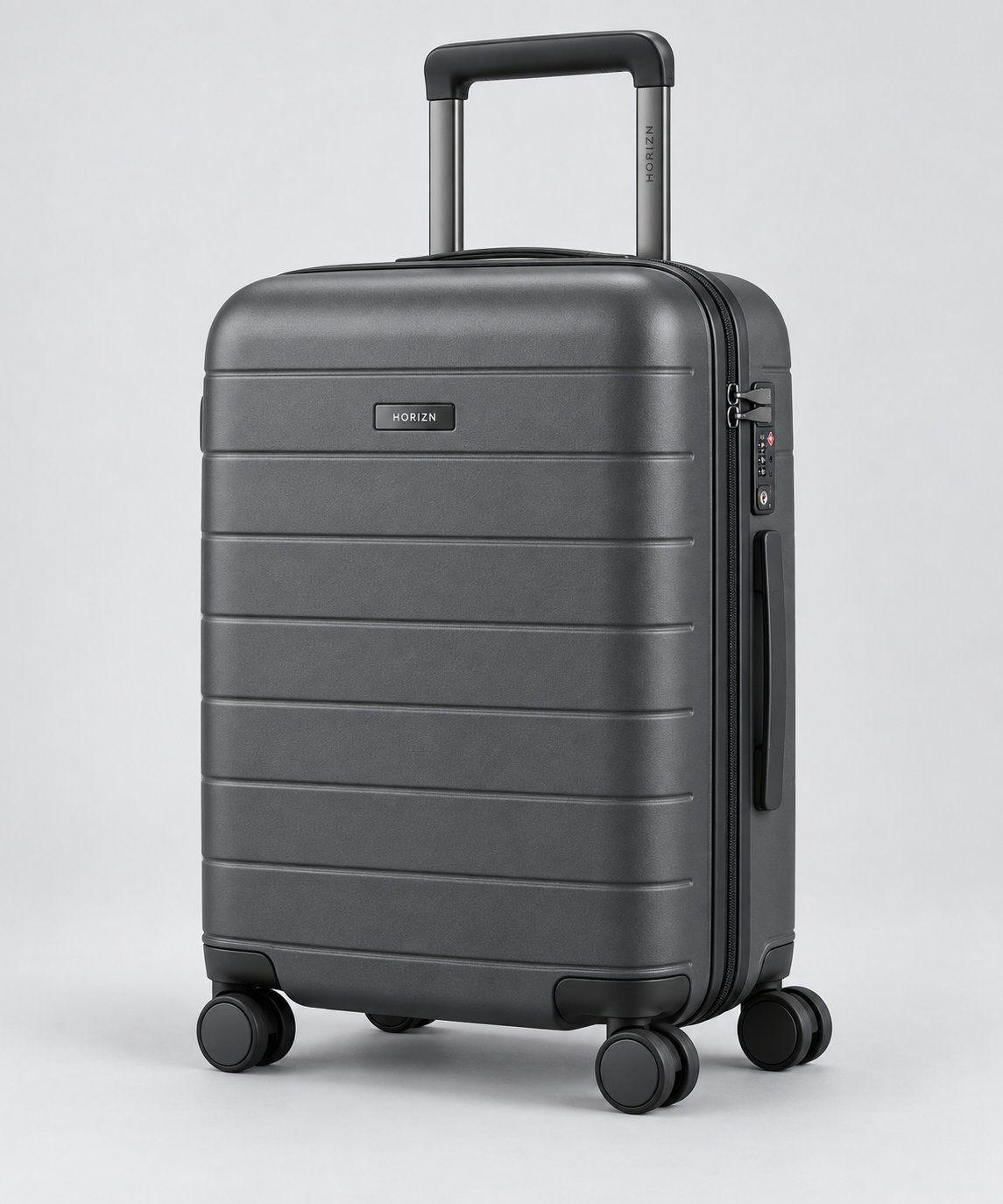
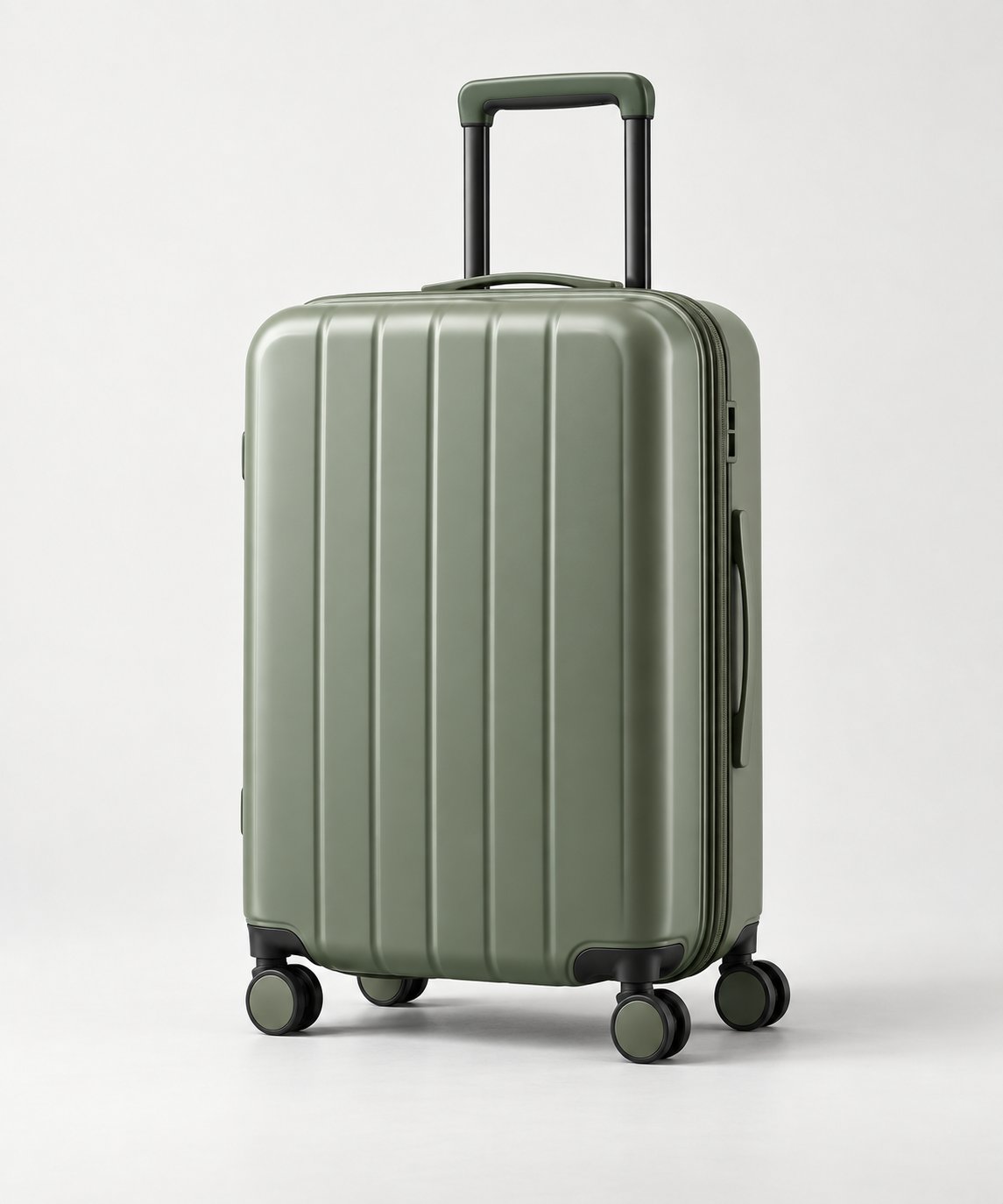
As a concrete reference point, Wellmax Luggage's Polycarbonate Cabin Luggage 22" carries an MOQ of 300 units with a 30–35 day lead time. That is the white-label entry point for one cabin-size SKU. The same is true for the Solid Color Spinner Luggage 24", also MOQ 300 and 30–35 days.
That means a private-label program is not a low-commitment experiment. A distributor testing a new brand must be prepared to commit to a full batch per design before seeing sell-through data. Stock assortment can be tested in smaller lots, but with no brand identity attached.
- White-label: budget for the full MOQ per color and SKU before launch; plan cash to be tied up during production.
- Stock: lower entry per order, but limited leverage on specification and color.
How Far Brand Customization Goes
White-label programs are not all-or-nothing. The practical boundary is which parts of the product can change and which cannot without new tooling. For hard-shell luggage, shell color, lining, and hardware are typically adjustable within an OEM program. That is what makes a product suitable for private label.
The 22" polycarbonate cabin case is offered in charcoal, black, and navy, with OEM adjustments available for color, lining, and hardware. The 24" solid-color spinner uses a clean solid shell as a private-label canvas, with OEM options for shell color, lining, and hardware. Before committing, confirm the exact options and any mold or minimum requirements with the supplier, because customization scope varies by component.
Stock assortment sits at the other end: you take existing colorways such as black, navy, or red and apply no branding. The customization limit is effectively zero. You differentiate through pricing, bundling, or channel—not through product identity.
Replenishment Cadence
Replenishment differs by path and directly affects how you manage stockouts.
With a white-label program, replenishment follows production scheduling. Lead time for the two examples above is 30–35 days, before shipping. That means reorders need forecasting discipline: if you sell out, you wait for a new production window. The upside is consistency—your reordered units should match the original specification, because the specification is yours.
With stock assortment, replenishment depends on what the supplier holds. Reorders can be faster if the item is in stock, but availability may change, and the exact color or trim may not be guaranteed on the next buy. This is a real risk for distributors who build a repeat-purchase expectation around a specific item.
Neither cadence is automatically better. A brand that values a stable, repeatable product line should lean white-label. A distributor that rotates items frequently may prefer the flexibility of stock.
Inventory and Cash-Flow Trade-offs
This is the decision most distributors underestimate. White-label programs consume cash earlier: you pay for a full MOQ batch, wait through production, and then hold inventory until it sells. The return comes from brand premium and customer loyalty—if the product sells.
Stock assortment spreads risk differently. You can buy smaller quantities more often, keeping less capital locked in a single SKU. But you compete on the same standard products as other distributors, which tends to compress margin unless you have a channel advantage.
The questions a distributor should answer before choosing:
- How many months of stock can I fund without straining cash flow?
- Can I forecast demand well enough to justify an MOQ batch per color?
- Does my customer base pay a premium for brand identity, or do they buy on price?
- If a white-label design underperforms, can I absorb that batch, or would it cripple my inventory?
- If I buy stock, can I still differentiate enough to avoid a price war?
There is no universal correct answer. A distributor with a strong own-brand retail presence can justify white-label MOQs. A distributor supplying mixed retail channels with unpredictable demand may find stock assortment safer until volumes stabilize.
Where Each Fits: A Decision Table
| Factor | White-Label Program | Stock Assortment |
|---|---|---|
| Minimum order | Per SKU and color (e.g., 300 units for the 22" and 24" models) | Can be lower and mixed |
| Lead time | 30–35 days production plus shipping | Depends on available stock; potentially shorter |
| Brand control | Shell color, lining, hardware adjustable (confirm options) | None; existing colorways only |
| Replenishment | Consistent spec, production-scheduled | Availability-dependent, may vary |
| Cash tied up | High upfront, longer cycle | Lower per order, more flexible |
| Best for | Distributors building a brand with forecastable demand | Distributors testing or rotating product quickly |
The table is a starting point, not a verdict. The right answer often changes as a distributor grows: start with stock to learn the market, then move to white-label once a specific product proves itself.
FAQ
Can I mix white-label and stock in the same order?
Generally yes, but they follow different production and MOQ rules. A white-label SKU still requires its own minimum and customization approval. Ask the supplier how the two are quoted and shipped together.
Does a white-label program always require new tooling?
Not always. Shell color, lining, and hardware changes on an existing model may avoid new tooling, but this depends on the specific product. Confirm before ordering—any mold requirements should be stated in writing.
Which path has lower risk for a first order?
Stock assortment usually has lower financial exposure because you commit to less inventory. White-label carries more risk but offers more upside if the brand sells. The choice depends on your confidence in demand.
Choosing Your Next Step
If you are building a brand and can forecast demand, a white-label program gives you product identity that stock cannot. If you are testing a market or need faster turns, stock assortment keeps your risk contained. Many distributors do both—stock for cash flow, white-label for brand growth.
Wellmax Luggage is an OEM/ODM manufacturer based in Fujian, established in 2013, with a 12,000 m² factory, around 320 employees, and monthly output of approximately 150,000 units. The product line covers spinner luggage, backpacks, business bags, and handbags, serving buyers in more than 40 countries. The factory holds ISO 9001:2015 and BSCI certification at the company and factory level.
If you are evaluating either path, the next practical step is to confirm MOQ, customization scope, and lead time for the specific models you have in mind. Those three variables determine which route fits your cash cycle and channel.