
Key planning points
- Custom programs compress at peak because tooling, sample approval, moulding and assembly share one calendar.
- Work backwards from the retail launch date to set the order-confirmation and sample-approval deadlines.
- Reserve a production slot in writing, not just a price.
- Split the program: proven shells and core colours first, new tooling later.
- Buffer the confirmation date and define partial shipment rules for core SKUs.
Why custom luggage compresses at peak
Peak season is not a single month; it is a cluster of deadlines arriving together. For a custom program the pressure starts before mass production, because tooling and sample approval sit in front of the line and consume calendar time that cannot be recovered later.
Moulding and assembly capacity is shared across styles. A factory running trolley cases, backpacks, business bags and handbags for buyers in more than 40 countries allocates moulding time, assembly lines and inspection capacity across its order book. When several buyers book the same window, the schedule tightens because the orders overlap.
The Lunar New Year holiday pulls labour out and ramps back gradually, hardware and fabric supply tighten as upstream suppliers face the same peak, and container space is booked earlier than the shipment date. The result is a planning problem, not a styling problem.
Work backwards from the retail calendar
Start with the in-store or launch date, subtract ocean transit and destination clearance to set the latest ship date, then subtract the factory order-confirmation date and the sample-approval date. That chain gives you the real cut-off before the holiday period, and it shows which milestone has the least slack.
Reserve capacity, not just a price
A quotation is not a capacity reservation. Agree the production slot in writing, confirm the deposit and order-confirmation timing, and state what happens if artwork or shell colour approval slips past the booked window. The reservation should name the window, the SKUs included and the consequence of a missed approval deadline.
At Wellmax Luggage, an OEM/ODM manufacturer in Fujian with a 12,000 m² facility and a team of about 320 people, the production system handles roughly 150,000 pieces a month across trolley cases, backpacks, business bags and handbags. Capacity is real, but finite: buyers who reserve early get a defined slot, and buyers who wait compete for what remains.
Split the program into waves
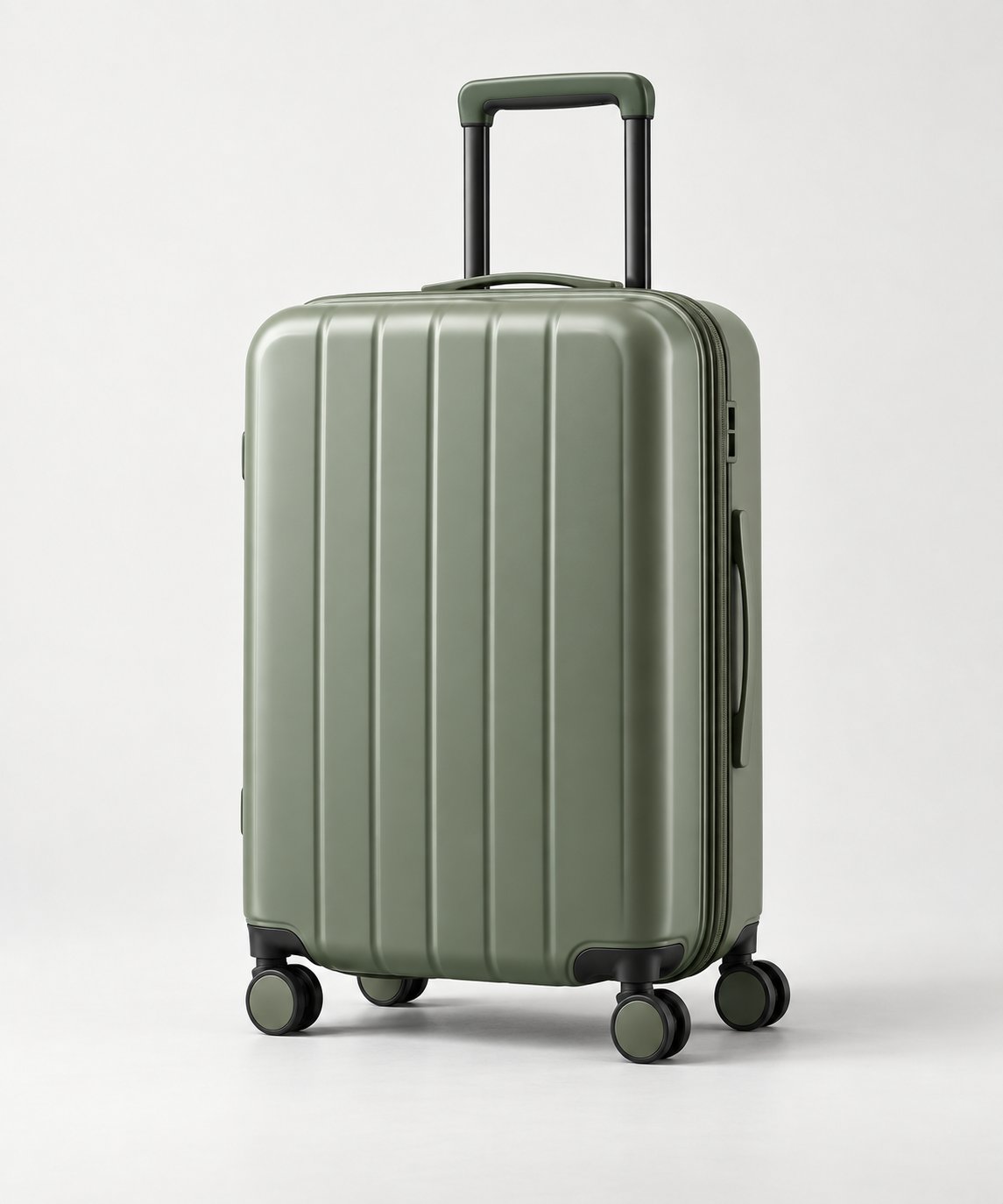
Not every SKU is equally urgent. Move core colourways and proven shells earlier and keep new tooling or new colourways in a later wave. The 24-inch solid colour spinner, with a polycarbonate shell, four spinner wheels and a telescopic handle in black, navy and red, is a proven shell that can be scheduled ahead of new developments. Wave planning also stops one delayed approval from holding back the whole order, and lets earlier waves ship while later waves are still in production.
Where variance really comes from
- Material availability: fabrics, hardware and packaging tighten as peak demand rises.
- Colour matching on coated shells: approval takes longer when the target colour is critical.
- Hardware supply: wheels, handles and zippers are shared across styles and buyers.
- Packaging and hangtags: printed materials often run on a separate schedule.
- Inspection capacity: final inspection slots fill as production peaks.
Build the buffer where it protects revenue
Buffer the confirmation date rather than the ship date. Setting the confirmation date earlier than strictly necessary creates room for sample approval and material preparation without rushing the line. Define partial shipment rules for core SKUs so proven items can ship while a later wave is delayed, reserve air freight only for the SKUs that fund the season, and put milestone checkpoints in the purchase order.
| Planning stage | Decision | Owner |
|---|---|---|
| Retail calendar | Set launch date and latest ship date | Brand owner |
| Sample approval | Approve shell colour, artwork and hardware | Brand owner with factory input |
| Capacity reservation | Confirm the slot and deposit timing | Sourcing manager and factory |
| Wave planning | Split core SKUs and new developments | Sourcing manager |
| Checkpoints | Fix inspection and shipping dates in the PO | Sourcing manager |
Monitoring milestones
- Sample approval
- Material in-house
- Moulding start
- Assembly start
- Inspection booking
- Container booking
Each checkpoint is an early warning if the schedule drifts. The travel luggage range shows the categories a single production system covers.
FAQ
How early should I reserve capacity?
As soon as the retail calendar is set. Exact timing depends on your launch date and program complexity, so raise it with the factory early and agree the cut-off.
What if my sample approval is delayed?
It depends on the written reservation terms. Clarify in advance whether the slot shifts or the order moves to a later window, and keep a buffer in the confirmation date.
Can I split the order into multiple shipments?
Partial shipment rules can be defined for core SKUs, so proven items ship on schedule while later waves are still in production.
How do I monitor progress once production starts?
Agree milestone checkpoints in the PO, such as material in-house, moulding start and inspection booking, and ask for regular updates so variance shows up early.
If you are planning a custom hard-shell program, share your target launch window and SKU mix so capacity can be discussed early. The Solid Color Spinner Luggage 24 inch is a reference for a proven shell.