Sourcing Guide
Corporate and brand buyers searching for a China business travel backpack supplier are usually not short of options. The harder problem is confirming that a factory can deliver the same bag, to the same specification, across a repeat order. This checklist walks through the selection decisions that matter most — capacity and compartment layout, fabric and hardware, laptop protection and checkpoint-friendly design, logo customisation — and closes with a specification confirmation table you can take into a supplier conversation.
Key takeaways
- Match internal capacity to the travel pattern your buyers actually have, not to a generic litre number.
- Compartment layout is a design decision that affects assembly complexity and unit cost.
- Laptop protection depends on foam thickness, suspension, and panel stiffness — not just the sleeve label.
- Checkpoint-friendly design is a construction feature that must be specified, not assumed.
- Logo customisation method determines tooling, minimum order, and colour accuracy.
- Confirm every specification in writing before sampling, so the bulk order matches the approved sample.
Why buyers source business travel backpacks from China
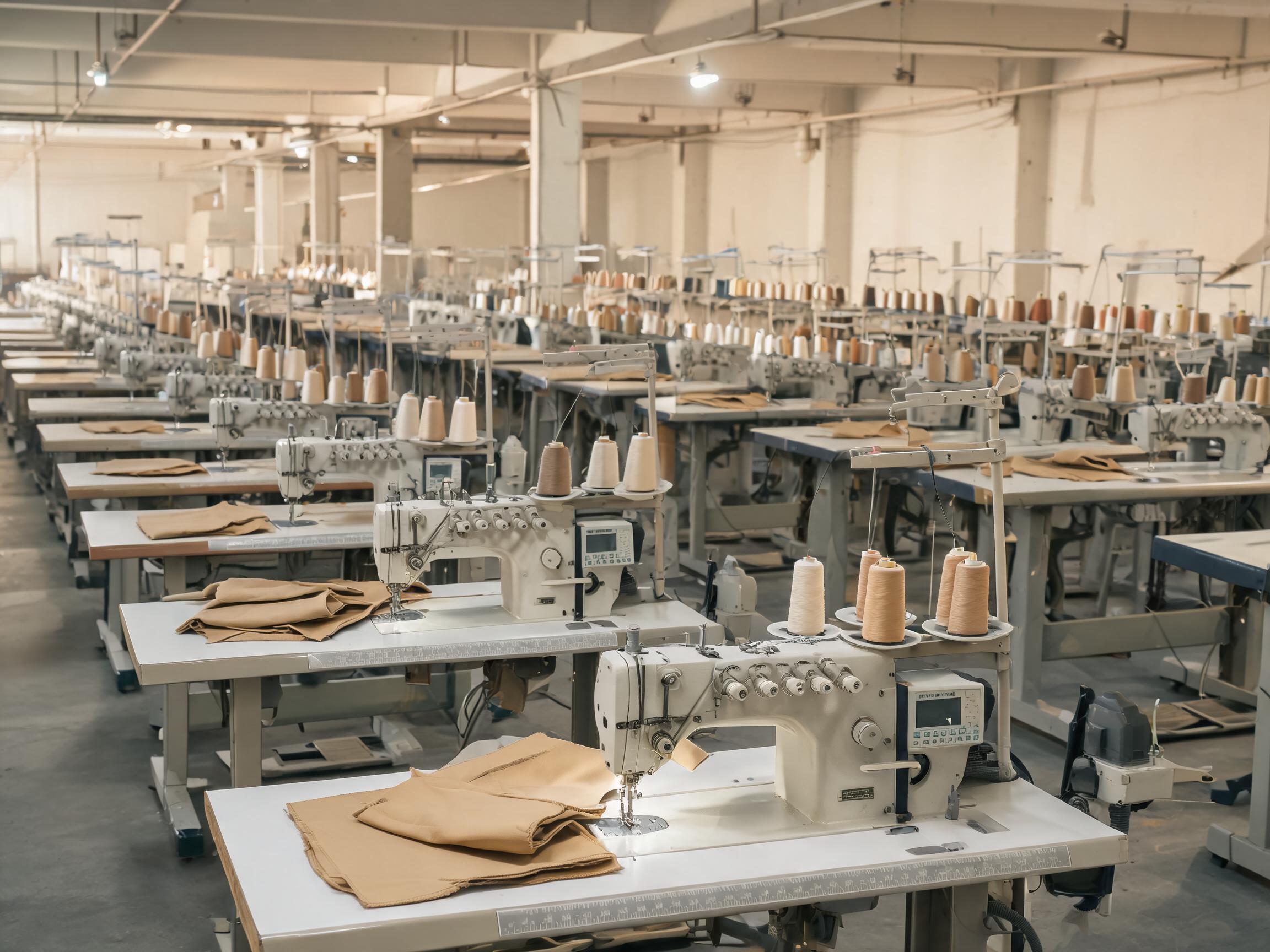
China's bag manufacturing base covers the full range of business travel backpack construction — cut-and-sew assembly, foam lamination, hardware fitting, and logo application — under one roof at most established factories. For corporate buyers, the practical advantage is the ability to move from sampling through tooling, mass production, quality inspection, and export within a single supply chain.
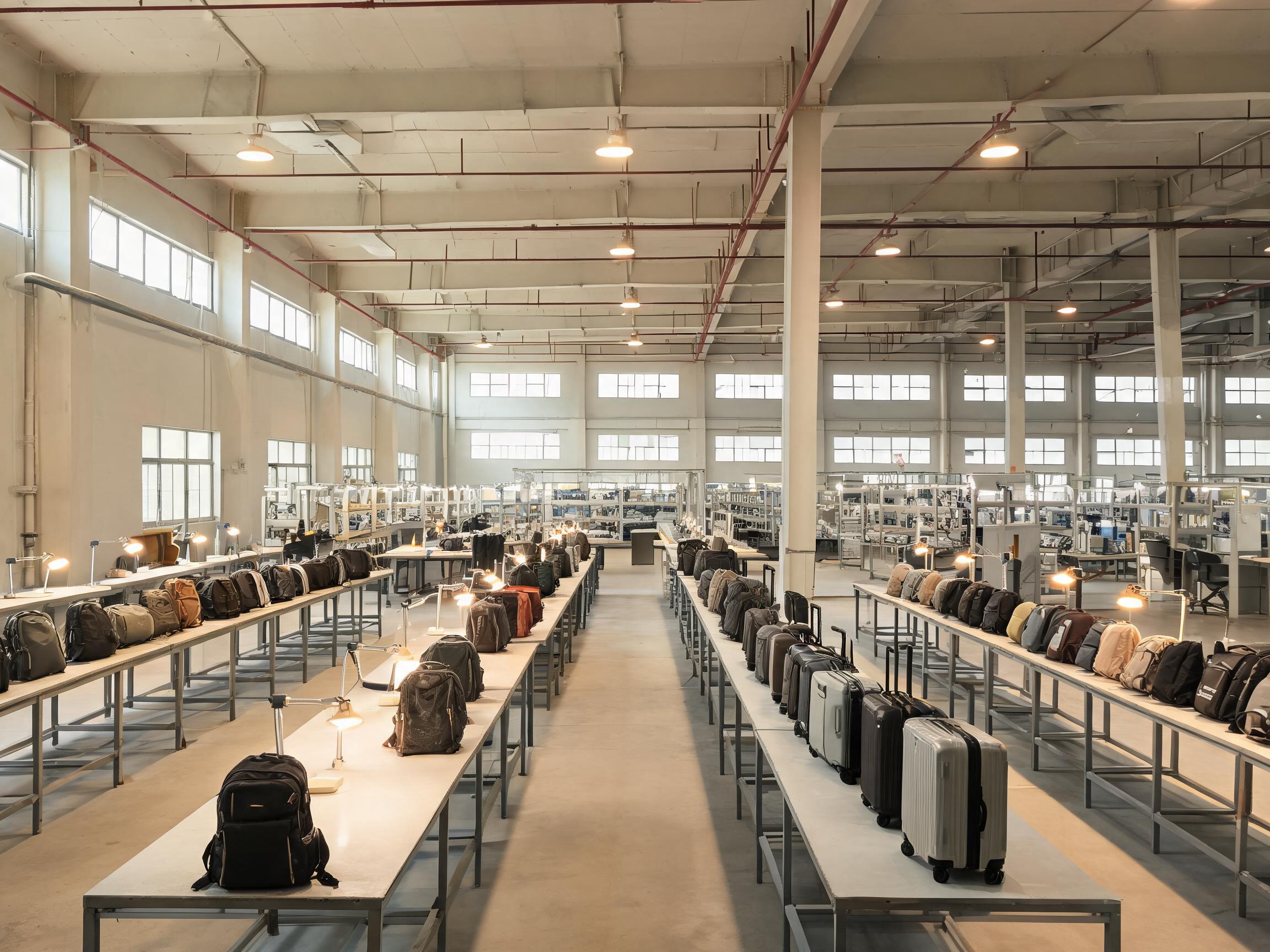
Wellmax Luggage is an OEM/ODM luggage and bag manufacturer based in Fujian, China, founded in 2013. The company operates a 12,000 m2 facility with about 320 employees and produces roughly 150,000 pieces per month across trolley cases, backpacks, business and laptop bags, and handbags. It holds ISO 9001:2015 certification and has been audited under the BSCI social compliance framework, and its export sales team serves buyers in more than 40 countries.
That scale matters for a business travel backpack programme because the product sits between two categories: it needs the structure of a laptop bag and the volume of a travel pack. A factory that already builds both has the pattern-making and assembly experience to handle that combination.
Capacity and compartment layout
Start with how the bag will be used. A business travel backpack typically serves one of three patterns:
- Daily commute plus occasional overnight. A single main compartment with a padded laptop sleeve and a front organiser is usually enough. Look at models in the 16–22 L range.
- Two-to-three day trips. Needs a larger main compartment, a separate shoe or laundry section, and a luggage pass-through. The 25–35 L range is the working window.
- Airline carry-on replacement. Requires a clamshell or wide U-zip opening so the bag packs like a case, plus compression straps to hold volume when partly loaded.
Compartment count is not a quality signal by itself. Every additional zip, divider, and pocket adds cutting, sewing, and inspection steps. If your target price point is tight, decide early which compartments are essential and which are nice-to-have. A clean 18 L laptop commuter bag such as the laptop commuter backpack 18L is often a better commercial fit for corporate gifting than a heavily compartmented 35 L pack.
Layout questions to settle before sampling
- Does the laptop sleeve sit against the back panel, or is it suspended away from the base?
- Is there a separate tablet or document sleeve, or does the laptop sleeve need to hold both?
- Where does the water bottle pocket sit — side, or internal?
- Is there a trolley strap on the back panel for attaching to rolling luggage?
Fabric and hardware
Fabric choice drives durability, hand feel, and cost. For business travel backpacks, the common directions are:
- Polyester or nylon with a PU or PVC backing. The standard choice for corporate programmes — good abrasion resistance, predictable colour matching, and a wide range of available finishes.
- Coated or water-resistant face fabric. Relevant if the bag will be used in wet climates or by field teams. A water-resistant daypack construction such as the technical daypack 25L shows how coating and seam treatment are handled in production.
- Recycled or solution-dyed yarns. Increasingly requested by brand buyers with sustainability reporting requirements. Confirm the yarn certification the mill can actually provide before you commit to a claim.
Hardware is where specification gaps show up fastest. Zippers, sliders, buckles, and D-rings should be named by brand or by a defined performance level in the specification sheet. If the buyer does not name them, the factory will use what is available — which may differ between the sample and the bulk run.
What to specify on hardware
- Zipper type and slider finish (metal vs. moulded plastic).
- Buckle and adjuster material, and whether they need to pass a load test.
- Logo plate or badge material if the brand mark is a separate part.
- Colour of all hardware, matched to the fabric or to a brand palette.
Laptop compartment and checkpoint-friendly design
The laptop compartment is the single most scrutinised feature by end users, and the most common source of returns when it is under-built. Three construction points determine whether it works:
- Foam thickness and density. The sleeve needs enough padding to absorb a drop, not just to feel soft. Specify the foam thickness in millimetres.
- Base suspension. The sleeve should sit above the bag's base so the laptop never contacts the ground directly. This is a pattern-making decision, not an add-on.
- Panel stiffness. A stiff back panel keeps the bag from folding onto the laptop when the pack is compressed.
Checkpoint-friendly design is a separate specification. A true checkpoint-friendly bag opens flat so the laptop can lie alone in the tray without removing it from the sleeve. That requires a specific hinge or clamshell construction. If your buyers travel frequently by air, confirm this feature explicitly — do not assume it from the product name. A convertible travel backpack, for example the convertible travel backpack 35L, often uses a clamshell opening that can be adapted for this purpose.
Logo customisation
Logo application method affects tooling cost, minimum order quantity, and how the mark looks after a year of use. The main options:
- Embroidery. Durable and premium-feeling. Best for text and simple marks. Complex multi-colour logos lose detail at small sizes.
- Woven label. Sharp detail, good for multi-colour marks. Applied as a separate part, so it adds a sewing step.
- Heat transfer or silicone print. Clean and flat, well suited to technical fabrics. Requires a mould or transfer plate, so tooling cost applies.
- Metal badge or plate. Highest perceived value, highest unit cost. Common on corporate gift programmes.
For corporate buyers, the practical question is placement: front panel, top lid, side, or on the hardware itself. Decide placement before sampling so the factory can position the mark correctly in the pattern. If the logo needs to appear on multiple surfaces, confirm each one.
Bulk-order specification confirmation checklist
Use this table to confirm the specification in writing before sampling. The goal is a document that both sides sign, so the bulk order can be checked against the approved sample.
| Item | What to confirm | Why it matters |
|---|---|---|
| Capacity and dimensions | Internal volume, external dimensions, and packed weight | Affects shipping cost and whether the bag meets carry-on limits |
| Compartment layout | Number and position of main compartments, sleeves, and pockets | Drives assembly complexity and unit cost |
| Fabric | Fibre type, backing, finish, and colour reference | Determines durability, hand feel, and colour consistency across orders |
| Hardware | Zipper and slider type, buckle material, colour | Prevents substitution between sample and bulk run |
| Laptop sleeve | Foam thickness, base suspension, panel stiffness | Protects the laptop and reduces returns |
| Checkpoint-friendly | Whether the bag opens flat and how | Must be designed in, not added later |
| Logo | Method, placement, size, and colour | Affects tooling cost and brand appearance |
| Packaging | Polybag, hangtag, retail box, carton quantity | Affects landed cost and retail readiness |
| Compliance | Any labelling, testing, or documentation the buyer requires | Needed before export, not after |
| Approval sample | Signed sample retained by both parties | The reference point for bulk inspection |
How to evaluate the supplier
Beyond the product specification, check the factory's process coverage. A supplier that handles sampling, tooling, mass production, quality inspection, and export in-house reduces the number of handoffs where problems can hide. An in-house design and development studio is useful if your programme needs pattern changes or a new silhouette rather than a catalogue item.
Ask for the factory's quality management certification and social compliance audit status, and confirm the scope of each. ISO 9001:2015 covers quality management systems; a BSCI audit covers social compliance. Neither is a product certification, so treat them as evidence of process discipline rather than a guarantee about a specific bag.
FAQ
- What is the typical capacity for a business travel backpack?
- Most business travel backpacks fall between 16 L and 35 L. Commuter and laptop-focused models sit at the lower end; multi-day travel packs sit at the upper end. The right choice depends on trip length and whether the bag replaces a carry-on case.
- Can a business travel backpack be made checkpoint-friendly?
- Yes, but it requires a specific clamshell or hinge construction that lets the laptop lie flat in the security tray. This must be specified at the design stage — it cannot be added to an existing pattern without rework.
- Which logo method is best for corporate orders?
- Embroidery is the most durable for text and simple marks. Woven labels give sharper detail for multi-colour logos. Heat transfer and metal badges suit technical fabrics and premium gift programmes. The choice depends on logo complexity, placement, and target unit cost.
- What should be confirmed before placing a bulk order?
- Capacity and dimensions, compartment layout, fabric and hardware specifications, laptop sleeve construction, logo method and placement, packaging, compliance requirements, and a signed approval sample. All of these should be in a written specification both parties hold.
- How do I compare two suppliers making a similar backpack?
- Compare on process coverage, not just unit price. Check whether sampling, tooling, production, inspection, and export are handled in-house, what certifications and audits apply, and whether the factory can hold the specification across repeat orders.
Next step
If you are sourcing a business travel backpack for a corporate programme or brand line, the fastest way to get a usable answer is to send your specification — capacity, compartment layout, fabric direction, laptop sleeve requirements, logo method, and target quantity — and ask for a sampling plan. A factory with an in-house design studio can usually tell you quickly which parts of the specification are straightforward and which need adjustment before tooling.
Wellmax Luggage works with buyers across more than 40 countries from its Fujian facility. If you have a specification sheet or a reference sample, share it and the team can respond with the production questions that need settling first.