Sustainable Backpack Sourcing Guide
If your retail or corporate program now includes recycled-content language, the sourcing question is no longer whether a China backpack OEM can make the bag. It is whether the recycled material you asked for can be specified, documented, and traced through a purchase order. This guide covers what to write into the inquiry, what to ask the factory, and which claims to verify against documentation.
Key takeaways
- Recycled rPET is a material specification, not a marketing label. It must be defined in the inquiry before it can be quoted.
- Ask for the mill or yarn supplier's declaration and traceability documents for the specific lot, not a general factory statement.
- Keep fabric claims and factory-level certifications separate in your PO, so each is verified against the right scope.
- Run a real sample in the specified recycled fabric before committing to bulk, since hand-feel, color, and coating behavior can shift.
- MOQ and lead time for standard backpacks at a Fujian OEM factory are typically 500 pcs and 30-35 days; recycled-material programs are confirmed per project.
Why recycled rPET has become a standard line item in backpack programs
Retail buyers and corporate merch teams are adding recycled-content language to their backpack briefs. Procurement policies in several markets now ask suppliers to disclose material composition, and end customers increasingly read the fabric callout on a hangtag. Neither trend requires a factory to overpromise. Both require you to specify the material clearly enough that a factory can source it, sample it, and quote it. Search demand for "China backpack" (720 monthly searches, 66/100 ad competition) reflects a mature, competitive sourcing market; the differentiator is not finding a factory, but finding one that can handle a recycled-fabric specification without turning your compliance claim into a liability.
What recycled rPET actually means in a backpack specification
rPET is a polyester feedstock produced from post-consumer or post-industrial PET waste. In backpack manufacturing it appears most often as recycled polyester fabric, used for the shell, lining, or both. It behaves close to virgin polyester in many applications, but it is not automatically interchangeable.
Three variables matter to a buyer:
- Feedstock source: post-consumer bottles, post-industrial offcuts, or a blend. The source affects documentation and sometimes color consistency.
- Fabric construction: the yarn count, weave, and coating determine whether the fabric is suitable for a commuter pack, a roll-top waterproof design, or a corporate laptop bag.
- Certification chain: recycled content claims are usually supported by a chain-of-custody standard. Whether that standard applies to your specific order is a factory-specific question you must confirm in writing.
If you cannot name the feedstock, the construction, and the documentation standard, the factory cannot quote accurately, and you cannot verify the claim later.
Questions to ask the factory before you ask for a price
Send these in the RFQ stage: which mills or yarn suppliers the factory works with for recycled polyester and whether they can share the declaration for the specific lot; whether the recycled content percentage can be confirmed in writing; whether the proposed fabric matches the abrasion, tear, and colorfastness performance of the standard polyester you currently use; what MOQ and lead time differences apply; and whether a pre-production sample in the recycled fabric is possible before bulk. A supplier who can answer these in detail is a better fit for a sustainable program than one who simply says yes.
Wellmax Luggage, an OEM/ODM manufacturer in Fujian, China, has produced backpacks since 2013 with roughly 320 employees across a 12,000 sqm single-roof facility, shipping to 40+ countries at about 150,000 pcs/month. The factory holds ISO 9001:2015 (factory level) and BSCI (social compliance, facility level). These are factory-level credentials; they do not certify any specific recycled fabric or product. Sustainable material options are confirmed per program, based on the buyer's specification and the mill's documentation.
Material claims to verify, and how to verify them
Recycled fabric claims fall into three categories, and each has a different verification path. A BSCI certificate says nothing about recycled content, and a mill's declaration says nothing about the factory's labor conditions, so keep them separate in the PO. If a mill declaration is unavailable, treat the claim as unverified.
| Claim type | What it asserts | What to ask for |
|---|---|---|
| Recycled content | Fabric contains a stated percentage of recycled material | Mill or yarn supplier declaration for the specific lot; chain-of-custody document if a standard applies |
| Fabric performance | Fabric meets a durability, water-resistance, or colorfastness requirement | Test report from the mill or a third-party lab, referencing the exact fabric code |
| Factory social compliance | Facility meets labor and social standards | BSCI audit report for the facility, with current validity |
What to put in the purchase order
A sustainable backpack PO should be more specific than a standard one: the exact fabric reference, fiber content, and recycled-content percentage as confirmed by the mill declaration; which declarations or test reports must accompany the shipment; the approved pre-production sample and its fabric lot; the exact hangtag and packaging wording, approved only after the documentation is in hand; and the inspection criteria, MOQ, and lead time for the recycled-fabric version, since they may differ from standard polyester.
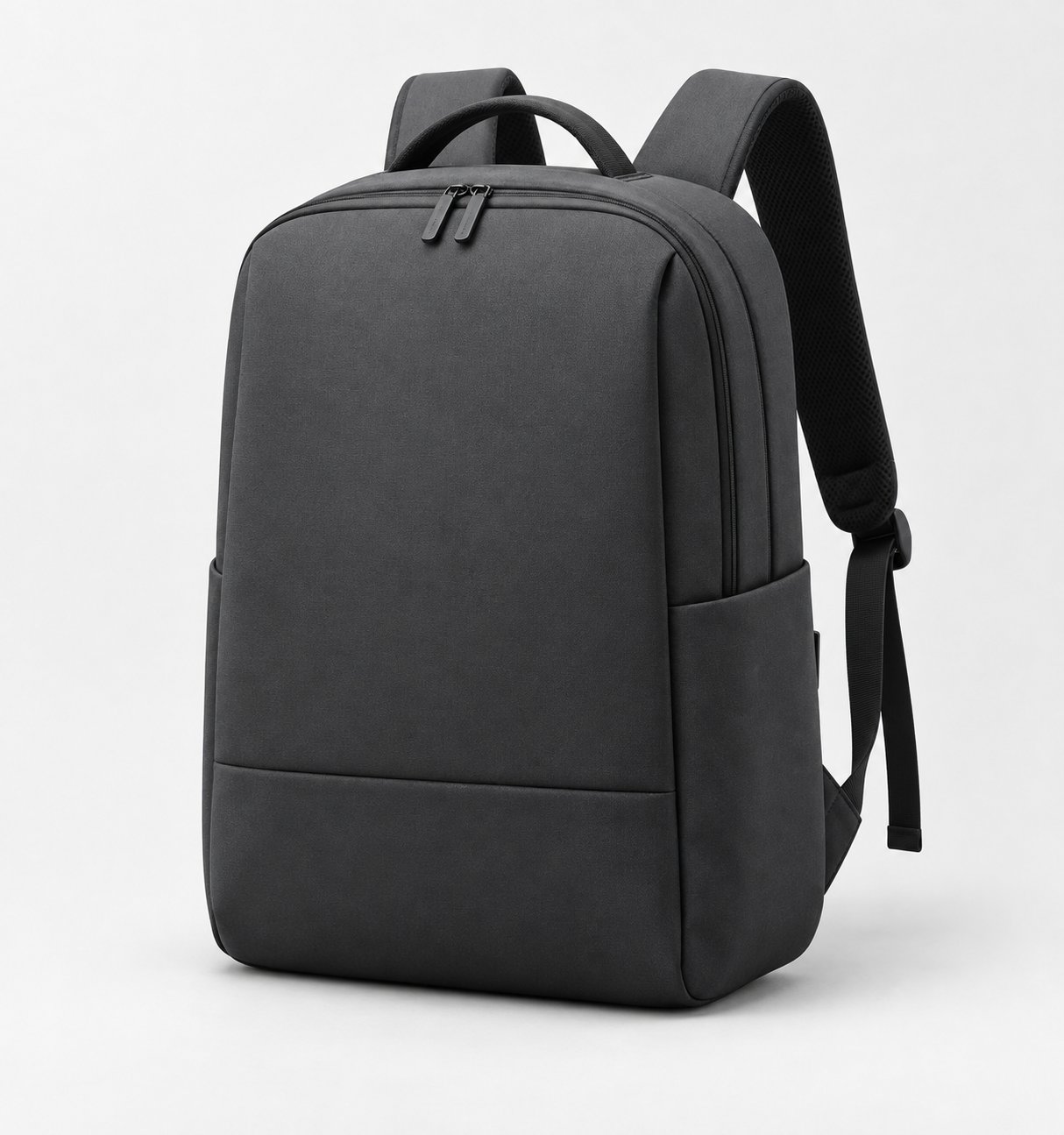
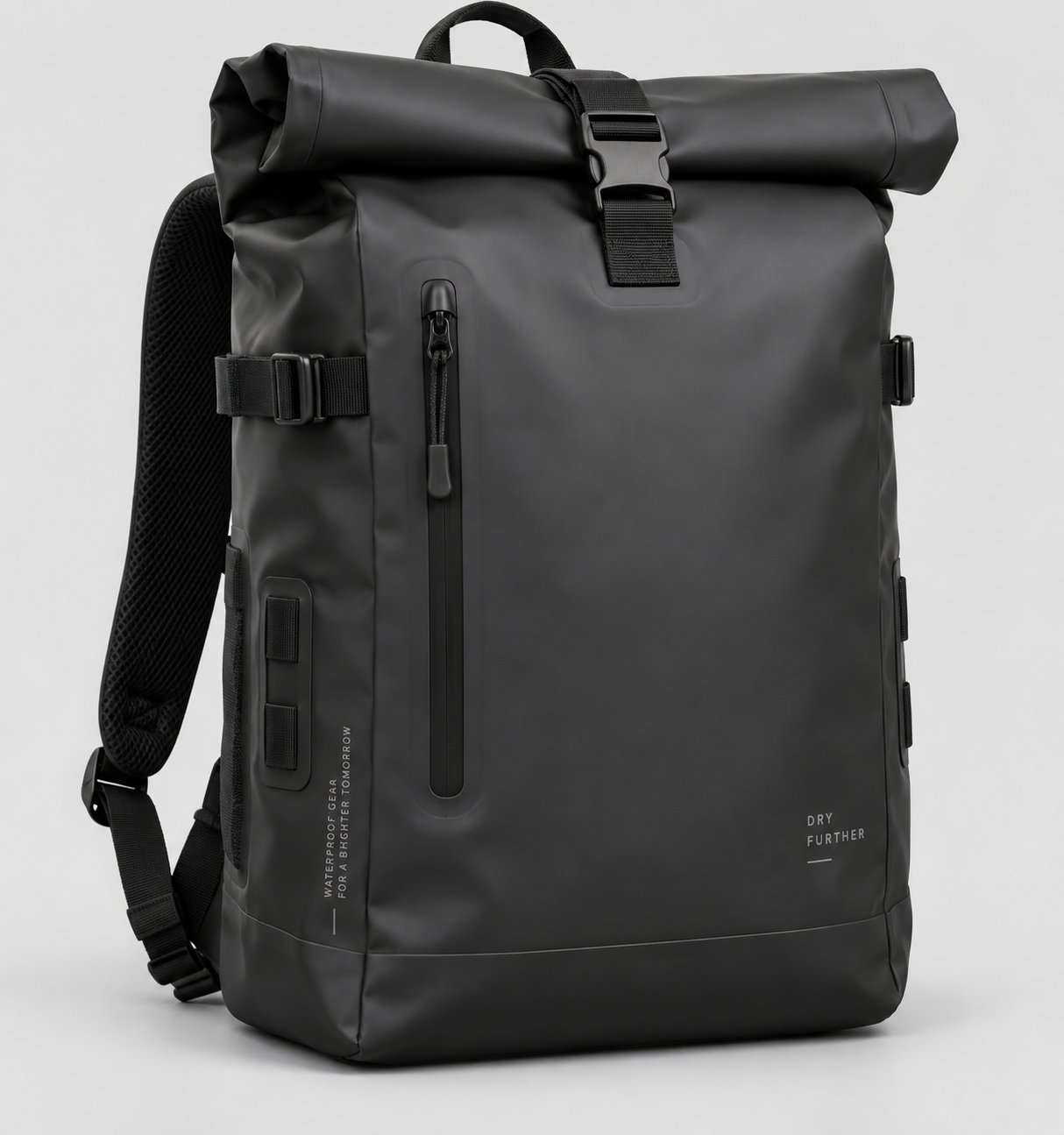
For reference, standard backpack models such as the Urban Commuter Backpack 22L carry an MOQ of 500 pcs and a 30-35 day lead time, with fabric, color, lining, and hardware adjustable. The Roll-Top Waterproof Backpack 30L, built on TPU-coated fabric with welded seams and a roll-top buckle closure, is a useful example of how a technical fabric program depends on verified material declarations. The Slim Laptop Backpack 16L is a common base for corporate programs where recycled lining may be specified. In every case, the recycled-fabric option is confirmed per order.
Sampling and pre-production: where sustainable programs are won or lost
Recycled polyester can differ from virgin polyester in hand-feel, dye uptake, and coating adhesion. Approve a pre-production sample in the actual recycled fabric before bulk production, keep it as the inspection reference, and ask the factory to note the fabric lot on the sample record. If the bulk order uses a different lot, the color may shift slightly - a buyer who specifies a lot reference in the PO has a basis for discussion if a discrepancy appears.
Cost, MOQ, and lead time expectations
Recycled fabric often carries a modest cost premium over standard polyester, MOQ may be higher if the mill sets a minimum run, and lead time can extend if the fabric must be ordered after the sample is approved. At a factory with 150,000 pcs/month capacity, standard backpack MOQ is typically 500 pcs with a 30-35 day lead time; for recycled-fabric programs, confirm both figures in the quotation stage rather than assuming they carry over.
Frequently asked questions
What document proves recycled content?
A declaration from the mill or yarn supplier, ideally tied to a chain-of-custody standard for the specific lot. A factory-level statement alone is not sufficient evidence of recycled content in the finished fabric.
Does ISO 9001:2015 or BSCI cover recycled material?
No. ISO 9001:2015 is a quality management system certification at the factory level. BSCI covers social compliance at the facility level. Neither certifies recycled content or fabric composition.
Can we use recycled fabric for a waterproof backpack?
Recycled polyester can be coated or laminated, but the performance depends on the specific construction. Confirm water-resistance requirements against a test report for the exact fabric, and validate through sampling.
Next step
If you are building a retail or corporate backpack program with recycled-material language, send your specification to the factory early: fabric composition, recycled-content requirement, documentation standard, target quantity, and labeling needs. Wellmax Luggage confirms sustainable material availability per project and can review your brief against standard backpack models, MOQ 500 pcs, and 30-35 day lead times.
Send your sustainable backpack specification
Share your fabric requirements, documentation needs, and program volume. We will confirm material availability, MOQ, and lead time for your specific order.
Request a project reviewRecycled and sustainable fabric options are subject to factory confirmation per program. Documentation requirements and labeling claims should be verified against mill declarations before the purchase order is issued.