
If you distribute tote bags, the question is rarely "can I find a factory." It is how the factory price moves with volume, what your real landed margin looks like, and when to place the next order so you don't run dry. This article works through those three decisions from a wholesaler's side of the table.
Key Takeaways
- Price tiers exist because setup, materials and labor spread differently across order sizes — ask the factory to quote your actual quantity, not a catalog number.
- Your gross margin is not factory price minus selling price. Landed cost, channel markup, returns and slow-moving stock all sit inside the real number.
- Repeat orders are planned backward from your sales cycle plus production and sea time, with a safety stock buffer sized to your own reorder history.
In this article
How Price Tiers Actually Work
Price tiers that scale with order quantity are standard practice in bag manufacturing. The logic behind them is worth understanding, because it tells you where you can negotiate and where you cannot.
An order carries fixed and variable costs. The fixed side — cutting dies, print plates, sample development, production scheduling, packaging setup — is incurred once no matter how many units you buy. Spread that across a larger quantity and the per-unit share shrinks. Variable costs (fabric, lining, hardware, labor time, cartons) scale more linearly, but they still benefit from better material purchasing at higher volumes and from longer, more efficient production runs.
That is why a factory can quote you a lower unit price at a higher quantity without cutting corners. It is not a discount for its own sake; it is the same cost structure divided by more units.
Specific tier boundaries and the actual per-unit price at each boundary depend on the product, the material, the print or hardware spec, and the factory's current schedule. Price tiers by order quantity are an industry norm; the actual tier boundaries and prices are quoted per order by the factory. Treat any published number as a starting assumption and confirm it against a written quotation for your exact spec and quantity.
What moves your quote up or down
- Material: PU leather versus coated canvas versus a heavier woven body changes the base cost per unit.
- Hardware and lining: zippers, magnetic closures, metal feet and interior organization all add line items.
- Printing or branding: screen print, heat transfer, embossing or woven labels each carry their own setup and run cost.
- Packaging: a poly bag versus a printed dust bag versus a retail-ready box changes both unit cost and shipping volume.
- Order quantity: the single biggest lever you control on a given design.
A Self-Check Framework for Your Margin
Many wholesalers calculate margin as selling price minus factory price. That number is optimistic. By the time a container clears and the last unit sells, several other costs have taken a bite. Before you commit to an order, run the numbers through this framework.
| Cost layer | What it includes | Why it matters to your margin |
|---|---|---|
| Factory purchase price | Unit price at your ordered quantity, per the written quote | The starting point, not the whole cost |
| Freight and duty | Inland transport to port, ocean or air freight, insurance, import duty and customs fees | Can add meaningfully to landed cost per unit, especially on smaller shipments |
| Channel markup | The price your distributor, retailer or marketplace buyer pays you | Determines your gross margin once landed cost is subtracted |
| Returns and defects | Replacement units, return freight, write-offs from damage in transit | A few percent of returns can erase a thin margin |
| Slow-moving stock | Capital tied up in colors or styles that sell slower than planned, storage cost, eventual markdown | The most commonly underestimated cost in bag distribution |
Work through it in this order:
- Get a written per-unit factory price for your exact quantity and spec.
- Add freight, insurance and duty to reach a landed cost per unit.
- Apply your channel's realistic selling price to reach gross margin per unit.
- Subtract an allowance for returns and a reserve for markdowns on slow sellers.
- What remains is your working margin. If it does not cover your operating costs and target profit, adjust the order — quantity, spec, or mix — not the selling price alone.
Matching Product Type to Your Sales Channel
Different wholesale channels carry different tote bag profiles. A promotional distributor buying in bulk wants a low unit cost and easy decoration. A corporate gifting buyer wants something that looks presentable in a meeting room. A retail or e-commerce wholesaler needs a design that turns over on shelf or on a product page.
Two product types illustrate how the sourcing decision changes with the channel.
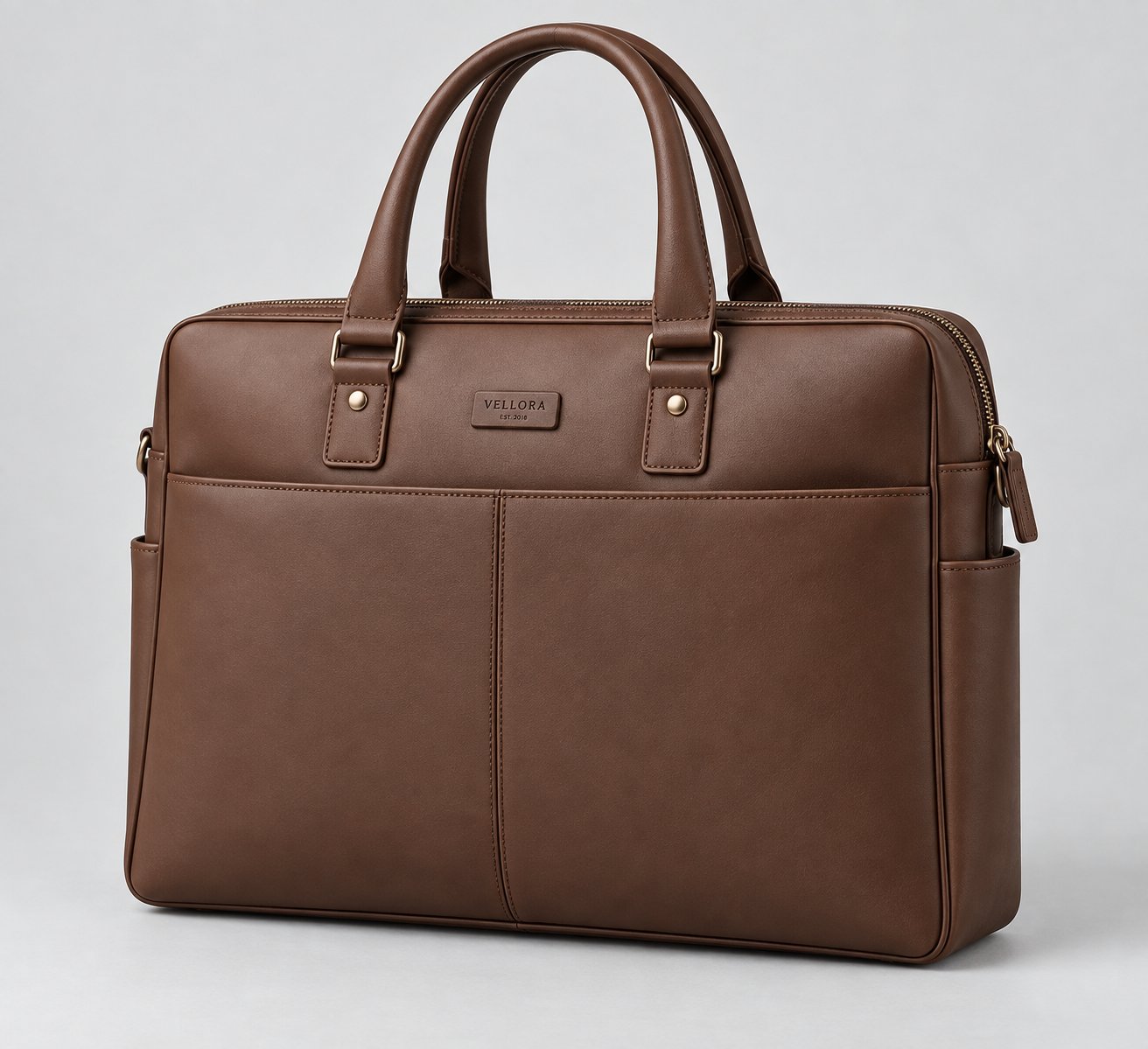
The Laptop Tote Briefcase is a PU leather business tote with double handles, a dedicated laptop compartment and a top zipper, offered in brown, black and tan. Its MOQ is 300 pieces with a 30–35 day production lead time. For a wholesaler selling to office, education or corporate buyers, this fills the structured, professional end of the range.
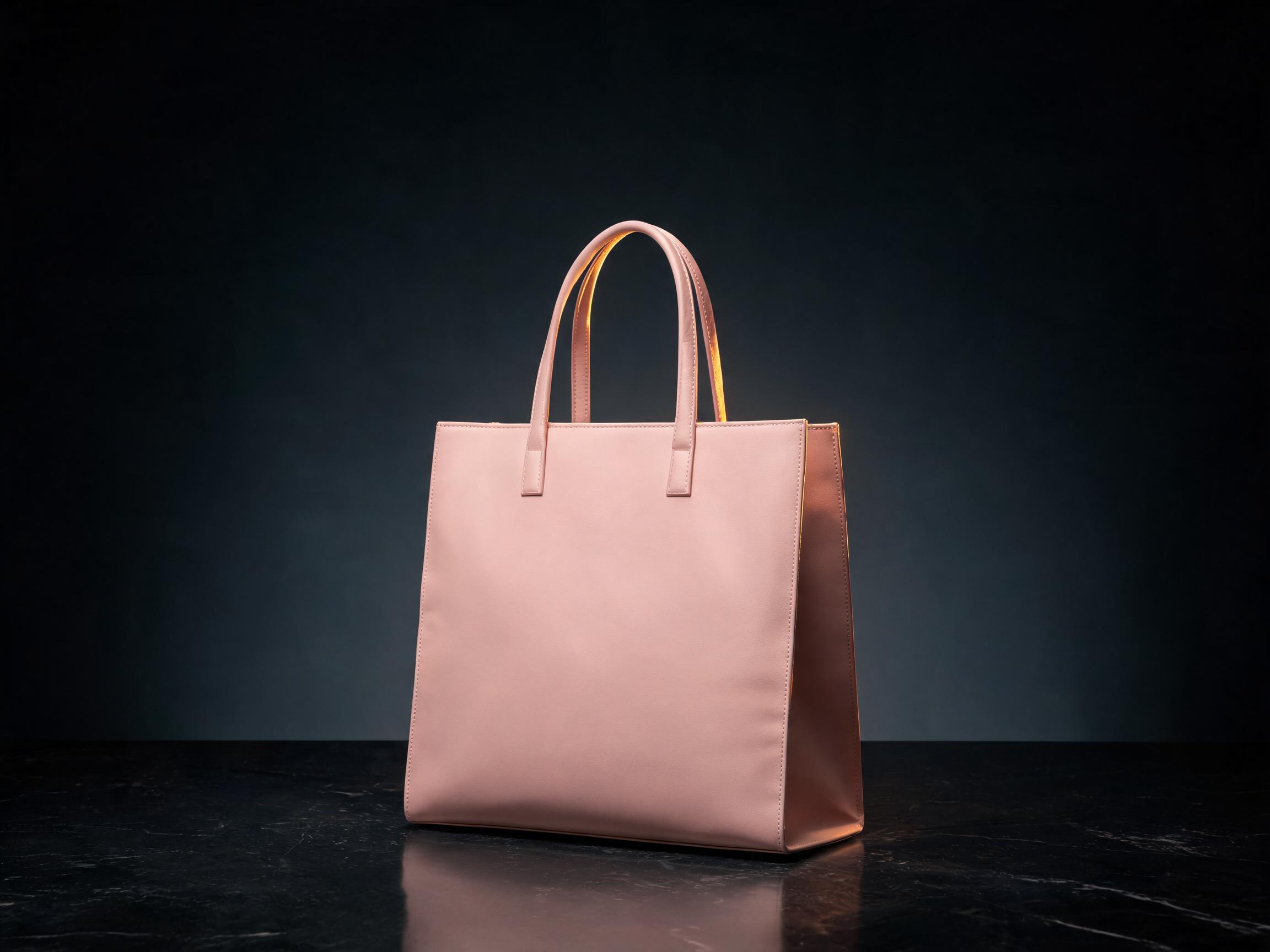
The PU Leather Tote Handbag is a daily-use PU leather tote with double handles and a magnetic closure, offered in black, camel and tan. Its MOQ is 500 pieces with a 30–35 day lead time, and OEM orders can adjust color, lining and hardware. This suits a wholesale program that wants a repeatable everyday design with room to build a color story for the season.
The MOQ difference is worth noting when you plan your first order or your cash flow: the laptop briefcase starts at 300 pieces, the handbag at 500. If you are testing a new channel, the lower-MOQ item may let you open with less committed capital.
Planning Repeat Orders and Stock
A repeat order is a timing decision, and the method is simpler than it sounds. Build the plan backward from when you need stock on the shelf.
Step 1: Know your sales cycle
Look at your own history for this product: how quickly does a batch of inventory sell through? If you have not sold it before, use nearest-comparable performance. The point is to know roughly how many weeks of stock a given quantity covers.
Step 2: Add production and shipping time
Production lead time for the tote briefcase and handbag examples above runs 30–35 days from confirmation. Then add ocean freight and customs clearance. Total time from purchase order to sellable stock is production time plus transit time — and transit time is the variable you should confirm with your freight forwarder, not assume.
Step 3: Set a safety stock level
Safety stock is the buffer that absorbs a demand spike or a shipping delay without a stockout. Size it from your own reorder history: if your last two reorders arrived later than planned, you need a larger buffer. If your factory has reliably hit confirmed dates, a smaller buffer is enough.
Step 4: Trigger the next order before you run out
The reorder point is the stock level at which you place the next order. It equals the quantity you expect to sell during production and transit, plus your safety stock. Once you have that number, the decision stops being reactive.
| Planning input | Where to get it |
|---|---|
| Weekly sell-through rate | Your own sales records or nearest-comparable product |
| Production lead time | Confirmed by the factory per order |
| Transit and clearance time | Your freight forwarder, based on your actual route |
| Safety stock level | Your variance history on past reorders |
| Reorder point | Calculated from the four inputs above |
One practical note on mix: if you carry multiple colors, plan reorders per color rather than per SKU family. A color that sells through twice as fast as the others should not wait for the slowest one to trigger a shared reorder.
What to Prepare Before You Request a Quote
The quality of the quote you get back depends on the quality of the brief you send. Before approaching a China tote bag factory as a wholesaler, put together:
- Target quantity and a second, higher quantity so the factory can quote you across two points and show how price moves with volume.
- Product type and use case — daily tote, business briefcase, promotional giveaway, or a mix.
- Material and hardware preferences if you have them; if not, ask for the standard spec and its upgrade options.
- Branding requirement: logo method, placement, and whether you need custom packaging.
- Your target retail or wholesale channel, so the factory can flag spec mismatches early.
- Timing: when you need stock available for sale, not just when you want the order to ship.
This is also the moment to ask two questions that shape your margin: what the confirmed production lead time is for your quantity, and whether the factory can hold a quotation for a stated period so you can plan your own pricing without re-quoting every month.
Wellmax Luggage is a bag manufacturer based in Fujian, China, established in 2013, with a 12,000 sqm facility and around 320 employees producing approximately 150,000 pieces per month across trolley cases, backpacks, business bags and handbags. Buyers across more than 40 countries source from us. The company and factory hold ISO 9001:2015 and BSCI certification. If you are building a wholesale tote bag program and want pricing against your actual quantity and spec, send your brief and we will quote it.