OEM/ODM Sourcing Guide
What Buyers Actually Need to Specify in a Business Travel Backpack
When you source a business travel backpack for corporate gifting, channel distribution, or your own brand, the product brief decides everything: the factory's quote, the sampling cycle, and whether the final goods match your market's expectations. The term "business travel backpack" covers a wide range of configurations, so the companies that get the best results are the ones that turn vague ideas into a precise specification sheet.
This guide walks through the five specification areas that global buyers typically address with a laptop backpack manufacturer: laptop compartment and protection, USB and anti-theft features, fabric and hardware selection, custom logo methods, and how to structure a bulk order spec sheet. It is written for importers, brand owners, and distributors who need practical decision criteria rather than product marketing.
In this guide
Key takeaways
- Define laptop size and protection level before anything else; this drives padding, compartment structure, and overall dimensions.
- USB and anti-theft features are common buyer requests, but they need clear technical specifications—port type, placement, and locking mechanism—not just a feature name.
- Fabric and hardware choices affect durability, weight, and perceived quality; specify them in your brief to avoid surprises.
- Custom logo methods range from embroidery to heat transfer; each has different cost, durability, and appearance trade-offs.
- A written spec sheet protects both buyer and factory by documenting every decision.
Laptop Compartment and Protection: The First Decision
The laptop compartment is the functional core of any business travel backpack. Buyers need to specify three things: the laptop size it must fit, the level of protection required, and how the compartment is accessed.
Laptop Size and Fit
Most business backpacks are designed around a nominal laptop screen size, but actual device dimensions vary by brand and model. Instead of writing "fits 15-inch laptops," specify the maximum laptop dimensions in centimeters or inches that the compartment must accommodate, including thickness. This prevents fit issues that lead to returns or damage claims.
For example, a 16-liter slim laptop backpack is typically suited for smaller laptops and light daily loads, while a 20-liter anti-theft commuter backpack offers more room for a slightly larger device and additional gear. When you brief a manufacturer, state the target laptop size and also the total load you expect the bag to carry.
Protection and Padding
Protection is not just about a padded sleeve. Buyers should specify whether the compartment is suspended (raised off the bottom of the bag) to absorb impact when the bag is set down, and whether the padding is on all sides or just the front and back. A fully padded compartment adds weight and cost, so it is worth deciding how much protection your market needs.
Ask your manufacturer how they construct the compartment: what padding thickness is standard, and whether the bottom is reinforced. This is a spec you can verify during sampling.
Access Type
Laptop compartments can open from the top, the back, or the side. Top access is traditional but requires the bag to be opened fully. Back access (a zipper on the back panel) allows the laptop to be removed while the bag is on a table or overhead bin, often considered more secure in crowded areas. Side access is less common but can be convenient for quick retrieval. Specify your preference in the brief.
USB and Anti-Theft Features Buyers Ask For
Two features appear frequently in buyer inquiries: USB charging and anti-theft design. Both need careful specification to avoid misunderstandings in mass production.
USB Charging
USB ports on backpacks are usually a cable that connects an internal power bank (not included) to an external port. Buyers should specify:
- Port type: USB-A, USB-C, or both. This affects the cable and the port hardware.
- Port location: On the side, back, or top of the bag. Side ports are common for easy access while carrying.
- Power bank compartment: Where the power bank sits and how the cable is routed. Some designs have a dedicated pocket with a cable pass-through.
Because power bank specifications vary, the manufacturer typically does not include a power bank. Your spec sheet should state that the bag has a cable and port, and that the power bank is user-supplied. Confirm the cable length and whether it is detachable.
Anti-Theft Features
Anti-theft design can include hidden pockets, lockable zippers, cut-resistant fabric, and RFID-blocking pockets. Each feature adds cost and complexity. Decide which ones matter for your market:
- Hidden pockets: A pocket on the back panel or inside the main compartment that is not visible from the outside.
- Lockable zippers: Zippers that can be joined with a small padlock. Some designs have a loop or a dedicated locking system.
- RFID-blocking pockets: A lined pocket that prevents scanning of credit cards or passports. This is a specific material requirement.
For a business travel backpack, a combination of a back-access laptop compartment and a hidden pocket is often enough. If you need RFID protection, specify that the pocket lining must be RFID-blocking material. The 20-liter anti-theft commuter backpack is an example of a design that incorporates some of these features, but you can customize the exact set for your brand.
Fabric and Hardware: The Quality Indicators
Fabric and hardware are what buyers and end customers touch. They determine the bag's durability, weight, and perceived quality. In an OEM program, you can choose from the factory's standard materials or develop custom ones.
Fabric
Common fabrics for business backpacks include polyester and nylon. Polyester is widely used for its balance of cost and durability; nylon is often lighter and more abrasion-resistant. You should specify:
- Fabric type: Polyester, nylon, or a blend.
- Denier or weight: This indicates thickness and strength. Higher numbers generally mean heavier, more durable fabric, but the exact relationship depends on the weave. Ask your manufacturer for their standard options.
- Coating or finish: Water-repellent coatings are common for travel bags. Specify if you need water resistance and to what degree.
For a business travel backpack, a water-repellent polyester is a safe default. If you need a specific look, such as a matte or textured finish, mention that in the brief.
Hardware
Hardware includes zippers, buckles, sliders, and hooks. Quality varies widely. Specify the type of zipper (e.g., coil or metal), the zipper pull design, and whether you need a particular finish (e.g., matte black, antique brass). Also consider the main opening zipper: a double-slider zipper is standard for backpacks, but you can choose the exact style.
Ask your manufacturer about the brands or grades of zippers they use as standard. This is a key quality checkpoint during sampling.
Custom Logo Methods: Matching the Look to Your Budget
Your logo is the most visible brand element. The method you choose affects cost, durability, and appearance. Discuss these options with your manufacturer:
- Embroidery: Durable and professional, but limited in color detail. Best for simple logos on fabric panels.
- Heat transfer (vinyl or film): Allows multi-color and detailed designs. Good for curved or complex logos, but can peel over time if not applied well.
- Screen printing: Flat and cost-effective for large quantities, but not ideal for textured fabrics.
- Debossing or embossing: Creates a recessed or raised logo, often on leather patches or hardware. Looks premium but may have minimum size requirements.
- Woven labels: A fabric label with your logo, sewn into the bag. Versatile and inexpensive.
For a business travel backpack, embroidery on the front panel or a woven label inside are common choices. If you want a metal logo plate, that is also possible but adds cost. Your manufacturer can provide samples of each method so you can compare in person.
How to Write a Bulk Order Specification Sheet
A clear spec sheet is the foundation of a smooth OEM/ODM project. It helps the factory quote accurately, reduces sampling revisions, and protects both parties. Here is a checklist of items to include:
- Product description: Type (e.g., business travel backpack), target volume, and target price range (if you have one).
- Dimensions and capacity: Overall size (H x W x D) in cm or inches, and capacity in liters (e.g., 16L, 20L).
- Laptop compartment: Max laptop size, padding requirements, access type, and whether it is suspended.
- Pockets and organization: Number and location of internal pockets, tablet sleeve, water bottle pocket, etc.
- Fabric: Type, denier/weight, finish, and any coating.
- Hardware: Zipper type and finish, buckles, sliders, and any metal parts.
- Features: USB port type and location, anti-theft features, RFID lining, etc.
- Logo and branding: Logo method, placement, size, and number of colors.
- Packaging: Individual poly bag, carton size, and quantity per carton. For example, the 16L slim backpack is packed in an individual poly bag with carton packaging.
- Certifications and compliance: List any required standards (e.g., ISO 9001 for quality management, BSCI for social compliance).
- Target timeline: Desired sampling date and mass production completion date.
Send this sheet to the manufacturer along with any reference images or competitor products you want to benchmark. The more specific you are, the faster you will get an accurate quotation and a sample that meets your expectations.
Working with a Laptop Backpack Manufacturer: What to Expect
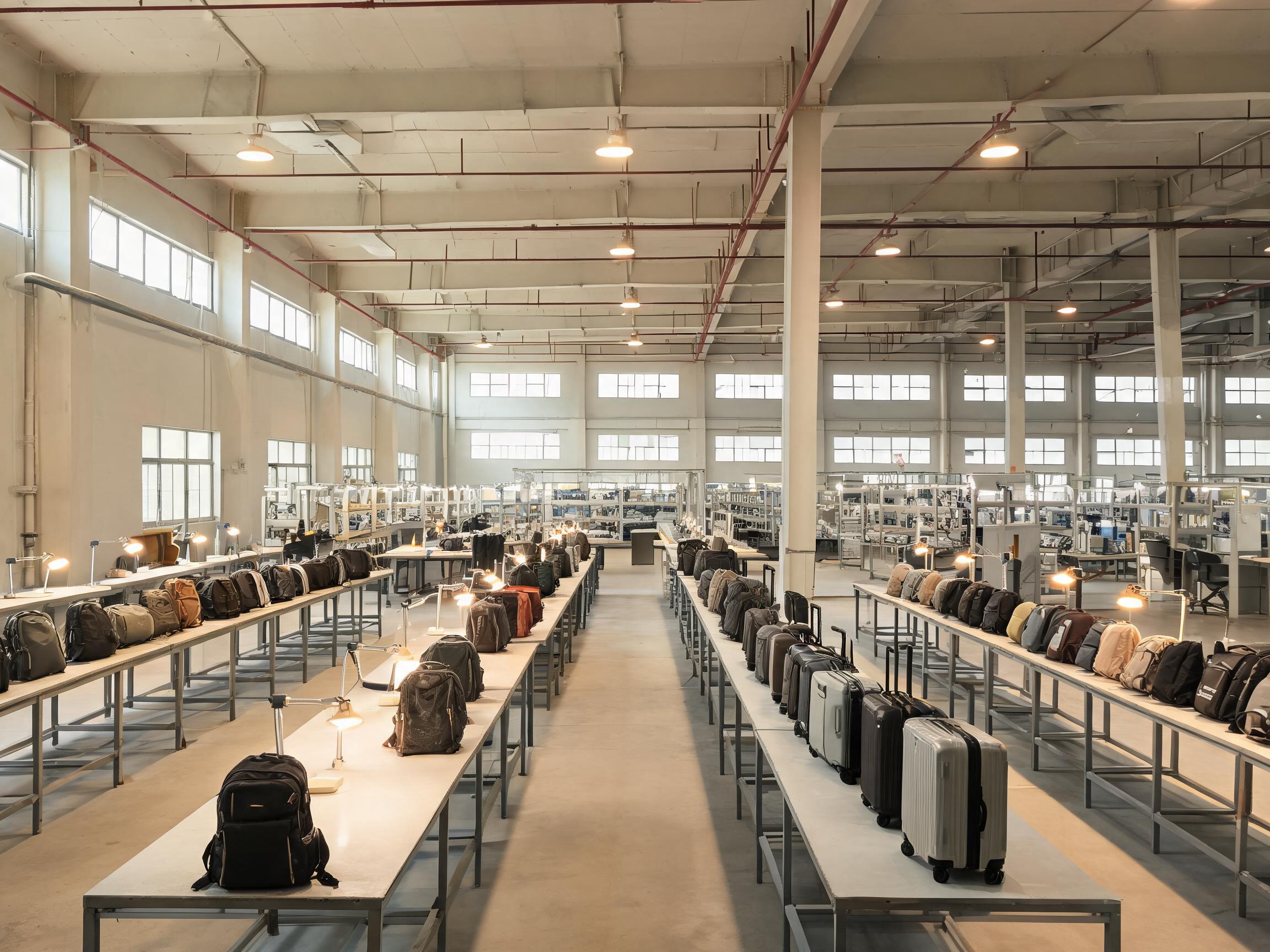
When you partner with an OEM/ODM manufacturer like Wellmax Luggage, you gain access to a production facility that handles the full order cycle: sampling, tooling, mass production, quality inspection, and export. Wellmax, based in Fujian, China, was founded in 2013 and employs about 320 people across a 12,000 m² facility, with a monthly output of around 150,000 pieces. Its export sales team serves buyers in more than 40 countries, and an in-house design and development studio creates new styles, selects materials, and prepares samples for both OEM and ODM programs.
Wellmax is certified to ISO 9001:2015 for its quality management system, covering the design, manufacturing, and sales of luggage and travel bags. The company also undergoes BSCI social compliance audits, which can be relevant for buyers who need to demonstrate responsible sourcing.
During the project, you can expect a structured process: your spec sheet is reviewed, a sample is produced for approval, and then mass production begins with quality checkpoints along the way. The factory's experience with international buyers means they understand the importance of clear communication and adherence to deadlines.
Ready to Source Your Business Travel Backpack?
Defining your specifications is the first step to a successful order. Whether you need a laptop commuter backpack for daily office use, a convertible travel backpack for longer trips, or a urban commuter backpack for a more urban aesthetic, the same principles apply: be clear about the laptop protection, features, materials, logo, and packaging.
If you are ready to move forward, send your spec sheet or a rough idea to Wellmax's export team. They will help you refine the details and provide a quotation based on your volume and customization needs. The sooner you share your requirements, the sooner you can review samples and plan your product launch.