Private label backpacks are one of the most practical ways to launch or extend a brand: the product category is universally understood, the price points are flexible, and an experienced OEM factory can turn your brand concept into a sellable line without you owning production. This guide explains how to build that line with a China backpack manufacturer—from planning the range and choosing materials and hardware, through MOQs and sampling rhythm, to packaging and hangtag customization.
Key Takeaways
- Start with a small, coherent range of two or three use cases rather than a single hero style.
- Specify fabric by denier, coating, and measured water resistance—not by material name alone.
- MOQ is set per style; each added colorway raises fabric and trim minimums.
- Test samples loaded with a laptop and adjusted straps before approving; that sample becomes the production benchmark.
- Confirm logo artwork in vector format early, and define an AQL-based inspection standard before mass production.
Start With a Line Plan, Not a Single Style
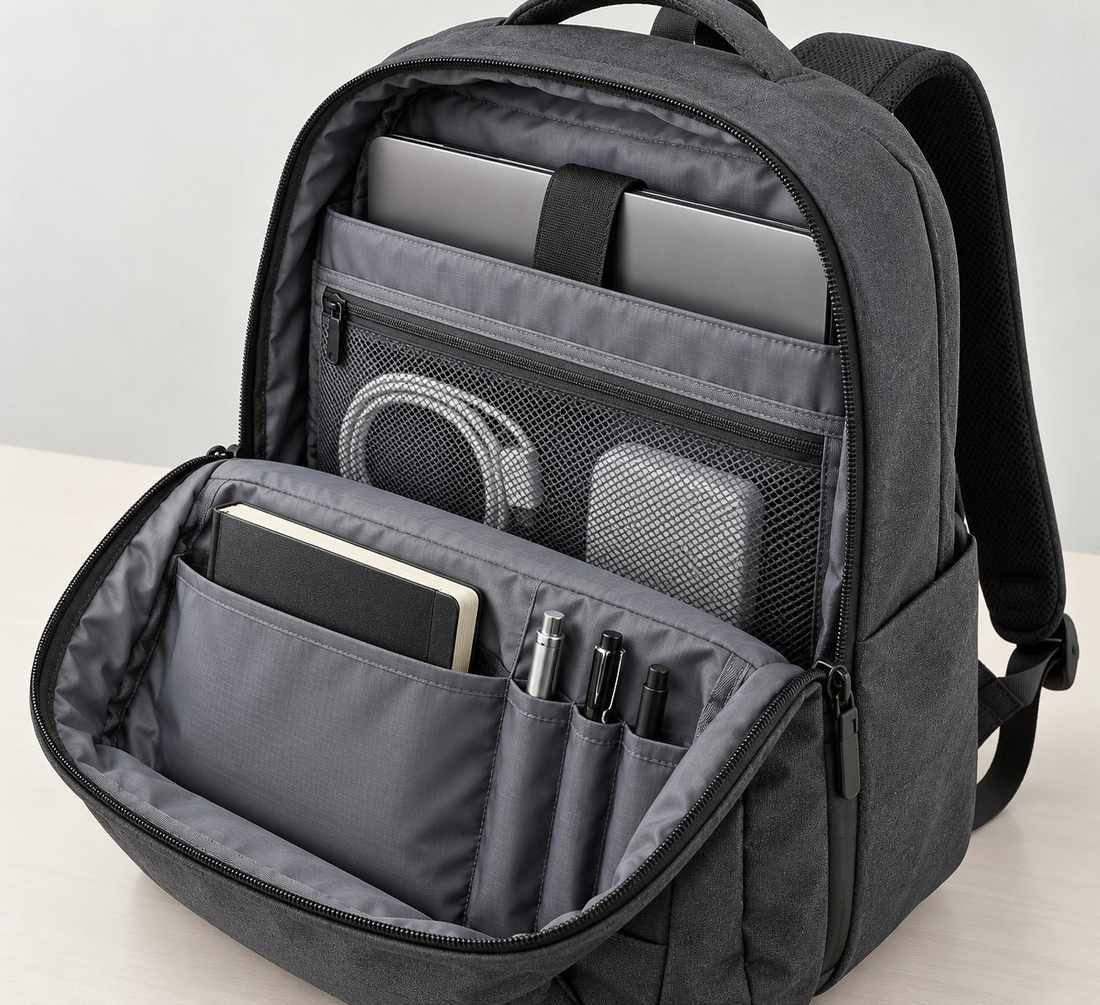
Buyers who succeed with private label backpacks usually start with a small, coherent range rather than one hero product. A typical first line covers two or three use cases—for example an urban commuter model, a laptop-focused style and one larger travel or outdoor piece. Wellmax's own backpack range illustrates the spread: slim 16L laptop packs and 18–22L commuter styles for daily carry, a 25L water-resistant technical daypack, 30–40L outdoor and trekking packs, and a 35L convertible travel model. Mapping your line against such a structure helps you decide what your brand actually needs for season one.
Define for each style: target user, capacity, laptop compartment or not, water-resistance expectations, color range and price tier. These decisions drive every downstream choice—fabric, hardware, cost and MOQ.
Once the use cases are set, write the decisions into a simple line sheet. It does not need to be complicated—a table with one row per style and columns for capacity, compartment layout, intended fabric, color count and target landed cost is enough to brief a factory and compare quotations fairly.
Choosing Fabrics and Hardware
Fabric selection is the biggest lever on both cost and positioning. Polyester is the workhorse for commuter and budget lines; nylon offers higher tear strength and a more technical hand feel; canvas reads as lifestyle and heritage. Note that material names alone do not guarantee performance—water resistance, denier and coating must be specified and verified on the physical sample, not assumed from the fabric name.
Hardware—zippers, buckles, adjusters and pulls—shapes perceived quality as much as fabric does. Decide early whether you need branded zipper pulls or standard hardware, and whether metal or plastic components fit your price point. A useful rule: specify the hardware finish in your spec sheet (matte black, gunmetal, brushed nickel) so the sample matches what you imagined.
Your manufacturer's design team can advise here. Wellmax's in-house studio develops new styles and selects materials for OEM and ODM programs, which matters for brand owners who have a concept but not a technical pack structure yet.
When reviewing fabric options, ask for the specific construction rather than a general category. A 600D polyester with a PU coating behaves differently from a 210D ripstop nylon, even if both are described as "water-resistant." The test is on the sample: spray or immersion results, seam sealing, and zipper type all affect real-world performance.
MOQ and Sampling Rhythm
Two practical questions dominate private label planning: how many pieces must I order, and how many sample rounds will I need? MOQs vary by style complexity, fabric and color count—confirm them per style rather than per factory. As a planning rule, each additional colorway increases the fabric and trim minimums you must buy, so a lean first line with fewer colors is usually cheaper per unit of brand impact.
Sampling typically proceeds in rounds: a first sample to validate structure and proportions, followed by revisions to correct fit, pocket placement or logo execution. Because backpacks carry weight and hold rigid objects, test the sample loaded—laptop inside, straps adjusted—before approving. The approved sample becomes the production benchmark, exactly as with any OEM program.
Plan for at least two rounds on a new structure. The first sample confirms the shape and capacity; the second corrects details such as zipper pull length, strap padding density, or the position of a logo patch. If your timeline is tight, ask the factory which changes can be handled in the same round without risking the fit.
Branding, Packaging and Hangtags
Private label branding on backpacks is usually delivered through several layers: woven brand labels inside the bag, printed or embossed logos on panels or pulls, hangtags with your brand story and barcode, and retail-ready packaging such as poly bags or branded boxes. Confirm artwork formats with your supplier early—vector files for logos and labels avoid rework later—and remember that packaging choices affect both unit cost and shipping volume. Wellmax packs backpacks in individual poly bags with cartons as standard, and supports buyers' customized packaging and label requirements as part of the OEM service.
Production, Inspection and Scale-Up
Once your samples are approved and commercial terms agreed, mass production follows the standard OEM cycle: material inspection, cutting, sewing, assembly and finished-product inspection. For a brand launching its first line, define the inspection standard (commonly AQL-based) before production starts, and consider an independent final inspection on the first order to calibrate the factory's internal checks. Wellmax's finished-product inspection stations check bags before packing and shipment, and the factory is certified to ISO 9001:2015 and audited under BSCI—documentation that your own retail or distribution channels may require.
Plan the scale-up conversation early: if season one sells, season two will need more colors, faster replenishment or additional styles. A manufacturer producing roughly 150,000 pieces per month across categories can absorb growth, but capacity booking for peak season should be discussed with your sales contact, not assumed.
Frequently Asked Questions
Can I mix styles in one private label order?
Factories usually set MOQ per style, not per order. Mixing styles is often possible but each style must meet its own minimum—confirm the breakdown in your quotation.
Do I need to provide full technical designs?
No. With ODM support, a brand direction, reference styles and a spec sheet are enough for the factory's designers to develop the structure. Full tech packs speed things up but are not mandatory.
How are my logos applied?
Common methods include woven labels, embroidery, printing, embossing and metal plates. The best method depends on material and logo size—ask the factory to show options on the sample.
What should I test on the sample before approving?
Load the bag to simulate real use: laptop fit, strap comfort, zipper function under load, and stitching at stress points. Photos are not a substitute for a loaded test.