Hardside Sourcing Guide
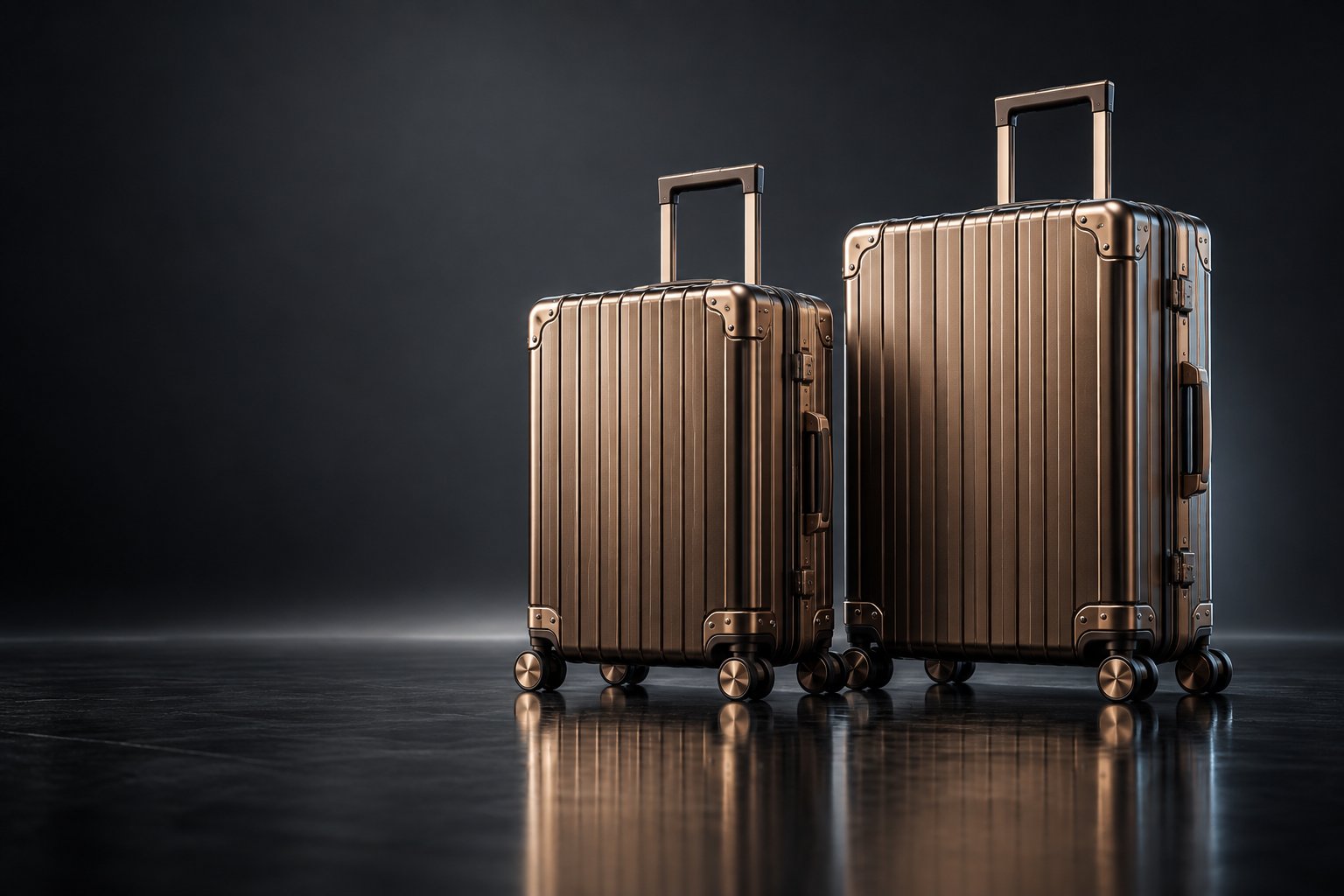
If you are building a premium hardside program, the first decision is not color or logo. It is construction: an aluminum-frame case and a full-aluminum-shell case are different products at different cost, weight and retail tiers. Buyers search for "aluminum luggage" with premium intent, and that intent usually needs to be split before a quote makes sense.
Key takeaways
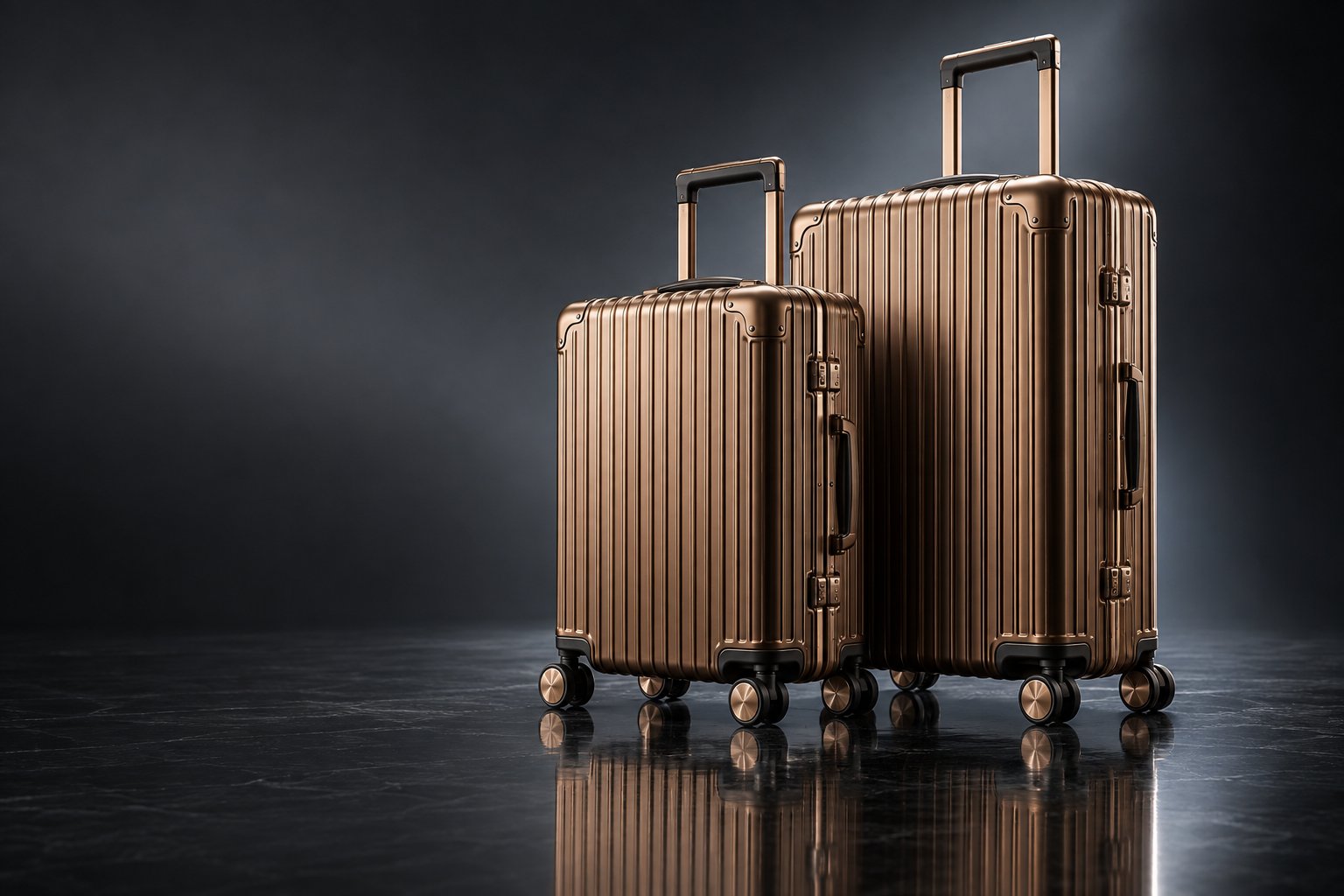
- Aluminum-frame construction wraps a metal frame around an ABS or polycarbonate shell; full-shell aluminum uses formed aluminum panels for the whole body. They are not interchangeable in a product range.
- Cost drivers differ: frame cases carry cost in the frame, latches and corner build-up; full-shell aluminum carries cost in forming, finishing and surface protection of the panels.
- Weight behavior differs too, and it changes how the case is carried, packed and positioned in your range.
- Hardware, hinge and latch sourcing is where premium perception is won or lost. Ask where each component is made and how it is tested.
- Finish, corner protection, interior presentation and branding are the main positioning levers — not the shell material alone.
Aluminum-frame vs full-aluminum-shell: what actually changes
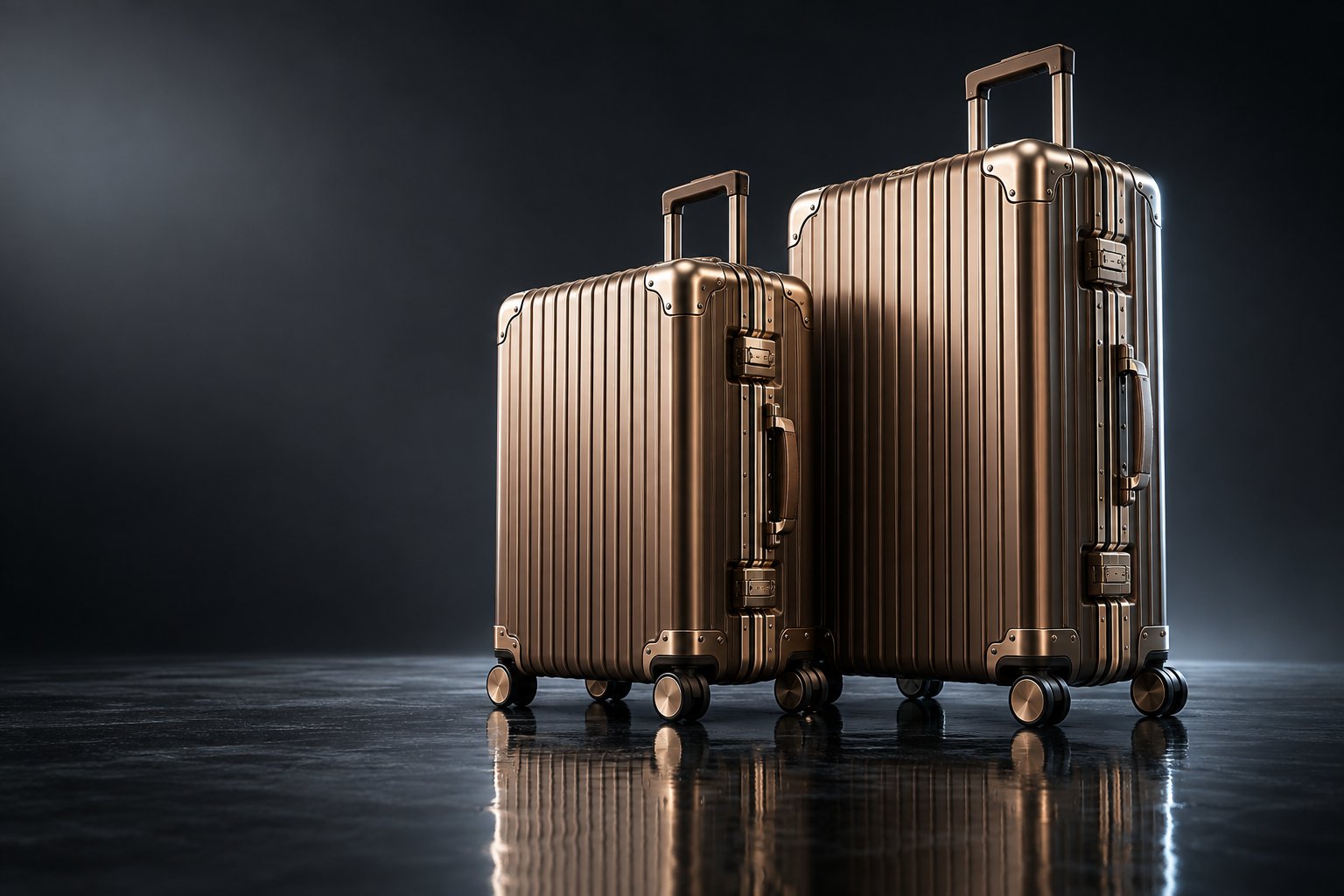
Both use the word "aluminum," but they solve different problems. In a frame-style case, the shell is molded ABS or polycarbonate and an aluminum frame runs around the opening, often with integrated lock hardware and reinforced corners. The frame becomes the structural and visual spine of the product. In a full-shell case, the aluminum panel itself is the body, and the surface finish, panel thickness and edge treatment define how the product reads.
The practical question for a buyer is not which is "better." It is which tier your retail channel can sell, and which supplier can hold consistency across repeat orders.
| Dimension | Aluminum-frame hardside | Full-aluminum-shell hardside |
|---|---|---|
| Where cost sits | Frame profile, latches, lock, corner reinforcement, assembly labor | Panel forming, surface finishing, edge handling, protective coating |
| Weight behavior | Generally easier to keep in a travel-friendly range because the shell is molded polymer | Panel construction pulls weight upward; weight control becomes a design effort |
| Positioning | Premium-feel mid-to-upper range: lock-centered, structured, accessible price ladder | Flagship range: the material itself is the story |
| Repairability angle | Lock and hardware can be serviced; frame alignment is the key production check | Surface scratches and dents shape the customer conversation |
| Best fit for | Brands building a step-up hardside line without jumping to flagship pricing | Brands whose identity is built around aluminum as a material |
A frame-style case is a practical way to enter the premium segment without the cost structure of a full aluminum shell. For a mainstream polymer alternative in the same range, many programs run a polycarbonate cabin case alongside it, or an expandable checked case where packing capacity matters more than hardware story.
Hardware, hinge and latch: the supply-chain questions buyers should ask
Hardware is where two similar-looking cases separate. Before you commit to a frame-style program, ask the factory to walk you through component sourcing and function testing — not just show a sample.
- Frame profile and source. Who draws the frame profile, and is the extrusion made in-house or bought to spec? Ask to see the profile drawing and the corner joint method.
- Lock and latch mechanism. Is the integrated lock a standard module or a custom mechanism? Where is it sourced, and how is it function-tested after assembly?
- Hinge and stay-open behavior. A frame case should open and hold without flexing the shell. Ask how the hinge is fixed to the frame and how many open/close cycles are checked in production.
- Hardware finish consistency. Silver, gunmetal and black finishes on latches, corner caps and logo plates must match across the order. Ask how finish batches are tracked.
- Wheel and handle integration. Wheel housings and telescopic handles are the highest-wear components. Ask which checks run before packing.
If the answers are vague, the risk is not the first sample — it is the second purchase order. A supplier with shell molding, frame assembly, sewing and inspection under one roof has fewer handoff points to lose consistency across. Wellmax Luggage, an OEM/ODM manufacturer in Fujian, China, runs this model: founded in 2013, a 12,000 m² facility, about 320 staff and roughly 150,000 pieces per month, serving buyers in more than 40 countries under an ISO 9001:2015-certified QMS and a BSCI-audited facility.
Positioning a premium line: where the perceived value comes from
Buyers often assume the shell material does the positioning work. In practice, the levers that move a hardside line upmarket are the ones a customer sees and touches.
- Finish. Brushed, matte or high-gloss surfaces live or die on consistency. Finish is a per-order quality variable as much as a design choice.
- Corner protection. Reinforced metal corners read as durable and give the range a recognizable silhouette.
- Frame and lock presence. A visible frame with an integrated lock is the single strongest premium cue on a frame-style case.
- Interior presentation. Lining, dividers and packing accessories are often the difference between a mid-tier and a premium unboxing.
- Branding. Metal logo plates, molded marks, hang tags and branded packaging convert a factory product into your product.
Customization on a frame program typically covers shell color and finish, frame profile and corner reinforcement, hardware finish, interior lining and dividers, packing accessories, and branding. That is enough surface area to build two or three distinct price points from one platform.
QC points to verify before bulk production
Premium positioning collapses fast if frame alignment or lock function drifts. Frame alignment, lock function and wheel checks are built into this factory's production workflow before goods are boxed; confirm the check scope and frequency, and write the points below into your order spec:
- Frame alignment. The two frame halves should meet evenly with no step, gap or twist when closed. Check across the full perimeter, not just at the lock.
- Lock function. Latch release, re-latch and combination or key function should be verified as a built-in workflow check; agree with the factory how it is recorded so it does not become a final spot check only.
- Wheel checks. Rolling direction, rolling noise and mounting tightness verified before packing.
- Corner reinforcement. Corner caps seated flush, finish matched, no sharp edge or lifting.
- Interior and branding. Lining fit, divider attachment, logo plate placement and hang-tag or packaging match.
- Packing. Individual polybag plus carton, with the carton spec confirmed against your retail or e-commerce requirement.
Pre-order checklist for a frame-style hardside program
- Confirm the construction tier: aluminum frame with ABS shell, or full aluminum shell.
- Confirm set composition. A two-piece medium plus large set is a common anchor for a checked-luggage program.
- Confirm color and finish direction, and ask how finish consistency is controlled across batches.
- Confirm frame profile, corner reinforcement and hardware finish.
- Confirm lock type and how lock function is tested in production.
- Confirm interior layout, dividers and packing accessories.
- Confirm branding scope: metal logo plates, molded marks, hang tags, packaging.
- Confirm MOQ, lead time, packing method and inspection points in writing.
For reference, the site's aluminum frame checked luggage set is a two-piece medium and large set with aluminum frame and ABS shell, available in silver, gunmetal and black, with reinforced metal corners and an integrated lock — MOQ 200 sets and 35–40 days lead time, packed individually in polybag and carton.
FAQ
Is an aluminum-frame case the same as an aluminum-shell case?
No. The frame version uses an aluminum frame around or reinforcing a molded shell; the full-shell version forms the body from aluminum panels. They differ in cost structure, weight behavior and retail positioning.
Can the same platform support more than one price point?
Yes, if the factory can vary finish, corner reinforcement, hardware finish, interior layout and branding without changing the core construction. Confirm this during sampling.
What should be in the order spec for QC?
Frame alignment, lock function, wheel checks, corner reinforcement seating and interior fit, plus packing method. These should be listed as inspection points, not left to the final sample.
If you are defining an aluminum-segment hardside line, the fastest next step is to send your target construction tier, set composition, color direction and branding scope to an OEM factory and ask for a sample plan against those points. That gives both sides a concrete basis for MOQ, lead time and QC before any tooling or frame profile is finalized.