
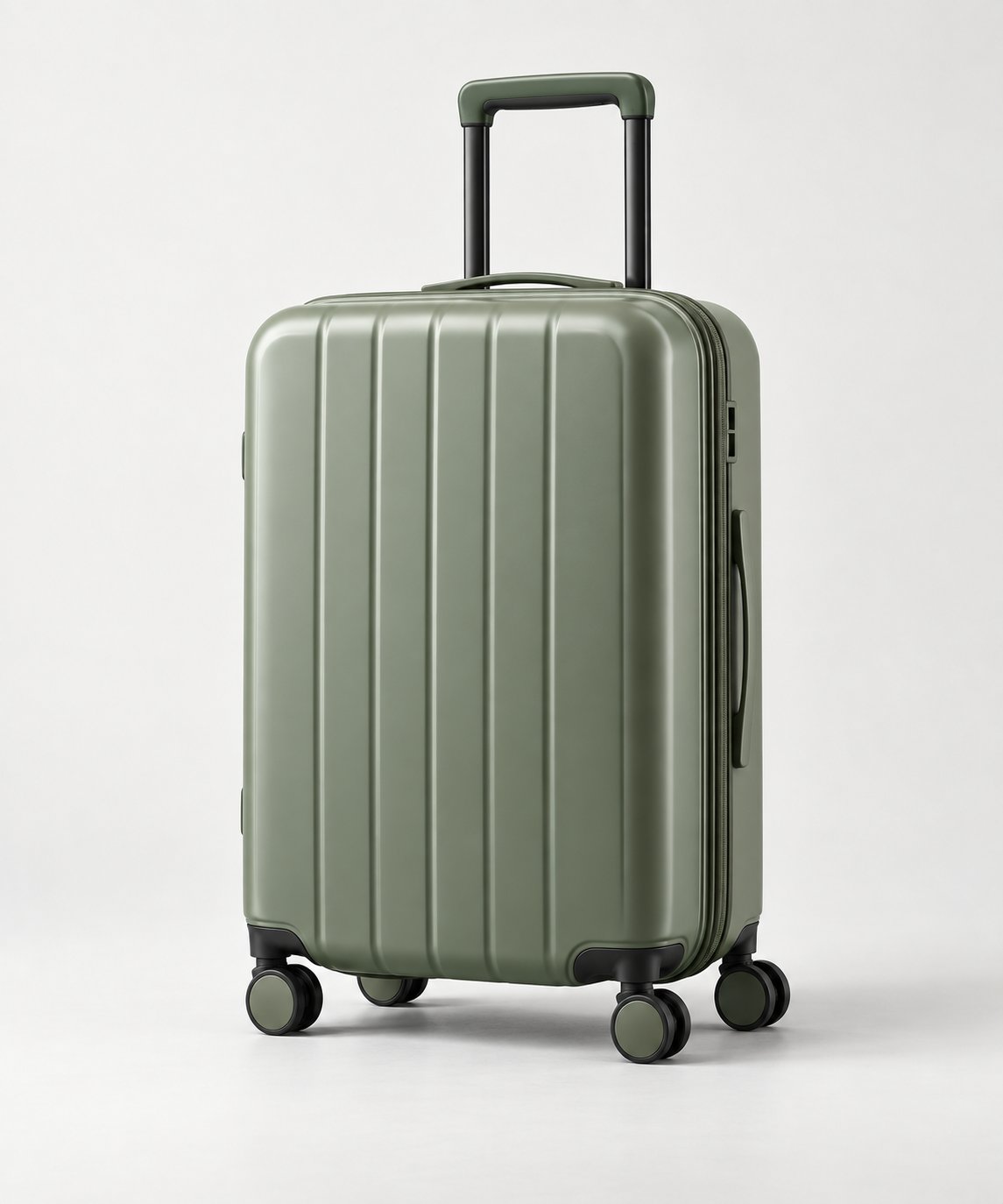
Four-wheel spinner luggage sells on effortless movement — and it is also the construction whose moving parts generate most of the after-sales conversation a luggage retailer will ever have. For B2B buyers, the question is not whether 4 wheel luggage will eventually need service, but whether your warranty design, spare parts plan and purchase-agreement terms were structured before the first claim arrived. This article lays out an after-sales cost model you can use when evaluating any spinner program.
Key takeaways
- Warranty exposure concentrates in three part families: wheels, telescopic handles, and carry handles/zippers. Budget for those, not for “the case.”
- Spare parts are cheapest when ordered with the PO, not after claims arrive — and part traceability per model makes service faster.
- A warranty matrix organized by component family beats a duration headline, and it converts wear items into a service revenue line.
- After-sales margin protection depends on purchase-agreement clauses: defect split, claim evaluation, spare-parts availability, batch accountability.
Map the wear parts before you price the warranty
A spinner case has three component groups that do almost all of the after-sales work: the wheel assemblies, the telescopic handle, and the carry handles and zippers. Everything else — shell, lining, expander — rarely drives a claim on its own. The practical implication for your cost model is that warranty exposure is concentrated: you are not reserving budget for “the case”, you are reserving for three part families.
Wheels: highest contact, highest claim share
Wheel assemblies touch the ground on every trip, hit curbs, stairs and baggage belts, and are the first thing customers notice when something degrades. A double-wheel spinner design — like the four double spinner wheels on Wellmax’s 28-inch PC checked case and 24-inch softside spinner — gives some redundancy in feel, but the after-sales takeaway for buyers is the same regardless of brand: decide in advance whether a damaged wheel cassette is replaced as a complete assembly or repaired piecemeal, because that decision determines both your part inventory and your service time per claim.
Telescopic handles: the second claim driver
Handles fail through bent tubes, worn locking mechanisms and broken grip housings. They are typically more standardized across a product line than wheels, which makes them the easiest wear part to hold as shared spares across multiple SKUs.
Carry handles and zippers: wear items, not defects
Softside spinners add a third exposure group: the top and side carry handles and the zipper chains and sliders. These wear through normal use rather than failing from a manufacturing fault, which is exactly the distinction your warranty language and spare-parts list need to reflect. Keeping a small stock of sliders and grab handles, sized to the models you actually carry, removes the most common reason a customer brings a case back for repair under protest.
Build a spare-parts plan in parallel with the PO
The most expensive after-sales mistake is treating spare parts as an afterthought ordered after the first claims arrive. A workable structure for a first spinner program:
- Include a spare-parts package in the original order — wheel cassettes, handle sets, grip components and zipper sliders proportional to your expected service volume. Factory-direct suppliers like Wellmax can ship these alongside the production order, so your service stock arrives with the goods rather than months later.
- Specify part traceability. Ask that wheel and handle part numbers be documented per model so a claim can be matched to a spare without disassembling a case to guess.
- Decide your repair-vs-replace threshold per component. A wheel cassette is usually a five-minute swap at a service counter; a cracked shell on a checked case is almost always a warranty replacement. Writing these thresholds down before launch keeps front-line staff decisions consistent.
- Check interchangeability across the range. If your softside 24-inch and your hardside 28-inch share the same handle set, one spare line covers two SKUs. Suppliers that build both constructions in-house — as with Wellmax’s softside spinner and aluminum-frame checked set ranges — can tell you which parts are shared and which are model-specific.
Design the warranty policy around claim types, not slogans
“Two-year warranty” tells a customer nothing about what happens when a wheel snaps in month fourteen. Strong spinner warranties are written as a coverage matrix, not a duration headline:
| Component family | Typical coverage stance | After-sales handling |
|---|---|---|
| Shell and structural failures | Longest coverage window — these represent manufacturing rather than wear | Warranty replacement of the unit |
| Moving components (wheels, telescopic handle) | Shorter window with explicit wear-and-tear exclusions | Spare parts sold beyond the window; converts a warranty cost into a service revenue line |
| Wear items (zippers, grip covers) | Excluded from warranty | Sold as spares at the service counter |
The exact durations are yours to set against your market’s competitive norms; the structural point is that coverage boundaries follow component families, so your policy and your spare-parts plan must be designed together. A buyer who publishes a clear matrix also spends less staff time arguing edge cases, because the answer to “is this covered?” is already written down by component.
Write the after-sales terms into the purchase agreement
Warranty design only protects your margin if the upstream side of it is contracted. The clauses worth negotiating with your supplier before signing:
- Defect responsibility split: what constitutes a manufacturing defect versus wear, and who bears freight on confirmed defect returns.
- Claim evaluation procedure: photo-based first assessment with physical samples required only above a value threshold — this keeps small claims fast and cheap.
- Spare parts supply commitment: a contracted availability window and reorder lead time for the specific wheel and handle parts of the models you bought, so you are not stranded when a colorway is discontinued.
- Batch-level quality accountability: if a defect pattern emerges across one production batch, the remedy (rework, replacement parts or credit) is defined in advance rather than negotiated during a crisis.
- Documentation of part numbers per model: the same traceability you asked for in the PO, written as a contractual deliverable so new production runs stay compatible with your installed base.
Suppliers with in-house production and their own inspection lines — Wellmax runs cutting, sewing, assembly and finished-product inspection under one roof in its Quanzhou facility, audited under ISO 9001:2015 and BSCI — are generally better positioned to honor these terms because the parts and the process sit inside one company rather than across a subcontractor chain.
A simple after-sales budget model to run before you order
Before committing to a spinner program, model three numbers: expected claims as a share of units sold (based on your own history with comparable hardside or spinner products, not supplier promises), average cost per claim (part + labor + freight, using the repair-vs-replace thresholds you defined), and total after-sales reserve as a percentage of program revenue. If that reserve is materially higher than your margin cushion on the program, either negotiate stronger defect-responsibility terms upstream or reposition the program’s price tier. The model takes an afternoon; it prevents a season of unbudgeted service costs.
The reserve figure is also a negotiating input. A buyer who can show a supplier the modeled cost of one wheel-cassette claim — part, labor and freight — is asking for a specific commercial structure rather than a general discount. That conversation is easier to have before the PO than after the first container has landed.
Talk to a supplier who can hold the parts
When you shortlist 4 wheel luggage suppliers, ask each one the same three questions: what spare parts they can contract for these models, what their reorder path looks like for discontinued colorways, and how they handle batch-level defect claims. Wellmax’s export team works with buyers in more than 40 countries and can discuss warranty structures and spare-parts packages alongside your product selection — send your target models and market to start that conversation.