Sourcing a luggage program from China is not hard because factories are scarce. It is hard because a polished website and a quick quote tell you almost nothing about whether the supplier can execute your specifications, hold a lead time, and stay compliant on a repeat order. This guide covers the checks that separate a real manufacturing partner from an intermediary, and the terms you should put in writing before tooling or sampling starts.
Confirm the production site, not just the company name. Verify certificates at the level they are actually held (company, factory or product). Read product range as process evidence, not as a catalog to choose from. Lock sampling, tooling, MOQ, payment, lead time, packaging and logistics into a written order confirmation.
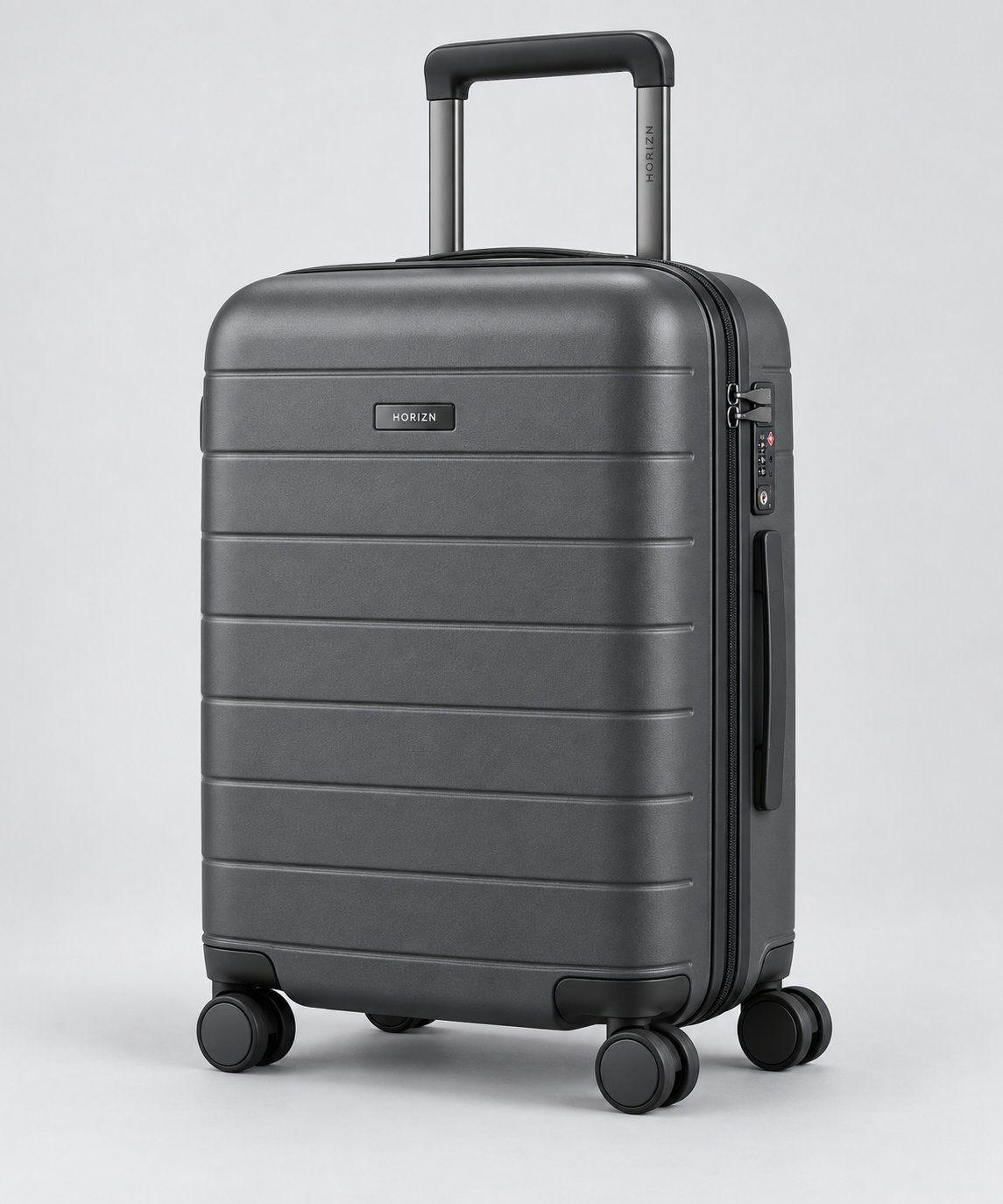
The cover image shows a charcoal polycarbonate cabin trolley case: a polycarbonate hardshell with a TSA lock. A supplier that handles this model alongside soft bags and leather goods is telling you something about its cutting, shell handling, hardware sourcing and inspection scope. That is the kind of evidence this article teaches you to read.
1. Verifying You Are Dealing With a Real Factory, Not a Trading Company
Trading companies are not automatically a bad choice, but you need to know which one you are buying from, because it changes who is accountable for defects, lead times and documentation.
Practical checks, in the order that saves the most time:
- Ask for the legal entity name and the factory address separately. If the sales entity and the production site are different, ask who owns the equipment and who employs the operators.
- Request a live video walk-through with a fixed route. Ask to see cutting, sewing, assembly and final inspection in one continuous call. A factory with all stages under one roof can usually show this in a single session. A trading company often cannot. Treat the walk-through as one signal among several: confirm it with the legal entity name, the business licence scope and inspection records before you draw a conclusion.
- Check who answers technical questions. Ask about seam construction, trolley tube diameter, shell material grade or hardware finish. Intermediaries typically forward the question; a factory's technical contact answers it directly.
- Match the business licence scope to the work. Confirm the registered scope covers manufacturing of bags or luggage, not only trading or wholesale.
- Look for indirect evidence in documents. Quality control records, inspection reports and tooling schedules are usually generated at the plant. Ask for a blank or redacted example of the inspection sheet used on your product category.
For reference, an OEM/ODM luggage manufacturer such as Wellmax Luggage operates a 12,000 m² facility in Fujian with cutting, sewing, assembly and inspection under one roof, and about 320 employees. That structure is what makes a single-session factory walk-through possible; if a supplier cannot organize one, treat it as a signal to dig further.
2. Certifications and Management Systems to Verify
Two categories matter, and buyers often blur them: quality management systems and social compliance.
| Check | What it tells you | How to verify |
|---|---|---|
| ISO 9001 quality management | Documented process control for design, manufacturing and sales | Ask for the certificate and check the stated scope and the certified entity or site |
| Social compliance audit (e.g. BSCI) | Working conditions, hours and labour practices on the audited site | Ask for the audit report and confirm the site and audit date |
| Product-level test reports | Performance of a specific material or component under specific test conditions | Ask which model, batch and laboratory the report covers |
Two rules prevent costly assumptions. First, a company-level certificate does not automatically cover every product or every production line; check the scope wording. Second, a passing report on one trolley model does not certify a different backpack. Ask for the document that matches the item you are buying.
Confirm the current validity and the audited site directly with the supplier in writing. Where you intend to rely on a certificate in your own market, ask whether the supplier can support your compliance testing program and at what cost.
3. Facility, Capacity and Process Depth
Capacity figures only mean something when you know the process behind them. A supplier quoting 150,000 pieces per month needs cutting, sewing, assembly and inspection capacity to match, or the number is theoretical.
Ask about process depth in these areas:
- In-house versus outsourced operations. Which steps happen on site, and which are subcontracted? Subcontracted steps add a quality hand-off and a schedule risk.
- Hard and soft goods in the same plant. Hardshell molding or frame assembly and soft-bag sewing require different equipment and skills. A supplier claiming both should be able to describe both lines.
- Inspection points. Ask where incoming material, in-process and final inspection happen, and who signs off before packing.
- Design and development support. For OEM and ODM programs, confirm whether there is an in-house design and development studio and how it interfaces with your technical drawings.
- Order cycle. A clear sequence of sampling, tooling, mass production, quality inspection and export is easier to manage than an informal process. Ask for each stage owner and each stage output.
If your volume is seasonal, ask how the plant schedules peak months and whether your slot is confirmed at order placement or only at deposit. Get the answer in writing.
4. Product Range as Evidence of Capability
A broad product range is useful for two reasons: it shows the machinery and skills the plant actually runs, and it tells you which categories you can consolidate into one purchase order.
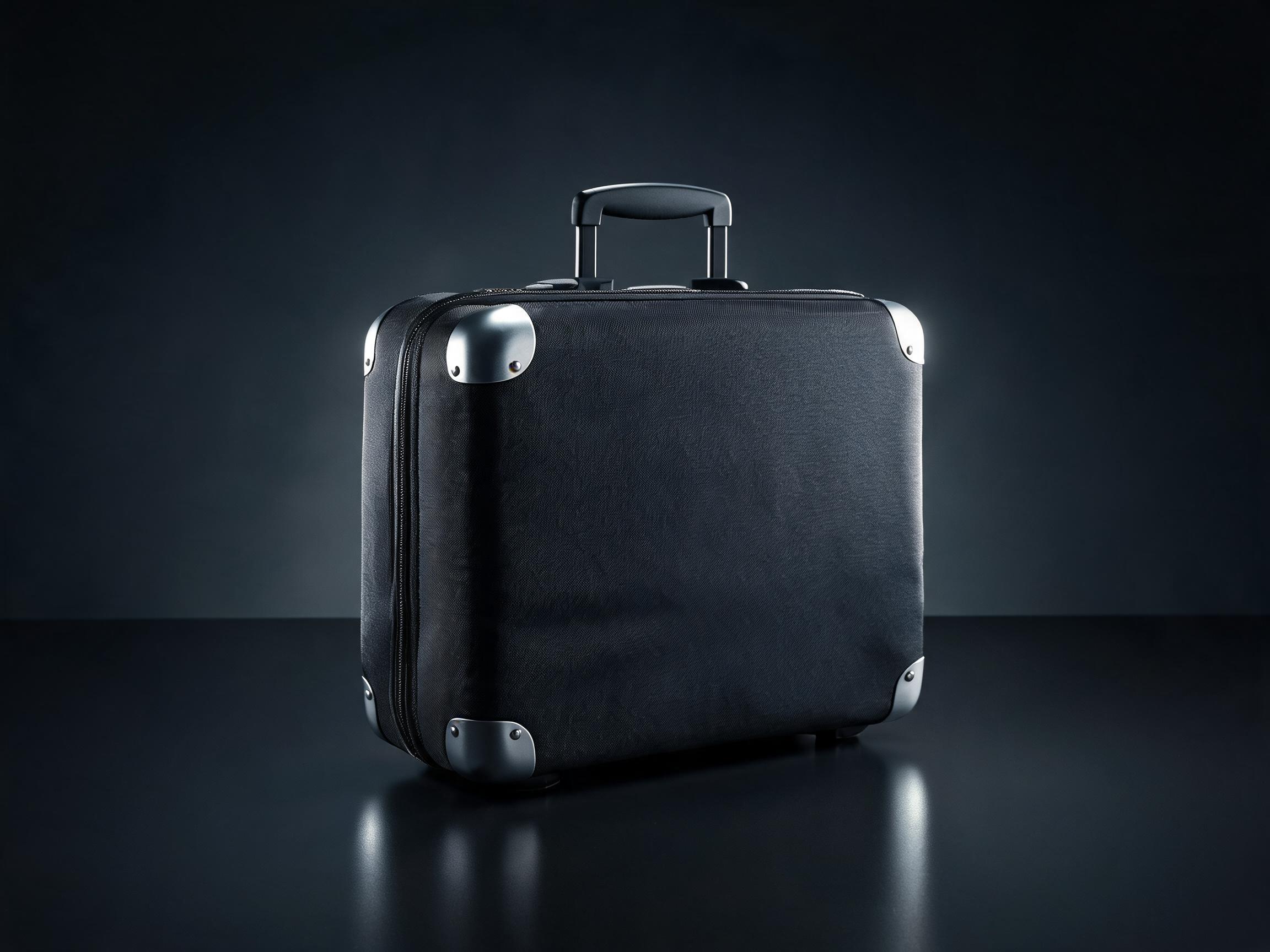
Read range carefully. The same supplier handling an aluminum frame checked luggage set with reinforced metal corners alongside a separate full-grain leather briefcase line is managing metal frame assembly, shell forming, leather cutting and stitching, and hardware testing in parallel. That is a different capability profile from a plant that only sews soft bags.
Use published MOQ and lead time per SKU as a rough map of how the factory runs:
| Product type | MOQ | Lead time |
|---|---|---|
| Polycarbonate cabin luggage, 22 inch | 300 pcs | 30–35 days |
| Aluminum frame checked luggage set (two-piece) | 200 sets | 35–40 days |
| Executive leather briefcase | 300 pcs | 30–35 days |
| Slim laptop backpack, 16L | 500 pcs | 30–35 days |
| Canvas weekend shoulder bag | 500 pcs | 30–35 days |
These numbers are starting points, not commitments for your specification. Color, hardware, logo method and packaging all affect the confirmed figure. The right move is to ask the supplier to quote your exact SKU and confirm MOQ and lead time in writing, item by item.
Also check whether the range is genuinely produced or partly resold. Ask which categories run on the supplier's own lines and which are sourced from partner factories; the answer determines who is accountable when a mixed order ships short.
5. Order Terms to Settle in Writing
Most disputes come from terms that were assumed rather than agreed. Settle each of the following before sampling begins.
Sampling and tooling
- Who pays for the sample, and is any part of it credited against the bulk order?
- How many sample rounds are included, and what triggers a chargeable revision?
- Tooling and mold ownership: who owns custom tooling, and does it transfer to you or stay with the factory?
- Sample approval criteria: which measurements, colors and hardware are checked, and who signs off.
MOQ and pricing structure
- MOQ per color, per SKU and per order, not just per model.
- Whether mixed-color orders within one SKU are accepted and at what threshold.
- Tolerance for quantity variance on bulk orders, stated as a percentage.
Payment
- Deposit and balance percentages, and the exact trigger for the balance: pre-shipment inspection, bill of lading date, or something else.
- Currency, bank charges and whether the payment instrument is T/T or another method.
Lead time
- Lead time counted from deposit or from approved sample, whichever is later.
- What happens to the schedule if sample approval slips.
- How Chinese public holidays are handled in the production calendar, confirmed for your order window.
Packaging
- Inner packing, master carton dimensions and carton drop-test requirements.
- Retail-ready packing if you sell through stores, and who supplies the artwork.
- Polybag, foam or protective inserts for hard-shell products.
Export logistics
- Trade term (FOB, EXW, CIF or other) and the named port.
- Who books freight and who arranges export documentation.
- Loading inspection: who attends, and when photos or a loading report are issued.
Ask for the order confirmation to restate all of the above. Verbal agreements on lead time or packaging grade do not survive a busy factory season.
6. Short Vetting Checklist
- Legal entity name and factory address confirmed as two separate items
- Live video walk-through covering cutting, sewing, assembly and inspection
- Business licence scope covers manufacturing of bags or luggage
- ISO 9001 certificate obtained, with scope and certified site checked
- Social compliance audit report obtained for the actual production site
- Product test reports matched to your specific model and batch
- Written confirmation of which steps are in-house and which are subcontracted
- MOQ and lead time quoted per SKU in writing
- Sampling cost, revision count and tooling ownership agreed
- Payment triggers, tolerance percentage and trade term written into the order confirmation
- Packaging specification and carton standard signed off
FAQ
- How do I know if I am talking to a factory or a trading company?
- Ask for the factory address and conduct a live video call with a fixed route through cutting, sewing, assembly and inspection. Then ask a technical question about construction or materials and check whether the answer comes back without a relay.
- Does an ISO 9001 certificate cover every product the supplier makes?
- Not necessarily. The certificate carries a stated scope, so you should check whether your product category and the certified site are included. Ask for product-level test reports for the specific model you intend to buy.
- Why is MOQ different for different product types?
- Hardshell luggage has tooling and material minimums, while soft bags depend more on fabric and trim purchasing. Published MOQs, such as 300 pcs for a polycarbonate cabin case or 500 pcs for a slim laptop backpack, reflect those differences. Your exact specification may change the number, so confirm it in writing per SKU.
- What is the most common term buyers forget to write down?
- Where the clock starts on lead time. Deposits, samples and material lead times can each be used as a start date, and the difference is often several weeks on a holiday-affected schedule.
One example of a full-range supplier is Wellmax Luggage, an OEM/ODM luggage and bag manufacturer in Fujian serving buyers in more than 40 countries through four product lines — travel luggage, backpacks, business bags and handbags — and an in-house design and development studio. To move forward, send your target models and quantities and ask for a written MOQ and lead time confirmation per SKU.
One last practical note: if the range you need spans hardshell, soft, leather and structured bags, look for a single source with an in-house design and development studio and a clear order cycle from sampling to export; that structure reduces the number of hand-offs you have to manage.