Sourcing Guide · Full-Category OEM
If you buy for a retail chain, a promotional distributor or an own-brand program, this article is written for you — not for end consumers. The question it answers is a sourcing question: when your range covers trolley cases, backpacks, business bags and handbags, is it better to place each category with a different specialist factory, or to consolidate the whole program with one bag manufacturer?
Why Programs Get Split Across Factories — and What That Costs
Most buyers start with one category. A luggage order lands with one factory, backpacks with another, handbags with a third. Each factory has its own sampling schedule, its own quality standard and its own communication rhythm, and the buyer becomes the integrator: reconciling different tolerance levels, chasing three sets of samples and shipping three partial containers instead of one full one.
The hidden costs are familiar to anyone who has run a multi-vendor program: duplicated sample fees, inconsistent branding placement across categories, mismatched packing standards, and longer consolidation times at port. None of these show up on a unit-price comparison — they show up in your landed cost and your launch calendar.
What a Full-Category OEM Actually Covers
"Full category" only means something if the factory genuinely produces each category in-house, rather than trading out half the range. At Wellmax Luggage, an OEM/ODM manufacturer founded in 2013 in Fujian, China, the four core categories are all produced on site:
- Luggage: hardshell and softside trolley cases, from a 20-inch ABS cabin trolley and 22-inch polycarbonate cabin case (with TSA lock) up to 24-, 26- and 28-inch spinner and expandable checked sizes, plus an aluminum-frame checked luggage set.
- Backpacks: commuter and laptop styles from 16L to 22L, water-resistant technical daypacks at 25L, roll-top waterproof packs at 30L, and convertible travel and hiking packs up to 40L.
- Business bags: ballistic nylon pilot cases, leather briefcases sized for 15.6-inch laptops, laptop tote briefcases and slim messengers.
- Handbags: totes, satchels, bucket bags, crossbody and shoulder styles in PU leather, nylon and canvas.
That breadth matters because it changes the conversation from "can you make this one bag?" to "how do we run our whole range together?"
How Mixed Orders Run on One Production Floor
One facility, four categories
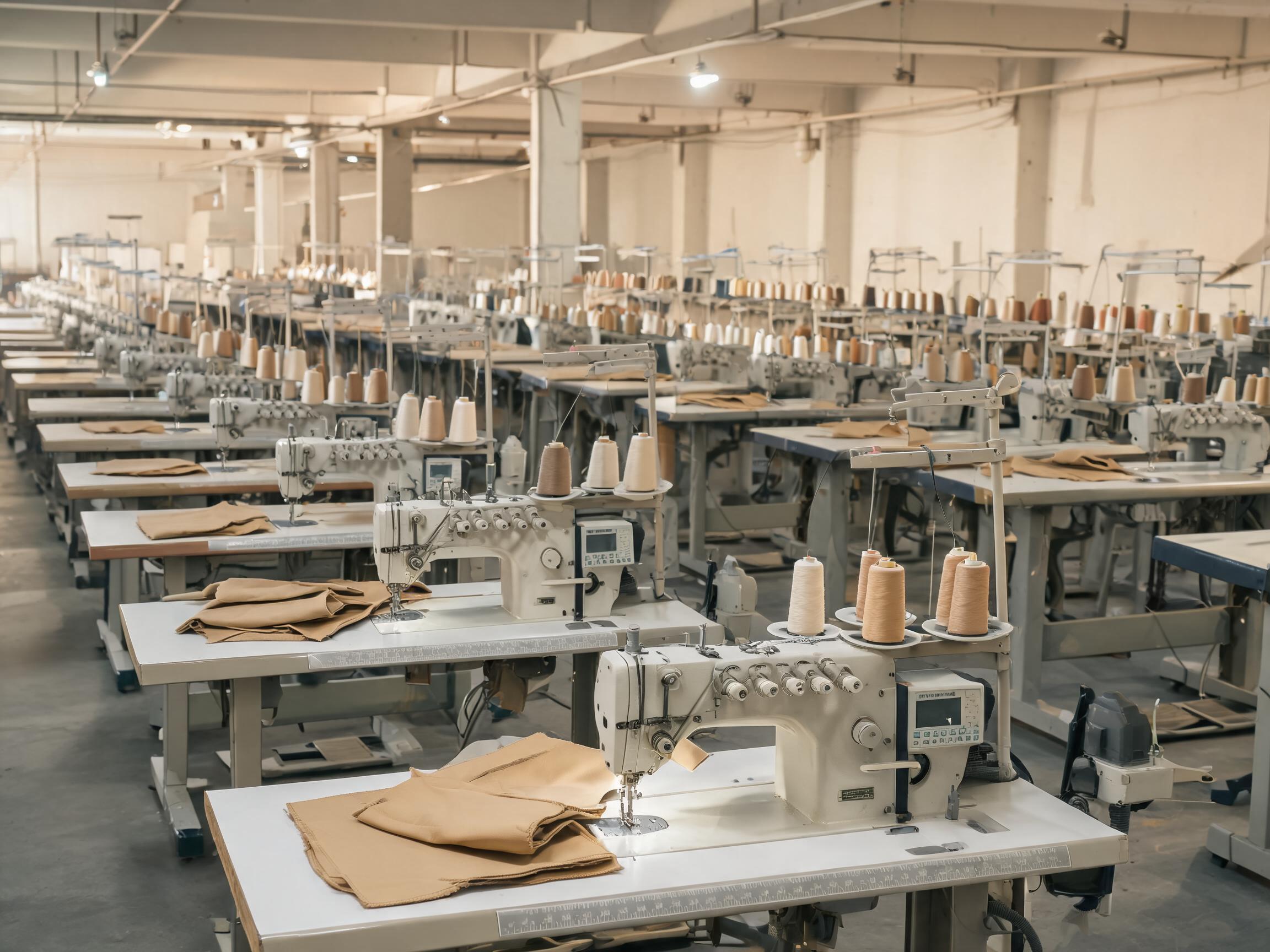
Wellmax operates a 12,000 m² facility where fabric cutting, sewing, assembly and finished-product inspection sit under one roof, producing roughly 150,000 pieces per month with a team of about 320. Dedicated sewing lines produce consistent stitching across all bag types — which is the practical requirement for mixed programs: a handbag line and a trolley-case line may use different materials, but they report into the same cutting, inspection and packing system.
One order cycle from sample to shipment
The full order cycle — sampling, tooling, mass production, quality inspection and export — is handled in-house. In practice that means an ODM buyer works with the in-house design and development studio on new styles and material selection, then moves through prototype approval, mass production and pre-shipment inspection with the same team that will pack the container. There is no third factory to onboard mid-program.
One Quality System Instead of Three
For buyers selling into markets where compliance documentation is required, a single audited system simplifies everything. Wellmax is certified under ISO 9001:2015 for the design, manufacturing and sales of luggage and travel bags, and is audited under the BSCI framework for social compliance. Finished bags and trolley cases pass through inspection stations before packing and shipment.
The practical effect for a mixed-category buyer: one quality standard, one inspection protocol and one corrective-action channel across luggage, backpacks, business bags and handbags — instead of aligning three factories with three definitions of "acceptable."
When One Manufacturer Makes Sense — and When It Doesn't
Consolidation is not right for every program. A single factory works best when:
- Your range spans two or more of the four categories and ships on a coordinated calendar.
- You need consistent branding, packing standards and quality levels across categories.
- You want fewer sample cycles, fewer vendor audits and fewer consolidations at port.
It may not be the right model when a category requires highly specialized equipment the factory does not run in-house — in that case, an honest supplier will tell you. The right first step is to ask any candidate factory to state, category by category, what is produced in its own facility and confirm it with a live audit or video walkthrough.
What to Send for a Mixed-Category Quotation
To get a usable quotation from a full-category OEM, prepare one brief that covers all categories: styles or reference products per category, target materials (for example, polycarbonate versus ABS for hardshell, water-resistant nylon versus polyester for backpacks), branding methods and placement, packing requirements, and your destination market. The export sales team handles inquiries, quotations and order follow-up for buyers in more than 40 countries, so one inquiry can cover the whole program.
- Full-category OEM only counts when each category is produced in-house, not traded out.
- One facility and one order cycle remove the buyer's integrator role between three vendors.
- One ISO 9001:2015 and BSCI-audited system means one inspection protocol, not three definitions of acceptable.
- A usable mixed-category quotation starts from a single master brief covering all categories.
FAQ
Can one factory really produce both hardshell luggage and soft bags well?
Check two things: whether both are made on site, and whether the factory can show you inspection processes for each category. A facility that runs cutting, sewing, assembly and inspection in-house for both hardshell and softside products can hold one quality system across categories.
Do we need separate suppliers for premium materials like leather and aluminum?
Wellmax produces leather briefcases and handbags alongside technical nylon bags, and offers an aluminum-frame checked luggage set within its luggage range. Confirm the specific material and construction for your target price point during sampling.
How do we keep branding consistent across four categories?
Specify branding methods and placement in the master program brief, then apply it in each category's sample approval. Working with one factory and one design team keeps those decisions in one place.
What capacity supports a mixed annual program?
Monthly production at the facility is roughly 150,000 pieces across all categories. Share your annual volume split by category and season, and confirm the production plan for your specific mix with the factory.
How do we start?
Send a mixed-category inquiry with your range, volumes and target markets. One inquiry, one quotation cycle, one production system — that is the core of the full-category OEM model.