Inside a Full-Category Bag Factory: How Multi-Product OEM Lines Handle Luggage, Backpacks and Handbags in One Plant
A full-category bag factory produces hard-shell luggage and soft bags—backpacks, tote handbags, laptop briefcases—within the same facility. That means one plant manages distinct materials, tooling, and assembly flows under a single quality system. For buyers, the practical question is how the factory keeps these categories from interfering with each other on the floor. This article explains the line layout, changeover process, MOQ differences, and the evidence a buyer can check during a factory visit or video audit. The example used here is Wellmax Luggage, an OEM/ODM manufacturer in Quanzhou, Fujian, founded in 2013, with a 12,000 m² facility, about 320 staff, and a monthly output of roughly 150,000 pieces.
Key Takeaways
- Hard-shell luggage and soft bags require different equipment and assembly sequences; a full-category plant separates these flows but shares cutting, inspection, and quality management.
- Category changeover involves tooling, line balancing, and operator retraining. Buyers should ask how changeover time is planned and verified.
- MOQs differ by category: 300 pcs for polycarbonate cabin luggage and laptop tote briefcases; 500 pcs for urban commuter backpacks, PU leather tote handbags, and everyday tote handbags.
- Line evidence for a video or on-site audit includes dedicated sewing lines, in-process inspection points, and finished-product inspection before packing.
- ISO 9001:2015 and BSCI apply at the company/factory level, not as product certifications.
Line Layout: Hard-Shell Luggage vs. Soft Bags
Hard-shell luggage and soft bags follow different production paths. Polycarbonate luggage, for example, starts with shell forming and tooling, then moves to assembly of wheels, handles, zippers, and TSA locks. Soft bags—backpacks, totes, briefcases—begin with cutting and sewing, followed by assembly and finishing. A full-category plant typically organizes these as separate zones but shares common functions like fabric cutting, quality inspection, and packing.
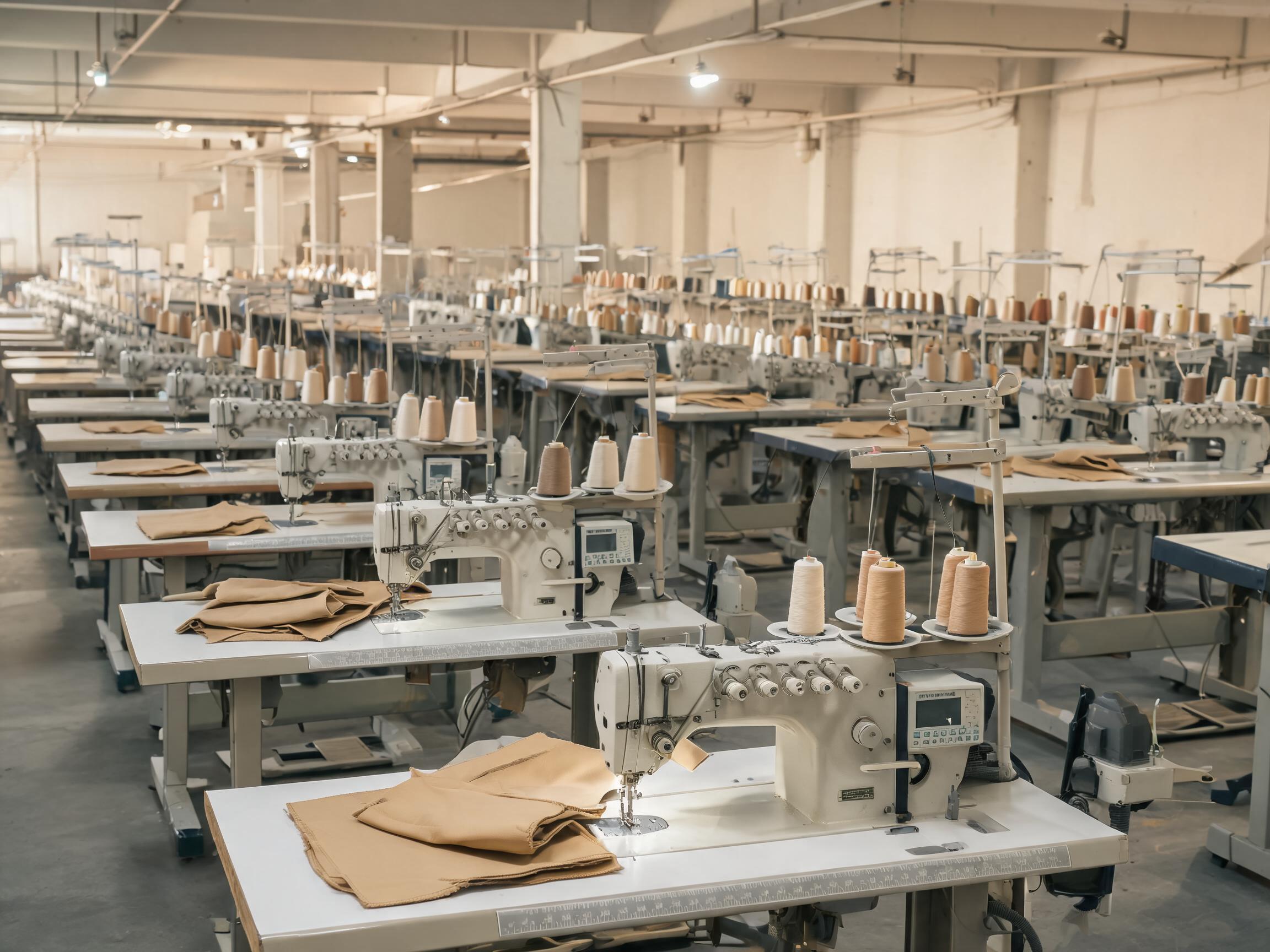
At Wellmax, the 12,000 m² facility houses cutting, sewing, assembly, and inspection under one roof. Dedicated sewing lines handle soft bag production, while luggage assembly follows its own sequence. Separating these flows reduces the chance of material mixing between hard-shell and soft bag orders and lets each category run at its own pace; the specific material-handling controls (for example, material zoning or color management) are worth checking during an audit rather than assuming. The shared inspection team applies the same finished-product inspection before packing, regardless of category.
For buyers, the layout matters because it affects lead time and quality consistency. A plant that mixes hard and soft bag assembly on the same line risks tooling conflicts and delays. Ask for a floor plan or video walkthrough that shows distinct zones for luggage shell assembly and soft bag sewing.
Category Changeover: What Happens Between Orders
Changeover is the process of switching a line from one product category to another. In a multi-product factory, changeover involves more than swapping materials. It requires tooling changes (e.g., shell molds for luggage), line balancing (reassigning operators to different stations), and retraining if the new category demands different skills.
Wellmax's order cycle covers sampling, tooling, mass production, quality inspection, and export. When a new category order begins, the in-house design and development studio prepares styles, materials, and samples for approval. Only after sample approval does mass production start. The standard lead time is 30–35 days after sample approval, but changeover time itself depends on the previous order's completion and the complexity of the new category. Buyers should confirm with the supplier how changeover is scheduled and whether it adds to the quoted lead time.
A well-organized factory plans changeovers during low-demand periods or staggers them across lines to avoid idle time. During a video audit, ask to see the changeover checklist or talk to the line supervisor about how long a typical switch takes.
MOQ Differences by Category
Minimum order quantities vary because material costs, tooling investments, and production efficiency differ across categories. The table below shows MOQs for representative products at Wellmax. These are starting points; actual MOQ may depend on customization and material availability.
| Product Category | Example Product | MOQ | Key Handling Notes |
|---|---|---|---|
| Hard-shell luggage | Polycarbonate Cabin Luggage 22" | 300 pcs | Requires shell tooling; zipper and TSA lock assembly |
| Soft bags – backpacks | Urban Commuter Backpack 22L | 500 pcs | Water-resistant polyester; sewing-intensive |
| Soft bags – handbags | PU Leather Tote Handbag | 500 pcs | Magnetic-snap open top; material cutting and sewing |
| Soft bags – handbags | Everyday Tote Handbag | 500 pcs | Similar sewing flow; material variations affect MOQ |
| Soft bags – briefcases | Laptop Tote Briefcase | 300 pcs | Structured design; may share lines with totes |
Why the difference? Luggage often involves higher tooling costs but lower per-unit material cost at scale, while soft bags are labor-intensive and may require more fabric variety. MOQ reflects the balance between setup cost and production efficiency. If your order spans several categories and none reaches the listed MOQ on its own, you can raise the question of a combined minimum with the supplier. This article does not state that the factory offers such a policy; whether a combined minimum is possible is a commercial term that has to be confirmed directly with the supplier.
Line Evidence: What to Check During a Visit or Video Audit
When evaluating a multi-category bag factory, look for evidence that each category is managed with dedicated resources and consistent quality checks. Here is what to request:
- Dedicated sewing lines: Soft bag sewing should be on separate lines from luggage assembly. Ask to see the line layout and confirm that operators are trained for the specific category.
- In-process inspection: Check for inspection stations at critical points—after cutting, after sewing, and before packing. At Wellmax, finished-product inspection happens before packing for all categories.
- Tooling storage and maintenance: Luggage shell molds and cutting dies should be stored properly and maintained. Ask how tooling is tracked and when it is replaced.
- Changeover records: Request a sample of changeover logs or talk to supervisors about how they manage switches. This shows whether changeover is planned or chaotic.
- Quality management system: Wellmax holds ISO 9001:2015 certification and has passed a BSCI social compliance audit at the company/factory level. These are not product certifications; ask for the certificates and confirm their scope.
During a video audit, ask the camera operator to show the flow from cutting to packing for one product. Then ask to see a different category (e.g., luggage assembly) to confirm separation.
FAQ
How long does changeover take between categories?
Changeover time depends on the previous order, tooling requirements, and line complexity. Wellmax's standard lead time is 30–35 days after sample approval, but changeover is not separately quoted. Confirm with the supplier how changeover is scheduled and whether it affects your delivery date.
Why do MOQs differ between luggage and backpacks?
MOQs reflect tooling costs, material sourcing, and production efficiency. For example, polycarbonate cabin luggage has an MOQ of 300 pcs because shell tooling is a major setup cost, while urban commuter backpacks have an MOQ of 500 pcs due to sewing labor and fabric variety. If your order does not reach a single-category MOQ, ask the supplier directly whether a combined minimum across categories is possible; any such term would need to be confirmed in your quotation.
What line evidence should I look for in a video audit?
Look for dedicated sewing lines for soft bags, separate luggage assembly areas, in-process inspection points, and finished-product inspection before packing. Also ask to see changeover records and tooling storage. These show how the factory manages multiple categories without compromising quality.
Are ISO 9001:2015 and BSCI certifications product-specific?
No. At Wellmax, ISO 9001:2015 and BSCI apply at the company/factory level. They cover the quality management system and social compliance of the facility, not individual products. Always request the certificates and verify their scope for your order.
For buyers evaluating a full-category bag factory, the key is to see how the plant separates hard-shell and soft bag production while sharing quality systems. Ask for layout evidence, changeover processes, and MOQ breakdowns. Wellmax's facility in Quanzhou, with its in-house design studio and dedicated sewing lines, is set up for multi-category OEM/ODM programs. To discuss your mixed-category order, contact the supplier.