Two quotations for the same 22-inch cabin case can look almost identical on the surface and still differ sharply on price. The gap rarely comes from negotiation alone: shell material, hardware, customization depth and order quantity each move the unit price in visible steps.
Wellmax Luggage, an OEM/ODM luggage and bag manufacturer in Fujian, China, produces trolley cases, backpacks, business bags and handbags for buyers in more than 40 countries, and the pricing questions below come up in almost every OEM luggage inquiry the export team answers.
The sections below explain where the money goes in an OEM luggage quotation, using real specifications from the Wellmax Luggage product range, and close with a method for comparing offers on equal terms.
Shell Material Sets the Base Cost
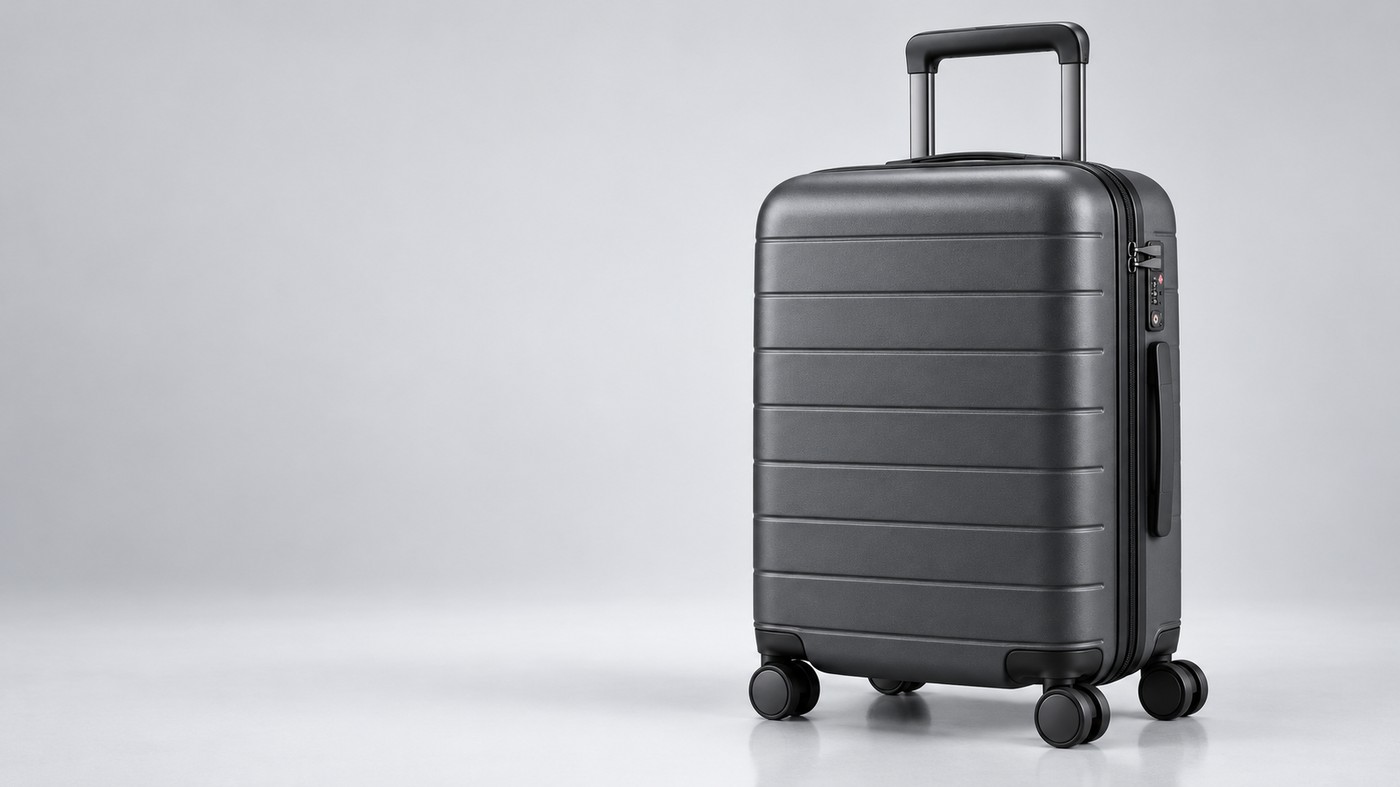
Hardshell programs start from the shell resin. Polycarbonate costs more per kilogram than ABS, and the difference carries through every panel, so the resin grade is the first line to confirm when two hardshell quotations do not match. The Polycarbonate Cabin Luggage 22" in the travel luggage range is built on impact-resistant polycarbonate with a zipper closure and TSA lock, and quotations for the same shell can still vary when a supplier substitutes a lower-grade resin or drops the lock.
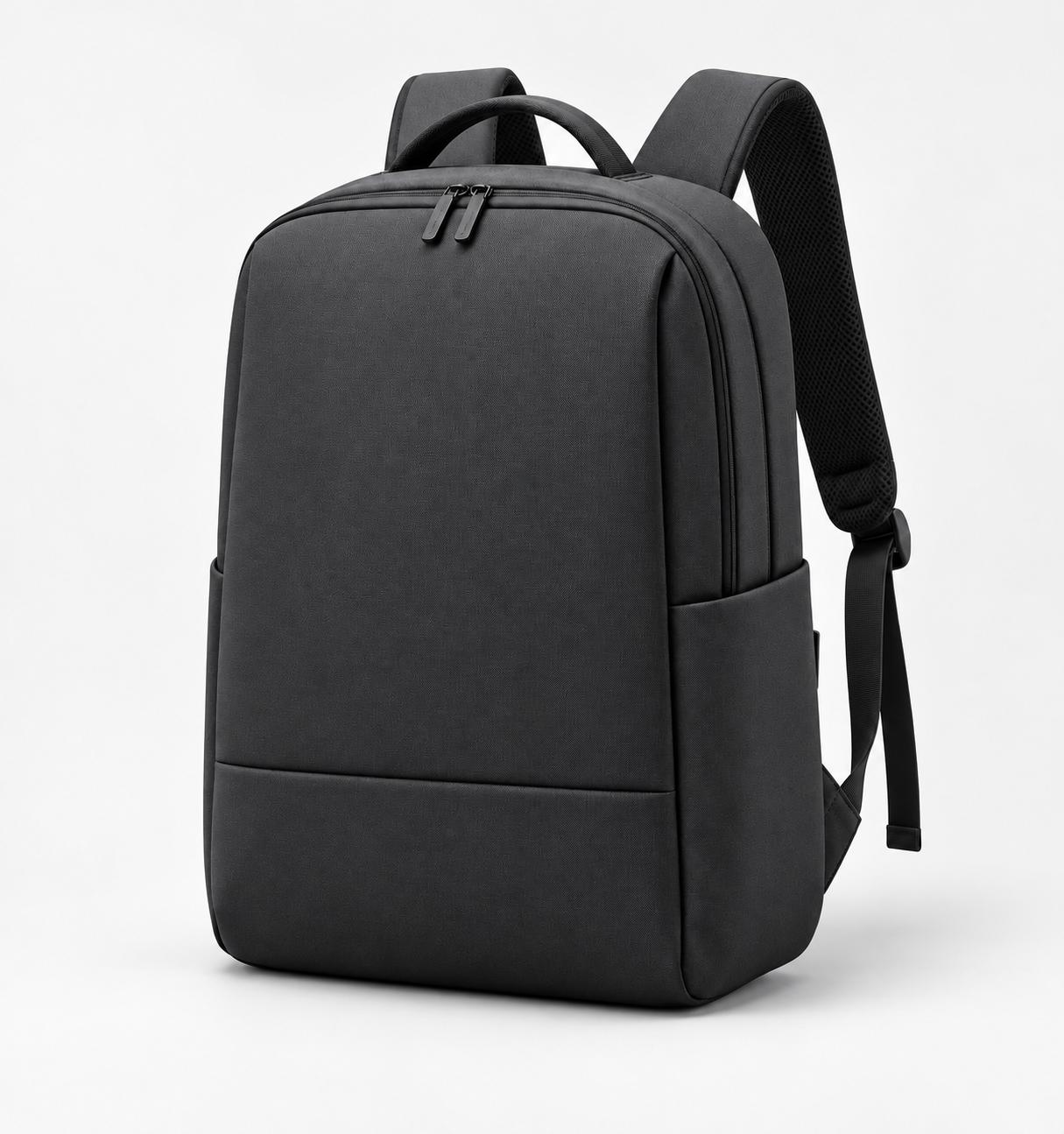
Soft goods follow a different logic. Fabric weight and coating decide the base cost of a backpack program, and a water-resistant treatment adds coating and testing steps. The Urban Commuter Backpack 22L uses water-resistant polyester across a 22-liter layout, and the same fabric logic applies to OEM bags for commuter, student and outdoor channels.
Hardware, Wheels and Locks Move the Line Item
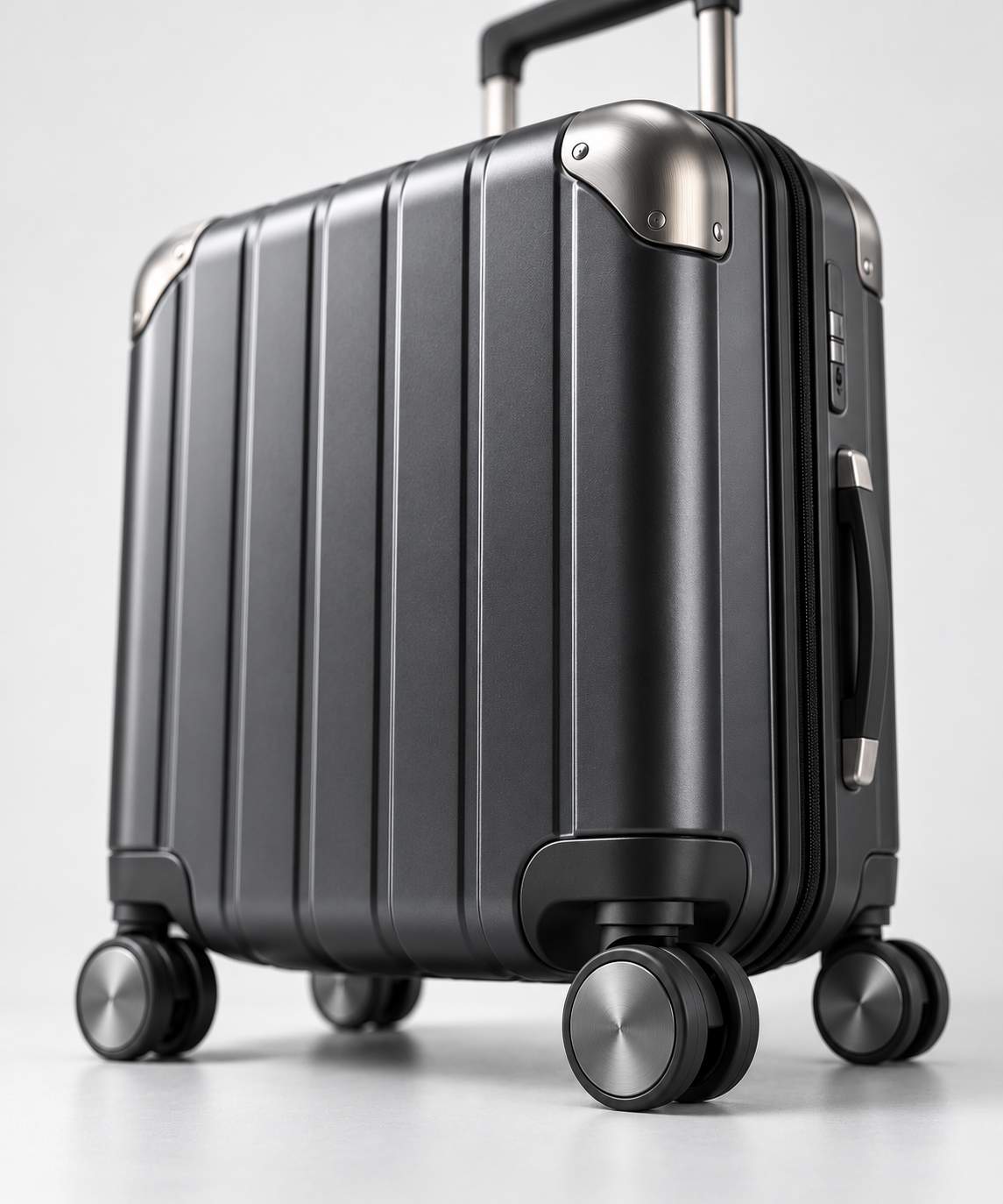
Hardware covers a small share of the surface and a large share of the price. Corner guards, telescopic handle assemblies, wheel systems and lock bodies are sourced components, and a supplier can move the unit price by several steps without changing the outer look of the case. The Business Hardshell Trolley 26" pairs a polycarbonate shell with brushed metal corners and four spinner wheels, and the metal corner detail alone separates the style from plain-shell checked cases in the same size.
When comparing offers, ask the supplier to list wheels, handles, zippers and locks as separate items. The same shell can be quoted with standard hubs or with upgraded spinner wheels, and the difference only becomes visible when the hardware list is written out.
Customization Depth
Customization sits between material and quantity in the quotation. A standard color run in charcoal, black or navy keeps tooling and dyeing simple, while a brand-specific color, custom lining or branded hardware finish adds sampling steps and, on some programs, tooling charges. The Leather Business Briefcase 15.6" Laptop shows the pattern on the business-bag side: leather grade, hardware tone, interior layout and debossed or foil logos are each quoted separately on request.
Buyers planning OEM bags for a corporate program should decide which customization level the launch actually needs. A first season can run on standard colors with a debossed logo, then move to custom linings once sell-through data supports the investment.
Order Quantity and Lead Time
Quantity changes the unit price through fixed-cost spreading. Pattern making, cutting dies and line setup cost roughly the same whether a run covers 300 pieces or 3,000, so higher volumes absorb those costs across more units. Published minimums in the Wellmax Luggage range show the spread: 300 pieces on the hardshell trolley and cabin programs, 500 pieces on the Urban Commuter Backpack 22L, and 200 pieces on the leather briefcase.
Lead time follows the same structure. Trolley and backpack programs quote 30 to 35 days after sample approval, while the full-grain leather briefcase program quotes 35 to 40 days, reflecting longer leather cutting and edge-finishing work. Buyers who compress the schedule into peak season should expect quantity and lead-time terms to move together.
How to Compare OEM Luggage Quotations on Equal Terms
The comparison method is simple in principle: send the same specification sheet to every supplier and ask each quotation to break into shell material, fabric, hardware, customization, packaging and quantity breaks. A quotation listing those items can be adjusted line by line, while a single blended number cannot. Wellmax Luggage structures quotations around the same items, so buyers can see which line drives a difference instead of guessing.
One detail sits outside the unit price: packaging. Standard poly bag plus carton, branded packaging and hang tags carry different costs, and the packaging line also affects the landed cost per unit once cartons reach the container.
Frequently Asked Questions
How much does a shell material change move an OEM luggage quotation?
No fixed percentage applies across programs, because case size and resin grade change the calculation. The Wellmax Luggage range includes polycarbonate cabin styles as well as the Lightweight ABS Cabin Trolley 20", so buyers can compare material grades across published styles and confirm the exact resin for a new program during sampling.
What is the minimum order for a mixed OEM luggage and bag program?
Minimums are confirmed per line: 300 pieces on the hardshell trolley and cabin programs, 500 pieces on the commuter backpack and 200 pieces on the leather briefcase. A mixed container can combine lines as long as each line meets its own minimum.
Next Step for Buyers
Buyers preparing a quotation comparison can send the specification sheet, target quantity and destination port in one inquiry to Wellmax Luggage. The export team returns a line-item quotation and a sampling schedule for the selected styles, and the travel luggage range together with the backpack, business bag and handbag categories on the Wellmax Luggage site gives buyers a starting point for building the comparison list.