
Why the carry system drives repeat orders
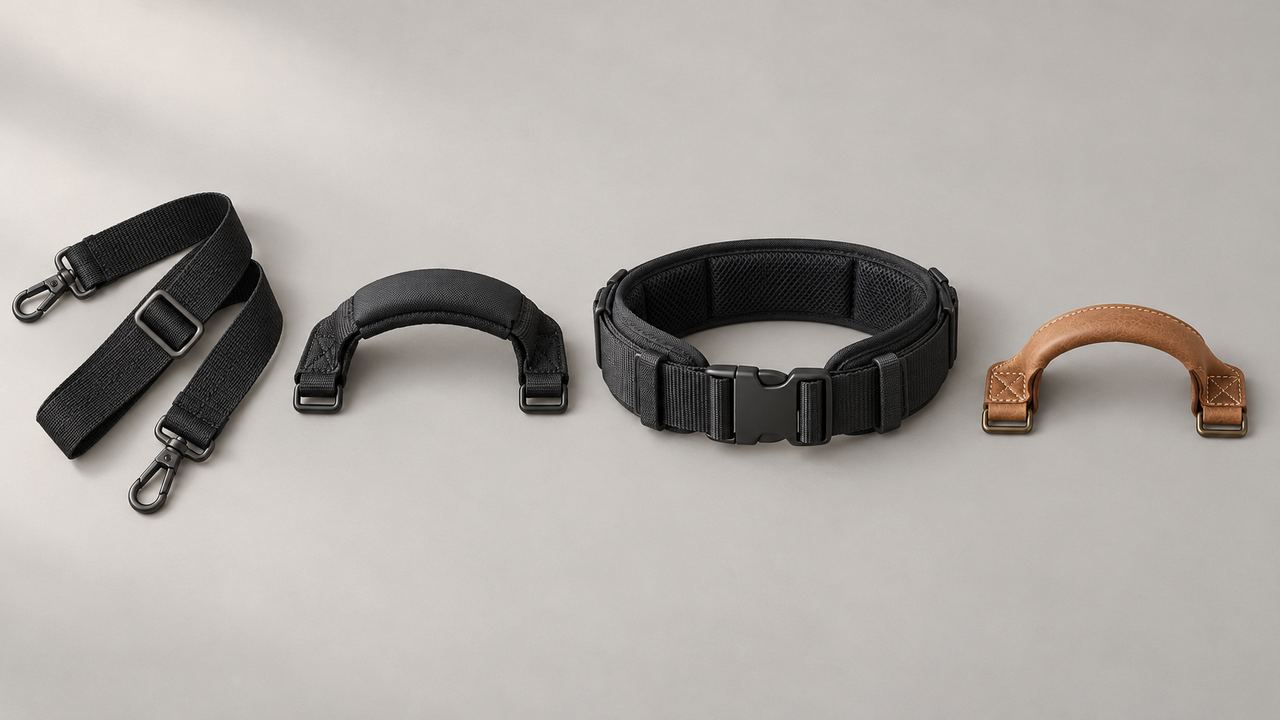
A bag line rarely fails because the body fabric is wrong. The first complaint from a buyer's customer is usually a strap edge that cuts into the shoulder, a top handle that pulls loose from the shell, or a hip belt that rides up after an hour of walking. Each of those parts is settled with the OEM bag manufacturer long before the first sample ships, and each part decides whether a program survives its second season.
Shoppers judge a bag by touch within seconds, and the parts a shopper grips first are the strap, the handle and the zipper pull. A carry system that feels thin or slips out of adjustment reads as a cheap bag, even when the shell fabric and the stitching are sound.
For a retail buyer the consequence is practical: strap and handle quality shapes warranty complaints and return rates more than lining colour does. Buyers who compare suppliers on body price alone usually notice the difference after the first container clears customs.
Shoulder straps: webbing, padding and adjustment range
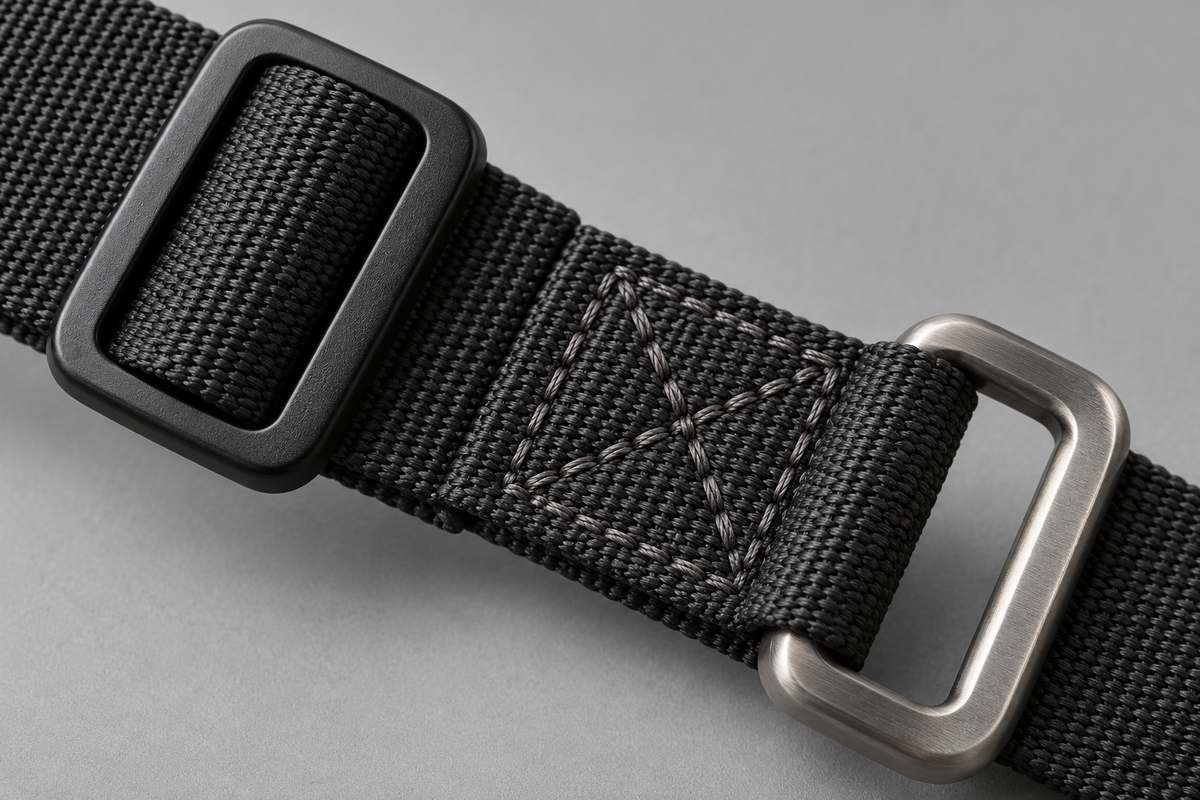
A shoulder strap begins as woven webbing. Width, thickness and weave density set how much load the webbing carries before the edge folds over, and padding sets how long a wearer tolerates that load. Narrow webbing on a commuter pack is reasonable; the same webbing on a loaded trekking pack concentrates pressure on a small patch of shoulder.
Adjustment range is the second decision. An OEM bag manufacturer should sample the strap at both the shortest and the longest settings, so the adjuster still grips the webbing under load and the tail does not hang past the wearer's hip. Slipping adjusters are a frequent complaint that a hardware change can settle at sampling stage instead of after delivery.
Top handles and hand carry on business bags
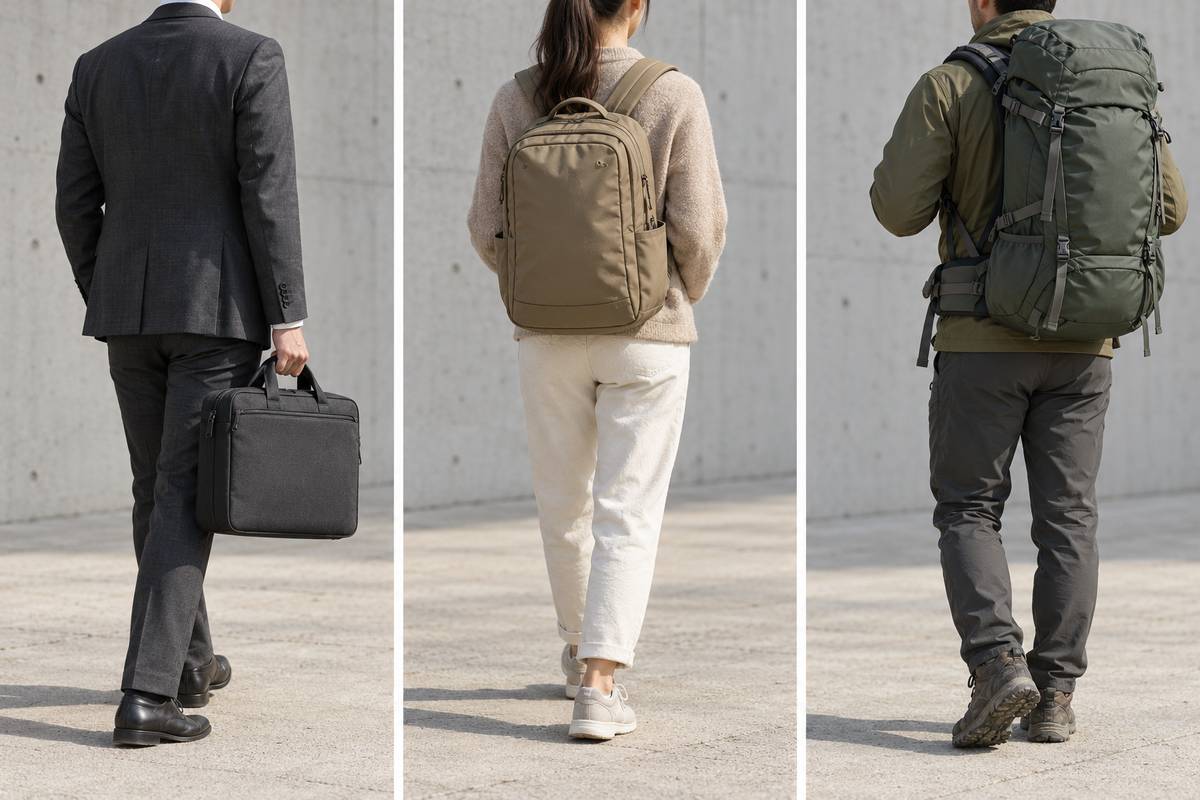
A hand-carried bag puts the whole load on four stitch lines. A short PU leather handle on a business and laptop bag needs a reinforcement patch plus box-X stitching at each anchor, and a stiffener inside the top edge so the mouth does not collapse when the bag is lifted full. The Laptop Tote Briefcase is a working example: two top handles, a padded laptop compartment and a top zipper on one shell.
Two handles that meet at the centre suit customers who commute on public transport, because the load stays balanced in one hand. A single handle plus a detachable shoulder strap suits customers who walk from a car park, because the bag switches to shoulder carry when hands are full. Both variants run on one shell pattern, a point worth raising with the OEM bag manufacturer early, because one pattern can cover two channels without paying twice for development.
The same logic applies to handbags. A top handle shoulder bag lives or dies on handle drop and strap attachment, since a short drop forces the bag into the hand and a detachable strap decides whether the same item sells to a crossbody customer.
Hip belts and load transfer on trekking packs
A hip belt changes which part of the body carries the weight. On a multi-day pack, a wide padded belt with a side-release buckle moves load from the shoulders onto the pelvis, and a sternum strap across the chest stops the shoulder straps from spreading outward on a climb. Buyers shopping the backpack range should read those two parts before the fabric spec, because the belt decides whether the pack suits a day hike or a three-day trek.
Confirm belt padding thickness, the side-release buckle type and the webbing tail length at the tightest setting. The Outdoor Hiking Pack 40L pairs a ventilated back panel with a load-transferring hip belt in a 40-litre body, and the commuter styles such as the Urban Commuter Backpack 22L drop the belt and keep a padded back panel instead, which shows how one factory plan can serve both channels.
What to confirm in the sample brief
A clear brief shortens sampling more than any other document, and the OEM bag manufacturer can only quote what the brief states. List these items before the first sample is cut:
- Strap width, webbing thickness and padding length, stated separately for each size in the range.
- Handle type: short leather or PU handle, padded webbing handle, or two handles meeting at the centre.
- Hardware for every load point, including adjuster style, buckle type and finish colour.
- Reinforcement at each anchor, described by stitch pattern and patch size rather than by photo alone.
- Whether the hip belt is removable, and how the belt attaches to the back panel.
A brief built on those five lines lets an OEM bag manufacturer quote a realistic sample schedule and a realistic unit price. A brief that names only a reference photo usually returns a sample that has to be cut twice.
FAQ for carry-system decisions
Should strap and handle values scale with the size range?
Padding length and handle drop normally scale with shell size. Approve the values for each size rather than approving one sample and assuming the rest follow.
Is hardware kept as standard stock or sourced per order?
The sourcing answer belongs in writing before sampling. Standard stock parts shorten the sample cycle; a specified custom part can add tooling or quantity conditions to the brief.
How long does a first sample and a bulk run take?
Wellmax Luggage quotes 30 to 35 days of production after sample approval for commuter packs, business bags and handbags, and 35 to 40 days for the 40-litre hiking pack. Sample timing is confirmed per project.
Manufacturing background
Wellmax Luggage is an OEM bag manufacturer in Fujian, China, founded in 2013. The 12,000 m² facility runs cutting, sewing, assembly and inspection under one roof, with a team of about 320 people producing roughly 150,000 pieces a month for buyers in more than 40 countries. The quality management system is certified to ISO 9001:2015 and the facility is audited under the BSCI framework for social compliance, both at company level rather than as a claim about one style.
Send a carry-system brief to the factory
Send strap width, handle drop, belt specification and target quantity, and the export sales team will reply with a quotation and a sampling plan. Buyers new to the range usually start with the travel luggage collection or the backpack assortment, then add business bags and handbags from the same OEM bag manufacturer once the first sample is approved.