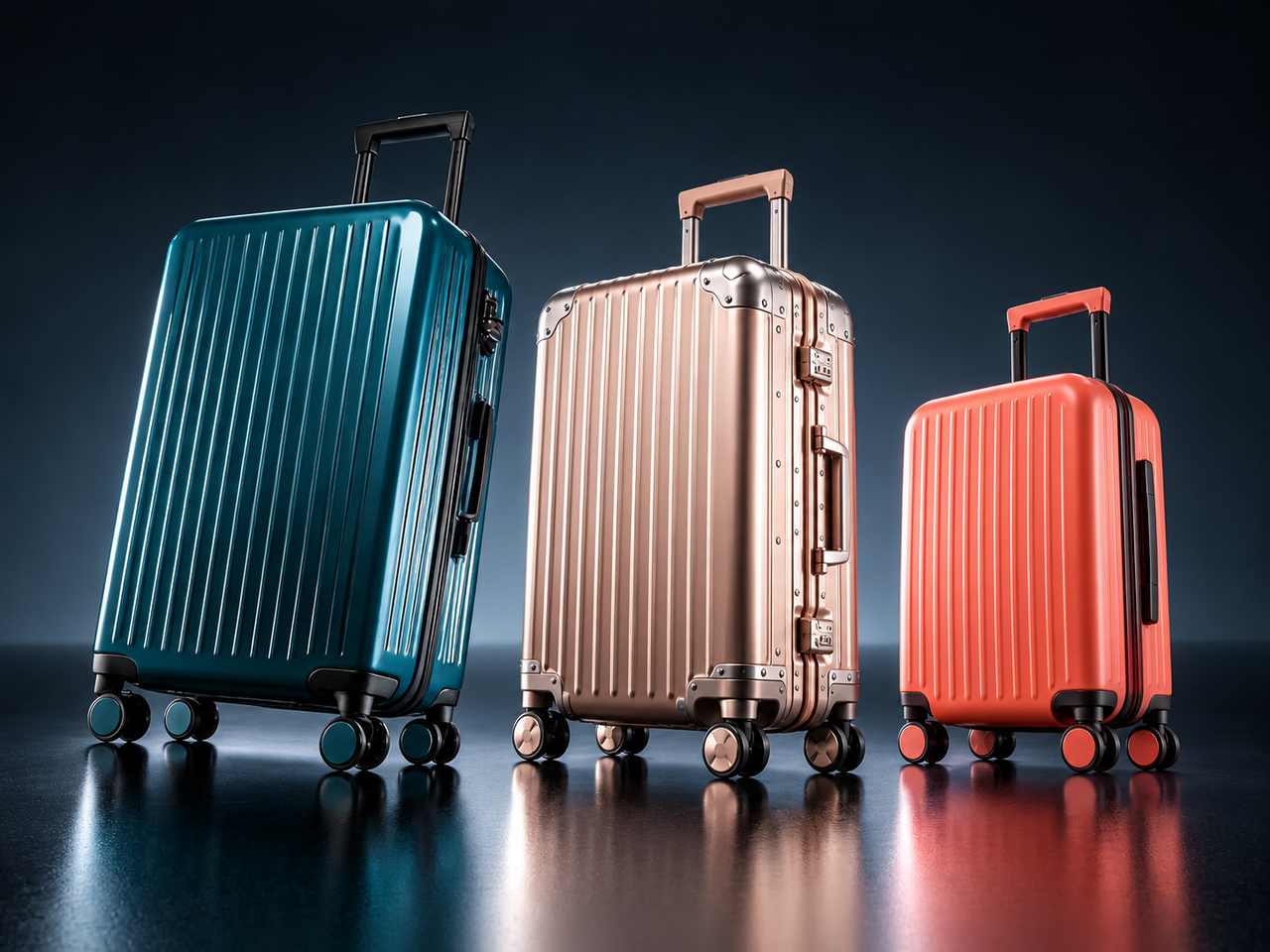
Cabin weight limits turn empty weight into a retail argument. A traveler packing a full wardrobe for a two-week trip needs kilograms of allowance for clothing, not for the case. On many carriers the cabin allowance sits between 7 and 10 kilograms, so a heavy shell consumes the margin before the first garment goes in. Wellmax Luggage, an OEM luggage manufacturer in Fujian, China, receives the empty-weight question on quotations across trolley cases, backpacks, business bags and handbags.
Empty weight also shapes the showroom moment. A salesperson who lifts a 20-inch cabin case with one hand makes a stronger impression than any spec table. For OEM luggage programs, the specification sheet decides the outcome: shell material, frame construction and hardware level each add or remove grams, and the differences compound across a full container.
Why Empty Weight Belongs on the Spec Sheet
Buyers compare loaded weight, not brochure figures. A case advertised at 2.5 kilograms empty leaves roughly 5.5 kilograms of cabin allowance on a carrier with an 8-kilogram limit; a case at 3.5 kilograms leaves 4.5 kilograms. The gap decides whether a customer packs a third pair of shoes or repacks at the check-in counter. Retail reviews routinely quote empty weight, so a heavy shell can cost stars and sell-through long after production ends.
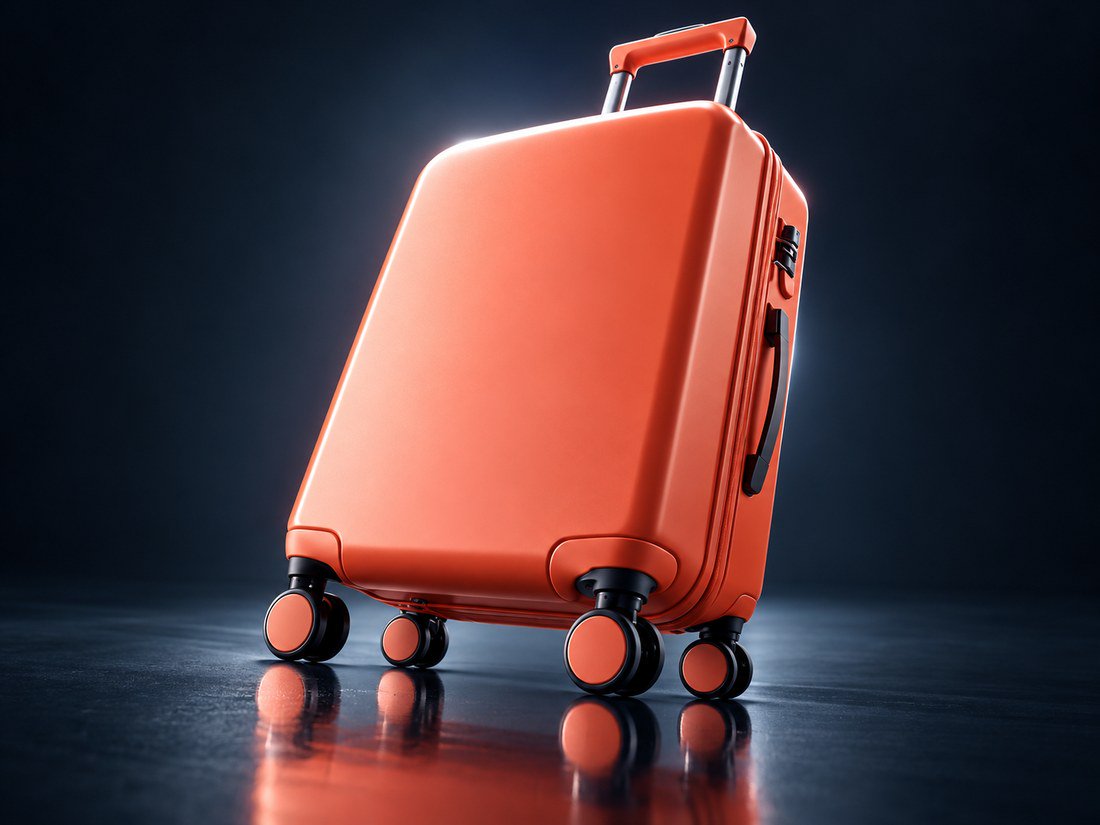
Weight also interacts with capacity. The Lightweight ABS Cabin Trolley 20" from Wellmax Luggage pairs a 20-inch shell with approximately 38 liters of capacity, sized to fit most airline cabin limits while keeping the empty weight low for small hands and tight connections. Explore the full range of travel luggage to compare cabin and checked sizes side by side.
Shell Material: The First Weight Decision
Shell material sets the baseline for any OEM luggage line. Lightweight ABS keeps unit cost and empty weight low, which makes the Lightweight ABS Cabin Trolley 20" (view product) a natural anchor for entry-level and mid-market assortments; the style carries a minimum order quantity of 300 pieces and a standard lead time of 30–35 days.
Polycarbonate trades a modest weight premium for impact resistance. The Polycarbonate Cabin Luggage 22" (view product) pairs an impact-resistant shell with a TSA lock, and ships in charcoal, black and navy with the same 300-piece minimum order. Buyers who serve frequent flyers usually accept the gram difference in exchange for fewer cracked shells in transit.
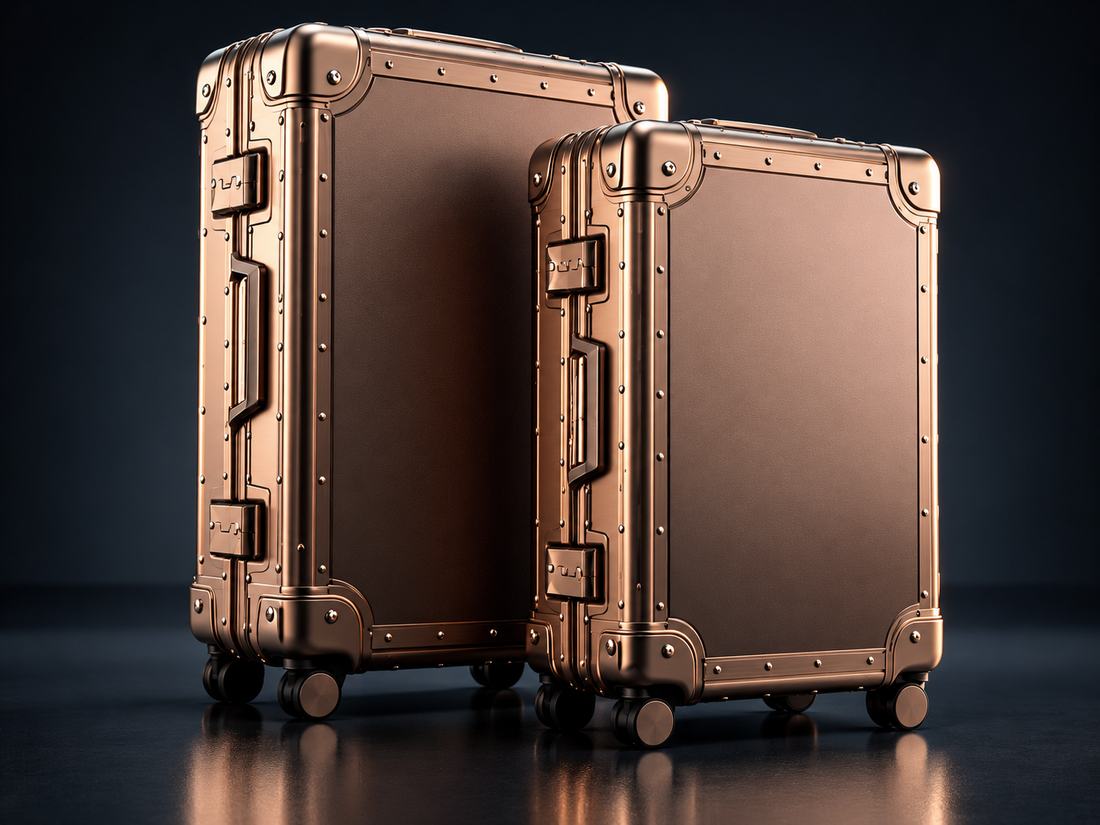
Aluminum frames move in the opposite direction. The Aluminum Frame Checked Luggage Set (view product) combines a rigid aluminum frame, an ABS shell and reinforced metal corners; the minimum order is 200 sets with a 35–40 day lead time. The added structure protects contents on rough baggage belts, and the premium look supports higher retail prices able to absorb the extra grams.
Hardware: Wheels, Trolley Systems and Zippers Add Up
Hardware hides the second wave of grams. Four double spinner wheels, as fitted on the Hardshell Trolley Case 28" PC Spinner (view product), roll smoothly in every direction and keep a fully loaded 95-liter case stable, yet the wheel assemblies weigh more than single-wheel units. Telescopic trolley systems, zipper grades and corner guards follow the same pattern: each upgrade adds function and grams together.
Wellmax Luggage treats hardware as a quotation variable rather than a fixed choice in OEM luggage development. Buyers specify wheel type, trolley system and zipper grade against a target price, and the same shell can land at different empty weights depending on the selected combination. Confirming hardware early keeps the sample weight aligned with the retail promise printed on the box.
Softside Programs: Fabric Weight Works Differently
Softside construction changes the calculation in OEM luggage programs. The Softside Spinner Luggage 24" (view product) uses a polyester fabric shell with four double spinner wheels and organized front pockets; navy, black and grey colorways carry the same 300-piece minimum. Fabric weight scales with denier, so buyers can tune grams and durability together without changing the silhouette.
Backpack programs follow the same logic. Water-resistant coatings, welded seams and padded back panels all add grams to a 16–40 liter pack. Wellmax Luggage produces backpacks on dedicated sewing lines within the same 12,000 m² facility, so a brand can balance a hardshell trolley line with lighter softside styles under one supplier.
How to Verify Empty Weight Before Mass Production
Verification belongs on the sample, not in the argument. For OEM luggage buyers, Wellmax Luggage recommends four steps: put a target empty weight in the RFQ alongside shell thickness and hardware level; ask the factory to record the measured weight on the sample report; lift the case with the handle fully extended to check balance; and repeat the measurement after any wheel or trolley change. Each step takes minutes and prevents a costly discovery after container loading.
Finished-product inspection at Wellmax Luggage covers wheel, handle and zipper function before packing, and ISO 9001:2015 certification plus BSCI social compliance auditing cover the factory system behind the checks. Buyers in more than 40 countries receive goods from the same 320-person team, which produces roughly 150,000 pieces per month in Quanzhou, Fujian.
Plan the Line Around Weight, Not Case by Case
A weight-led range reads clearly on a retail floor: a lightweight ABS cabin case for budget travelers, a polycarbonate 22-inch carry-on for frequent flyers, a 28-inch polycarbonate spinner for family trips and an aluminum-frame set for premium shelves. Buyers planning an OEM luggage program around empty weight can send target sizes, materials and hardware levels to Wellmax Luggage for a quotation; the export sales team answers inquiries with measured specifications rather than catalog claims.