Most buyers shortlist a suitcase manufacturer in China on samples and price. Samples show what a factory can do once; capability shows what it can do at 5,000 pieces. If you are at the factory-selection stage, these four areas are where capability is either present or missing: shell production lines, trolley and wheel assembly, tooling and sample development, and where quality checks sit in the production flow.
What this guide covers
- Whether the factory molds its own PC, ABS or PP shells, or buys them in
- In-house versus outsourced trolley, wheel and handle assembly
- What a sample actually proves about tooling and development cadence
- Where in-line and finished-product inspection happen on the line
- Questions to put to any suitcase manufacturer before you commit
1. Start with shell production, not the catalogue
The shell is the largest and most expensive component on a hard-sided suitcase, and how it gets made determines your cost structure, your tooling investment and how fast a new design can move. Ask the factory to walk you through the shell line before they walk you through the showroom.
Molding in-house versus buying shells in
A factory that molds its own PC, ABS or PP shells controls wall consistency and can respond to a design change without re-negotiating with a third party. A factory that buys molded shells is working to another supplier's capacity calendar — which matters most when orders cluster or when you want a mid-project change to the shell shape. Neither model is automatically better; what matters is that you know which one you are buying from, because it changes tooling ownership, minimum quantities and lead time.
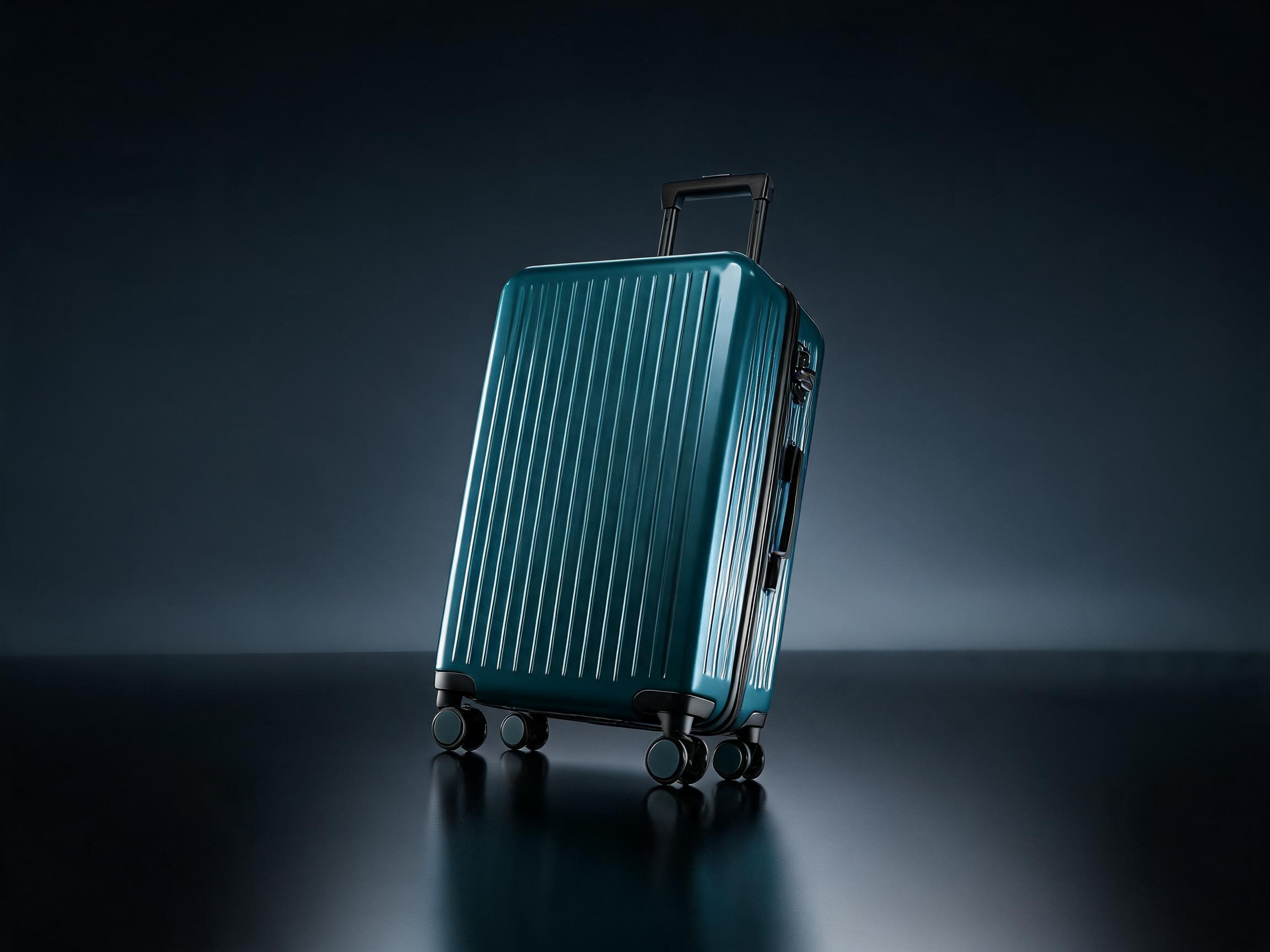
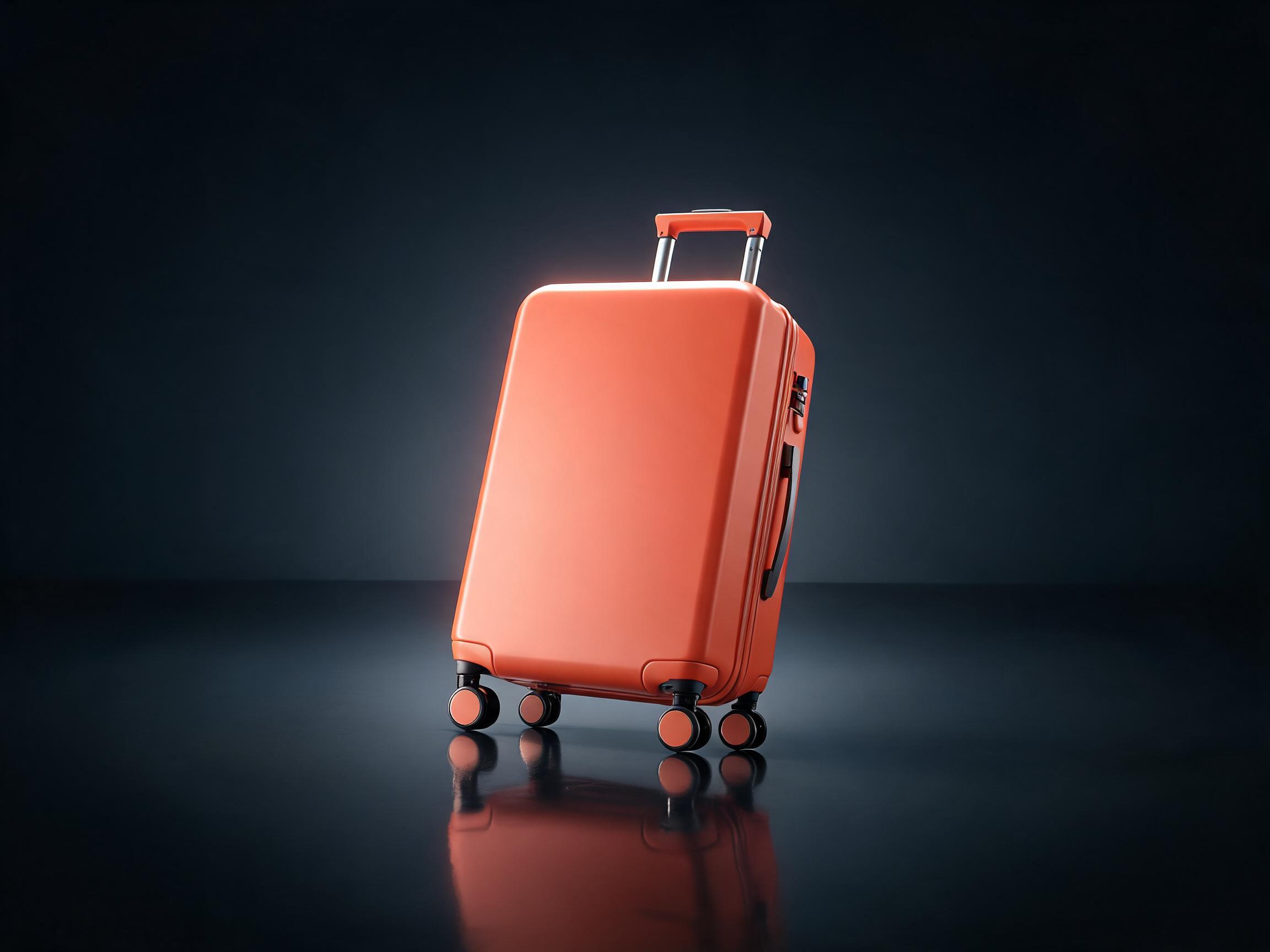
Material choice interacts with line capability. PC, ABS and PP do not behave the same way in molding, cutting or assembly, so a factory that runs all three has to manage separate process settings. When material trade-offs matter for your range, treat them as a line question: ask which shells are molded on site, on what equipment, and how the factory switches between materials. For a worked example of what those shell types look like as finished products, see the 28-inch PC spinner trolley case and the 20-inch lightweight ABS cabin trolley.
2. Trolley and wheel assembly: in-house or outsourced?
Trolley systems and wheels are the parts buyers complain about first, and they are the parts most often sourced complete from outside suppliers. That is normal in the industry, but it changes what the factory can actually control.
When trolley and wheel sets arrive as finished sub-assemblies, the factory's job is fitment and function checking — not adjusting the mechanism itself. When assembly is done in-house, the factory can trace a failure back to the batch of handles or wheels and act on it. The practical question for your visit or audit is simple: are wheels, handles, trolley tubes and zippers assembled and checked on your factory's own line, and what function checks are built into the workflow?
At a facility like Wellmax Luggage in Fujian, wheel, handle and zipper function checks are written into the assembly workflow before carton packing, and orders run on dedicated assembly lines followed by finished-product inspection. That sequencing is what you are looking for: the check exists as a step, not as a final surprise.
3. Tooling and sample development: read the cadence, not the promise
Every factory will tell you it supports custom development. What separates them is the sequence and how long each step takes. A workable development flow runs sampling, then tooling, then mass production, then QC, then export — and you should be able to get a timeline for each stage before you place a deposit.
What a sample reveals
A sample is not just a look at the design. It is evidence about tooling. Ask whether the sample was built on production tooling or hand-assembled, whether the shell mold for that shape already exists or will be cut for your order, and who owns the tooling afterward. If the shape is new to the factory, the sample timeline should reflect mold development, not just sewing and assembly time.
An in-house design and development studio shortens the loop between your brief and a physical sample, because there is no third-party handoff for drawings or shell modification. It does not eliminate mold lead time — nothing does — but it does mean specification questions get answered by the people who will run the line.
4. Where QC sits tells you how the factory thinks
End-of-line inspection catches problems after the value has already been added. In-line checks catch them while the piece can still be corrected. When you evaluate a suitcase manufacturer, look for both, and ask which defects are checked where.
- In-line: shell surface defects, zipper installation, wheel and handle function, hardware fit
- Finished product: full function check, trolley extension and retraction, spinner rotation, closure integrity, packing condition
- Documentation: what gets recorded when a defect is found, and whether you receive that record
Where test thresholds matter — impact resistance, wheel endurance, handle strength — ask the factory which standards its lab tests to and whether it can share the report for the specific model you are ordering. Test numbers from a different model or a different batch tell you little about your order.
Company-level certifications are a useful filter but not a product guarantee. A factory holding ISO 9001:2015 and a BSCI social compliance audit has documented quality and labour management systems at the facility level; that is a starting signal, not a substitute for checking your own order.
5. A practical comparison for your factory shortlist
Use this table to structure what you learn from each candidate. The right-hand column is what a buyer should try to confirm in writing or on a factory visit.
| Area | What to ask | What a good answer looks like |
|---|---|---|
| Shell production | Which shells are molded on site? PC, ABS, PP? | A clear statement of what is in-house and what is bought in |
| Trolley and wheels | Where do trolley sets and wheels come from, and who assembles them? | Assembly and function checks on the factory's own line |
| Tooling | Is the mold for my shell new or existing? Who owns it? | A named development step and ownership terms in the quote |
| Sampling | How long from brief to sample, and from sample approval to mass production? | A stage-by-stage timeline you can hold them to |
| QC | What is checked in-line versus at finished product? | Function checks as workflow steps, not final inspection only |
| Capacity | Monthly output and how many lines serve your order type | Numbers that match the order size you are placing |
6. What the numbers look like in practice
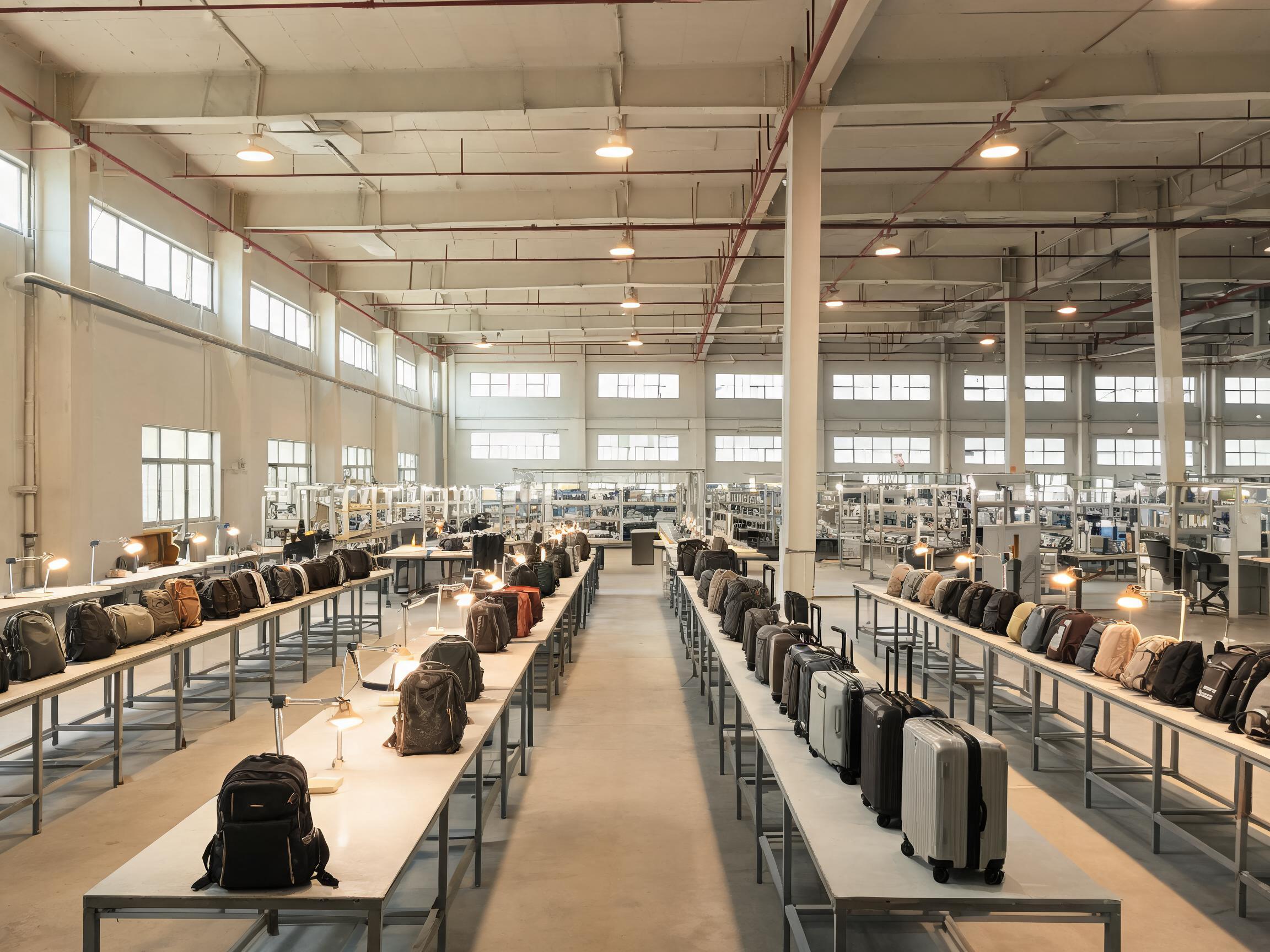
For scale: Wellmax Luggage has operated since 2013, employs roughly 320 people, and runs a 12,000 m² facility in Fujian that houses shell molding, cutting, sewing, assembly and finished-product inspection under one roof, at around 150,000 pieces per month for export to more than 40 countries. Those figures matter to you only as a check on whether the factory can absorb your order without pushing your delivery slot behind someone else's.
Commercial terms vary by model and by specification. As examples from current product pages: the 22-inch polycarbonate cabin case and the 24-inch softside spinner list MOQ 300 pcs, and typical lead time runs 30–35 days after sample approval. Treat those as reference points when you build a schedule, not as a commitment until your specification is quoted.
FAQ
Is it a problem if trolley systems are outsourced?
Not by itself — most factories source complete trolley and wheel sets. The question is what happens after they arrive: whether the factory assembles and function-checks them on its own line, and whether it can trace a defect to the incoming batch. Ask which checks run before packing.
What does a sample tell me about tooling capability?
A sample shows finish and fit; it does not automatically prove the factory can mold your shell at volume. Ask whether the sample used production tooling, whether the mold for your shape exists, and how long mold development takes if it does not. Those answers tell you more than the sample itself.
What MOQ and lead time should I expect?
It depends on the model and specification. Current product pages list MOQ 300 pcs with 30–35 days after sample approval for several trolley case models; confirm both figures against your own specification and order timing before planning a launch.
How does sampling lead into mass production?
A workable flow runs sampling, then tooling, then mass production, then QC, then export. Ask for a timeline for each stage and for the checkpoint where you sign off before the line starts. Factories with in-house development studios can usually answer specification changes faster, but mold lead time still applies.
Which tests should I ask about?
Ask which standards the factory's lab tests to for impact, wheel endurance and handle strength, and whether it can share results for the exact model you are ordering. Avoid accepting numbers carried over from another model or a previous batch.
If you are comparing a shortlist of suppliers, bring these questions to the first call rather than the fifth. A factory that can answer them clearly — with named process steps, a sampling timeline and an explanation of what is made in-house — is easier to manage from the other side of the world than one that only sends a catalogue. To discuss a specific suitcase or trolley case programme, share the shell type, target volume and market with the team at Wellmax Luggage.