Most articles about custom luggage pricing tell you which factors affect cost. Useful — but a buyer sitting in front of an actual manufacturer quotation needs something more operational: a method for going through the document line by line, deciding where the money is hiding, and negotiating on terms the factory can actually respond to. That is what this article provides, written from the manufacturer's side of the table.
The context: Wellmax is an OEM/ODM luggage and bag manufacturer in Fujian, China, producing trolley cases, backpacks, business bags and handbags for buyers in more than 40 countries, with sampling, tooling, mass production, quality inspection and export handled under one roof. Quotations we issue — and the ones our buyers compare us against — all share the same anatomy. Learn the anatomy, and negotiation becomes structured instead of adversarial.
Before negotiating: make the quotes comparable
The most common negotiation failure is comparing two quotations that describe two different suitcases. Before any price talk, confirm in writing for each quote: shell material and thickness, wheel type, handle system, zipper brand or grade, lining, packaging, and Incoterm. Two quotes only become comparable when these lines match. If one supplier quotes ABS and another polycarbonate, you are not comparing prices — you are comparing products, and the negotiation should say so explicitly.
Line 1 — the shell: where material grade lives
What the shell line actually contains
"ABS" and "polycarbonate" are categories, not specifications. Within each, sheet gauge and grade vary. When you push on the shell line, do not ask "can it be cheaper" — ask "what grade is quoted, and what does the next grade down change?" A manufacturer can usually show you the difference in impact behavior and finish. On a hardshell trolley, the shell is the majority of the product's value, so this line deserves the most scrutiny per yuan of movement.
The negotiation move
Accept the material category you need, then negotiate within it. Asking for polycarbonate performance at an ABS price does not create a discount; it creates a quietly downgraded case that generates warranty claims later — which cost you more than the discount saved.
Line 2 — hardware and wheels: the specification fingerprint
Wheels
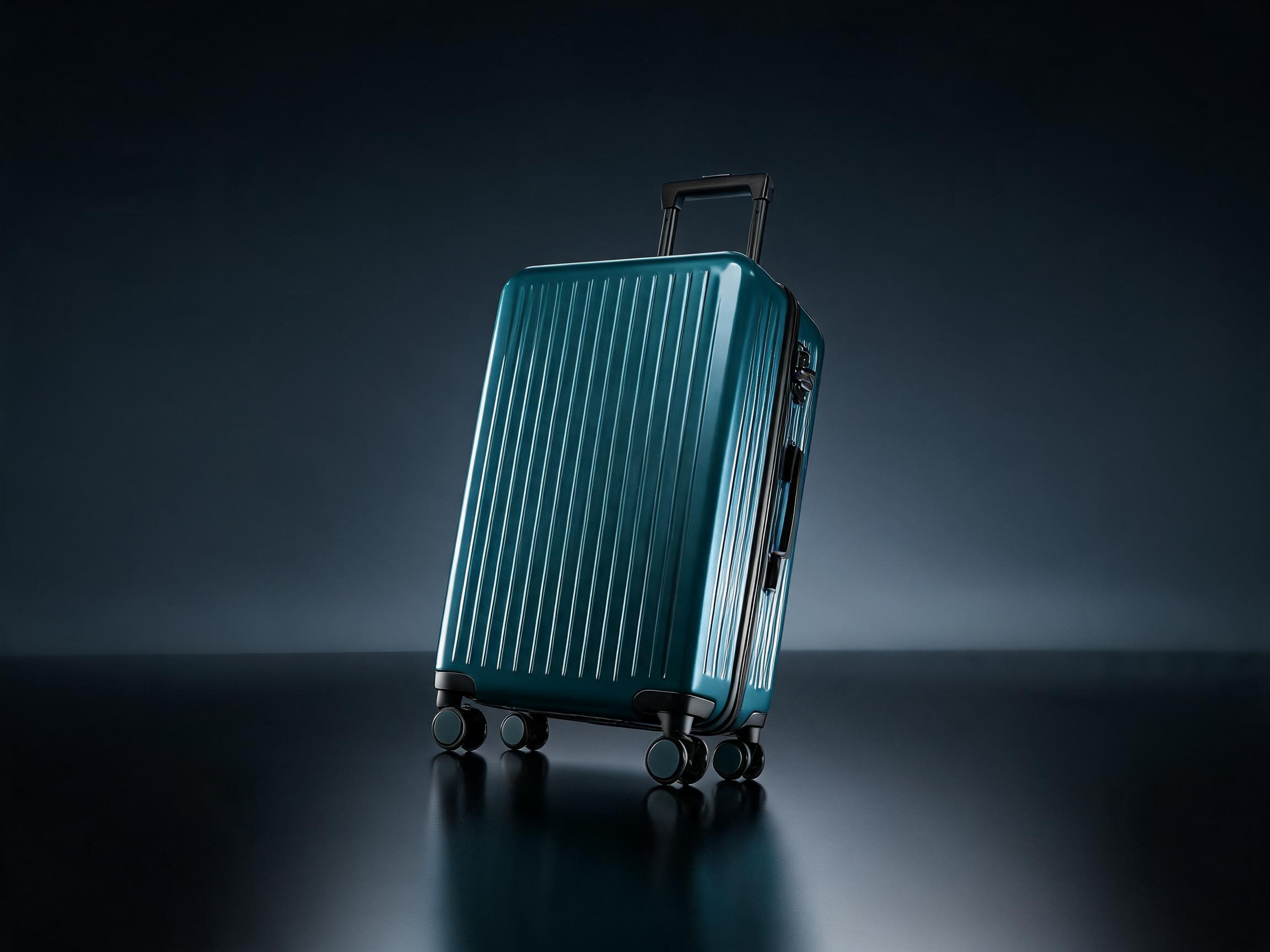
Single wheels versus double spinners, wheel housing design, and bearing quality are all visible in a quotation's wheel line. On our Hardshell Trolley Case 28" PC Spinner, for example, four double spinner wheels are a stated specification — when you negotiate, the question is whether the quoted wheel spec is identical across competing quotes, not whether wheels exist.
Handles and zippers
Telescopic handle systems and closure types — zipper with TSA lock, as on our 22-inch polycarbonate cabin case, versus standard zippers — carry different costs and different failure profiles. This is also where an honest factory will tell you where a cheaper option is acceptable: zippers on an interior pocket do not need the grade of the main closure.
Line 3 — the logo and customization lines
Each customization technique prices differently: surface printing or heat transfer on a stock shell is the lightest; custom shell colorways and branded lining add material minimums; custom hardware adds tooling. When a quotation lists customization as one lump line, break it apart in your reply. Ask which parts are one-time tooling costs and which are per-unit costs — because tooling amortizes across your reorders while per-unit costs compound. This single question often reveals more negotiating room than any discount request.
Reading the quantity tiers correctly
Tiers reflect real cost structure
Tiered quotations exist because changeovers, material minimums and line scheduling have real costs. A steep drop from tier one to tier two is normal; that is the fixed cost of your program spreading across more units.
Negotiate the tier you will actually order at
Discount pressure applied to a quantity you will never order is wasted. Put your realistic annual quantity on the table and ask the manufacturer what specification improvements that volume funds — a better wheel spec, upgraded lining, improved packaging — rather than only a lower number. Volume-for-specification trades are where manufacturers have genuine flexibility, and they improve the product instead of diluting it.
Questions that surface hidden costs
Ask each supplier: What is included in the packing line — individual poly bag and carton, or more? Who pays for pre-shipment inspection, and can we witness it? What is the re-order process and pricing once tooling exists? And what quality system stands behind the quote — an ISO 9001:2015 certified facility audited under BSCI carries process discipline that shows up in consistency, order after order.
The close
A good custom luggage negotiation ends with a quotation where every line is specified, every tier matches the same specification, and both sides know what the first order tests. Send your specification, your realistic volumes and your market — and ask for the quote to be built line by line, because that is the version worth negotiating.
Key takeaways
- Make quotes comparable before negotiating: confirm shell material and thickness, wheel type, handle system, zipper grade, lining, packaging, and Incoterm in writing.
- Negotiate within the material category you need; don't ask for polycarbonate performance at an ABS price.
- Break down the customization line into one-time tooling and per-unit costs to find real negotiating room.
- Negotiate at the quantity tier you will actually order and trade volume for specification improvements.
- Ask about packing details, inspection costs, re-order process, and quality certifications (ISO 9001:2015, BSCI) to surface hidden costs.