Wholesale Sourcing Guide
Why Wholesale Laundry Bags Are a Program Purchase, Not a One-Off Order
Hotels, commercial laundries, and hospitality distributors rarely buy laundry bags one at a time. A single hotel property may issue hundreds of bags per floor program, and a laundry service operating across multiple sites needs consistent replacement stock on a schedule. That is why “laundry bag wholesale” searches come overwhelmingly from buyers planning a repeatable supply program — and why the questions that matter are not “what is a laundry bag?” but “which construction, which closure, and which packaging plan will survive months of industrial washing and daily guest handling?”
This guide walks through the decisions a wholesale buyer actually has to make: mesh versus canvas construction, drawstring versus zipper versus flat closures, size and weight tolerances, branding options, and how to structure an RFQ with an OEM bag factory so quotes are comparable.
Key Takeaways
- Mesh and canvas solve different jobs: mesh for breathability and visibility, canvas for containment, privacy and transport.
- Closure choice changes unit cost and failure modes — drawstring, zipper, or grommeted open top each suit specific duties.
- A comparable RFQ specifies construction, closure, dimensions, fabric weight, branding, packaging, and replenishment volume.
- Pre-production samples tested in your actual wash environment are the most reliable way to validate construction before scaling.
Mesh vs Canvas: Matching Construction to the Washing Environment
The single biggest structural decision is fabric. The two dominant wholesale constructions behave very differently in service.
| Attribute | Mesh laundry bag | Canvas laundry bag |
|---|---|---|
| Water and airflow | Fully breathable; water and detergent pass through freely | Absorbs water; contents stay enclosed during wash |
| Contents visibility | High — guests and sorters see items through the bag | Low — contents concealed, better for guest privacy |
| Abrasion behavior | Snags on rough drum edges and zippers of other items | More resistant to snagging; edges fray before holes spread |
| Typical hospitality role | Guest-room delicates bags; separating items inside a wash load | Guest-room collection bags; laundry-cart liners; branded room service bags |
For hotel room programs, the two constructions often coexist: a mesh bag for guests to separate delicates, and a canvas bag hanging on the door or closet rail for collection. For laundry-service buyers, mesh bags used to sort and protect items inside wash loads need finer, more stable weaves, while heavy canvas works better for transport and storage. Ask any prospective supplier which of these two jobs your program actually needs — quoting the wrong construction is the most common cause of a wholesale RFQ coming back with unusable pricing.
Closure Options: Drawstring, Zipper, or Flat Top?
Closure choice changes both unit cost and failure modes in industrial laundering.
- Drawstring / cord-lock closures are the workhorse of wholesale laundry bags. They are inexpensive, tolerate repeated high-temperature cycles better than hardware, and are easy for guests to use. The trade-off is that cords and cord locks are the most common failure point, so ask the factory how the cord channel is secured.
- Zipper closures keep contents fully enclosed, which matters for delicates programs and for laundry services that sort by room or client. Zippers add cost and introduce a metal or plastic component that must survive commercial washing; coil zippers with taped edges are generally the safer specification than exposed metal teeth.
- Flat-top or open bags with a hanging feature suit collection duty: a grommeted top that slips over a door hook lets housekeeping collect linens without touching a closure at all. These are usually the cheapest per unit and the simplest to replace.
When comparing supplier quotes, make sure every vendor is quoting the same closure — a drawstring bag and a zippered bag can differ meaningfully in cost even with identical fabric.
Size, Weight, and Construction Details Worth Specifying
Wholesale laundry bags look simple, but buyers who specify details get fewer surprises after the first bulk shipment:
- Capacity and dimensions. A guest-room collection bag, a delicates bag, and a cart liner all have different practical sizes. Decide the duty of each SKU before requesting quotes.
- Seam construction. Bags that survive industrial laundering typically use reinforced stitching at stress points — the cord channel ends, handle junctions, and bottom corners. Ask how seams are finished and whether stress points are bar-tacked.
- Fabric weight. Heavier is not automatically better: overly thick mesh reduces water flow, and overly heavy canvas dries slowly. Match weight to duty rather than defaulting to the heaviest option.
- Hanging hardware. Grommets and hooks should be corrosion-resistant if bags will be stored in humid housekeeping areas.
Because wash cycles, detergents, and load sizes vary between properties, treat published specifications from any supplier — including ours — as a starting point to be confirmed with pre-production samples tested in your actual laundering environment.
Branding and Guest-Experience Details
For hotel groups, the laundry bag is one of the few textile items guests handle daily, which makes it a quiet branding surface. Common wholesale customization options include:
- Silkscreen printing of the property logo on canvas — the most economical option at wholesale volumes.
- Woven labels sewn into the seam for a more integrated look that survives washing better than surface printing on mesh.
- Color-matched cords, binding tape, or grommets to align with brand palettes.
For laundry-service and hospitality distributors, neutral unbranded stock in standard sizes is often the better wholesale play, keeping inventory flexible across multiple end clients.
Structuring a Wholesale RFQ for Laundry Bags
A comparable RFQ is the difference between a fast sourcing cycle and three weeks of clarification emails. Include:
- Construction — mesh or canvas, and the duty of the bag (guest-room collection, delicates separation, cart liner, or transport).
- Closure type — drawstring with or without cord lock, zipper, or grommeted open top.
- Target dimensions and capacity — per SKU, not one average size for the program.
- Fabric weight and finishing requirements — specify what you need or ask the factory to propose options per duty.
- Branding method and placement — print, woven label, or unbranded stock.
- Packaging plan — individually poly-bagged for guest-room distribution, or bulk packed for laundry operations; individual bagging affects both cost and warehouse handling.
- Volume and replenishment schedule — initial quantity plus expected annual repeat volume lets a factory price the program realistically rather than quoting a one-off.
A factory that asks clarifying questions about duty and washing environment is a good sign; a quote returned without any questions on a vaguely specified RFQ deserves suspicion.
Working With an OEM Bag Factory on Laundry Programs
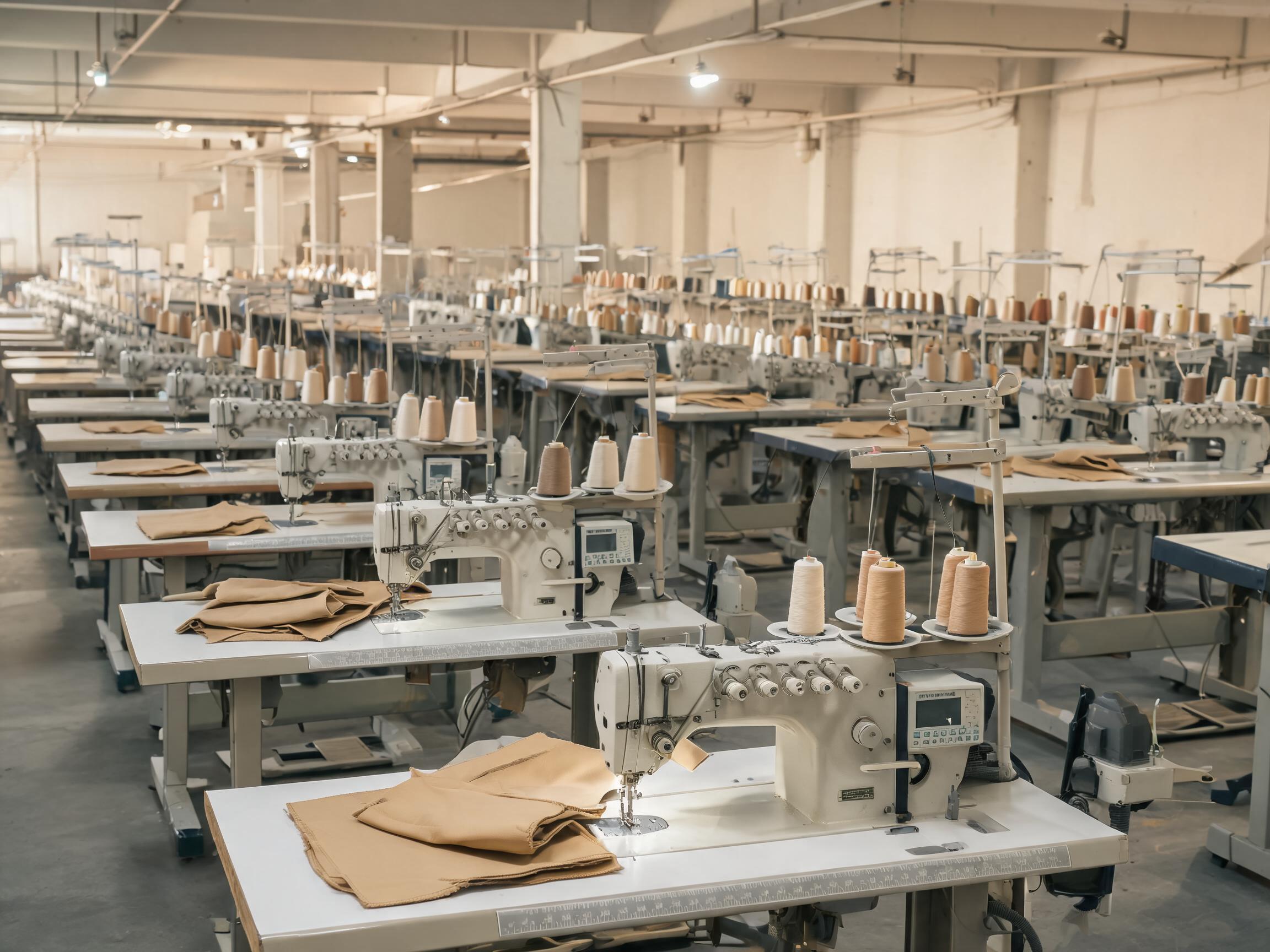
Laundry bags sit in the soft-goods family: their quality depends on the same capabilities as other sewn products — cutting accuracy, stitch density and reinforcement, webbing and zipper integration, and consistent inspection before packing. Buyers evaluating a manufacturer for a laundry program can therefore assess the same fundamentals that apply across the bag category: an in-house cutting and sewing floor rather than fully outsourced stitching, a sampling capability for testing construction variants before bulk, and an inspection process that catches cord-channel and seam failures before shipment.
Wellmax Luggage operates integrated cutting, sewing, assembly, and inspection lines in Quanzhou, Fujian, with an in-house sampling studio that supports exactly this kind of construction iteration for program buyers across more than 40 countries. While our published catalog focuses on luggage, backpacks, business bags, and handbags, the soft-goods manufacturing capability behind those lines is the same one that produces sewn textile programs like laundry bags — and we confirm category-specific experience and current capacity directly with buyers during sampling and RFQ discussions.
For wholesale buyers, that translates into a practical evaluation checklist: request samples built to your specified construction, wash-test them in your real environment, and only then scale the order. Whether you work with us or another OEM factory, pre-production testing is the cheapest insurance available in this category.
Frequently Asked Questions
What size laundry bags do hotels typically order wholesale?
Most hotel programs use at least two sizes: a compact delicates bag for guest-room use and a larger collection bag sized to the closet or door hook position. The right dimensions depend on your fixtures and housekeeping workflow, so measure the intended hanging location and typical load before finalizing SKUs.
Can laundry bags be customized with a hotel logo?
Yes — silkscreen printing on canvas and sewn-in woven labels are the standard methods at wholesale volumes. Woven labels generally survive industrial washing longer than surface printing on mesh fabrics.
How should a buyer test samples before a bulk order?
Run the sample bags through your actual wash cycles — temperature, detergent, and load conditions as they really operate — and inspect seam integrity, closure function, and fabric condition after repeated cycles. Confirm any specification changes with the factory before mass production.